

Once I swapped out the old switches in my 1920s bungalow with an Aqara no‑neutral double rocker, the lights finally behaved without rewiring the whole house. I’ll walk you through seven top options for SmartThings in 2026, from hub‑free Wi‑Fi picks to battery‑powered Zigbee toggles and Matter plugs, so you can match tech to wiring, rooms, and rental rules—and figure out which tradeoffs matter most.
Aqara No-Neutral Double Rocker Smart Light Switch

In case you want a compact, no-neutral option that works with SmartThings and major voice assistants, the Aqara No-Neutral Double Rocker Smart Light Switch is a solid pick — especially for older homes where neutral wires aren’t available. You’ll need an Aqara Hub (sold separately) and a repeater like an Aqara Smart Plug for reliable connectivity; observe hub Wi‑Fi varies according to model (some need 2.4 GHz, others support 5 GHz). It handles 120V/60Hz, low minimum loads, and up to 600W per way for incandescent. You’ll get HomeKit/Google/Alexa voice control, scheduling, flame‑retardant safety, and auto shutoff.
Best For: Homeowners in older houses without neutral wiring who want a compact, voice‑enabled smart double rocker switch compatible with SmartThings and major voice assistants.
Pros:
- Works without a neutral wire, ideal for older homes where neutrals aren’t available.
- Broad smart-home integration (Apple HomeKit, Google Assistant, Alexa, SmartThings) with scheduling and automation via Aqara Hub.
- High load capacity (up to 600 W/way incandescent) and safety features like V‑0 flame‑retardant panel and automatic high‑temp shutoff.
Cons:
- Requires a separate Aqara Hub (and often a repeater such as an Aqara Smart Plug) for reliable connectivity, adding cost and setup complexity.
- Hub Wi‑Fi requirements vary by model (some hub models only support 2.4 GHz), which can complicate network compatibility.
- Minimum load requirements (3 W/way incandescent, 5 W/way CFL/LED) may cause issues with very low‑wattage LED fixtures or require dummy loads.
Wireless 16A Smart Light Switches (2-Pack)
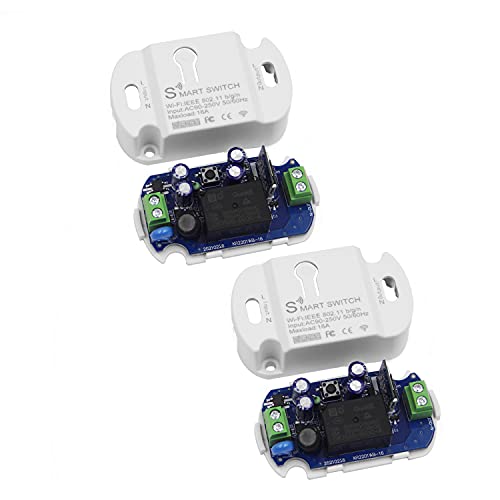
In case you need high-load switches that handle heavy fixtures or multiple lights, these Wireless 16A Smart Light Switches (2-Pack) are ideal because they support up to 16A (3,500W) and work without a separate hub. You’ll control them remotely via your Wi‑Fi router using Smart Life or TUYA Smart (iOS/Android), schedule timers and countdowns, and manage devices from anywhere with network access. They’re voice-ready for Alexa and Google Home, cover about 97% of household appliances, and accept 100–240V AC. FCC certified, the kit includes a small module for DIY installation in case you’ve basic electrician knowledge.
Best For: Homeowners or DIYers who need high-load, hub-free smart switches to remotely control heavy fixtures or multiple lights using Wi‑Fi and voice assistants.
Pros:
- Supports up to 16A (3,500W) for high-load appliances and multiple light circuits.
- Hub-free Wi‑Fi operation with Smart Life/TUYA app for remote control, scheduling, and voice control via Alexa/Google Home.
- Wide compatibility (97% of household appliances), FCC certified, and includes a DIY-friendly installation module.
Cons:
- Requires basic electrician knowledge for installation; may need a professional for complex wiring or older homes.
- Remote control depends on phone network availability and home Wi‑Fi, so functionality can be limited by connectivity issues.
- TUYA/Smart Life cloud reliance may raise privacy or data concerns for some users.
SONOFF Matter Smart Plug S41s 15A (4-Pack)

Should you want a high-capacity plug that plays nicely with SmartThings and other ecosystems, the SONOFF Matter S41s 15A (4-pack) delivers 15A/1800W switching with Matter, Alexa, Google, HomeKit, and IFTTT support so you can control heavy-duty appliances and automate scenes dependably. You’ll remote-control or voice-control lights, fans, coffee makers, and more, even during times away. ETL certification and PC fireproof housing mean safe operation; the plug self-extinguishes during faults. Use one-time, repeat, random, and countdown timers, or tie the plug to SONOFF presence sensors for automated lighting and appliance workflows. It’s a sturdy, versatile option for SmartThings.
Best For: homeowners and smart-home enthusiasts who need a high-capacity, Matter-compatible smart plug for controlling and automating heavier appliances across multiple ecosystems.
Pros:
- Supports up to 15A/1800W, suitable for higher-draw devices like coffee makers and fans.
- Broad ecosystem compatibility (Matter, Alexa, Google, HomeKit, IFTTT, SmartThings) for flexible control and automation.
- ETL-certified with PC fireproof housing and self-extinguishing behavior for improved safety.
Cons:
- Four-pack may be more than needed for users who only want one or two smart plugs.
- High-capacity devices still require careful attention to wiring and circuit limits despite plug rating.
- Advanced automation features may require familiarity with SmartThings or other platforms to fully utilize (learning curve for some users).
Kasa HS200 Wi‑Fi Smart Light Switch (Single Pole)

Should you need a straightforward, reliable smart switch for a home with neutral wiring, the Kasa HS200 is a solid pick that’s built for everyday users who want remote control and simple automation. You’ll need 2.4 GHz Wi‑Fi and a neutral wire; the Kasa or Tapo app guides setup on Android 5.0+/iOS 10+. Once installed (hire an electrician should uncertain), you can control and monitor lights remotely, set timers, countdowns, and use Away Mode for security. It’s Alexa and Google Assistant compatible for voice control, UL certified, Silicon Valley‑designed, trusted with 4M+ users, and compact (4.13×1.71×1.74″).
Best For: homeowners with existing neutral wiring who want a reliable, easy-to-use smart switch for remote control, scheduling, and voice automation.
Pros:
- Requires only 2.4 GHz Wi‑Fi and offers app-guided setup via Kasa or Tapo for straightforward installation.
- Remote monitoring, timers/countdowns, and Away Mode provide convenience and added home security.
- Works with Amazon Alexa and Google Assistant, UL certified, compact design, and backed by 4M+ users.
Cons:
- Requires a neutral wire and 2.4 GHz Wi‑Fi, so incompatible with some older homes or 5 GHz‑only networks.
- Installation involves wiring—may require an electrician if you’re not comfortable with electrical work.
- Limited to single‑pole switch configurations (no multi‑way support in this model).
Enbrighten White Add-On Z-Wave/Zigbee Smart Switch

Should you need a compact add-on that extends Enbrighten smart switch features to multiple locations, the 2nd‑generation White Add‑On Z‑Wave/Zigbee model is a great choice because it mirrors the primary device’s dimming, fan speed, and ON/OFF controls without adding depth to crowded switch boxes. You’ll pair it with any Enbrighten Z‑Wave or Zigbee in‑wall smart control for true 3‑way operation; it sends commands to the primary unit and can’t work standalone. The slim housing (20% reduced depth), dual offset grounds, and no breakoff tabs fit older multi‑gang boxes. Requires neutral, traveler, and ground; wall plate not included.
Best For: homeowners or light-commercial installers needing a compact add-on to extend Enbrighten Z‑Wave/Zigbee smart switch capabilities (dimming, fan speed, ON/OFF) to additional 3‑way locations without increasing switch-box depth.
Pros:
- Compatible with any Enbrighten Z‑Wave or Zigbee in‑wall smart control for true 3‑way operation, mirroring primary device functions.
- Slim 2nd‑generation housing (20% reduced depth), no breakoff tabs, and dual offset grounds make it easy to fit in older or multi‑gang boxes.
- Supports both 120VAC and 277VAC systems (when paired with the 277VAC primary), and works with LED/CFL/incandescent/halogen fixtures per the primary device.
Cons:
- Cannot operate standalone—must be paired with an Enbrighten primary smart switch to function.
- Requires in-wall hardwired installation with neutral, traveler, and ground wires, which may complicate retrofit installs.
- Wall plate not included, so an appropriate plate must be purchased separately.
THIRDREALITY Zigbee Smart Toggle/Rocker Switch (Hub Required)
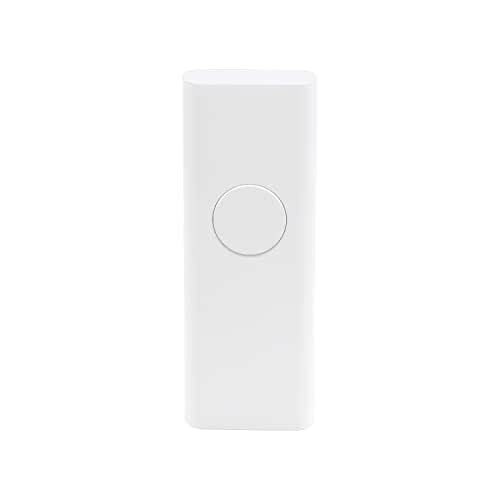
Should you want a drop-in Zigbee solution that leaves your wiring untouched, the THIRDREALITY Zigbee Smart Toggle/Rocker Switch is ideal — it snaps over existing toggles or rockers, runs on 2 AAA batteries, and talks directly to Zigbee 3.0 hubs like SmartThings or Echo devices with built-in hubs. You won’t rewire: it controls the mechanical switch beneath and fits narrow 2-gang boxes. It supports any line or low voltage, enables voice control, scheduling, OTA updates, and precise runtime to save energy. You’ll need a Zigbee hub (not Tuya); optional Smart Bridge MZ1 adds HomeKit, Google, and Alexa integrations as needed.
Best For: Homeowners or renters who want a no-wiring, battery-powered Zigbee smart switch that snaps over existing toggles/rockers for voice, scheduling, and remote control via a Zigbee 3.0 hub.
Pros:
- No rewiring required—snaps onto existing toggle/rocker and fits narrow 2-gang boxes, ideal for rentals or retrofit installs.
- Direct Zigbee 3.0 connectivity (works with SmartThings, Echo devices with hubs, Hubitat, Home Assistant, etc.) with OTA updates for ongoing improvements.
- Supports any line or low voltage and enables voice control, scheduling, and precise runtime to save energy and extend device life.
Cons:
- Requires a Zigbee 3.0 hub (not compatible with Tuya); additional Smart Bridge MZ1 needed for native HomeKit/Google Home integration.
- Runs on 2 AAA batteries, so periodic battery replacement is required.
- Controls the existing mechanical switch beneath, which may limit some advanced features compared with true in-wall smart switches (e.g., neutral-powered behaviors).
Kasa Smart HS210 3-Way Wi‑Fi Light Switch
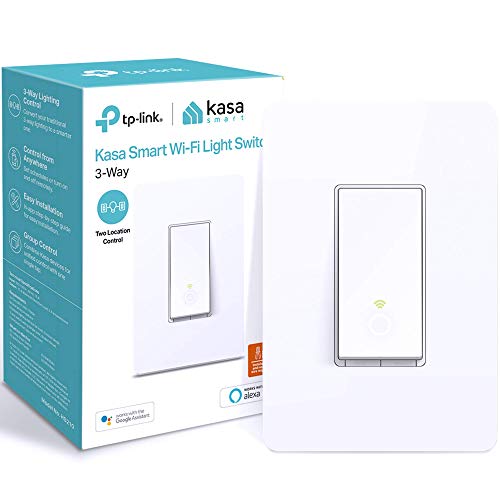
Should you want a straightforward way to add smart control to a hallway, stairway, or residential room that already uses 3‑way wiring, the Kasa Smart HS210 is a solid pick — it replaces traditional 3‑way switches, works on 2.4 GHz Wi‑Fi with no hub, and gives you app and voice control via Alexa or Google Assistant. You’ll install via the Kasa app guided setup for 3‑way or single‑pole systems; neutral wiring is required. It supports Android/iOS, UL certification, 15A/120V operation, and scheduling, timers, and away mode. In case you’re unsure about wiring, consult an electrician before installation.
Best For: Homeowners or renters with existing 3‑way wiring who want an easy, hub‑free way to add app and voice control (Alexa/Google) to hallways, stairs, or rooms.
Pros:
- Replaces traditional 3‑way switches and supports both 3‑way and single‑pole setups with guided Kasa app installation.
- Works on 2.4 GHz Wi‑Fi with no hub required and offers remote control, scheduling, timers, and away mode.
- UL certified, supports Alexa/Google Assistant voice control, and handles standard residential loads (15A/120V, 600W).
Cons:
- Requires a neutral wire, so older homes without neutral at the switch may need wiring work or an electrician.
- Limited to 2.4 GHz Wi‑Fi (no 5 GHz support), which may complicate networks that prefer single‑band setups.
- IP00 protection and indoor temperature range restricts use to standard indoor environments only.
Factors to Consider When Choosing Smart Switches For Smartthings
Before you pick a switch, I check hub compatibility and wiring requirements to make sure the device will actually work in my SmartThings setup and fit the existing wall box. I also verify load ratings and supported load types, confirm voice assistant support, and test how well the switch handles automations and scenes. Those factors determine reliability and whether the switch will behave the way I want in daily use.
Hub Compatibility
While you’re picking smart switches for SmartThings, I look initially at hub compatibility because it determines whether a switch will actually work in your setup and how smoothly it’ll integrate. I always verify the specific hub models and firmware versions a switch supports—some won’t function without certain hub iterations. Hub compatibility also dictates the wireless protocol (Zigbee, Z‑Wave, Wi‑Fi), which impacts range, reliability, and power use, so pick one that matches your network priorities. I prefer switches that connect directly to SmartThings to avoid extra bridges or repeaters; that simplifies installation and reduces latency. Finally, confirm the switch can be controlled via the SmartThings app and linked voice assistants for unified automation and hands‑free control.
Wiring Requirements
Because smart switches need power and proper connections to work reliably, I always begin upon checking the wiring in the box where I’ll install them. Many smart switches require a neutral wire to feed their electronics, so I confirm its presence before buying. In case my box lacks a neutral, I look for models that support neutral-less installs or that work with a hub or special design. For multi-switch or 3-way setups, I verify traveler wires and plan compatible add-on switches to keep controls synchronized. I also identify line, load, and ground to avoid mistakes. Should I ever be unsure about wire functions or local wiring standards, I call a licensed electrician—safety and code compliance come initially.
Load And Ratings
Although electrical compatibility often gets overlooked, I always check a switch’s load and ratings before buying to guarantee it matches my home’s voltage and the amperage of the circuit. I confirm the switch supports standard 120V AC (or your local voltage) and the circuit’s amperage. I compare maximum load capacities for incandescent, CFL, and LED since wattage limits differ, and I verify the minimum load rating so low-wattage LEDs won’t flicker or misbehave. For ceiling fans, pumps, or other motors I treat motor loads separately because they need different specs. Finally, I total the wattage and amperage of all connected fixtures to make certain I don’t exceed the switch’s rating—it’s about safety and reliable long-term performance.
Voice Assistant Support
After checking load ratings, I next look at voice assistant support because it’s how I actually interact with my lights day-to-day. I make sure switches work with Alexa, Google Assistant, and Apple HomeKit so SmartThings integration stays seamless. Voice control lets me turn lights on or off and adjust settings hands-free, which is essential whenever I’m carrying items or waking up at night. I verify the switch can address multiple rooms or grouped devices through voice so scenes and whole-house commands behave predictably. I also confirm whether a hub is required and that the hub supports voice assistant bridging. Finally, I check for firmware and software update support so voice capabilities keep improving and remain compatible over time.
Automation And Scenes
How do you want your lights and devices to behave as you walk in the door or arise in the morning? I look for SmartThings-compatible switches that make scenes and automation simple and reliable. Good switches integrate into SmartThings scenes so one trigger—time, presence, or a sensor—can control lights, plugs, and thermostats together. Scheduling lets me set timed on/off events for daily routines and energy savings. Presence-based automation is key: lights and appliances react whenever someone arrives or leaves, enhancing security and convenience. I also value multi-room control so whole-house moods or task lighting activate in sync. Finally, choose switches that let you combine and customize triggers and actions for routines that actually match your life.
Installation Complexity
Upon I pick a SmartThings-compatible switch I always start with checking installation complexity, because wiring, mounting space, and hub requirements will determine whether I can DIY or need a pro. I initially confirm whether a neutral wire is required — some switches need it, others run battery-powered or no-wiring designs exist. For multi-way setups I check compatibility and whether extra modules or wiring know-how are needed; those often push me toward hiring an electrician. I also verify hub requirements: hubless models save a step, while hub-dependent switches add pairing and placement considerations. Finally I measure switch housing depth and wall-box space to avoid fit issues. In case the app offers clear step-by-step guidance, I’ll DIY; otherwise, I call a pro.
