

Smart thermostats can feel like futuristic luxury and everyday necessity at once. I’ve compared seven top options for 2026 so you can skip the marketing and focus on what actually fits your home, budget, and wiring. I’ll point out which models learn routines, which work with high-voltage baseboards, and which keep things simple. Should you want confident, practical choices for comfort and savings, keep going.
Honeywell RTH7560E 7-Day Programmable Thermostat (White)
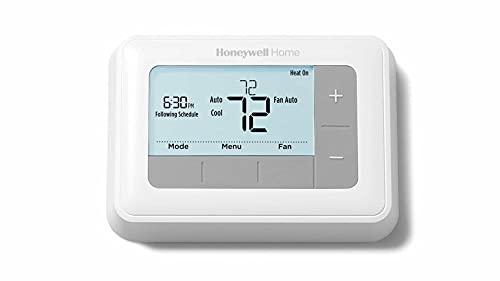
Should you want straightforward, reliable scheduling without fuss, the Honeywell RTH7560E is a solid pick — it gives you seven-day flexible programming so you can set different routines for each weekday, a combined weekend schedule, or one plan for the whole week. You’ll see time, room temperature, and set point at a glance on the extra-large backlit display, no menu digging required. Smart Response Learning adapts run times so your home reaches desired temps whenever you want. UWP mounting simplifies wiring and upgrades, and notifications for filter changes plus low-battery alerts keep maintenance easy. Settings stay saved through outages.
Best For: Homeowners or renters who want a simple, reliable programmable thermostat with flexible 7-day scheduling and easy-to-read display.
Pros:
- 7-day flexible programming allows distinct weekday, weekend, or single-week schedules for tailored comfort.
- Extra-large backlit display shows time, current temperature, and set point at a glance—no menu navigation needed.
- Smart Response Learning and retained settings during outages improve comfort and convenience; UWP mounting simplifies installation.
Cons:
- Lacks Wi‑Fi/smart home connectivity for remote control or app integration.
- Interface and features may be basic compared with newer touchscreen or learning thermostats.
- Physical installation still requires wiring knowledge despite simplified mounting system.
Google Nest Learning Thermostat (4th Gen) + Sensor

Should you want a smart thermostat that learns your routines and fine-tunes comfort throughout rooms, the Google Nest Learning Thermostat (4th Gen) with its included Temperature Sensor is a top pick—especially for households that want automatic energy savings without constant tinkering. You’ll get broad 24V system compatibility and usually won’t need a C wire; check compatibility with Nest’s tool. Control it via Google Home, Alexa, or Siri, and enjoy Matter support for smart-home integration. The larger Responsive Farsight display is easy to read, and multiple sensors let you target rooms. Adaptive Eco and learning features can cut energy use by up to 31%.
Best For: Households and smart-home users who want a learning thermostat that automates comfort and energy savings across multiple rooms with easy app and voice control.
Pros:
- Learns routines and fine-tunes heating/cooling to reduce energy use (up to ~31%) with minimal manual adjustment.
- Broad 24V system compatibility, usually no C wire required, and includes a Temperature Sensor to manage hot/cold spots.
- Works with Google Home, Alexa, Siri, and Matter for seamless smart-home integration and remote control.
Cons:
- Advanced features and full setup depend on the Google Home ecosystem and app familiarity.
- Some installations may still require checking compatibility or a professional install if wiring differs.
- Additional sensors for whole-home coverage add extra cost.
Non-Programmable Single-Stage Home Thermostat with Backlight

In case you want a straightforward, easy-to-read thermostat for a conventional single-stage heating and cooling setup, this non-programmable model is a great fit—especially for older homes without a C-wire. You’ll get a large 3-inch white backlit LCD with clear numerals, ±1°F accuracy, and adjustable heat/cool swing (0.2–2°F). It supports 1 Heat/1 Cool conventional systems, mounts easily with included hardware, and runs on 24VAC or two AAA batteries. It’s not for multi-stage, heat pump, or line-voltage systems. Features include selectable 5-minute compressor delay, low-battery indicator, BACnet MS/TP connectivity, 2-year warranty, and 24/7 support.
Best For: homeowners with conventional single-stage (1H/1C) heating and cooling systems—especially in older homes without a C-wire—who want a simple, easy-to-read non-programmable thermostat.
Pros:
- Large 3-inch white backlit LCD with clear numerals and ±1°F accuracy for easy readability.
- Dual power options (24VAC hardwire or 2 AAA batteries) making it retrofit-friendly without a C-wire.
- Adjustable heat/cool swing and selectable 5-minute compressor delay for equipment protection and comfort tuning.
Cons:
- Not compatible with multi-stage systems, heat pumps, line-voltage systems, mini-splits, PTACs, or certain hydronic/RV setups.
- Non-programmable — lacks scheduling features found in smart or programmable thermostats.
- Limited to basic controls and plastic build; advanced connectivity/features beyond BACnet MS/TP are not supported.
meross Matter Smart Wi‑Fi Thermostat for Electric Baseboards
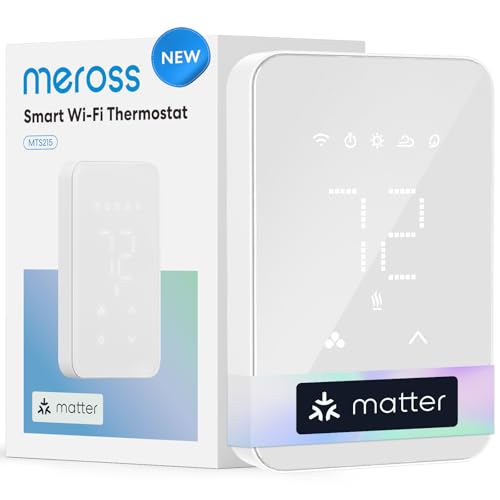
Should you run electric baseboard or convector heaters and want full Matter-compatible smart-home control, the meross Matter Smart Wi‑Fi Thermostat is a clear pick: it’s built for 120–240 VAC systems and lets you manage heating via Alexa, HomeKit, Google Home, and SmartThings all at once. You’ll use it for baseboard, convector, or fan‑forced heaters but not 24V heat pumps or central AC. Wi‑Fi and Matter enable voice, app, and remote control. Set smart schedules, view a 24/7 visual timetable, monitor real‑time energy use, check historical consumption, and rely on open‑window detection to avoid wasted heating.
Best For: homeowners or renters with 120–240 VAC electric baseboard, convector, or fan‑forced heaters who want full Matter‑compatible smart‑home control across Alexa, HomeKit, Google Home, and SmartThings.
Pros:
- Universal Matter compatibility lets you control the thermostat via voice and apps across multiple smart-home platforms simultaneously.
- Built for high‑line voltage electric heating (120–240 VAC) with smart scheduling, 24/7 visual timetable, and open‑window detection for energy savings.
- Real‑time energy monitoring and historical usage data in the Meross app help track consumption and promote efficiency.
Cons:
- Not compatible with 24V HVAC systems such as heat pumps or central air conditioning.
- Requires Wi‑Fi and a Matter‑compatible smart‑home setup for full functionality, which may complicate installation for some users.
- Installation involves high‑voltage wiring (120–240 VAC), which may require professional installation for safety and code compliance.
ecobee Smart Thermostat Enhanced — Voice Assistant Compatible
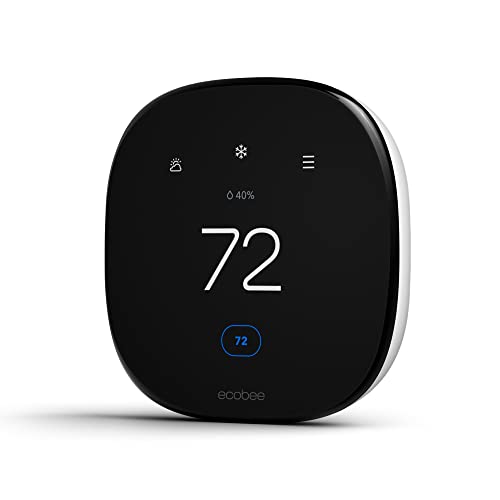
In case you want a thermostat that learns your schedule, saves energy, and works with Siri, Alexa, or Google Assistant, the ecobee Smart Thermostat Improved is a top pick — especially for households that value occupancy-driven comfort and remote control. You’ll get Energy Star–rated efficiency, up to 26% annual savings, and automatic away adjustments versus a 72°F hold. Built-in radar occupancy preheats or precools before arrival, while additional SmartSensors extend room-level control. It supports most 24 VAC systems, includes PEK and Trim Kit for C‑wire-free installs, and hardwires for continuous power. Control it via ecobee apps or your voice.
Best For: Households seeking an energy-efficient, occupancy-aware smart thermostat that integrates with Siri, Alexa, or Google Assistant and supports most 24 VAC HVAC systems.
Pros:
- Saves up to 26% annually and is Energy Star certified for proven energy efficiency.
- Built-in radar occupancy sensor plus optional SmartSensors provide room-level comfort and preheating/precooling before arrival.
- Includes Power Extender Kit and Trim Kit for easy DIY installation on homes without a C‑wire and hardwires for continuous power.
Cons:
- May be unnecessary for very small homes or renters without control over HVAC systems.
- Compatibility, while broad (90% of systems), still requires checking for some less common HVAC setups.
- Advanced features and integration may have a learning curve for users new to smart-home thermostats.
Google Nest Learning Thermostat (3rd Gen, Stainless Steel)

Should you want a thermostat that learns your routine and trims energy waste without constant tweaking, the Nest Learning Thermostat (3rd Gen) is a solid pick. You’ll get automatic scheduling as it learns preferred temperatures, plus Home/Away Assist that drops to an Eco setting once you leave. Use your phone, tablet, or laptop to change settings remotely. Energy History and a Quick View display show usage and reasons, while the Nest Leaf flags efficient choices. It monitors HVAC performance and sends maintenance alerts. For precise room control, pair it with a Nest Temperature Sensor (sold separately).
Best For: tech-savvy homeowners who want a smart, self-programming thermostat that reduces energy waste and can be controlled remotely.
Pros:
- Learns your schedule and programs itself to save energy and maintain comfort.
- Home/Away Assist and remote control via phone/tablet/laptop for automated and on-the-go adjustments.
- Energy History, Nest Leaf guidance, and HVAC alerts help track efficiency and prevent system issues.
Cons:
- Precise room-level temperature control requires purchasing separate Nest Temperature Sensor.
- Compatibility and installation may be tricky with some HVAC systems, potentially requiring professional help.
- Higher upfront cost compared with basic programmable or manual thermostats.
Bosch Connected BCC50 Wi‑Fi Smart Thermostat

Should you want a smart thermostat that blends simple touch controls with broad smart‑home compatibility, the Bosch Connected BCC50 is a solid pick. You can connect to HVAC equipment remotely and control temperature from anywhere, and it works with Google Home and Alexa for voice control. The color touchscreen and five illuminated touch buttons make local operation straightforward. You’ll get auto-on safety control with app alerts and HVAC filter notifications to simplify maintenance. It supports up to four preset or custom schedules to save energy, fits most HVAC systems, and requires a C‑Wire for installation.
Best For: homeowners who want an easy-to-use smart thermostat with touch controls, voice assistant compatibility (Google Home/Alexa), and remote HVAC monitoring for safety and maintenance reminders.
Pros:
- Simple color touchscreen with five illuminated touch buttons for intuitive local control.
- Remote access and integration with Google Home and Alexa for convenient voice and app control.
- Auto-on safety alerts and HVAC filter reminders help simplify maintenance and improve safety.
Cons:
- Requires a C‑Wire for installation, which may complicate setup in older homes without one.
- Limited to up to four preset or user-defined schedules, which may be restrictive for complex routines.
- Compatibility is broad but not universal—some HVAC systems may still be unsupported.
Factors to Consider When Choosing a Connected Thermostat
Before you pick a connected thermostat, I check that it’s compatible with my heating and cooling system and meets the wiring or power requirements. I also consider how well it integrates with my smart home platform, whether its scheduling is flexible enough for my routine, and which energy-saving features actually cut costs. Those factors together determine usability, savings, and long-term satisfaction.
System Compatibility
Before I pick a connected thermostat, I initially confirm it matches my HVAC type—single- or multi-stage systems, heat pumps, or electric baseboards—so I don’t end up with a unit that can’t control my equipment. I always verify voltage: low-voltage (24V) versus high-line (120–240V) matters for safe wiring. I check whether the thermostat needs a C-wire or can work without one; that decision often dictates whether I need rewiring or a power adapter. I also confirm compatibility with specific components—conventional furnaces, forced air, radiant floors, boilers, or mini-split systems—since some models don’t support hybrid or multi-stage setups. At times of doubt, I use manufacturers’ compatibility checkers or consult their system requirements before buying.
Smart Home Integration
Upon I pick a connected thermostat, I weigh how well it joins my existing smart-home setup—voice control through Alexa, Google Assistant, or Siri, and compatibility with hubs like SmartThings or Matter can make daily use much smoother. I look for native support in HomeKit or Google Home so devices appear together and automations are simpler. Remote app control is essential: I want reliable, responsive temperature adjustments and schedules from anywhere. I also value integration with occupancy and remote temperature sensors to balance comfort across rooms and avoid overheating unused spaces. Finally, I check whether the thermostat participates in platform automations — reacting to routines, weather, or presence — because those rules deliver real energy savings with minimal effort.
Power Requirements
At that moment I pick a connected thermostat, I initially check how it will get power, since compatibility with my HVAC wiring determines whether installation will be simple or need extra parts. I confirm whether my system provides a C-wire for steady 24V power or in case the thermostat will rely on internal batteries. In the event that my system lacks a C-wire, I look for models that offer power extender kits or dual power modes to avoid rewiring. I also verify whether the HVAC is a low-voltage 24V system or a high-voltage line system (120–240 VAC), since line-voltage heaters need thermostats built for that power. Checking voltage and wiring compatibility before buying keeps the thermostat functional and prevents installation headaches.
Scheduling Flexibility
At the moment I’m choosing a connected thermostat, I look closely at scheduling flexibility because it determines how well the device fits my daily routine and energy goals. I prefer models that let me set separate weekday and weekend programs or unique schedules for individual days so temperature matches activity patterns. Multiple daily time periods are useful: I can have distinct settings for morning, workday, evening, and sleep. Adaptive scheduling that learns my habits and adjusts gradually is appealing whenever it reliably reflects actual behavior. Remote schedule edits via app or voice control let me respond to sudden plans without fuss. Clear visual schedule displays and intuitive programming menus make setup painless and keep me engaged with maintaining comfortable, consistent settings.
Energy Savings Features
Scheduling options are great, but I also look for features that actively cut energy use so comfort doesn’t come at a high cost. I value learning thermostats that adapt to my routine, trimming run times without constant input. Occupancy sensors are a must—they drop temperatures in unused rooms automatically, which saves more than manual tweaks. I appreciate adaptive eco modes that use outdoor temperature data to fine-tune indoor settings, especially during shoulder seasons. Real-time energy monitoring and historical trends let me spot wasteful patterns and confirm savings from changes I make. Automated vacation modes and smart schedules handle absence and sleep periods, preventing unnecessary heating or cooling. Together, these features turn convenience into measurable energy and cost reductions.
Installation Ease
Because installing a connected thermostat can be the difference between a weekend DIY win and a costly service call, I focus initially on compatibility and wiring needs—does it match my HVAC type, and will I need a common (C) wire for power? From there I pick models with simple mounting systems or included installation kits to streamline the process and future upgrades. Clear, step-by-step guides and accessible professional support matter whenever wiring or configuration looks tricky. I honestly assess whether I’m comfortable with self-installation or should hire a pro for complex systems. Finally, I verify backup memory so programming persists through power outages, saving me from repeat setup. Prioritizing these points keeps installation painless and reliable.
