

Last week I swapped my old hallway bulb for meross multicolor LEDs and noticed instant HomeKit convenience. I’ll walk you through seven top picks for 2026 that balance Apple ecosystem polish with better video, AI detection, and Matter readiness. I’ll point out which devices I’d trust for privacy, firmware longevity, and real-world automation — and which ones I’d skip should future-proofing matters to you.
meross Smart Plug Power Strip with 4 Outlets, 4 USB

Should you need a compact, multi-device hub for HomeKit that also charges phones and tablets, the meross Smart Plug Power Strip is a great choice—it’s a great choice. You get four individually controlled AC outlets (15A total) and four group-controlled USB ports providing up to 4.0A combined, so you can power appliances and charge phones or tablets without extra adapters. It joins any 2.4GHz or dual-band WiFi network—no hub required—and supports HomeKit, Siri, Alexa, Google Home, and SmartThings. Use the meross app for remote control, timers, and sunrise/sunset schedules; the unit adds safety with ETL/FCC approvals and flame-retardant housing.
Best For: Compact smart-home users who want HomeKit compatibility plus multi-device charging and individually controlled outlets for desks, entertainment centers, or small offices.
Pros:
- Supports HomeKit, Siri, Alexa, Google Home, and SmartThings for broad voice/control compatibility.
- Four individually controlled AC outlets (up to 15A) plus four USB ports (4.0A combined) for powering appliances and charging devices without extra adapters.
- No hub required (works on 2.4GHz/dual-band WiFi) with remote control, scheduling, and sunrise/sunset automation via the meross app.
Cons:
- USB ports are group-controlled rather than individually switched.
- Requires Apple TV (4K/HD) or iPad as a bridge for HomeKit remote access.
- Total USB output (4.0A) may be insufficient for charging multiple power-hungry tablets simultaneously.
eufy Indoor Cam E220 — 2K Pan & Tilt Pet Camera
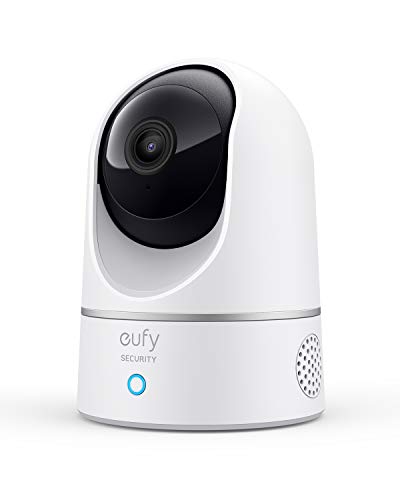
Should you want a pet-friendly camera that actually follows the action, the eufy Indoor Cam E220’s pan-and-tilt with motion tracking delivers true 360° coverage and on-device AI that records only human or pet events so you’re not drowning in footage. You’ll get up to 2K clarity for detailed playback (HomeKit limits you to 1080p), plus motion tracking that locks onto movement for continuous monitoring. It pairs with HomeKit, Google Assistant, and Alexa, and includes a downloadable HomeKit guide. Two-way audio lets you check in and speak to pets or family in real time, all without cloud clutter.
Best For: Pet owners and busy households who want a privacy-friendly, AI-powered indoor camera that actively follows and records pets or people with high-resolution detail.
Pros:
- On-device AI detects and records only human or pet events, reducing unnecessary footage and cloud use.
- Pan-and-tilt motion tracking provides true 360° coverage and locks onto moving subjects for continuous monitoring.
- Up to 2K video quality (1080p with HomeKit), plus two-way audio and compatibility with HomeKit, Google Assistant, and Alexa.
Cons:
- HomeKit integration limits video resolution to 1080p, reducing the max 2K clarity when used with Apple devices.
- Relying on on-device processing may limit some advanced cloud-based features or remote processing options.
- No mention of included local storage options in this description, which could require additional setup or purchase for continuous recording.
meross Smart Wi‑Fi Multicolor LED Bulbs (2-Pack)

Should you want affordable, easy-to-install color bulbs that work seamlessly with HomeKit and other voice assistants, the meross Smart Wi‑Fi Multicolor LED Bulbs are a solid pick—especially for renters or anyone who doesn’t want a hub. You’ll control them via the Apple Home app over 2.4GHz Wi‑Fi or the Meross app remotely; data runs through Amazon AWS and a high-end IoT chipset enhances range and reliability. Each E26 bulb gives up to 810 lumens, 2700–6500K white, RGB colors, and dimming at 9W (≈60W incandescent). Use schedules, timers, and voice commands for arrival lighting, parties, or daily automation.
Best For: renters and budget-conscious smart-home users who want easy, hub-free HomeKit and voice-assistant compatible color bulbs.
Pros:
- Affordable, easy-to-install E26 bulbs that work with HomeKit, Siri, Alexa, Google Assistant, and SmartThings.
- Full-color RGB plus 2700–6500K white range, dimming, and up to 810 lumens at only 9W.
- Remote control and scheduling via Meross and Apple Home over 2.4GHz Wi‑Fi with AWS-backed secure data and extended range chipset.
Cons:
- Requires 2.4GHz Wi‑Fi (no 5GHz), which may require router configuration or separate SSID.
- No hub option for local-only control; cloud dependence could affect functionality if internet/AWS is down.
- Sold only in 2-packs and limited to E26 base, which may not fit all fixtures or preference for single-bulb purchases.
Aqara G100 2K Wi‑Fi 6 Security Camera (HomeKit)
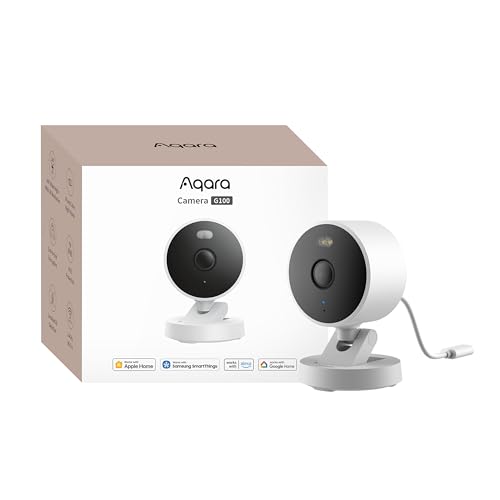
Should you want a HomeKit camera that balances high-resolution daytime footage with versatile night modes, the Aqara G100 is a strong pick—its 2K sensor (2304×1296) and 140° lens give crisp coverage indoors or out, while Spotlight Color Night Vision and covert IR mode let you choose illuminated color or stealthy black‑and‑white recording. You’ll get IP65 weatherproofing for indoor/outdoor use, local motion and person detection, two-way audio, and lens obstruction alerts. HomeKit Secure Video works (caps at 1080p), and cloud/NAS/microSD storage options exist. It uses Wi‑Fi 6 (2.4 GHz only), needs DC 5V/1A power, and offers advanced security features.
Best For: HomeKit users who want higher-than-1080p daytime detail with flexible night-vision options and an outdoor-capable camera that integrates with Apple, Google, and local storage options.
Pros:
- 2K (2304×1296) sensor with 140° wide-angle for crisp daytime coverage and wide field of view.
- Two selectable night modes (color spotlight and covert 940 nm IR) plus IP65 weatherproofing for indoor/outdoor use.
- HomeKit Secure Video support, local motion/person detection, two-way audio, microSD/NAS storage, and Wi‑Fi 6 with WPA3 security.
Cons:
- HomeKit caps streams at 1080p and using Apple/Aqara apps simultaneously limits Aqara app to 1080p until HomeKit disconnects.
- Night-vision modes must be manually activated in the app (do not switch on automatically).
- Only supports 2.4 GHz Wi‑Fi (no 5 GHz) and requires a DC 5V/1A adapter (not included).
TP-Link Tapo C225 2K Pan/Tilt Wi‑Fi Camera

Should you want a versatile, design-forward indoor camera that captures crisp detail day or night, the TP‑Link Tapo C225 is a strong pick: its 2K QHD sensor, 360° horizontal pan/tilt coverage, and large f/1.6 aperture deliver clearer, brighter footage, while physical privacy mode and AI detection keep control and alerts in your hands. You’ll appreciate Red Dot award styling, 2.4 GHz Wi‑Fi support, and a starlight sensor plus selectable 850nm/940nm IR for customizable night vision. AI detects people, pets, vehicles, and baby cries with instant push alerts. Store locally on microSD up to 512GB or opt for cloud history.
Best For: tech-savvy homeowners or renters who want a stylish, versatile indoor camera with high-resolution 2K video, full pan/tilt coverage, strong low-light performance, and AI detection features for security and monitoring.
Pros:
- 2K QHD sensor, large f/1.6 aperture, and starlight sensor deliver clear, bright footage day and night.
- 360° horizontal pan/tilt coverage and customizable 850nm/940nm IR provide comprehensive, flexible monitoring.
- Physical privacy mode plus on-device microSD storage (up to 512 GB) and optional cloud history give control over privacy and recordings.
Cons:
- Requires 2.4 GHz Wi‑Fi only, which may limit network options or performance in crowded bands.
- Some advanced features (30-day history, motion tracking, baby crying detection) require a paid cloud subscription.
- MicroSD card not included, and continuous local storage depends on user purchasing and configuring the card.
Aqara Smart Doorbell Camera G410 with Matter Hub

Should you want a doorbell that doubles as a smart hub, the Aqara Smart Doorbell Camera G410 with Matter Hub is built for multi-device homes—its integrated Zigbee and Matter hub lets you control sensors, lights, and locks right from the doorbell while keeping Apple HomeKit Secure Video, Alexa, Google Assistant, SmartThings, and Home Assistant compatibility. You get 2K Ultra HD video (1600×1200 with HomeKit/Aqara Home), dual-band Wi‑Fi with WPA3, and a 95dB chime. MmWave radar and local face recognition cut false alerts and preserve privacy. Choose encrypted cloud or microSD local storage; microSD sits in the chime to prevent theft.
Best For: homeowners and smart-home enthusiasts who want a doorbell that also serves as a built-in Zigbee and Matter hub for seamless multi-device integration while preserving privacy with local face recognition and HomeKit Secure Video support.
Pros:
- Integrated Zigbee and Matter hub eliminates need for a separate hub and enables direct control of sensors, lights, and locks.
- High-quality 2K video, dual-band Wi‑Fi with WPA3, and a loud 95dB chime for clear monitoring and alerts.
- Advanced mmWave radar and local face recognition reduce false triggers and keep biometric data private.
Cons:
- Resolution limited to 1600×1200 when used with Apple HomeKit or Aqara Home, reducing full 2K quality.
- MicroSD card not included; local storage relies on internal chime slot which may be less convenient to access.
- Third-party USB dongles and Zigbee2MQTT are not officially supported, limiting some advanced integrations.
eufy Security Indoor Camera E30 — 4K UHD Home Camera
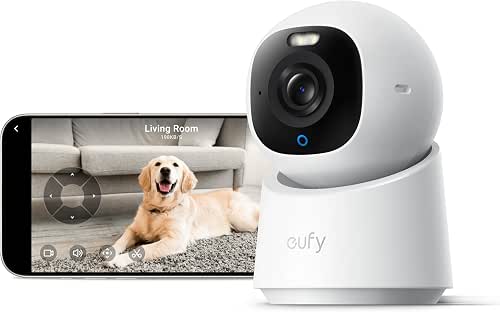
Should you want ultra-clear home monitoring, the eufy Security Indoor Camera E30 delivers 4K detail and 24/7 continuous recording so you won’t miss a moment. You’ll get color night vision with a built-in spotlight that deters intruders and switches to infrared as needed. On-device AI distinguishes people, pets, and sounds like crying, and it automatically tracks activity so you capture full events. Use the 360° panoramic view and Quick Focus Tap in the app to instantly check any area, plus two-way audio to communicate. It supports HomeKit (to 1080p), Alexa, Google, local SD storage, and optional cloud.
Best For: Homeowners or parents who want ultra-clear 24/7 indoor monitoring with smart on-device detection and tracking for people and pets.
Pros:
- 4K UHD resolution with 24/7 continuous recording and color night vision for detailed, round-the-clock footage.
- On-device AI that distinguishes people, pets, and sounds (including crying) plus automatic tracking to capture full activity.
- Local SD storage (no subscription required) with HomeKit/Alexa/Google integration and two-way audio for real-time communication.
Cons:
- HomeKit support is limited to 1080p, not full 4K.
- SD card sold separately (additional cost) and cloud storage is optional/paid.
- High-resolution continuous recording may require significant local storage and network bandwidth.
Factors to Consider When Choosing Homekit Products
Before you pick any HomeKit gear, I’ll look at five key factors that really matter: device compatibility, security and privacy, connectivity requirements, automation capabilities, and power and performance. I’ll explain how each affects daily use and whether a product will fit into your existing setup. Upon the end you’ll know which trade-offs to watch for as you are choosing HomeKit devices.
Device Compatibility
How do you know a HomeKit device will actually work in your setup? I always check for native HomeKit support or compatibility via a hub so the Home app and Siri control work seamlessly. I confirm whether remote access or automations need an Apple TV or iPad acting as a bridge; that changes placement and cost. For cameras I verify HomeKit Secure Video limits—some models drop resolution or features compared with their apps. I also make certain the device supports the Wi‑Fi band my network uses, since many only work on 2.4 GHz. Finally, I review whether advanced features—notifications, AI detections, face recognition—are available in HomeKit or locked behind the maker’s app, so expectations match reality.
Security & Privacy
During the period I pick HomeKit gear I prioritize security and privacy above flashy features, because a compromised camera or hub undermines everything else; I look for end‑to‑end encryption for video and data, hubs that enforce authenticated access and modern Wi‑Fi security like WPA3, and devices that can process sensitive detection tasks locally so footage or events don’t have to leave my home. I also verify local storage options with strong access controls so I’m not forced into cloud dependence. Favor products offering on‑device AI for motion or face detection, and check for privacy conveniences like physical lens covers or manual night‑vision switches to prevent unwanted recording. These measures keep my system resilient and my household data private.
Connectivity Requirements
Security and privacy set the baseline, but your setup only works provided devices can actually talk to each other reliably—so I focus next on connectivity requirements. I prioritize 2.4GHz Wi‑Fi compatibility since many HomeKit devices don’t support 5GHz; that affects placement and router settings. I also check whether a dedicated Apple hub—Apple TV, HomePod, or an iPad—is required for remote access and certain features. WPA3 support matters to me for stronger wireless security. For devices using Zigbee or Matter, I confirm compatible bridges or hubs beforehand to avoid integration headaches. Finally, I consider range: devices that play nicely with mesh systems or offer extended Wi‑Fi range reduce dropouts and make the whole HomeKit experience far more dependable.
Automation Capabilities
Because my goal is to make daily routines invisible, I prioritize HomeKit devices with flexible automation: scheduling (timers, sunrise/sunset), multi‑trigger rules that combine sensors and conditions, and customizable actions like dimming or color shifts. I look for gear that lets me chain events — motion plus time of day, or door sensor plus presence — so scenes behave intelligently without my input. Remote management from the Home app means I can tweak or trigger automations whenever I’m away, which saves energy and prevents false positives. Siri support is nonnegotiable for hands‑free overrides. Finally, I favor devices that expose granular action options (color temperature, brightness steps, power state) so automations feel natural and truly customized to my home.
Power And Performance
Good automation won’t mean much in case devices can’t keep up, so I also pay close attention to power and performance every time choosing HomeKit gear. I prioritize stable Wi‑Fi connectivity—ideally 2.4GHz or dual‑band—so devices stay responsive in HomeKit scenes. For smart plugs and power strips I check maximum load ratings to avoid overloads and guarantee safe operation. With cameras and sensors I evaluate resolution and processing for clear images and reliable detection across lighting conditions. I also weigh power consumption efficiency to balance performance with energy savings and longer device life. Finally, I look for advanced protocols and strong security like WPA3 so performance isn’t undermined through connectivity or safety weaknesses.
Installation And Support
Upon I bring a new HomeKit device into my setup, I initially confirm it plugs neatly into Apple’s ecosystem and won’t need surprise add‑ons like a separate hub or bridge to work remotely. I check explicit HomeKit support and which iOS versions and Apple TVs or iPads are required for remote control and automations. In the event a hub is necessary, I weigh its cost and placement impact. I look for clear setup guides, an intuitive app, and straightforward troubleshooting steps so I can install and schedule without frustration. Ultimately, ongoing manufacturer support matters: timely firmware updates, active security patches, and responsive customer service keep devices reliable and compatible as iOS evolves. Good support saves time and future headaches.
