

You want straightforward protection against carbon monoxide without guesswork or constant maintenance. These five plug‑in detectors combine reliable electrochemical sensors, clear PPM readouts, loud alarms and useful extras like battery backup, temperature displays and peak memory. I’ll walk you through models that fit different needs and budgets so you can pick the right one for bedrooms, kitchens or the garage — and avoid common pitfalls that undermine safety.
| 6-in-1 Carbon Monoxide Gas & Smoke Detector | Professional Grade | Power Type: AC plug-in with rechargeable battery backup | CO Sensing: Electrochemical CO sensor | Audible Alarm: ≥85 dB audible alarm | VIEW LATEST PRICE | Our Analysis | |
| 3-Pack Plug-in Carbon Monoxide Detector with Display | Family Pack | Power Type: AC plug-in (plug-and-play) | CO Sensing: Electrochemical CO sensor | Audible Alarm: 85 dB alarm | VIEW LATEST PRICE | Our Analysis | |
| Kidde Plug-In Carbon Monoxide Detector with Battery Backup |
| Trusted Classic | Power Type: AC plug-in with 2×AA battery backup | CO Sensing: CO detector (electrochemical implied) | Audible Alarm: 85 dB alarm | VIEW LATEST PRICE | Our Analysis |
| First Alert CO615 Plug-In Carbon Monoxide Detector |
| Reliable Choice | Power Type: AC plug-in (120V) with 2×AA battery backup | CO Sensing: Electrochemical CO sensor | Audible Alarm: 85 dB alarm | VIEW LATEST PRICE | Our Analysis |
| Plug-in Natural Gas Propane & CO Detector | Multi-Gas Monitor | Power Type: AC plug-in (110–220V) | CO Sensing: CO sensor (part of 4-in-1) | Audible Alarm: ≥85 dB audible alarm | VIEW LATEST PRICE | Our Analysis |
More Details on Our Top Picks
6-in-1 Carbon Monoxide Gas & Smoke Detector
Professional Grade
View Latest PriceShould you need a single, portable unit that watches for carbon monoxide, combustible gas, and smoke—whether at home, in an RV, or on a camping trip—the 6-in-1 Plug-In Carbon Monoxide, Gas & Smoke Detector is a strong choice because it combines electrochemical CO sensing, a photoelectric smoke sensor, and a combustible gas sensor with a rotatable color display and battery backup for uninterrupted protection. You’ll get real-time readouts on a 2.8-inch rotatable screen for CO, gas, temperature, and humidity, plus 85 dB+ alarms, LED indicators, and a one-button self-test. The magnetic base and rechargeable battery make placement flexible and reliable.
- Power Type:AC plug-in with rechargeable battery backup
- CO Sensing:Electrochemical CO sensor
- Audible Alarm:≥85 dB audible alarm
- Digital Display:2.8″ rotatable color digital display (CO, gas, smoke, temp, humidity)
- Multi‑sensor / Combination Detection:6-in-1 (CO, combustible gas, smoke, temperature, humidity, battery backup)
- Intended Use / Locations:Home, RV, travel, camper, cabin
- Additional Feature:Magnetic detachable base
- Additional Feature:Rotatable 2.8″ screen
- Additional Feature:Rechargeable Li‑poly battery
3-Pack Plug-in Carbon Monoxide Detector with Display
Family Pack
View Latest PriceLooking for a simple, reliable way to keep inhabited spaces safe from carbon monoxide? You’ll appreciate this 3-pack plug-in CO detector with display. It shows real-time CO (PPM), temperature (°F), and humidity on a large round digital screen with color indicators, so you always know conditions at a glance. The 3-in-1 sensors combine electrochemical CO detection with temperature and humidity sensing for high sensitivity and continuous monitoring. Its bright mirror finish and durable PC construction plug in easily for instant use. Should CO hits the default threshold, an 85 dB alarm sounds immediately to warn you.
- Power Type:AC plug-in (plug-and-play)
- CO Sensing:Electrochemical CO sensor
- Audible Alarm:85 dB alarm
- Digital Display:Large round digital display (CO, temperature, humidity)
- Multi‑sensor / Combination Detection:3-in-1 (CO, temperature, humidity)
- Intended Use / Locations:Home, RV, apartment
- Additional Feature:3‑pack value bundle
- Additional Feature:High‑gloss mirror finish
- Additional Feature:Always‑on status display
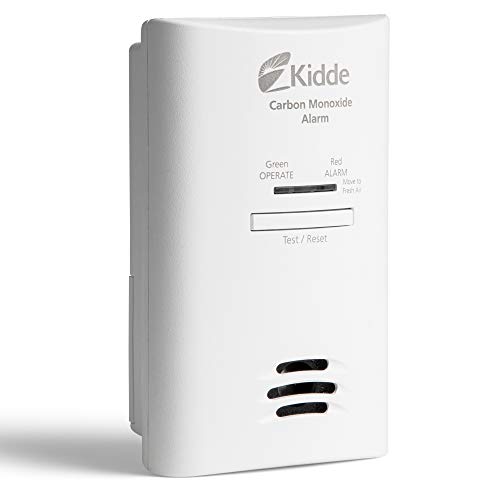
Kidde Plug-In Carbon Monoxide Detector with Battery Backup
Should you want a low-fuss CO detector that keeps working through outages, the Kidde plug-in with AA battery backup is a great choice for apartments and homes with frequent power interruptions. You plug it into any standard 120V outlet and insert two AA batteries so it stays active during outages. Once CO reaches dangerous levels, an 85-decibel alarm warns you immediately. A Peak Level Memory records the last CO event or test, helping you track incidents. Use the Test-Hush button to check operation or silence false alerts. Installation is simple—plug in and rely on continuous detection for occupant safety.
- Power Type:AC plug-in with 2×AA battery backup
- CO Sensing:CO detector (electrochemical implied)
- Audible Alarm:85 dB alarm
- Digital Display:Digital display (peak memory) — shows CO (implied)
- Multi‑sensor / Combination Detection:CO-only detector with backup (primary CO detection)
- Intended Use / Locations:Home (standard outlet locations)
- Additional Feature:Peak level memory
- Additional Feature:Test‑Hush button
- Additional Feature:Uses AA backup cells
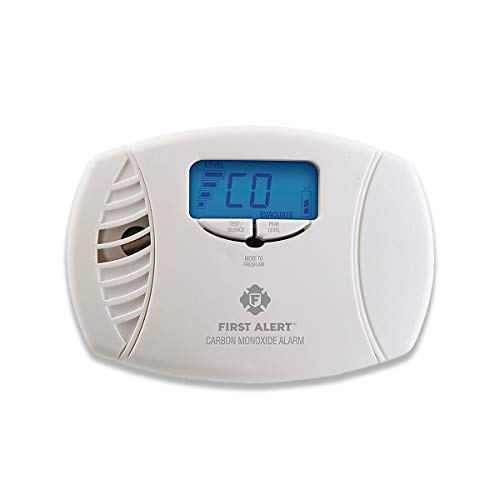
First Alert CO615 Plug-In Carbon Monoxide Detector
In case you want a straightforward, continuously powered CO monitor for bedrooms or each floor of your home, the First Alert CO615 plugs into any standard 120V outlet and gives you a clear digital readout plus battery backup so it keeps protecting you during outages. You get an electrochemical sensor that displays current and peak CO in PPM on a backlit LED and emits an 85 dB alarm at dangerous levels. Install one per level and in sleeping areas; the unit offers test/silence, low-battery and end-of-life chirps, UL listing, and a seven-year limited warranty for reliable, long-term protection.
- Power Type:AC plug-in (120V) with 2×AA battery backup
- CO Sensing:Electrochemical CO sensor
- Audible Alarm:85 dB alarm
- Digital Display:Backlit digital LED display (CO PPM and peak level)
- Multi‑sensor / Combination Detection:CO-only detector (electrochemical CO sensor)
- Intended Use / Locations:Home (each level/bedroom recommended)
- Additional Feature:UL listed certification
- Additional Feature:7‑year limited warranty
- Additional Feature:End‑of‑life chirp
Plug-in Natural Gas Propane & CO Detector
Multi-Gas Monitor
View Latest PriceShould you need a compact, plug-and-play sensor that watches for both carbon monoxide and natural gas (including propane) in real time, the KOABBIT KH885A is a strong choice—its 4-in-1 display shows CO, LEL for natural gas, temperature, and humidity so you’ll get immediate, actionable readings. You plug it into 110–220V AC; after a 180-second startup it shows normal operation with a green light. It detects CO 0–2000 ppm and natural gas 0–10% LEL, alarms at CO ≥150 ppm or gas ≥5% LEL with ≥85 dB sound and flashing red light. It’s compact, sensitive, and highly rated.
- Power Type:AC plug-in (110–220V)
- CO Sensing:CO sensor (part of 4-in-1)
- Audible Alarm:≥85 dB audible alarm
- Digital Display:Real-time digital display (CO, gas, temperature, humidity)
- Multi‑sensor / Combination Detection:4-in-1 (CO, natural gas/propane, temperature, humidity)
- Intended Use / Locations:Home, apartment, RV, hotel, kitchen, camping
- Additional Feature:Natural gas %LEL sensing
- Additional Feature:Wide AC voltage range
- Additional Feature:180‑second startup countdown
Factors to Consider When Choosing a Plug-In Carbon Monoxide Detector
At the time you pick a plug-in CO detector, consider the sensor type, whether it’s electrochemical or semiconductor, and how that affects accuracy and lifespan. Check power options and battery backup, loudness levels for your space, and whether the display is clear and readable. Finally, reflect about installation and placement so the unit can detect gas where you need it most.
Sensor Type Choice
Choose a plug-in carbon monoxide detector with the right sensor technology to guarantee accurate, timely alerts—electrochemical sensors are the industry standard because they react directly with CO, offering the best accuracy and long-term stability. You should avoid photoelectric or metal-oxide-only units for CO detection since those are tuned to smoke or can suffer cross-sensitivity and false readings. Check sensor response time and detection range (many cover 0–1000+ ppm); pick a model that alarms well below lethal concentrations. Verify the sensor’s rated service life—commonly 5–10 years—and prefer devices that signal clearly whenever the sensor reaches end-of-life. Finally, choose detectors with calibration or automated self-test features so you can confirm ongoing accuracy without guesswork.
Power And Backup
After you’ve picked the right sensor technology, power and backup arrangements determine whether your detector will keep protecting you during outages or moves. Choose units with dual power—AC plug plus battery backup—so monitoring continues during outages. Verify battery type and runtime: AA backups offer limited hours, while built-in rechargeable lithium-ion/polymer cells usually run longer between charges. Make sure the backup is replaceable or rechargeable and that the device gives low-battery alerts (audible and/or visual). Confirm power specs (voltage, wattage) match your outlet and that the detector indicates when it’s on AC versus battery. Should you require portability, look for cord-free options or detachable/magnetic adapters combined with internal battery backup for RVs, travel, or temporary placements.
Alarm Loudness Levels
Although many residential CO alarms put out about 85 dB at 10 feet, that level won’t guarantee you’ll hear it through closed doors or over loud background noise, so check the stated decibel rating and consider tone, alerts, and placement to secure reliable detection. You should aim for 85 dB or higher but recall audibility falls fast with distance and barriers. Pay attention to tone patterns and frequencies—higher-frequency, pulsed tones are easier for most adults to detect than low, monotone signals. Look for multi-modal alerts (audible plus flashing lights or visual indicators) in case anyone in your home has hearing issues or you run noisy equipment. Finally, account for home layout and bedroom door positions; use multiple detectors per floor or strategic placement to make certain alarms reach sleeping occupants.
Display And Readability
Whenever you’re evaluating plug‑in CO detectors, make sure the display gives a clear, real‑time reading in parts per million (ppm) with large, high‑contrast numerals and backlighting so you can read it from across a room or in dim light. You’ll want numeric ppm values front and center so you can assess exposure immediately, not just rely on an alarm tone. Prefer displays that add color or LED bands (green/yellow/red) to show safe, caution, and dangerous ranges at a glance. In the event the screen also shows temperature or humidity, verify each value is clearly labeled to avoid mistaking readings. Finally, pick a model with a rotatable or wide‑angle display and large fonts so it’s legible from typical bedroom or hallway distances.
Installation And Placement
When you’re choosing and positioning a plug‑in CO detector, consider about where people sleep and how air moves through rooms: put a unit on every level and inside or just outside each bedroom, mount it at knee‑to‑waist height (or follow the manufacturer) rather than near the ceiling, and keep it 3–5 feet from stoves, vents, windows, and humid or obstructed spots so airflow isn’t restricted. Install detectors in reachable locations for monthly testing and maintenance but out of reach of small children. Don’t place units in garages, unfinished attics, or below‑grade spaces where intermittent exhaust causes nuisance alarms; use dedicated monitors there instead. Avoid enclosed cabinets, behind curtains, and directly above fuel‑burning appliances to guarantee timely, reliable detection.
Multi-Gas Detection
Many plug-in detectors now combine sensors for CO, combustible gases, and smoke, so you can cover multiple hazards with a single unit. Whenever choosing one, check sensor types—electrochemical for CO, semiconductor or catalytic for combustible gases, and photoelectric for smoke—and verify their detection ranges: CO often reads 0–2000 ppm, combustible sensors report %LEL. Confirm response thresholds and alarm setpoints for each gas so alerts occur at appropriate safety limits. Prefer units with separate audible/visual alerts and clear digital readouts for each hazard so you instantly know what’s triggered. Consider maintenance: different sensors might have varied lifespans or recalibration needs, which affects long-term reliability and cost. Prioritize transparent specs and replaceable sensors.
Durability And Build
Multi-gas capabilities are great, but a detector’s long-term reliability depends on how it’s built. You should pick housings made from impact-resistant plastics like ABS or metal alloys so drops, dents, and heat don’t compromise the unit. Check the stated operating humidity and temperature ranges—if your climate sits outside those limits, components will degrade faster. Verify reinforced AC plugs or magnetic adapter retention and secure battery compartments so vibration or battery swaps don’t loosen connections. Prefer models with corrosion- and UV-resistant coatings and sealed sensor compartments to keep moisture, dust, and airborne contaminants away from electronics. Finally, review the manufacturer’s stated sensor lifespan or end-of-life indication; aging sensors and batteries are the primary durability failure modes.
