

You may not know that a thermostat’s scheduling type can cut your heating and cooling bills through double-digit percentages once configured properly. I’ve tested and compared models that range from simple nonprogrammable units to advanced Wi‑Fi thermostats with occupancy sensing, and I’ll walk you through which features actually save energy and which are mostly bells and whistles—so you can pick the right one for your system and start seeing real savings soon.
MAXKOSKO WiFi Smart Programmable Thermostat (2-Pack)

Should you’re outfitting electric underfloor heating and want reliable remote control, the MAXKOSKO 2-pack is a smart choice—its Wi‑Fi connectivity and Smart Life app let you set schedules and adjust temps from anywhere, while Alexa and Google Assistant support keeps voice control simple. You’ll get two white touchscreen thermostats with LED backlights, a 15 ft floor sensor, and clear DIY instructions for 120V/240V systems. You can program precise schedules to cut energy use, monitor usage through the app, and mount them on the wall for easy access. Lightweight and compact, they deliver dependable remote and automated floor-warming control.
Best For: Homeowners or installers of electric underfloor heating who want remotely programmable temperature control with voice assistant compatibility and simple DIY installation.
Pros:
- Wi‑Fi and Smart Life app enable remote control, scheduling, and energy monitoring.
- Compatible with Alexa and Google Assistant for convenient voice control.
- Includes 15 ft floor sensor and clear installation instructions for 120V/240V systems.
Cons:
- Requires a stable Wi‑Fi network and smartphone for full functionality.
- Limited to corded electric underfloor systems (not suitable for hydronic setups).
- May need professional wiring if users are not comfortable with electrical installations.
Vine WiFi Touchscreen Smart Thermostat (2.8″)

Should you want a straightforward, budget-friendly smart thermostat that saves energy without fuss, the Vine WiFi Touchscreen is a smart pick because it combines simple touchscreen controls, app and voice compatibility, and Auto Home/Away to cut wasted heating and cooling whenever no one’s home. You’ll get a 2.8″ color touchscreen, 7-day/8-period scheduling, and Energy Star certification to lower HVAC costs. It works with about 90% of systems (including heat pump and dual fuel) but needs a C-wire; a QR code verifies compatibility prior to purchase. Features include remote control via Vine/Smart Life apps, Alexa/Google voice control, alerts, filter notifications, child lock, and quick DIY setup.
Best For: budget-conscious homeowners or renters who want an easy-to-install, energy-saving smart thermostat with simple touchscreen controls, app/voice integration, and automatic Home/Away features.
Pros:
- Affordable, Energy Star–certified unit with 7-day/8-period scheduling and Auto Home/Away to reduce HVAC costs.
- Remote control via Vine or Smart Life app plus hands-free Alexa and Google Home voice compatibility.
- Quick DIY installation (≈20 minutes) with online guides and a QR code to verify system compatibility.
Cons:
- Requires a C-wire, which may necessitate wiring upgrades in some homes.
- Limited to a 2.8″ touchscreen, which may be small for some users who prefer larger displays.
- Not fully compatible with every HVAC setup (compatible with ~90% of systems), so some systems may be excluded.
Programmable 5-1-1 Digital Thermostat (2H/2C)

Should you want a budget-friendly, programmable thermostat that handles small multi-stage systems, the Miuputake STN615 (5-1-1) is a solid choice because it supports up to 2 heat and 2 cool stages while offering flexible 5-1-1 scheduling for weekday/weekend customization. You’ll get wide system compatibility—forced air, heat only, hot water, millivolt, gas fireplaces and cool-only setups—though it won’t work with heat pumps using auxiliary heat, dual-fuel, line-voltage, mini-splits or electric baseboard. Installation is quick with a universal sub-base and large terminals; it runs on 24VAC or two AAA batteries, needs no C-wire for most systems, and features an easy LCD and button interface.
Best For: Budget-conscious homeowners or renters with small multi-stage (up to 2H/2C) 24VAC HVAC systems who want simple programmable scheduling and easy DIY installation.
Pros:
- Supports up to 2 heat and 2 cool stages with flexible 5-1-1 weekday/weekend programming.
- Wide compatibility with many system types (forced air, hot water, millivolt, gas fireplace, cool-only) and no C-wire required for most systems.
- Easy installation with universal sub-base and large terminals; dual power (24VAC or 2 AAA batteries) and clear LCD with backlight.
Cons:
- Not compatible with heat pumps that use auxiliary/emergency heat, dual-fuel systems, mini-splits, line-voltage or electric baseboard heat.
- Basic button interface and feature set compared with smart Wi‑Fi or app-controlled thermostats.
- Requires batteries for backup and may need a C-wire for heat-only or cool-only setups.
Programmable 5-1-1 Day Thermostat for Single-Stage Systems
Should you run a conventional single-stage heating or cooling system and want reliable, programmable control, the Miuputake STN605 5-1-1 day thermostat is a smart pick—it’s built for forced-air, electric furnace, hot water/steam, and many other single-stage setups (but not multi-stage heat pumps or line-voltage baseboard systems). You’ll get five-one-one day programming with a factory energy-saving preset, adjustable swing, compressor delay protection, and °C/°F calibration. Installation is straightforward with a universal sub-base and large terminal blocks. The backlit LCD, front-load battery compartment, and included hardware simplify setup. It runs on 24VAC with AAA backup and supports one heat/one cool.
Best For: homeowners or renters with conventional single-stage heating/cooling systems (forced air, electric furnace, hot water/steam, or similar) who want an affordable, programmable thermostat with basic energy-saving features.
Pros:
- Easy installation with universal sub-base and large terminal blocks, typically within 30 minutes.
- 5-1-1 day programming with factory energy-saving preset, adjustable swing, and compressor delay protection for efficiency and equipment longevity.
- Backlit LCD, front-load AAA battery backup, and simple push-button interface for straightforward use and reliability.
Cons:
- Not compatible with multi-stage heat pumps with auxiliary/emergency heat, dual-fuel systems, mini-splits, or line-voltage/electric baseboard systems.
- Basic feature set (single heat/one cool) may lack advanced smart/home integration or remote control.
- Plastic, entry-level design and limited warranty details may not suit users seeking premium thermostats or extensive support.
Nonprogrammable Digital Thermostat for Single-Stage Home Systems

Should you want a simple, reliable thermostat for a single-stage heating or cooling setup, this nonprogrammable digital model is a smart pick because it gives clear controls and broad system compatibility without the complexity of scheduling. You’ll get wide support—forced air, electric furnace, hot water/steam, gravity radiant, millivolt, gas fireplaces (24V), floor/wall furnaces, and cool-only systems—though it won’t work with auxiliary heat pumps, dual-fuel, line-voltage, mini-splits, or electric baseboard. Installation’s quick with a universal sub-base and large terminals; it runs on 24VAC or two AAA batteries. The blue backlit display, swing adjustment, compressor delay, and calibration keep operation straightforward.
Best For: Homeowners with a single-stage heating or cooling system who want a simple, reliable, nonprogrammable thermostat with easy installation and clear controls.
Pros:
- Broad compatibility with many single-stage systems (forced air, gas/oil/electric furnaces, hot water/steam, millivolt, gas fireplaces, floor/wall furnaces, cool-only).
- Simple installation and power options—universal sub-base, large terminals, and runs on 24VAC or 2 AAA batteries (no C-wire usually required).
- User-friendly features like blue backlit display, adjustable temperature swing, compressor delay protection, and temperature calibration.
Cons:
- Not compatible with heat pumps that use auxiliary/emergency heat, dual-fuel/hybrid systems, mini-splits, or electric baseboard/line-voltage heating.
- Nonprogrammable—no scheduling or advanced energy-saving programming features.
- Limited to single-stage (1 heat/1 cool) systems and lacks smart/home automation connectivity.
Programmable 5-1-1 Digital Thermostat for Single-Stage Systems
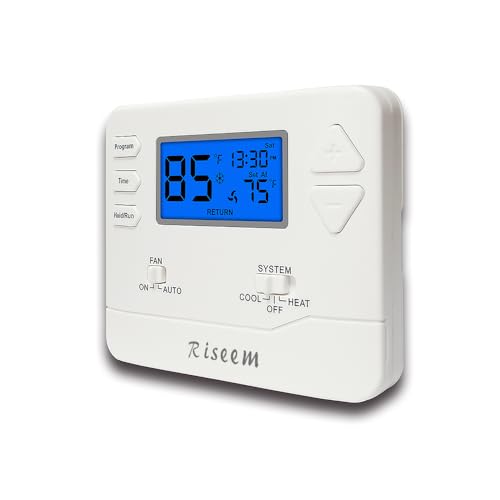
In case you run a single-stage forced-air or heat-only system and want a simple, energy-conscious schedule, this programmable 5-1-1 thermostat is a great fit—why juggle daily tweaks once you can set weekday and two separate weekend routines and forget it? You’ll get broad compatibility with conventional single-stage systems—gas, oil, electric furnaces, radiant heat, millivolt, and cool-only setups—while avoiding complex multi-stage or line-voltage systems. Installation is quick with a universal sub-base and large terminals; it runs on 24VAC or 2 AAA batteries (no C-wire for most installs). Features include compressor delay, adjustable swing, calibration, and 24/7 support.
Best For: homeowners or renters with single-stage forced-air or heat-only HVAC systems who want an easy-to-program, energy-saving thermostat with basic features and simple installation.
Pros:
- Simple 5-1-1 programming (weekday + two weekend schedules) for hands-off energy savings.
- Broad compatibility with conventional single-stage systems and quick installation using a universal sub-base and large terminals.
- Runs on 24VAC or 2 AAA batteries (no C-wire required for most installs) and includes compressor delay, adjustable swing, and calibration.
Cons:
- Not compatible with multi-stage, heat pump systems with auxiliary/emergency heat, dual-fuel/hybrid systems, line-voltage or electric baseboard (110–240V), mini-splits, or 12V RV systems.
- Lacks smart features like Wi-Fi, remote control, or integration with home automation platforms.
- Basic display and push-button controls may be less convenient than touchscreen or app-driven thermostats.
Nonprogrammable Digital Thermostat for Single-Stage Systems

Should you want a simple, reliable thermostat for a single-stage system, this nonprogrammable digital model is a great pick — especially for renters or homeowners who just need basic temperature control without schedules. You’ll get wide compatibility with forced air, electric furnaces, hot water/steam, millivolt, gas fireplaces (24V), floor/wall furnaces, and cool-only systems; confirm compatibility before buying. Installation is DIY-friendly with a universal sub-base and large terminals, typically under 30 minutes. Dual power via 24VAC or two AAA batteries; no C-wire usually required. Features include adjustable swing, compressor delay protection, °C/°F conversion, LCD backlight, and low-battery alert.
Best For: Renters or homeowners with a single-stage heating/cooling system who want a simple, no-frills, easy-to-install digital thermostat for basic temperature control.
Pros:
- Wide compatibility with many single-stage systems (forced air, electric furnace, hot water/steam, millivolt, gas fireplaces 24V, floor/wall furnaces, cool-only).
- Easy DIY installation with universal sub-base, large terminals, and no C-wire required for most setups; dual power via 24VAC or two AAA batteries.
- Useful features for a basic unit: adjustable temperature swing, compressor delay protection, °C/°F conversion, LCD backlight, and low-battery indicator.
Cons:
- Not compatible with heat pumps that use auxiliary/emergency heat, dual-fuel/hybrid systems, mini-splits, electric baseboard (110–240V), line-voltage, or 12V RV systems.
- Lacks programmability and advanced smart features (scheduling, Wi‑Fi, remote control, energy reports).
- Requires a C-wire for heat-only and cool-only systems and may lack the power/features desired for more complex HVAC setups.
Factors to Consider When Choosing an Energy Saving Thermostat
Before you pick a thermostat, I check that it’s compatible with your HVAC system and meets its power and wiring needs. I also weigh programmability and scheduling, smart‑home integration, and the accuracy of sensors and displays since those directly affect energy savings. With those factors in mind, you can narrow options to the models that’ll actually cut your bills.
Compatibility With Systems
Because every HVAC setup is different, I check system compatibility initially whenever picking an energy‑saving thermostat so I know it’ll actually control my heating and cooling. To start, I match the thermostat to my system type — forced air, electric furnace, heat pump, or radiant — since each needs different control logic. I verify voltage requirements (24VAC versus line‑voltage 110–240V) and whether a C‑wire is required or whether battery backup will suffice. For homes with multi‑stage heating or cooling, I confirm the thermostat supports the correct number of stages. I also avoid models incompatible with specialized systems such as heat pumps with auxiliary/emergency heat, dual‑fuel setups, mini‑splits, electric baseboards, or millivolt systems. This prevents installation headaches and guarantees reliable energy savings.
Programmability And Scheduling
During the period I pick a thermostat, I look initially at how flexible its scheduling is and how easy it is to use, since good programmability lets the system cut energy use automatically without constant tinkering. I favor models offering 5-1-1 or full weekly programming with multiple periods per day so I can set weekday, weekend, and varied-day routines that match the times the house is empty or asleep. Auto Home/Away occupancy modes are a big plus because they adjust comfort and savings without me flipping switches. Clear interfaces and preset energy-efficient schedules mean I don’t need technical skills to get benefits. Whenever programmed properly, the thermostat reduces HVAC runtime, lowers bills, and keeps comfort consistent with minimal effort.
Power And Wiring Needs
When selecting a thermostat, I pay close attention to power and wiring because they determine whether a model will actually work in my home and how reliable it will be over time. I look initially at the power source: some thermostats run on 24 VAC from the HVAC system, others on batteries, and a few use both. Many smart units need a C-wire for continuous power, so I check my wall box before buying. Dual-power designs with battery backup are appealing for outages or flaky wiring. I also confirm compatibility with line-voltage systems or electric baseboards, which require specialized thermostats. Finally, I verify support for multi-stage HVAC setups since they demand extra wiring and specific terminals.
Smart Home Integration
Connectivity matters whenever I pick a thermostat, since I want it to talk to my phone, voice assistant, and other smart devices so I can control temperature hands-free and tune settings from anywhere. I prioritize models that work with major smart home platforms so remote adjustments via apps are reliable — that’s key for managing energy as I’m away. I look for seamless scheduling and occupancy-aware features that automate setpoints based on presence, which saves more than manual tweaks. Real-time usage reports and alerts let me spot waste and change habits quickly. Finally, I favor thermostats that integrate cleanly with multiple devices so the whole climate system is centrally manageable, enhancing convenience and total efficiency.
Sensor And Display Accuracy
Because precise sensing and clear displays directly affect both comfort and bills, I always check a thermostat’s sensor and display accuracy prior to buying. Sensor accuracy prevents over- or under-heating that wastes energy, so I favor models with dedicated floor or ambient sensors—especially for underfloor heating where readings must reflect the occupied space. I also look for adjustable temperature differentials (swing) so the system starts and stops at efficient points rather than short-cycling. Display clarity matters: calibrated, backlit screens that switch between Celsius and Fahrenheit reduce mistakes whenever I set targets. Touchscreen controls with clear readouts let me make precise adjustments quickly. In short, accurate sensors plus trustworthy displays translate directly into better comfort and measurable energy savings.
