


Hardwood comes from deciduous trees. It offers significant advantages for many projects. Hardwood is known for its strength, aesthetic appeal, and long life. Its inherent durability makes it a popular choice. This article explores various types of hardwood. It details different wood species, their characteristics, and common uses. Understanding these differences helps in selecting the right hardwood for home projects. This ensures a durable and beautiful result.
Key Takeaways
Hardwood comes from trees that lose their leaves. It is strong and lasts a long time. Softwood comes from trees that keep their needles. It is usually softer and grows faster.
The Janka Hardness Scale tells you how strong wood is against dents. A higher number means the wood is harder. This helps you pick the right wood for floors or other projects.
Different hardwoods like oak, maple, and cherry have unique looks and strengths. Oak is good for floors, maple is very hard, and cherry changes color over time. Choose the wood that fits your project best.
Some woods, like Brazilian Cherry and Wenge, are very hard. Teak is good for outside because it resists water. Bamboo is a grass, but it can be very hard for flooring.
Pick hardwood based on where you will use it. Harder woods are better for busy areas. Keep your wood floors clean and control the humidity to make them last longer.
Hardwood Versus Softwood
Defining Hardwood Characteristics
Hardwood comes from deciduous trees. These trees lose their leaves each autumn. A key anatomical feature classifies wood as hardwood: the presence of vessel elements. People also call these pores. These structures are characteristic of hardwoods. They are absent in softwoods. Hardwood trees typically grow slower. This slower growth often makes their wood denser and stronger. This density contributes to hardwood’s renowned durability.
Defining Softwood Characteristics
Softwood comes from coniferous trees. These trees usually keep their needles year-round. Common examples include pine, spruce, and fir. Softwoods generally grow faster than hardwoods. Their wood is typically less dense. Softwoods do not have vessel elements. They use simpler cellular structures, like tracheids, for water transport and sap production. This simpler structure often makes softwoods easier to cut and work with.
Key Differences in Wood Properties
Hardwood and softwood show clear differences in their properties. Their cellular structures are distinct. Hardwoods have complex cells with specialized vessels. These vessels efficiently transport water and nutrients. Softwoods have a simpler cellular structure. They primarily use longitudinal tracheids and medullary rays for water movement.
Feature | Hardwood | Softwood |
|---|---|---|
Pores (Vessels) | Present (specialized structures for sap conduction, appear as holes under microscope) | Absent (nonporous) |
Cellular Structure | Complex, with specialized vessels | Simpler, primarily longitudinal tracheids and medullary rays |
Water Transport | Vessels | Longitudinal tracheids and medullary rays |
Classification Basis | Presence of pores | Absence of pores |
Hardwood density generally exceeds softwood values. This higher density gives hardwood better wear resistance. It also improves fastener holding and overall stability. Hardwoods like ash, maple, and oak are typically denser and stronger. They suit applications needing high impact resistance. Softwoods, such as pine and spruce, are usually lighter and more flexible. People often use them for framing and lightweight components. Hardwood is generally denser and stronger. This makes it ideal for structural and load-bearing components.
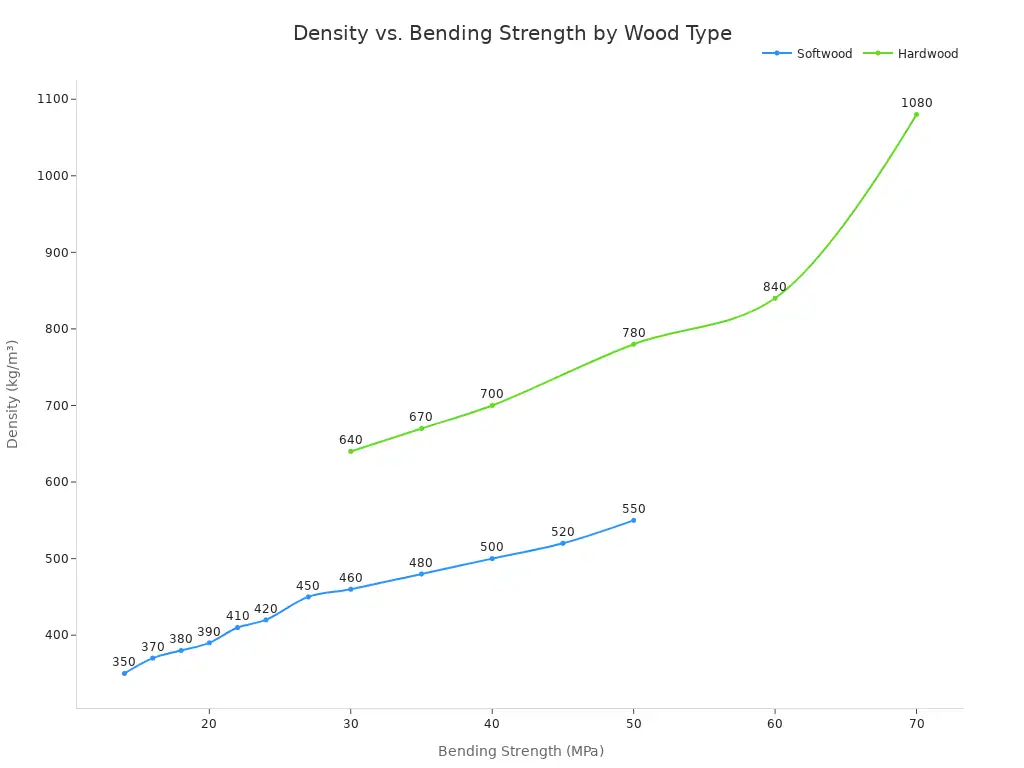
The chart above visually represents these differences. Hardwood consistently shows higher density and bending strength compared to softwood.
Understanding the Janka Hardness Scale
What is Janka Rating
The Janka Hardness Scale measures a wood’s resistance to denting and wear. It provides a standard way to compare the hardness of different wood species. The Janka measurement method is standardized by ASTM International under the code ASTM D143.
This test involves placing an 11.28 mm steel ball on a solid, unfinished, knot-free wood sample. The wood sample has about 12 percent moisture content. A machine then applies a precise force to embed the steel ball halfway into the wood. This creates a 200 square mm hemispherical indentation. The Janka rating is the force needed to achieve this indentation. This rating helps people understand the strength of various hardwood options.
How Janka Hardness Impacts Durability
A higher Janka rating directly correlates with increased resistance to dents, scratches, and overall wear and tear. This is crucial for applications like flooring and decking. The Janka hardness test directly assesses a wood’s resistance to indentation.
It measures the force needed to embed a 0.444-inch steel ball halfway into a piece of wood. Higher Janka ratings signify greater durability. This makes them useful for selecting hardwood for high-traffic areas. A hardwood with a high Janka score will better withstand daily use and abuse. This ensures a more durable surface over time.
Interpreting Janka Scores
Interpreting Janka scores helps in choosing the right hardwood for a project. A higher number means harder wood. For example, a hardwood floor with a Janka rating of 1200 lbf offers good resistance to dents. A hardwood with a rating of 2000 lbf provides even greater durability. This scale helps consumers and builders make informed decisions. They can select wood that matches the expected wear and tear of its intended use. Understanding these scores ensures a long-lasting and beautiful result for any hardwood application.
Exploring Different Types of Hardwood Species
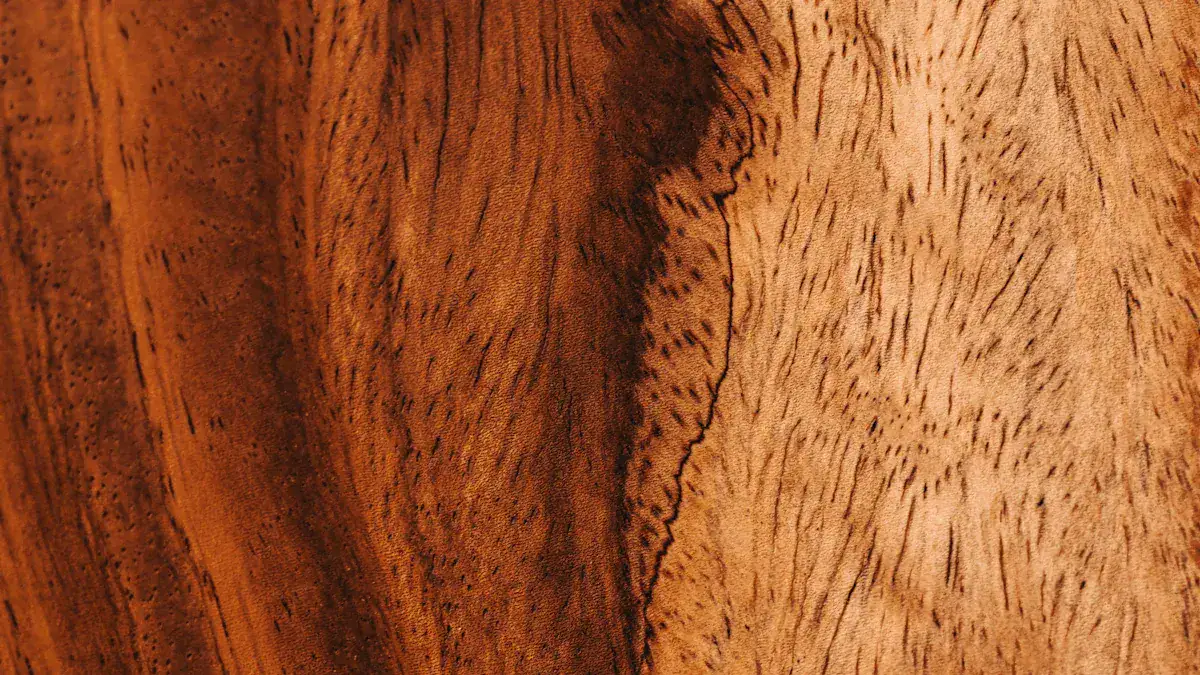
This section details popular hardwood species. For each species, it discusses appearance, grain, Janka rating, common uses, and any special considerations.
Oak
Oak is a widely recognized type of hardwood. It offers excellent durability. This wood species comes in many varieties. Red oak and white oak are the most common.
Red oak heartwood shows a warm, red to pinkish-brown hue. It features a more pronounced grain pattern. This includes distinct color variations. Red oak is more porous. It readily accepts a wide variety of stain colors. White oak has a lighter color. It often has creamy or light brown undertones. It possesses a tighter grain pattern. This results in a more uniform appearance when stained.
Feature | Red Oak | White Oak |
|---|---|---|
Color | Light to medium brown, often with reddish cast | Pale yellow-brown to medium brown, sometimes with slight grayish hue |
Grain | Straight, coarse, uneven texture | Straight, coarse, more even texture |
Pores | Large and open | Smaller, usually filled with tyloses (water and rot resistant) |
Red oak has a Janka Hardness rating of 1290. This places it in the medium range for hardwood flooring. It is less hard than white oak on the Janka scale. Southern red oak varieties may have a lower rating of 1060. White oak has a Janka rating of 1360. Northern red oak has a Janka rating of 1290. Red oak has a Janka rating of 1290. It serves as the industry benchmark. This benchmark compares the relative hardness of different wood species.
Oak is a versatile hardwood. People use it for flooring, furniture, and cabinetry. Its strength and attractive grain make it a top choice among hardwood tree species. White oak’s closed pores make it water-resistant. This makes white oak suitable for outdoor furniture and boat building.
Maple
Maple is another popular type of hardwood. It comes in hard maple and soft maple varieties. Hard maple is very dense. It has a Janka hardness rating of approximately 1450. This positions it among the hardest domestic hardwoods. Soft maple has lower density and hardness. It has a Janka hardness rating of around 950. This makes it softer and less dense than hard maple.
Wood Type | Janka Hardness Rating |
|---|---|
Hard Maple | 1450 |
Curly Hard Maple | 1450 |
Quarter Sawn Maple | 1450 |
Bark Pocket Maple | 1450 |
Hard Maple Burl | 1450 |
Spalted Maple | 1450 |
Rift Sawn Hard Maple | 1450 |
Curly Soft Maple | 950 |
Soft Maple | 950 |
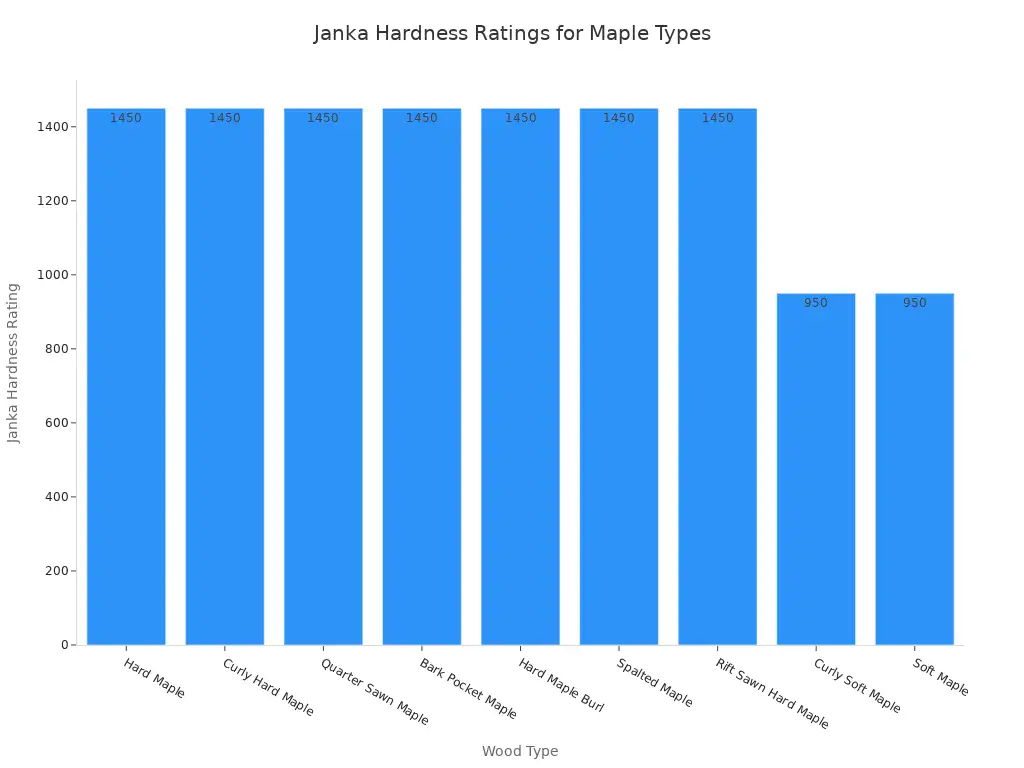
Maple wood has a fine, even grain. Its color ranges from creamy white to light reddish-brown. Hard maple possesses exceptional hardness and stability. This makes it an ideal material for flooring applications.
It withstands heavy foot traffic. It is resilient to wear. This is crucial for high-traffic areas. Gymnasiums and dance floors use maple. Hard maple is a popular choice for long-lasting and aesthetically pleasing hardwood flooring. Maple wood is highly valued for kitchen applications. Butcher blocks and cutting boards use maple. Its non-porous nature and resistance to moisture are beneficial.
Its toughness for daily use also helps. Hard maple’s solid nature leads to its use in various products. These include baseball bats, flooring, and rolling pins. It is notably used for butcher blocks and cutting boards. The National Sanitation Foundation (NSF) approves maple for commercial kitchen use. John Boos’ maple cutting boards are NSF certified. Scientific evidence supports that wooden boards, including maple, are safe. They inhibit bacterial growth around food. They use capillary action to trap and suffocate bacteria within the wood’s cells. Hardwood lumber of maple also finds use in furniture making.
Cherry
Cherry wood, particularly American cherry, is prized for its rich color. It has a fine, straight grain. Its color naturally deepens and darkens over time. This happens primarily through oxidation. UV light exposure causes this change. The majority of this color change, about 80%, occurs within the first year. If the wood is in a particularly sunny location, this oxidation can happen even faster.
It often happens within the first three months. Initially, the wood appears as a light, pink-toned color. It then gradually transforms into a medium red tone. This happens as it ages and is exposed to sunlight. American cherry wood’s interaction with UV light is a key factor. After sanding, the wood returns to its original pale red. Over the subsequent 10 to 15 years, this color gradually deepens to a richer red. It eventually becomes a medium brown. It develops a distinctive chatoyance effect.
This effect is characteristic of aged cherry. American cherry wood naturally deepens and darkens. This is due to a photochemical reaction. Sunlight and oxidation are involved. This process is most pronounced in the first year. It accounts for approximately 80% of the total color change.
The wood’s natural phenolic compounds and resins react with oxygen and UV light. This causes a chemical transformation. It shifts the color from a pale salmon or pinkish-tan to a rich reddish-brown. Direct sunlight accelerates this darkening. It alters the wood’s molecular structure. It enhances its warm tones. Over 10 to 15 years, the color can further evolve. It becomes a deeper red. It eventually turns a medium brown.
Cherry has a Janka hardness rating of about 950. This makes it softer than oak or maple. People use cherry for fine furniture, cabinetry, and decorative items. Its beautiful aging process makes it highly sought after.
Walnut
Walnut is a highly valued wood. Black walnut is particularly notable. Its heartwood ranges from dark chocolate brown to light brown. It often contrasts with creamy white sapwood. This gives it an elegant appearance. Its unique dark brown color and natural patina contribute to a premium, upscale allure.
The grain is tight, fine, and uniform. This provides an elegant look for furniture and high-end cabinetry. Black walnut wood is known for its dark, hard, dense, and tight-grained nature. Its color ranges from creamy white in the sapwood to a dark chocolate in the heartwood. It can also include light brown, blonde, or yellow tones. While generally straight-grained, it can sometimes exhibit waves or curls.
This adds to its character. Black walnut wood is dense, fine-grained, and naturally dark. Its heartwood can vary from a deep, rich chocolate brown to coffee-brown, dark purple, grey, or dark burgundy. The sapwood, closer to the bark, is typically a pale tannish brown, pale yellow, or faded grey. The grain patterns are beautiful and intricate. They are more so than oak. While technically straight-grained, the density of branches and the tree’s growth shape create unique bends and waves. This makes it more interesting than white or red oak.
Walnut has a Janka hardness rating of about 1010. This makes it moderately hard. Walnut is the preferred wood for gunmaking. This is due to its superior strength and flexibility. It also effectively holds the small screws. These screws attach metal parts to the stock. Walnut is valued for its beautiful figure. People use walnut for fine furniture, cabinetry, and gun stocks.
Ash
Ash is a strong and flexible wood. It has a prominent, open grain pattern. Its color is typically light, ranging from creamy white to light brown. This makes it similar in appearance to oak. American Ash has a Janka Hardness rating of 1320. This makes it 2% harder than red oak. Red oak often serves as a benchmark on the Janka scale.
Type of Ash | Janka Hardness Rating |
|---|---|
Black Ash | 850 |
Blue Ash | 2,030 |
Green Ash | 1,200 |
Oregon Ash | 1,160 |
Pumpkin Ash | 990 |
White Ash | 1,320 |
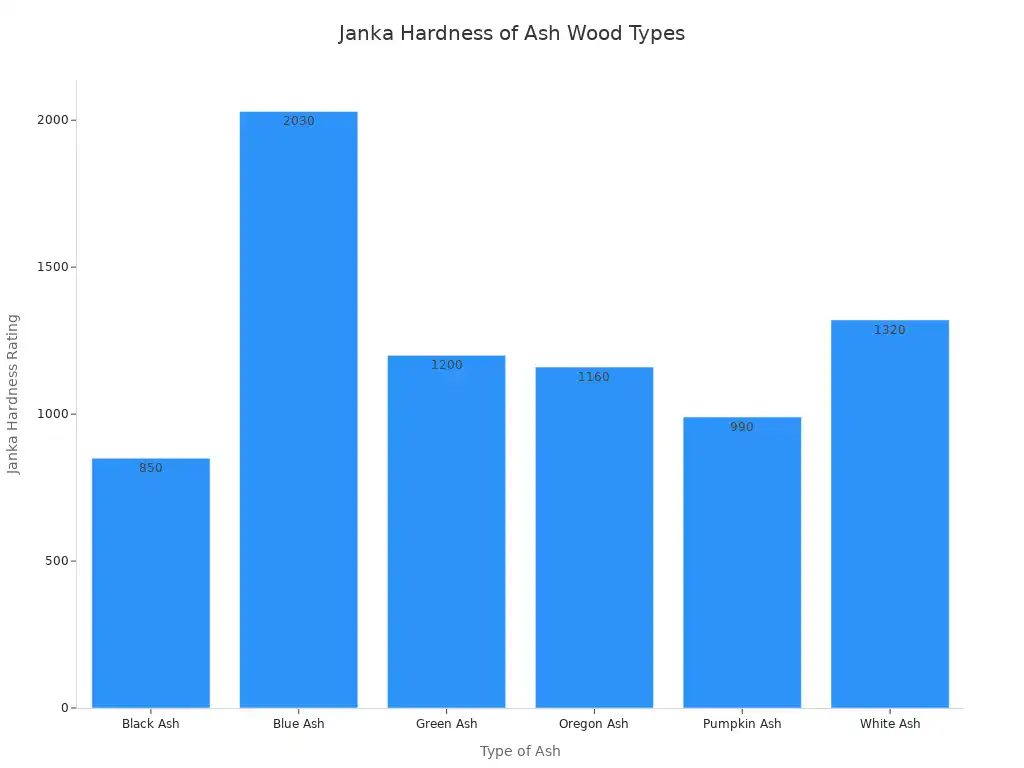
Ash is known for its excellent shock resistance. This makes it a popular choice for tool handles. Baseball bats also use ash. Its flexibility and strength make it suitable for furniture and sports equipment.
Hickory
Hickory is one of the hardest and strongest domestic hardwood species. It has a Janka rating of 1820. This makes it approximately 41% harder than red oak.
Wood Type | Janka Rating | Comparison to Red Oak |
|---|---|---|
Hickory | 1820 | Approximately 41% harder |
Hard Maple | 1450 | N/A |
White Oak | 1360 | N/A |
Red Oak | 1290 (implied, based on hickory comparison) | N/A |

Hickory wood has a distinctive grain pattern. It often features dramatic color variations. These range from creamy white sapwood to reddish-brown heartwood. This gives it a rustic appearance.
Hickory wood is specifically used for tool handles and sporting equipment. This is due to its exceptional impact resistance. It is known for being hard. It handles shock effectively. This contributes to the longevity of tools and gear. Its impact bending measurement is 1,120 mm. This indicates its strong resistance to breaking under impact. People also use hickory for hardwood flooring. Its extreme durability makes it suitable for high-traffic areas.
Exotic and Specialty Hardwood Options
This section explores less common or specialized types of hardwood. Each wood species has unique properties, Janka ratings, and specific applications.
Brazilian Cherry (Jatoba)
Brazilian Cherry, also known as Jatoba, is a striking wood. It features a beautiful reddish-brown color. This color deepens over time with exposure to light. Its grain pattern is often interlocked, giving it a distinctive look. Brazilian Cherry (Jatoba) wood has a Janka hardness rating of 2350. This places it among the top woods on the Janka Hardness scale. This incredible hardness makes it a very durable choice for flooring.
Brazilian Cherry is a popular choice for flooring due to its hardness and rich color. However, proper acclimation is crucial before installation. Acclimation focuses on the wood’s moisture content, not just how long it sits. Installers must measure the temperature and humidity in the home. This helps determine the target moisture content for the wood. Maintaining constant temperature and humidity is vital for a long-lasting, problem-free wood floor. A rise in humidity increases the wood’s moisture content, causing it to swell.
If installers place it too tightly, this can lead to buckling. Failure to properly acclimate can cause issues like excessive gaps, warping, or cupping. It can also void the manufacturer’s warranty.
Teak
Teak is a highly prized wood. It comes from tropical regions. It has a golden to medium brown color. This color darkens with age. Teak features a straight grain, but it can sometimes be wavy. Teak wood’s exceptional weather resistance comes from its high content of natural oils and silica.
The natural oils act as a built-in water repellent. They prevent warping, cracking, and decay, even with exposure to rain or humidity. These oils also protect against termites and fungal decay. Silica, found within these natural oils, plays a crucial role in the wood’s resilience. It contributes to its water-repellent properties. This natural resistance makes teak highly sought after.
Teak has a Janka hardness rating of approximately 1000 to 1150 lbf. This makes it moderately hard. Teak wood is extensively used for marine decking. The Titanic and the USS Missouri used teak. This is due to its natural waterproof properties and durability in high-traffic areas. It protects against sparks on metal decks and withstands harsh conditions like sun and salt. Today, it is a preferred material for luxury boat and yacht decks. For outdoor furniture, teak is a premier lumber for luxury items. Its durability and anti-weathering properties make it ideal. Its natural oils prevent swelling, cracking, and warping, making it perfect for poolside or spa furniture.
Mahogany
Mahogany is a classic choice for fine woodworking. Genuine Honduran Mahogany lumber displays rich, warm honey-brown colors with beautiful fiddleback. Its color ranges from a light golden brown to a pale pinkish-red. It darkens over time. Premium examples show a velvety look to fine grains.
Fine grain patterns have a tight consistency. It features chatoyance, which can range from subtle to dramatic. This wood has an interlocked grain, a common mahogany family trait. Spiraling grain switches direction between growing seasons. This creates distinctive stripes on quartersawn faces.
Mahogany has a Janka hardness rating of about 800 to 900 lbf. This makes it a softer hardwood. Mahogany’s rich history dates back to the 16th century. Spanish explorers discovered it in the Americas.
Its exceptional qualities, including durability, attractive reddish-brown color, and workability, quickly made it popular. By the 18th century, mahogany symbolized luxury and status. It adorned the homes of the wealthy in Europe and America. Its popularity continued through the 19th and 20th centuries. People use mahogany for fine furniture like tables, chairs, and cabinets. Its strength, ease of work, rich color, and beautiful grain patterns make it ideal. Its tonal qualities make it a favored choice for musical instruments, especially guitars and pianos.
Wenge
Wenge is an exotic hardwood species from Central Africa. It is known for its very dark color. Its heartwood is a deep brown, almost black, with fine, closely spaced dark veins. This gives it a distinct striped pattern. The grain is straight and coarse. Wenge has a Janka hardness rating of 1930. This makes it a very hard and dense wood.
Wood Species | Janka Hardness (lbf) |
|---|---|
Wenge | 1930 |
This hardwood species is popular for flooring, furniture, and decorative accents. Its striking appearance and hardness make it suitable for high-end applications. Wenge is also used for musical instruments and turned objects. Its density makes it resistant to wear and tear.
Bamboo
Bamboo is often discussed alongside hardwood, but it is botanically a grass. Bamboo is a monocot in the grass family. It lacks sapwood, heartwood, or growth rings, which are characteristic of wood. It belongs to the Poaceae (grass) family. Many timber-producing species come from genera like Phyllostachys and Bambusa. Despite not being a true hardwood, manufacturers process bamboo into flooring and other products. These products offer similar benefits to traditional hardwood.
Bamboo flooring varies greatly in hardness. Traditional bamboo flooring has a Janka rating of 1000-1500 lbf. Strand-woven bamboo, a more processed form, can reach over 3000 lbf. This makes it extremely hard.
Bamboo offers significant environmental sustainability benefits. It is a fast-growing grass, maturing in five years. This is much quicker than the approximately twenty-five years required for trees. It is a renewable grass with self-regenerating properties. This eliminates the need for replanting after harvest. Bamboo grows naturally and quickly. It requires no irrigation systems or artificial fertilizers. Bamboo produces about 30% more oxygen than hardwood forests of comparable size. Its growth and manufacturing in China reduce the carbon footprint. This is especially true when compared to European hardwood, which often travels twice as much for processing.
Choosing the Right Hardwood
Factors for Selection
Selecting the right hardwood involves considering several factors. Environmental conditions play a critical role. Wood naturally expands and contracts with moisture.
Humidity fluctuations are a critical environmental factor. Different wood species and manufacturing methods respond differently to moisture levels. Solid hardwood reacts most dramatically. Dense woods like oak and maple resist moisture fluctuations better than softer woods such as pine or cherry. Engineered hardwood offers superior dimensional stability. This makes it suitable for areas with extreme seasonal humidity shifts or inconsistent climate control. Maintaining an optimal relative humidity range of 35-55% is crucial. This preserves the aesthetic appeal and structural integrity of wood flooring.
Optimal relative humidity for most wood flooring ranges between 35-55%. Deviations from this range can lead to various issues:
Temperature does not significantly affect wood’s moisture content or cause shrinkage/swelling. An increase or decrease in ambient temperature does not appreciably affect wood’s moisture content. This lack of temperature sensitivity is an advantage of wood.
Matching Hardwood to Applications
Matching hardwood to its intended use ensures longevity and performance. For high-traffic areas, a harder wood with a high Janka rating is ideal. For example, hickory offers exceptional durability for flooring. For specific hardwood applications, like basements, certain species perform better. Oak and hickory are recommended for their hardness and density. These properties help resist swelling and shrinking in basements. These types of hardwood provide reliable performance.
Maintenance and Longevity
Proper maintenance extends the life of hardwood. Use a pH-neutral cleaning solution designed for hardwood floors. Avoid damp sponges or soaked mops. Excess water damages wood surfaces. Purchase cleaning products from the company that installed your wood floors for optimal results.
Increase cleaning frequency in high-traffic areas. This prevents dirt and grime buildup. Protect floors from wear and tear. Use rugs, mats, and felt protectors in high-traffic zones and under furniture. Regularly wash and replace rugs, mats, and felt protectors. This prevents accumulated dirt from acting like sandpaper.
During winter, use a humidifier to maintain moisture levels. This prevents gaps between floorboards. Promptly clean up tracked-in salt or calcium chloride. Use specialized cleaners to prevent surface damage. For wax-finished flooring, reapply wax periodically. This maintains its protective coating, especially in high-traffic areas. The National Wood Flooring Association (NWFA) notes that a person weighing 125 pounds wearing high heels can exert up to 8,000 pounds of pressure when walking. To protect hardwood floors in high-traffic areas where high heels are worn, use additional mats for padding.
This guide explored diverse hardwood species. It detailed their varying durability and suitable applications. Understanding these differences empowers informed choices. Readers should consider both aesthetics and functionality for their projects. This ensures lasting beauty and performance. Selecting the right hardwood guarantees satisfaction and longevity. It also enhances any space.

