

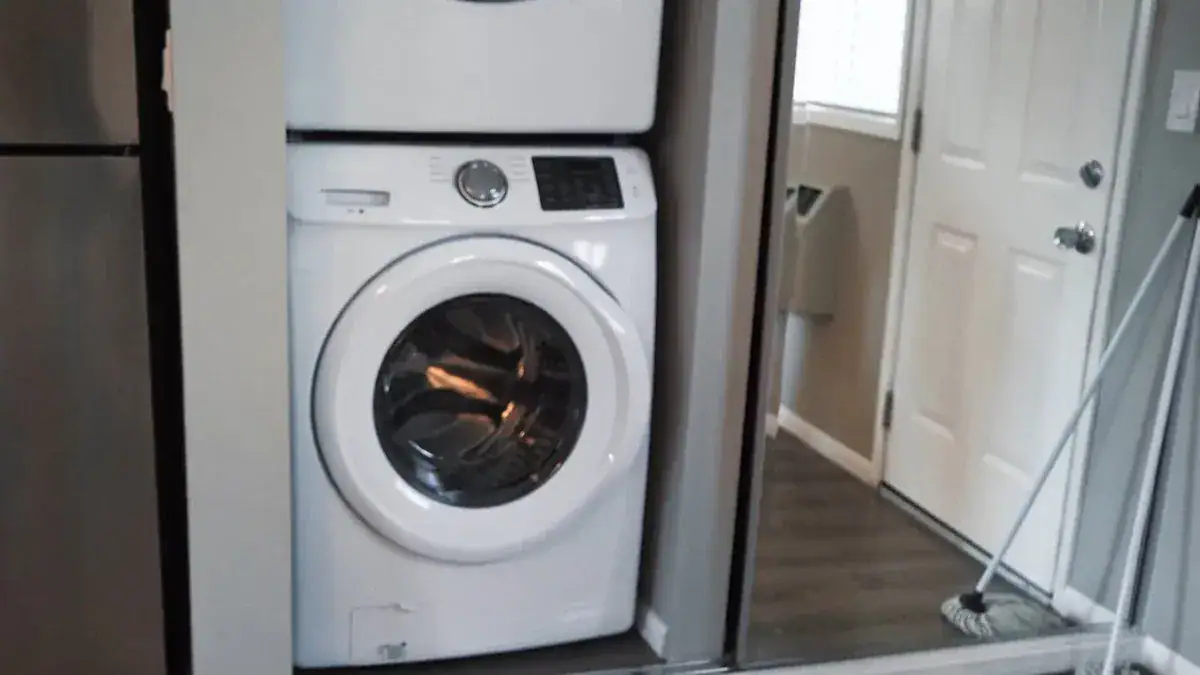
Knowing the age of your appliances is crucial for making informed decisions about maintenance and replacements. It can help you decide whether to repair or replace an appliance, especially if repair costs exceed half the price of a new one. Consider these common challenges you might face when trying to determine appliance age:
Challenge | Explanation |
|---|---|
Cheaper Materials, More Tech | Modern appliances often use lighter components and sensitive electronics, which can break more easily. |
Energy Efficiency Trade-Offs | Manufacturers may use thinner metals, leading to durability issues, such as leaks in dishwashers. |
Complexity and User Error | Smart features can cause misuse, resulting in breakdowns from poor installation or incorrect settings. |
By understanding these factors, you can better navigate the process to determine the age of your major appliances.
Key Takeaways
Locate the serial number on your appliance. This is the first step to determining its age.
Understand the brand’s serial number format. Each brand has unique methods for encoding manufacturing dates.
Use online tools like Appliance411.com to quickly find your appliance’s age by entering model and serial numbers.
Contact manufacturer support if you cannot determine the age through other methods. They can provide valuable insights.
Knowing your appliance’s age helps you decide whether to repair or replace it, saving you time and money.
Determine the Age by Brand and Model
Importance of Brand and Model
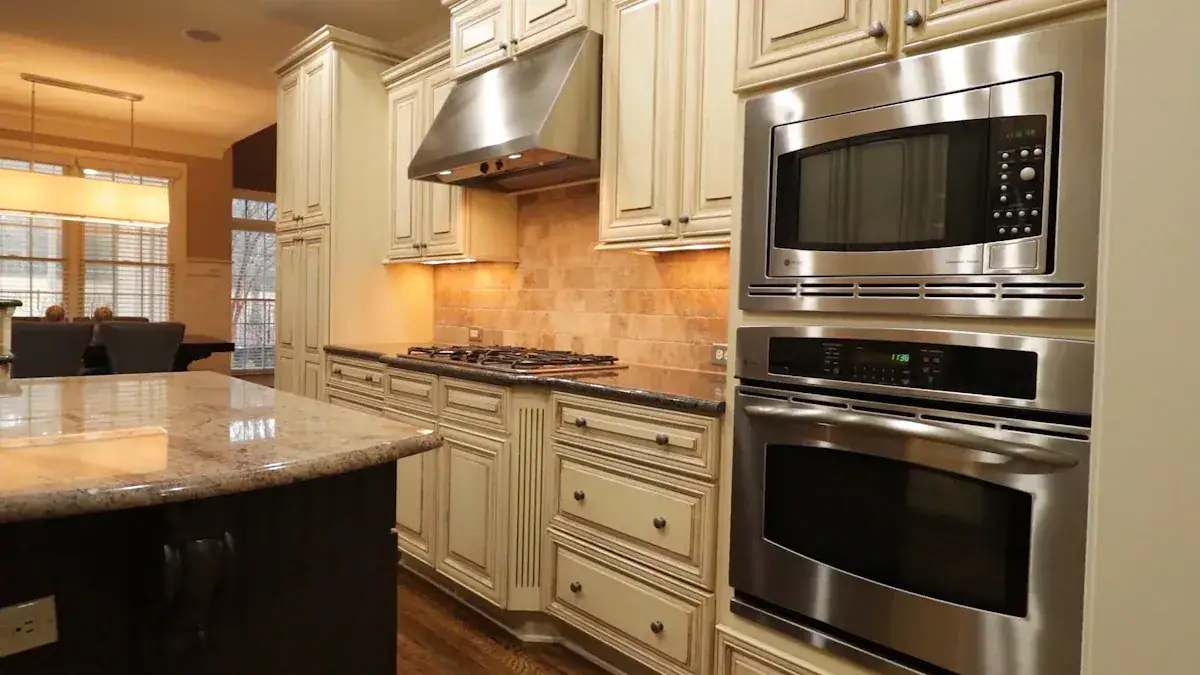
Identifying the brand and model of your appliance is essential for determining its age. Different brands have unique methods for encoding manufacturing dates in their serial numbers. This can significantly affect how you interpret the information. For example, a KENMORE appliance, which is manufactured by WHIRLPOOL, may have a serial number that leads to multiple potential manufacturing dates. This inconsistency can make it challenging to pinpoint the exact age without sufficient data.
Common Brands
Many major appliance brands provide clear age identification methods. Here are some common brands and their features:
GE Appliances: Their serial numbers start with two letters that indicate the month and year of manufacture.
LG: The serial numbers begin with three digits, where the first digit represents the year, followed by two digits for the month.
Whirlpool: This brand often uses a combination of letters and numbers, making it necessary to refer to specific decoding guides.
Other notable brands include:
Kenmore
Maytag
Samsung
Frigidaire
KitchenAid
Each of these brands has its own method for encoding the manufacturing date within the serial number. Understanding these systems can help you determine the age of your appliance more accurately. For instance, GE’s approach allows you to quickly identify the manufacturing date, while LG’s system requires a bit more decoding.
By knowing the brand and model, you can streamline the process to determine the age of your appliance. This knowledge can guide your maintenance and replacement decisions, ensuring you make informed choices.
Locating the Serial Number
Finding the Serial Number
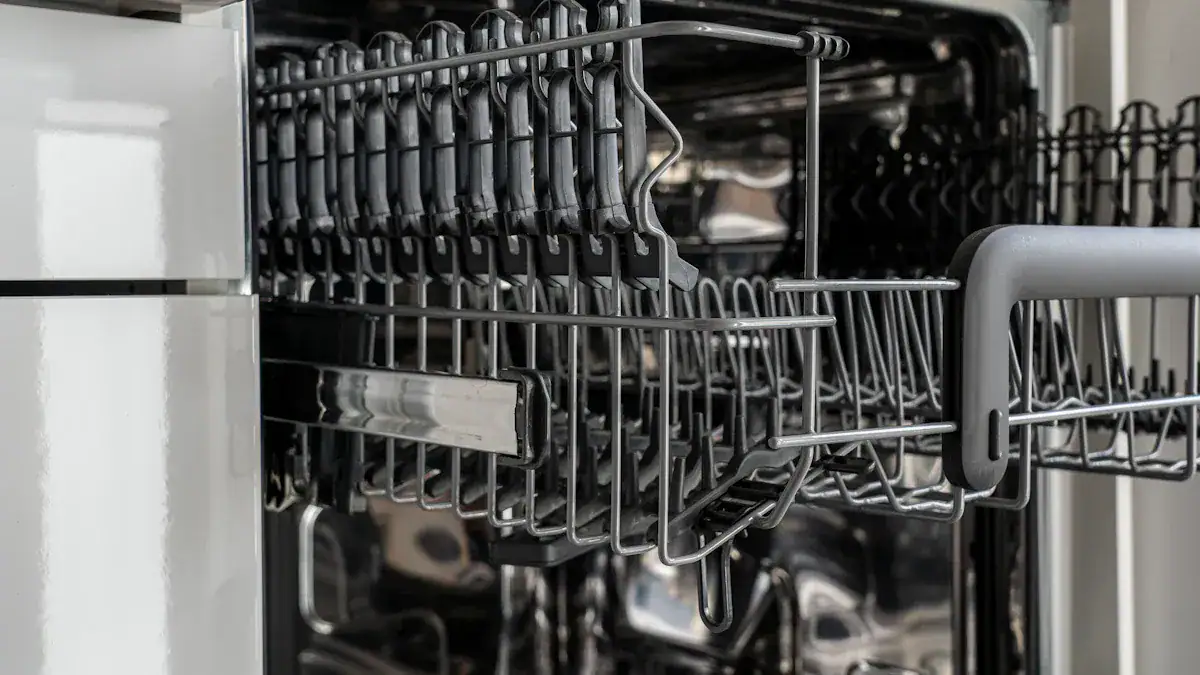
Finding the serial number on your appliance is a crucial step in determining its age. Each appliance has a specific location where the serial number is displayed. Here are some common places to check:
Refrigerators:
Upper left side wall of the fresh food compartment (top freezer).
Upper right side of the fresh food compartment (French door/side-by-side).
Ranges and Stoves:
Interior side trim of the oven.
Left-side panel or front frame of the storage drawer.
Wall Ovens:
Interior side trim of the oven.
Washers:
Front Load: trim of the door.
Top Load: back of the tub opening under the lid.
You can also look for a sticker or plate on the appliance itself. If you have the appliance’s manual or user guide, it often contains information about the serial number’s location. For smart appliances, you might find the serial number in the on-screen menu.
Tip: Diagrams of common model number locations for various appliances can help guide you to the exact spots.
Serial Number Formats
Understanding the format of serial numbers is essential for accurately determining the age of your appliance. Different manufacturers use various formats, which can include letters and numbers that signify the manufacturing date. Here are some examples:
Manufacturer | Serial Number Format Description |
|---|---|
General Electric | First two letters indicate the month and year of manufacture. |
Whirlpool | The third-to-last character corresponds to a specific year in the date code chart. |
Kenmore | First three digits of the model number specify the manufacturer, with serial numbers matching the manufacturer’s format. |
Amana | Part of the serial number contains the manufacturing date. |
The serial number plays a vital role in determining the age of your appliance. It helps you identify when the appliance was made, which can influence your maintenance and replacement decisions. Knowing the age can also help you understand warranty coverage and potential issues related to older models.
Age Codes Explained
Decoding Age Codes
Decoding age codes can help you determine the manufacturing date of your appliance. Each brand has its own system for encoding this information. Understanding these codes allows you to make informed decisions about maintenance and replacement. Here are some common age code systems used by popular appliance manufacturers:
Brand | Age Code System Description |
|---|---|
Amana | Uses a four-digit serial number code in the format YYWW (Year, Week of the year). |
GE | Decoding methods vary; specific details are provided for American and Canadian models. |
Frigidaire | Includes brands like White/Westinghouse and Tappan; specific decoding methods available. |
Kenmore | Serial number decoding methods are provided for various models. |
KitchenAid | Specific decoding methods for KitchenAid appliances are available. |
Maytag | Newer models may follow a different format; details provided for decoding. |
Whirlpool | Specific decoding methods are available for Whirlpool appliances. |
Examples of Age Codes
To illustrate how to decode age codes, consider the following examples. The first digit often indicates the year of manufacture, while other characters may represent the week of production. For instance, if you see a serial number like NF11910958, you can break it down as follows:
N: Represents the month.
F: Indicates the year, which in this case is 2001.
19: Represents the week of the year, meaning it was manufactured in the 19th week of April 2001.
Another example is LA84501552. This serial number could indicate that the appliance was made in either 1988 or 1998, depending on its design features.
You can also refer to a chart that maps appliance age codes to years. For example:
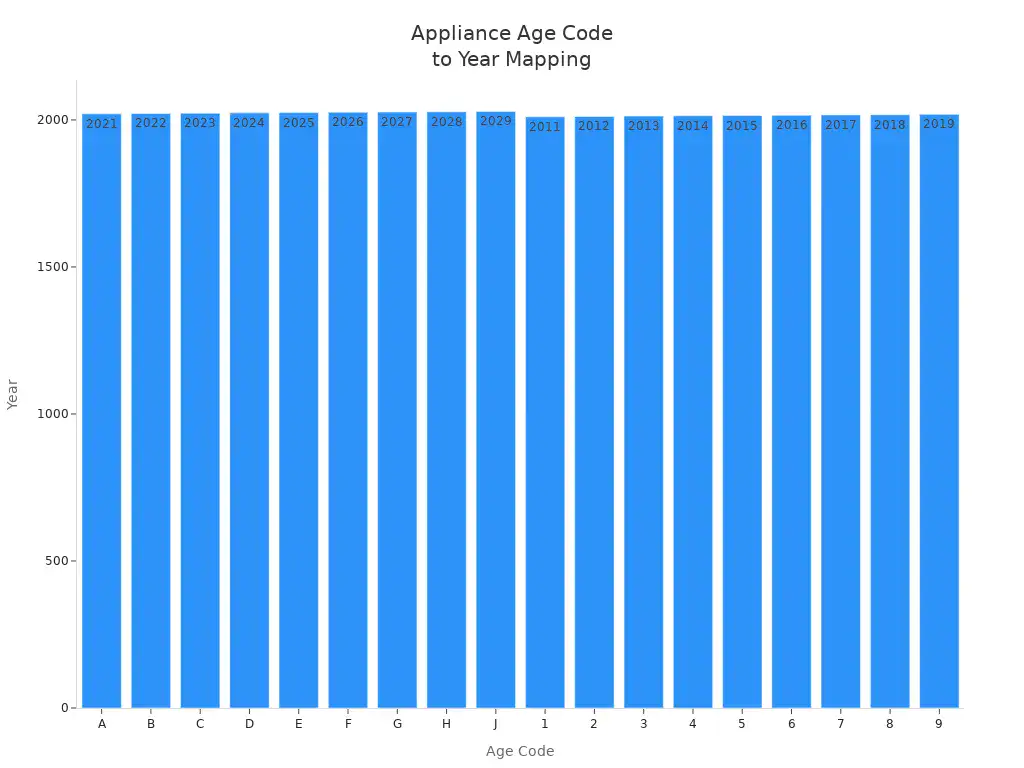
By understanding these codes, you can easily determine the age of your appliance. This knowledge empowers you to make better decisions regarding repairs or replacements.
Online Tools to Determine Age
Finding the age of your major appliances can be easier with the help of online tools. These resources allow you to enter model and serial numbers to quickly determine when your appliance was manufactured. Here are some popular options:
Appliance411.com
Appliance411.com offers a user-friendly tool called the Appliance Age Finder. This tool helps you determine the age of your appliances by entering the model and serial numbers. To use this tool effectively, follow these steps:
Visit the Appliance411 Age Finder page at this link.
Enter the necessary details about your appliance.
Review the results to see if your appliance qualifies for any rebates or if it needs replacement.
This tool is particularly useful because it provides clear information based on the data you input. However, remember that some manufacturers have unclear serial number conventions. This can lead to ambiguity in determining the exact manufacturing date.
Other Online Resources
In addition to Appliance411.com, several other online resources can help you determine the age of your appliances. Here’s a list of useful websites:
How Old Is My Appliance? A Guide to Finding Its Age by Serial or Model Number
How Old Is My Appliance?
Major Home Appliance Age
HVAC & Plumbing Date Search
Commercial Food Equipment Age
These resources provide guides and tools to help you decode serial numbers and find the manufacturing dates of various appliances.
Using these online tools can simplify the process of determining the age of your appliances. However, keep in mind that some manufacturers encode minimal information in their serial numbers. This can make it difficult to ascertain the exact year of manufacture. Ambiguities may also arise from pseudo manufacturers who outsource designs, complicating the decoding process.
By leveraging these online resources, you can make informed decisions about your appliances, ensuring they remain in good working condition or are replaced when necessary.
Consulting Manufacturer Support
When to Contact Support
You should consider contacting manufacturer support when you cannot determine the age of your appliance through other methods. If you have exhausted options like checking the serial number or using online tools, reaching out to the manufacturer can provide clarity. Additionally, if your appliance shows signs of malfunction or if you suspect it may be nearing the end of its lifespan, contacting support can help you understand its age and any potential issues.
Information to Provide
When you contact manufacturer support, being prepared can make the process smoother. Here are some key details to gather before reaching out:
Relevant Details: Have your appliance’s brand, model, and serial number ready. This information helps the support team assist you more efficiently.
Specific Symptoms: Document any issues your appliance is experiencing. This can help the support team understand your situation better.
Clear Presentation: Present your information clearly during the interaction. This approach can enhance communication and reduce misunderstandings.
Preparation: Being well-prepared can save you time and improve the efficiency of your conversation.
By following these steps, you can ensure that your interaction with manufacturer support is productive. They can provide valuable insights into your appliance’s age and any necessary maintenance or replacement options. Remember, knowing the age of your appliance can help you make informed decisions about repairs or upgrades, ultimately saving you time and money.
Understanding the age of your major appliances is essential for effective maintenance and budgeting. Here are the key steps to determine their age:
Locate the serial number and decode it.
Check warranty or purchase paperwork for installation dates.
Review owner’s manuals for print dates.
Ask previous homeowners about installation dates.
Consider the age of your home or renovations.
Knowing your appliances’ ages helps you decide whether to repair or replace them. It also allows you to budget for replacements, especially since appliances over eight years old often require more repairs. By staying informed, you can save money and ensure your home runs efficiently. 🏡✨
FAQ
How can I find the serial number on my appliance?
You can usually find the serial number on a sticker or metal plate. Check common locations like the back, inside the door, or on the side panel. Refer to your appliance’s manual for specific guidance.
What if my appliance doesn’t have a visible serial number?
If you can’t find a serial number, check the user manual or contact the manufacturer. They can guide you on where to look or provide alternative methods to determine the age.
Are there any online tools to help me determine my appliance’s age?
Yes, websites like Appliance411.com offer tools to help you find your appliance’s age. Enter the model and serial numbers to get information about the manufacturing date.
Why is knowing my appliance’s age important?
Knowing your appliance’s age helps you make informed decisions about repairs or replacements. Older appliances may require more maintenance and could be less energy-efficient, impacting your utility bills.
What should I do if my appliance is over 10 years old?
If your appliance is over 10 years old, consider evaluating its performance and repair costs. You may want to start budgeting for a replacement, especially if it shows signs of wear or inefficiency.