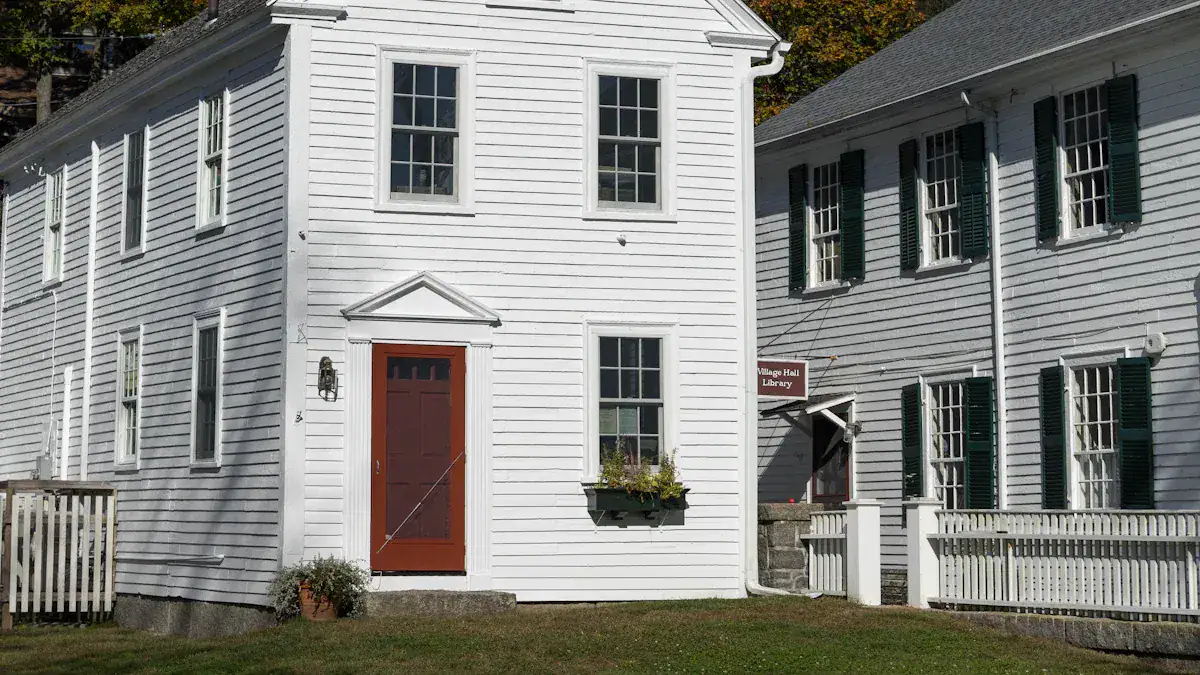
Sears American Foursquare Houses stand out with their unique architectural style. These homes feature a boxy design and a symmetrical square shape, making them easily recognizable. The low-pitched hip roof and large windows allow ample natural light into the interior. You will notice that these houses typically include a full-width covered front porch, enhancing their charm. Popular among the urban middle class during the early 20th century, they offered a practical alternative to the ornate Victorian homes. Their simplicity and affordability made them a favored choice for families seeking straightforward housing.
Key Takeaways
Sears American Foursquare Houses feature a simple, boxy design that maximizes space and natural light.
These homes were affordable, with prices ranging from $650 to $2,500, making them accessible to many families.
Sears sold around 60,000 to 70,000 Foursquare homes as mail-order kits, promoting homeownership for the urban middle class.
The architectural style reflects a shift towards practicality and simplicity, appealing to families during the early 20th century.
Identifying a Foursquare house is easy; look for its square shape, low-pitched roof, and full-width front porch.
Sears American Features
Design Elements
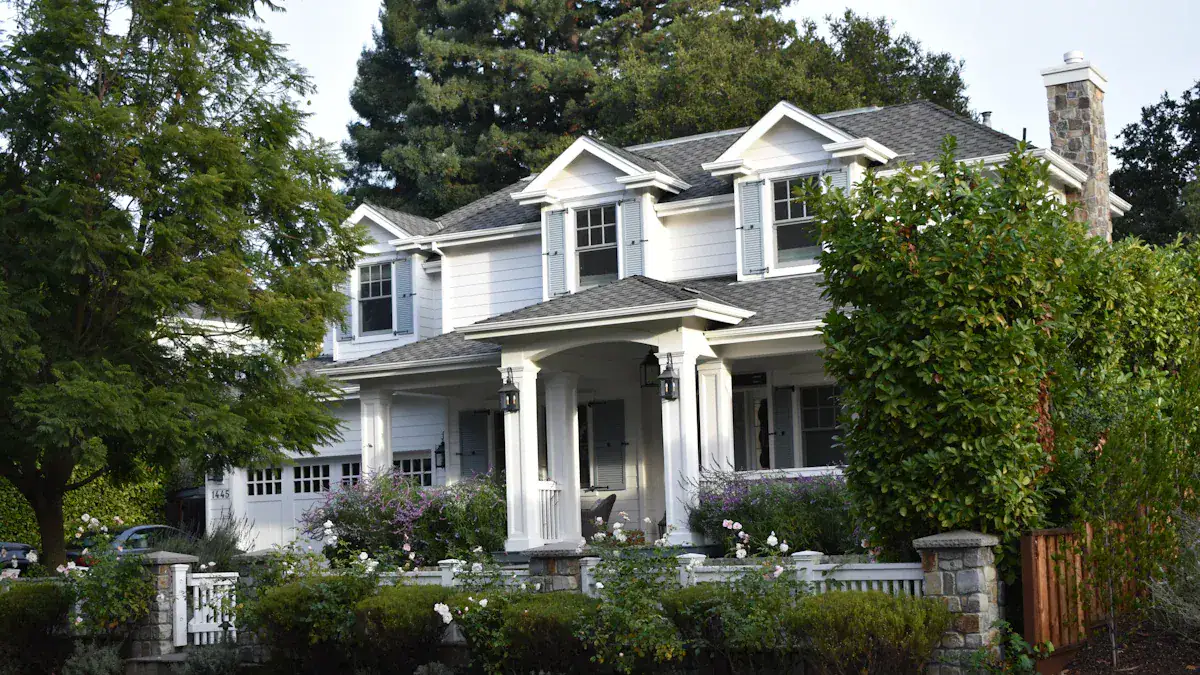
The design of Sears American Foursquare Houses emphasizes simplicity and functionality. You will notice their boxy shape, which allows for efficient use of space. This style emerged as a response to the elaborate designs of the Queen Anne homes. The Foursquare’s straightforward configuration made it appealing during a time when practicality took precedence over ornamentation.
Here are some key design features that contribute to the popularity of the American Foursquare style:
Design Feature | Impact |
|---|---|
Simple and understated configuration | Allowed for personalization, making it versatile for homeowners. |
No frills approach | Attracted those looking for economical housing solutions. |
Blank canvas façade | Enabled homeowners to incorporate elements from various architectural styles, enhancing its appeal. |
The Foursquare homes could fit comfortably on small lots without sacrificing too much interior space. This practicality made them a popular choice for the budget-conscious middle class, especially during urban expansion. Sears Roebuck sold around 75,000 prefabricated houses in this style, further boosting its popularity.
Common Materials
When it comes to construction, Sears American Foursquare Houses often utilized a variety of materials. These materials contributed to the durability and aesthetic appeal of the homes. Here’s a breakdown of the most frequently used materials:
Material Type | Description |
|---|---|
Wood | Used in various constructions, often with good sheathing. |
Concrete | Mentioned as a primary material in some Foursquare homes. |
Siding | Various types were utilized for exterior finishes. |
Brick | Commonly used for exteriors in many Foursquares. |
Frame | Described as part of the construction method in some models. |
These materials not only provided structural integrity but also allowed homeowners to customize their homes according to their preferences. The combination of wood, brick, and siding created a warm and inviting atmosphere, making these houses feel like home.
Sears American History
Origins
The American Foursquare style emerged as a response to the ornate Victorian homes that dominated the late 19th century. You can trace its origins to several historical factors:
A reaction against ornate Victorian styles
The economic boom of the late 19th century
A growing demand for affordable housing among the urban middle class
As one observer noted, “The gaudy complexity of the Queen Anne brought a widespread revolt which set the course of American design from the 1890s through the First World War.” This shift in architectural preference reflected a desire for simpler, more sensible residential designs.
The American Foursquare style gained traction during a time of significant societal and technological changes, particularly between the 1890s and 1930s. The emergence of the middle class and improvements in construction methods played crucial roles in shaping this architectural trend. The Foursquare style aimed to create efficient and affordable housing solutions for a growing population. It catered to the needs of working and middle-class families, marking a transition from the elaborate Victorian styles to more practical and compact designs. This transition aligned with the broader Edwardian speculative housing movement, which sought to provide accessible housing during a period of urban development.
Sears’ Role
Sears, Roebuck and Company significantly contributed to the popularity of the Foursquare House. They offered these homes as mail-order kits, making home construction more accessible to the urban middle class. You could select a house design from a catalog, order it, and receive a kit of materials and instructions. This innovative approach facilitated the building process for many families.
Between 1908 and 1940, Sears sold an estimated 60,000 to 70,000 homes in the Foursquare style. This mass production and distribution allowed countless families to realize their dream of homeownership. The combination of affordability and practicality made the Sears American Foursquare Houses a staple in neighborhoods across the country.
Significance of Sears American Homes
Impact on Homeownership
Sears American Foursquare Houses played a crucial role in making homeownership accessible to many families in the early 20th century. These homes were marketed as kit homes. You could choose a design from a catalog and receive all the necessary materials and instructions by mail. This convenience allowed families to take on home construction themselves, promoting the idea of homeownership.
Here are some key features that contributed to this impact:
Feature | Description |
|---|---|
Affordability | Homes priced between $650 and $2,500, making them accessible to families. |
Simplicity in Design | Simple designs reduced construction costs compared to elaborate styles. |
Kit Home Availability | Delivered via railroad, allowing easy access for families to build homes. |
The straightforward design of the Foursquare made it cheaper than Victorian homes. It appealed to the urban middle class for its affordability and efficiency. Built from coast to coast, these homes showcased widespread acceptance. By 1929, Sears reported home sales worth $12.5 million, indicating a significant impact on homeownership rates.
Cultural Relevance
Sears American Foursquare Houses hold cultural significance as symbols of the American dream. They represent a shift toward practicality and affordability in housing. Families sought homes that reflected their values of simplicity and functionality. The Foursquare style became a canvas for personal expression, allowing homeowners to customize their spaces.
These homes also fostered community. As neighborhoods filled with Foursquares, they created a sense of belonging among residents. The architectural style became a staple in American neighborhoods, reflecting the aspirations of many families during a transformative period in history.
Identifying Sears American Foursquare Houses
Key Characteristics
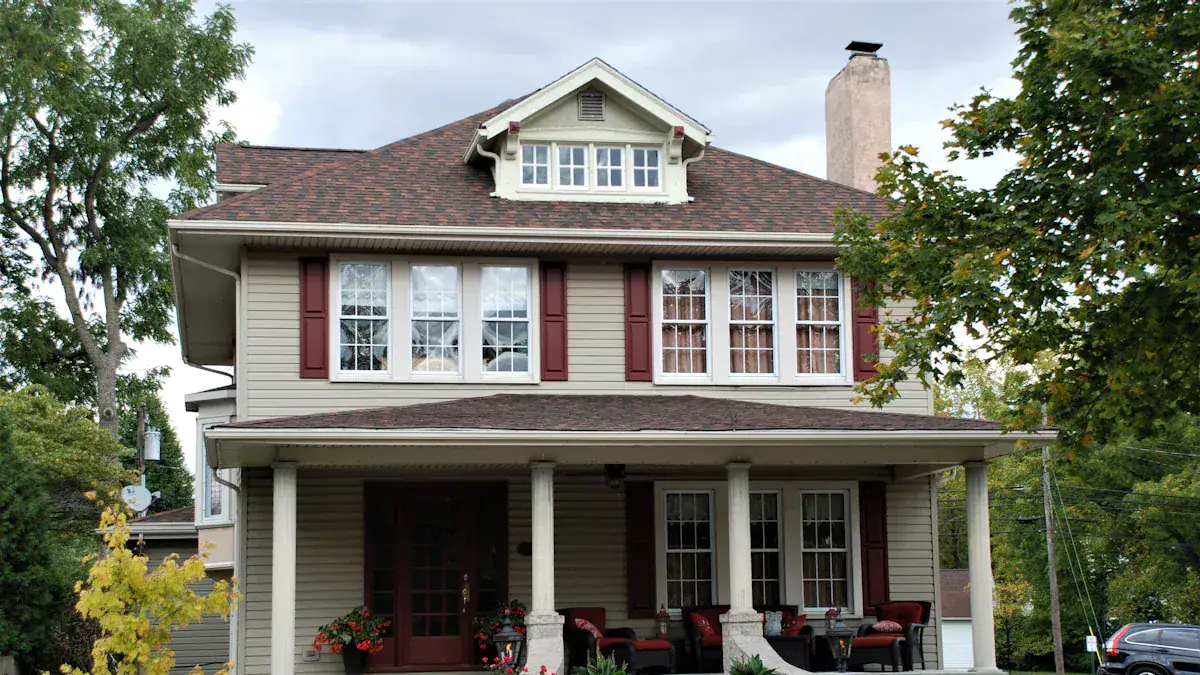
Identifying a Sears American Foursquare House can be straightforward if you know what to look for. Here are some key characteristics that can help you recognize these homes:
Boxy Shape: The distinct square silhouette sets these homes apart from other styles.
Low-Pitched Hip Roof: This roof design is a defining feature of the Foursquare style.
Full-Width Front Porch: A welcoming porch enhances both the aesthetic and functional appeal.
Efficient Interior Layout: The layout maximizes space, making it practical for families.
To further confirm if a house is a Sears kit home, consider these identifying marks:
Look for stamped letter-number marks on framing and trim, indicating a “Sears kit.”
Check for framing members with identifying marks, often found on the ends of visible joists.
Identify square-cut douglas-fir or southern yellow pine framing, which is typically free of knots and splits.
Inspect plumbing access panels for identifying marks on wall studs.
Search for Sears Kit House Shipping Labels during remodeling or disassembly.
Resources
If you are interested in verifying the authenticity of a Sears American Foursquare House, several resources can assist you:
Sears Houses In the U.S.: This group maintains a national database of Sears houses, focusing on authentication through mortgage and deed research.
Authenticating: This resource details the primary-source evidence needed for official authentication, including mortgages, building permits, blueprints, and original paperwork.
You can also reach out to organizations and archives that maintain records of Sears American Foursquare House sales and plans. Notable contacts include:
Rosemary Thornton at searshomes.org
Rachel Shoemaker at Oklahoma Homes by Mail
Rebecca Hunter at kithouse.org
Andrew and Wendy Mutch at Kit House Hunters
Cindy Catanzaro at Sears Houses in Ohio
These resources can provide valuable insights and assistance in your search for a Sears American Foursquare House.
Sears American Foursquare Houses represent a significant chapter in American architectural history. Their popularity from the mid-1890s to the late 1930s highlights their appeal to the growing middle class. You can appreciate these homes for their affordability and efficiency.
Key Points to Remember:
The Foursquare style thrived during a period of economic growth.
These homes adapted well to both urban and rural settings.
As you explore neighborhoods filled with these historic homes, recognize their lasting legacy and the stories they tell about American life.
Preservation Challenge | Description |
|---|---|
Difficulties in Authentication | Unique variations complicate the process of identifying a Sears home. |
Impact of Neglect and Maintenance | The condition of homes varies based on the care they received over the years. |
Loss of Historical Records | The destruction of sales records after the Modern Homes program ended poses challenges for preservation. |
By understanding their significance, you contribute to preserving these architectural treasures for future generations.
FAQ
What is a Sears American Foursquare House?
A Sears American Foursquare House is a boxy, two-story home characterized by its simple design, low-pitched hip roof, and full-width front porch. These homes gained popularity in the early 20th century due to their affordability and practicality.
How can I identify a Sears kit home?
You can identify a Sears kit home by looking for specific features like a square shape, low-pitched hip roof, and a full-width porch. Check for stamped markings on framing or plumbing access panels that indicate it is a Sears home.
Were Sears American Foursquare Houses affordable?
Yes, these homes were affordable. Prices ranged from $650 to $2,500, making them accessible to many families. Their simple designs reduced construction costs, allowing more people to achieve homeownership during the early 20th century.
How many Sears American Foursquare Houses were sold?
Sears, Roebuck and Company sold an estimated 60,000 to 70,000 American Foursquare Houses between 1908 and 1940. This mass production helped many families realize their dreams of owning a home.
What materials were commonly used in these homes?
Sears American Foursquare Houses commonly used wood, brick, concrete, and various types of siding. These materials provided durability and allowed homeowners to customize their homes according to their preferences.