

Provided you want reliable clean water on the go, these five purifier straws are worth a close look. You’ll get options that range from NSF‑certified membrane filters to ultralight personal straws and multi‑packs with backflush plungers. I’ll compare pore size, tested claims, capacity, and maintenance so you can pick what fits your trips—keep going to see which one matches your needs.
| Membrane Solutions Straw Water Filter S1 (NSF-Certified) |
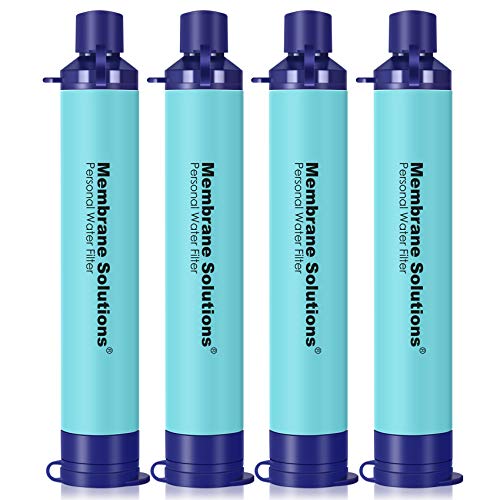
| Best Certified Protection | Applications / Use Cases: Hiking, camping, travel, emergency preparedness, individual/family/small-group use | Microbial Protection (bacteria/parasites): Removes up to 99.9999% total coliforms (including E. coli); certified high bacterial reduction | Filtration Pore Size / Technology: Hollow-fiber ultrafiltration membrane, 0.1 micron; 5-stage (carbon, PP fiber, screen) | VIEW LATEST PRICE | Read Our Analysis |
| LifeStraw Personal Water Purifier for Outdoor Use |
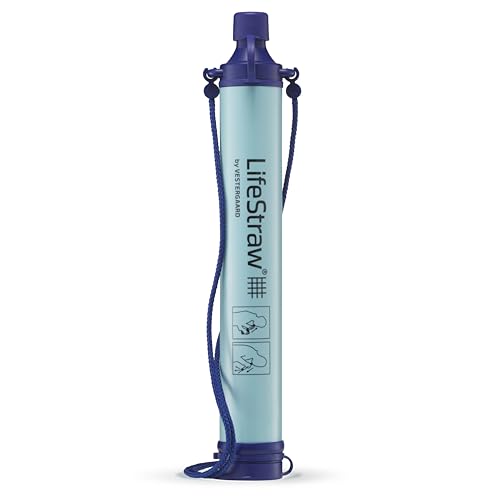
| Social Impact Favorite | Applications / Use Cases: Hiking, camping, travel, emergency preparedness, bug-out bags, backpacking | Microbial Protection (bacteria/parasites): Removes 99.999999% bacteria; 99.999% parasites | Filtration Pore Size / Technology: Microfiltration membrane, down to ~1 micron (reduces turbidity to 0.2 microns) | VIEW LATEST PRICE | Read Our Analysis |
| LifeStraw Personal Water Purifier for Hiking and Travel |

| Backpacking Essential | Applications / Use Cases: Hiking, camping, travel, emergency preparedness, bug-out bags, backpacking | Microbial Protection (bacteria/parasites): Removes 99.999999% bacteria; 99.999% parasites | Filtration Pore Size / Technology: Microfiltration membrane, down to ~1 micron (reduces turbidity to 0.2 microns) | VIEW LATEST PRICE | Read Our Analysis |
| Emergency Reusable Water Straws (5-Pack 1800 Gallon) |

| Best for Emergencies | Applications / Use Cases: Camping, hiking, backpacking, travel, RV trips, EDC/bugout bags, emergency kits | Microbial Protection (bacteria/parasites): Removes >99.99% bacteria; >99.99% parasites | Filtration Pore Size / Technology: Removes microplastics down to 0.1 micron; hollow-fiber (implied) filtration | VIEW LATEST PRICE | Read Our Analysis |
| 2-Pack Portable Water Filter Straw for Camping |
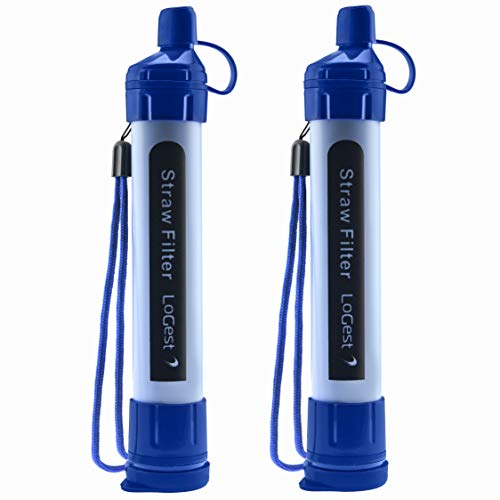
| Budget Backup Pack | Applications / Use Cases: Emergency kits, natural disasters, hiking, camping, backpacking, travel | Microbial Protection (bacteria/parasites): Removes 99% of harmful bacteria (includes E. coli, Legionella, Salmonella) | Filtration Pore Size / Technology: Hollow-fiber membrane, 0.1 micron | VIEW LATEST PRICE | Read Our Analysis |
More Details on Our Top Picks
Membrane Solutions Straw Water Filter S1 (NSF-Certified)
Should you need a lightweight, NSF‑certified straw that reliably removes bacteria and microplastics without stripping minerals, the Membrane Solutions S1 is a top pick—its 0.1‑micron hollow‑fiber ultrafiltration plus activated carbon delivers up to 99.9999% removal of common pathogens while preserving TDS, making it ideal for hikers, travelers, and emergency kits. You’ll get NSF/ANSI 42, 372, and 401 certifications, tested reductions for E. coli, Salmonella, Staph, Vibrio, and microplastics. The five-stage filter and 500 ml/min flow fit 28 mm bottles, weighs 2 ounces, supports up to 5,000 liters, and uses BPA-free materials for reliable, portable purification.
- Applications / Use Cases:Hiking, camping, travel, emergency preparedness, individual/family/small-group use
- Microbial Protection (bacteria/parasites):Removes up to 99.9999% total coliforms (including E. coli); certified high bacterial reduction
- Filtration Pore Size / Technology:Hollow-fiber ultrafiltration membrane, 0.1 micron; 5-stage (carbon, PP fiber, screen)
- Capacity / Service Life:Up to 5,000 liters (1,320 gallons)
- Portability / Size & Weight:Palm-sized straw ~6.7–7.4″ long, ~1″ diameter, 2 oz
- Materials / Safety (BPA / food-grade):BPA-free ABS plastic; food-grade components; NSF certifications (lead-free)
- Additional Feature:NSF multi-standard certified
- Additional Feature:Dual removable ends
- Additional Feature:Fits 28mm bottles
LifeStraw Personal Water Purifier for Outdoor Use
In case you need a lightweight, no-fuss drinking solution for hiking, travel, or emergency kits, the LifeStraw Personal Water Filter is a great pick—it’s made for anyone who wants to sip directly from lakes, streams, or a filled container without carrying heavy gear. You’ll get microfiltration that removes 99.999999% of bacteria and 99.999% of parasites, plus microplastics down to 1 micron and turbidity to 0.2 microns. Lab-tested to EPA/NSF/ASTM protocols and BPA-free, it delivers up to 4,000 liters of safe water with basic maintenance. Ultralight and durable, it’s ideal for backpacking, travel, and emergency kits.
- Applications / Use Cases:Hiking, camping, travel, emergency preparedness, bug-out bags, backpacking
- Microbial Protection (bacteria/parasites):Removes 99.999999% bacteria; 99.999% parasites
- Filtration Pore Size / Technology:Microfiltration membrane, down to ~1 micron (reduces turbidity to 0.2 microns)
- Capacity / Service Life:Up to 4,000 liters (1,000 gallons)
- Portability / Size & Weight:Straw ~8.66″ long, 0.98″ diameter, 0.04 kg (~1.4 oz)
- Materials / Safety (BPA / food-grade):BPA-free plastic; tested to EPA/NSF/ASTM protocols
- Additional Feature:Verified lab-tested protocols
- Additional Feature:Charity buy-one-give-one
- Additional Feature:Up to 5-year shelf life
LifeStraw Personal Water Purifier for Hiking and Travel
Should you need a lightweight, no-fuss way to drink safely straight from lakes and streams, the LifeStraw Personal Water Filter is built for hikers, travelers, and emergency kits. You’ll sip directly from rivers, lakes, or filled containers while the straw removes 99.999999% of bacteria and 99.999% of parasites, plus microplastics down to 1 micron and reduces turbidity to 0.2 microns. It blocks silt and sand, fits in any pack at just 8.66 inches and 0.04 kg, and delivers 4,000 liters of filtered water. BPA-free, lab-tested to EPA/NSF/ASTM standards; one purchase helps a child get school water.
- Applications / Use Cases:Hiking, camping, travel, emergency preparedness, bug-out bags, backpacking
- Microbial Protection (bacteria/parasites):Removes 99.999999% bacteria; 99.999% parasites
- Filtration Pore Size / Technology:Microfiltration membrane, down to ~1 micron (reduces turbidity to 0.2 microns)
- Capacity / Service Life:Up to 4,000 liters (1,000 gallons)
- Portability / Size & Weight:Straw ~8.66″ long, 0.98″ diameter, 0.04 kg (~1.4 oz)
- Materials / Safety (BPA / food-grade):BPA-free plastic; tested to EPA/NSF/ASTM protocols
- Additional Feature:EPA/ASTM/NSF-verified claims
- Additional Feature:Republic of Korea origin
- Additional Feature:1-year warranty
Emergency Reusable Water Straws (5-Pack 1800 Gallon)
Should you need a lightweight, high-capacity backup for clean drinking water on the move, these 5-pack reusable straws deliver up to 1,800 gallons per unit and remove >99.99% of bacteria and parasites. You get five 8-inch, 2-ounce filters that block microplastics down to 0.1 micron, use chemical- and BPA-free materials, and have no expiration date. They suit camping, travel, EDC, and disaster kits. Each filter ships sealed with a backflushing plunger; routine backflushing and low-turbidity sources extend service life. One unit can supply roughly 10 years of drinking water for one person provided used sparingly.
- Applications / Use Cases:Camping, hiking, backpacking, travel, RV trips, EDC/bugout bags, emergency kits
- Microbial Protection (bacteria/parasites):Removes >99.99% bacteria; >99.99% parasites
- Filtration Pore Size / Technology:Removes microplastics down to 0.1 micron; hollow-fiber (implied) filtration
- Capacity / Service Life:Up to 1,800 gallons per unit (pack of 5) — per-unit lifespan claim; up to ~10 years for typical personal use
- Portability / Size & Weight:Each straw ~8″ long, 2 oz
- Materials / Safety (BPA / food-grade):BPA-free components; FDA-compliant raw materials; chemical-free
- Additional Feature:Includes backflushing plunger
- Additional Feature:5-pack multi-user set
- Additional Feature:No expiration date
2-Pack Portable Water Filter Straw for Camping
Should you need a lightweight, reliable backup for clean drinking water on multi-day trips, this 2-pack portable water filter straw is a smart pick—each 7.5″ hollow-fiber straw removes 99% of harmful bacteria (like E. coli and Salmonella) with a 0.1-micron membrane and comes with a carrying strap and spare filter so you’re covered longer in the field. You’ll use them for hiking, camping, backpacking, emergency kits, or travel. They also reduce chlorine, particles, and bad odor. Each filter handles about 1,500 liters and lasts over a year depending on conditions. They won’t desalinate seawater or remove chemical contaminants.
- Applications / Use Cases:Emergency kits, natural disasters, hiking, camping, backpacking, travel
- Microbial Protection (bacteria/parasites):Removes 99% of harmful bacteria (includes E. coli, Legionella, Salmonella)
- Filtration Pore Size / Technology:Hollow-fiber membrane, 0.1 micron
- Capacity / Service Life:~1,500 liters per filter
- Portability / Size & Weight:7.5″ long, 1.35″ diameter (2-pack, includes strap)
- Materials / Safety (BPA / food-grade):Hollow-fiber membrane in plastic housing; intended for microbiological safety (BPA not explicitly stated)
- Additional Feature:Includes carrying strap
- Additional Feature:Comes with spare filter
- Additional Feature:Not for desalination
Factors to Consider When Choosing a Water Purifier Straw
Upon selecting a water purifier straw, you should compare filtration performance ratings and confirm which contaminants it actually removes. Check the filter pore size, expected flow rate and output, and whether its lifespan and capacity match your trip length. Those specs will tell you whether the straw will keep your water safe and usable.
Filtration Performance Ratings
Performance matters: check microbial removal ratings and membrane specs so you know what the straw actually stops. You should look for log reduction values or percentage claims—6‑log or 99.999% for bacteria and parasites gives real protection. Confirm membrane pore size: 0.1–0.2 micron blocks most bacteria and protozoa; 1 micron or larger might let smaller organisms through. Review service capacity in liters or gallons and planned lifespan so you know replacement frequency and long‑term cost. Evaluate flow rate alongside filtration fineness—fast flow is convenient but can signal larger pores or trade‑offs. Finally, consider whether the filter affects total dissolved solids: most straw filters tackle microbes but don’t desalinate or remove many chemical contaminants.
Contaminant Removal Types
Protection starts with grasping what the straw actually removes, so check each device’s contaminant list before you buy. You’ll want clear microbial reduction ratings—look for percent removal or log reductions for bacteria (e.g., 99.999% or 6‑log) and parasites (5+‑log) to guarantee pathogen protection. Confirm whether the straw handles viruses; that usually requires ultrafiltration or specialized tech since many microfilters won’t. Take into account particulate and turbidity claims and whether a pre‑filter handles silt to keep flow and filter life at peak. Finally, provided taste, chlorine or organic chemicals matter to you, choose a straw with activated carbon or similar media to reduce odors, chlorine, and some organic contaminants, including microplastics where specified.
Filter Pore Size
Choose the right pore size to match the contaminants you expect: smaller pores (about 0.1–0.2 µm) will block bacteria and many microplastics, while larger pores (0.5–1.0 µm) let more pathogens through but keep flow faster and clogging less likely. You should pick a pore size based on likely threats: 0.1 µm stops most bacteria and many microplastics, but viruses can be smaller and could pass unless the straw includes antiviral stages. Bear in mind pore size won’t remove dissolved chemicals or salts—use activated carbon or other treatments for those. Balance protection versus usability: finer pores mean more clogging and lower throughput. Finally, verify claims—choose filters with measured micron ratings and log‑reduction test results or credible standards to guarantee real-world performance.
Flow Rate And Output
Because you’ll often be drinking on the move, flow rate and output determine how fast you get clean water and how practical the straw is for your needs. Typical personal straws deliver about 250–500 ml/min; higher flow saves time whenever you’re thirsty or filling a bottle. Faster output usually comes from larger pore area or multiple channels, but beware: very high flow can mean bigger pores that risk microbial retention unless well engineered. Flow will decline as the filter clogs with sediment, so plan on backflushing or cleaning to restore performance. Turbid, silty sources reduce output far more than clear springs or treated tap water. Match the straw’s rated output to your use—individual sips versus filling for several people.
Lifespan And Capacity
At the moment you’re sizing a purifier straw for trips or daily use, check both the rated service capacity (liters or gallons) and the device’s lifespan in years, since some filters stop working after a fixed volume while others expire over time. Match capacity—common ranges run roughly 1,000–5,000 liters (250–1,320 gallons)—to your expected use and trip length. Confirm whether limits are according to volume, duration, or both. Prefer designs with replaceable elements, removable end-caps, backflushing, or maintenance tools to restore flow and extend life. Bear in mind source water matters: turbid, silty supplies clog membranes far faster than clear water. Finally, verify the manufacturer’s assumptions and guidance so you’ll know exactly at which point to retire or replace the filter for safe drinking.
Certification And Testing
Whenever you’re vetting a purifier straw, don’t rely on marketing—look for third-party certifications and lab reports that back up claimed contaminant reductions. You should prioritize NSF/ANSI or equivalent certifications (e.g., 42 for chlorine/taste, 401 for emerging contaminants, and microbiological standards) and check lab-verified log reductions for microbes—numbers like 3-log or 5-log tell you real removal performance. Confirm independent test reports listing tested organisms, methods, pore size, flow rate, and influent quality rather than vague manufacturer statements. Also verify service-life testing details (liters/gallons treated and turbidity/TDS of test water) so capacity claims match your water sources. Finally, make certain materials and safety testing (BPA-free, food-grade, lead-free documentation) to avoid device-origin contamination.
Size Weight Portability
Lab reports and certifications tell you what a straw will remove, but they don’t say how easy it’ll be to carry on a hike or stash in a go-bag. Pick a compact length (about 6–9 inches) so it reaches water comfortably yet fits pockets or packs. Check diameter and weight—aim for roughly 1 inch (2.5 cm) diameter and 1–2 ounces (25–60 g) to minimize carry burden. Consider packed volume: disassemblable or nested designs save space in backpacks, pouches, or emergency kits. For groups, multiply size/weight per person to keep total load manageable. Should you want universal compatibility, choose a compact model that fits common bottle openings and clips to lanyards or straps for hands-free, ready access.
Maintenance And Cleaning
Because regular cleaning directly affects performance and lifespan, you should plan simple maintenance routines for any straw purifier you consider. Backflush or rinse the straw after each use with clear water whenever possible to restore flow and prevent sediment clogging. Use the supplied or compatible backflush tool and clean water; don’t use soap inside the membrane and never boil or chemically sterilize unless the manufacturer allows it. Follow rated service capacity and replace the filter once you hit the recommended liters/gallons (or whenever flow loss won’t recover with cleaning). Store the straw dry with both ends open or disassembled to avoid mold and biofilm. Before trips, inspect O-rings, caps, and seals for cracks and replace worn parts to maintain suction and microbial protection.
