

Worried that remote‑sensor thermostats are too complex or won’t work with your system? You’ll find models here that balance ease, compatibility, and smart features so you don’t waste time troubleshooting. I’ll cover options from simple outlet controllers to full smart hubs, compare sensor accuracy, range, and power needs, and point out which ones suit different homes—so you can quickly narrow your choices and pick the right fit.
| DIGITEN WTC100 Wireless Programmable Temperature Controller Outlet |

| Portable Greenhouse Controller | Connectivity: RF wireless (remote ↔ receiver), ZigBee indicated | Remote/Room Sensing: External remote temperature sensor (remote controller measures ambient) | Programmable Scheduling: Programmable ON/OFF temperature setpoints via remote | VIEW LATEST PRICE | Read Our Analysis |
| Braeburn 7500 Wireless Programmable Home Thermostat Kit |

| Professional-Grade Kit | Connectivity: Wireless (proprietary RF) and Wi‑Fi (app connectivity listed) | Remote/Room Sensing: Includes supply air sensor; supports up to 4 optional wireless indoor sensors | Programmable Scheduling: 7‑day / 5‑2 day / non‑programmable options (programmable) | VIEW LATEST PRICE | Read Our Analysis |
| Sensi Touch 2 Smart Thermostat (ST76) |

| Best Smart Interface | Connectivity: Wi‑Fi (app/Alexa compatible); supports Sensi Room Sensors | Remote/Room Sensing: Compatible with Sensi Room Sensors (sold separately) | Programmable Scheduling: Flexible scheduling (programmable) | VIEW LATEST PRICE | Read Our Analysis |
| Honeywell Home RTH6580WF Wi-Fi 7-Day Programmable Thermostat White |

| Reliable Wi‑Fi Classic | Connectivity: Wi‑Fi (app/cloud control; voice assistant integration) | Remote/Room Sensing: Compatible with remote sensors (uses remote sensing via app/features) | Programmable Scheduling: 7‑day programmable with Smart Response learning | VIEW LATEST PRICE | Read Our Analysis |
| Emerson Sensi Touch Wi‑Fi Smart Thermostat (ST75) |

| Feature‑Rich Touchscreen | Connectivity: Wi‑Fi (Sensi app; voice assistant integrations) | Remote/Room Sensing: Works with Sensi Room Sensors (room-level sensing supported) | Programmable Scheduling: Flexible scheduling (programmable) | VIEW LATEST PRICE | Read Our Analysis |
| ecobee3 Smarter Wi-Fi Thermostat with Remote Sensor 2nd Generation |
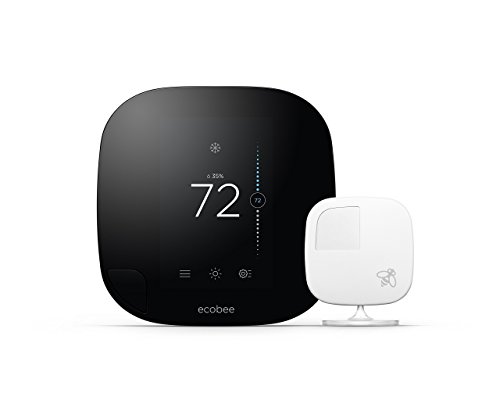
| Room‑Level Comfort | Connectivity: Wi‑Fi (smart hub/voice assistant compatible); includes remote sensor | Remote/Room Sensing: Includes Remote Sensor (room-level occupancy/temp sensing) | Programmable Scheduling: Smart scheduling/automation (learns and optimizes schedules) | VIEW LATEST PRICE | Read Our Analysis |
| Sensi Smart Wi‑Fi Thermostat ST55 (Energy Star) |

| Energy‑Saving Essential | Connectivity: Wi‑Fi (Sensi app; remote access) | Remote/Room Sensing: Compatible with Sensi Room Sensors / supports remote sensors | Programmable Scheduling: Flexible scheduling (programmable 7‑day features) | VIEW LATEST PRICE | Read Our Analysis |
More Details on Our Top Picks
DIGITEN WTC100 Wireless Programmable Temperature Controller Outlet
Should you need precise remote temperature control for spaces like a greenhouse, window AC, or attic fan, the DIGITEN WTC100 lets you place its high‑precision sensor where it matters and wirelessly switch a plugged‑in heater or cooler on and off based on your set RUN/STOP temperatures. You’ll program the battery‑powered remote to control the mains receiver—no wiring—and see settings on the backlit LCD in °C or °F. The RF link reaches about 50–100 m in isothermal spaces, and settings survive power outages. The receiver handles up to 15 A/1650 W, uses flame‑retardant materials with heat‑dissipation design, and supports ZigBee compatibility.
- Connectivity:RF wireless (remote ↔ receiver), ZigBee indicated
- Remote/Room Sensing:External remote temperature sensor (remote controller measures ambient)
- Programmable Scheduling:Programmable ON/OFF temperature setpoints via remote
- Smart Home / Voice Support:Smart Home compatible; ZigBee indicated (no specific voice listed)
- Energy / Efficiency Focus:Thermostat control to reduce runtime; programmable for energy management
- Installation / Power Options:Plug‑in receiver (mains) + battery‑powered remote; plug‑and‑play (no wiring)
- Additional Feature:Precise built-in sensor
- Additional Feature:Battery-powered remote
- Additional Feature:15A / 1650W max load
Braeburn 7500 Wireless Programmable Home Thermostat Kit
Should you want flexible, whole-home temperature control, the Braeburn 7500 Wireless Programmable Thermostat Kit delivers—with a large backlit LCD, supply-air sensing, and support for up to four optional wireless indoor sensors so you can monitor and control temperatures where they matter most. You’ll get a rectangular, battery-powered thermostat with control module and supply sensor, plus optional 24V R/C hookups. It’s universal for conventional and heat-pump systems (up to 3H/2C), supports hydronic zones, and offers 7-day/5-2-day or non-programmable modes. Superior wireless range, long battery life, programmable fan control, and accessory sensors for outdoor or humidity sensing round it out.
- Connectivity:Wireless (proprietary RF) and Wi‑Fi (app connectivity listed)
- Remote/Room Sensing:Includes supply air sensor; supports up to 4 optional wireless indoor sensors
- Programmable Scheduling:7‑day / 5‑2 day / non‑programmable options (programmable)
- Smart Home / Voice Support:Smart Home compatible; Wi‑Fi/app connectivity (voice not explicitly listed)
- Energy / Efficiency Focus:Programmable features and sensor options for system efficiency (manufacturer claims superior battery life)
- Installation / Power Options:Battery powered with optional 24V (R/C terminals) — flexible installation
- Additional Feature:Includes supply sensor
- Additional Feature:7-/5-2-day programming
- Additional Feature:3H/2C heat pump support
Sensi Touch 2 Smart Thermostat (ST76)
Provided you want a touchscreen, Alexa‑ready thermostat that pairs with optional remote room sensors for balanced comfort, the Sensi Touch 2 (ST76) delivers — it’s ENERGY STAR certified, easy to install yourself with the app’s step‑by‑step guidance, and requires a common wire for reliable operation. You’ll get a color touchscreen, Wi‑Fi control, flexible scheduling, remote access, usage reports and alerts, and about 23% potential HVAC energy savings. The app and universal Bluetooth simplify setup, and included hardware and manuals help DIYers. Sensi protects personal data and offers filter alerts, equipment alerts, and century‑long HVAC know‑how backing its performance.
- Connectivity:Wi‑Fi (app/Alexa compatible); supports Sensi Room Sensors
- Remote/Room Sensing:Compatible with Sensi Room Sensors (sold separately)
- Programmable Scheduling:Flexible scheduling (programmable)
- Smart Home / Voice Support:Works with Alexa (voice assistant)
- Energy / Efficiency Focus:ENERGY STAR certified; up to ~23% HVAC energy savings (product claims)
- Installation / Power Options:Requires common wire (c‑wire); DIY installation guided by app
- Additional Feature:Touchscreen color display
- Additional Feature:ENERGY STAR certified
- Additional Feature:Usage reports & alerts
Honeywell Home RTH6580WF Wi-Fi 7-Day Programmable Thermostat White
Provided you want a straightforward, Wi‑Fi enabled thermostat that learns your home’s heating and cooling cycles, the Honeywell Home RTH6580WF is a solid pick—its Smart Response feature adapts to deliver your target temperature while letting you control schedules remotely via the Total Connect Comfort or Honeywell Home apps. You’ll set seven‑day schedules, view a large backlit display, and use voice control with Alexa, Google Assistant, or Cortana. Installation is DIY but needs a C‑wire and 20–30 VAC; it won’t work with electric baseboard heat. It’s ENERGY STAR certified and compatible with many utility save‑energy programs nationwide.
- Connectivity:Wi‑Fi (app/cloud control; voice assistant integration)
- Remote/Room Sensing:Compatible with remote sensors (uses remote sensing via app/features)
- Programmable Scheduling:7‑day programmable with Smart Response learning
- Smart Home / Voice Support:Works with Alexa, Google Assistant, Cortana (voice)
- Energy / Efficiency Focus:ENERGY STAR certified; Smart Response learning for efficient cycling
- Installation / Power Options:Requires c‑wire (20–30 VAC) or verify C‑wire adapter; DIY installation
- Additional Feature:Smart Response learning
- Additional Feature:Large backlit display
- Additional Feature:Works with utility programs
Emerson Sensi Touch Wi‑Fi Smart Thermostat (ST75)
Should you want a smart thermostat that pairs simple touchscreen control with broad smart‑home compatibility, the Emerson Sensi Touch ST75 is a strong pick. You get a 4.3″ color touchscreen, compact rectangular body (5.625″ x 3.4″ x 1.17″), and illuminated terminals that simplify installation. It’s Energy Star certified, requires a common wire, and supports AC, furnace, heat pump, or boiler systems. Use the Sensi app or voice assistants (Alexa, Google, HomeKit, SmartThings) for remote control, geofencing, schedules, alerts, and usage reports. Emerson backs it with a three‑year warranty and privacy promises about your data.
- Connectivity:Wi‑Fi (Sensi app; voice assistant integrations)
- Remote/Room Sensing:Works with Sensi Room Sensors (room-level sensing supported)
- Programmable Scheduling:Flexible scheduling (programmable)
- Smart Home / Voice Support:Works with Alexa, Apple HomeKit, Google Assistant, SmartThings, Vera (voice/platforms)
- Energy / Efficiency Focus:ENERGY STAR certified; energy‑saving features and usage reports
- Installation / Power Options:C‑wire required in many applications; AC/DC 30V power; DIY installation
- Additional Feature:4.3″ touchscreen display
- Additional Feature:Illuminated easy-click terminals
- Additional Feature:3-year manufacturer warranty
ecobee3 Smarter Wi-Fi Thermostat with Remote Sensor 2nd Generation
Provided that you want precise comfort in the rooms you use most, the ecobee3 Smarter Wi‑Fi Thermostat with Remote Sensor, 2nd Generation is a smart choice—its included Remote Sensor detects which rooms are occupied and directs heating or cooling there, while the thermostat itself learns your home’s energy profile and factors in external weather to optimize performance. You’ll get room-level comfort and occupancy detection, and the ecobee3 adapts run times to save energy whenever you’re away. It works with Alexa for voice control (device sold separately) and uses thousands of data points to balance comfort and efficiency, lowering utility costs over time.
- Connectivity:Wi‑Fi (smart hub/voice assistant compatible); includes remote sensor
- Remote/Room Sensing:Includes Remote Sensor (room-level occupancy/temp sensing)
- Programmable Scheduling:Smart scheduling/automation (learns and optimizes schedules)
- Smart Home / Voice Support:Works with Alexa (voice control via Alexa device)
- Energy / Efficiency Focus:Smart optimization for comfort vs. energy; reduces utility costs
- Installation / Power Options:Requires connection to HVAC system (professional/DIY depending); includes thermostat wiring to system (typical smart thermostat installation)
- Additional Feature:Occupancy-aware sensing
- Additional Feature:Room-level comfort control
- Additional Feature:Weather-informed optimization
Sensi Smart Wi‑Fi Thermostat ST55 (Energy Star)
In case you want an easy, traditional-feeling smart thermostat that saves energy without a complicated install, the Sensi ST55 is a strong choice — it fits existing wall space, uses physical buttons, and usually doesn’t need a common wire. You’ll get simple DIY setup with a built-in level and step-by-step app guidance, and compatibility with most HVAC systems. It’s ENERGY STAR certified and can cut HVAC use roughly 23% via flexible scheduling, remote access, and usage reports. The app sends equipment alerts and maintenance notifications, it works with Alexa, and Sensi pledges not to sell your personal information.
- Connectivity:Wi‑Fi (Sensi app; remote access)
- Remote/Room Sensing:Compatible with Sensi Room Sensors / supports remote sensors
- Programmable Scheduling:Flexible scheduling (programmable 7‑day features)
- Smart Home / Voice Support:Works with Alexa (voice assistant)
- Energy / Efficiency Focus:ENERGY STAR certified; estimated ~23% HVAC energy savings
- Installation / Power Options:Common wire not required in most applications; easy DIY installation
- Additional Feature:Traditional-button form factor
- Additional Feature:No C-wire in most installs
- Additional Feature:Built-in physical level
Factors to Consider When Choosing a Thermostat With Remote Sensor
When choosing a thermostat with remote sensors, you’ll want to consider about where sensors can be placed, how accurate their readings are, and how far their signals reach. Check that the sensors and thermostat work with your HVAC system and meet your home’s power and wiring options. Also confirm the device supports the smart home platforms and automations you use.
Sensor Placement Options
Although you might be tempted to tuck a remote sensor near a vent or window, place sensors in representative life zones—like bedrooms or the living room—and mount them on an interior wall about seated head height (3–5 feet / 1–1.5 m) away from drafts, direct sunlight, appliances, exterior walls, and HVAC registers so they read true ambient temperature; for multi‑room setups, distribute sensors across priority areas and put occupancy sensors where they’ve got a clear line of sight to the room’s main activity. Mount each sensor away from localized heat or cold sources and avoid kitchens, exterior walls, and window alcoves. For balanced control, prioritize rooms that run warmer or cooler than the main thermostat and space sensors evenly to reflect typical occupancy patterns.
Sensor Accuracy And Range
Now that you’ve chosen where to put sensors for true ambient readings, you’ll want to check how accurate and far those sensors can measure. Accuracy is usually listed as ±°C or ±°F (for example ±0.5°C / ±1°F); pick sensors with tighter tolerances and factory-traceable calibration for stable comfort. Resolution of 0.1–0.5°C (0.2–1°F) helps the thermostat respond to small changes. Range must cover the distance and obstacles between sensor and base—tens of meters is common, but walls, metal and insulation reduce range, so verify line-of-sight when feasible. Also compare sample rate and update interval: fast reporting (seconds to minutes) yields more responsive control, while slower updates smooth noise but delay reactions. Avoid placing sensors near heat sources.
Compatibility With HVAC
Because your thermostat and sensors must talk the same language as your HVAC, start confirming system and power compatibility prior to buying. Verify the thermostat and remote sensor explicitly support your system type—conventional forced‑air, heat pump, boiler/hydronic, or multi‑stage—so control logic and auxiliary/backup heat work correctly. Make sure the remote sensor can be configured as a room/occupancy sensor or as a supply/return sensor depending on whether you require localized comfort or system feedback. Should you have multi‑zone or zone‑valve hydronic systems, confirm support for multiple sensors per zone and zone management. Finally, check communication protocol, wireless range, and interference tolerance so sensor signals reliably reach the controller from the locations you plan to install them.
Power And Wiring Needs
After confirming system compatibility, you’ll want to check how the thermostat and sensors are powered and wired, since that affects reliability, features, and installation work. Remote sensors often use AA/AAA or coin cells, so verify expected battery type and replacement interval to avoid surprise maintenance. Many main units need a common (C) wire to deliver steady power and enable reliable Wi‑Fi and advanced features; battery‑only thermostats can limit functions and require frequent battery swaps. Should you prefer wired sensors, confirm your thermostat accepts multiple sensor inputs and that existing HVAC wiring can handle extra conductors without major re‑wiring. For multi‑zone or heat‑pump setups, double‑check the thermostat’s power capacity and auxiliary circuit compatibility to make certain sensors operate and communicate properly.
Smart Home Integration
While picking sensors and a thermostat, make sure they’ll actually work together within your smart‑home ecosystem—check platform support (Alexa, Google, HomeKit), whether the thermostat’s app and cloud expose sensor data for automations and reports, and provided that the control logic can use sensor inputs for setpoints and cycling rather than just displaying readings. You’ll also want matching platform support across thermostat and sensors so readings and automations are accessible everywhere. Confirm the app/cloud publishes temperature, humidity, and occupancy data for scenes, energy reports, and remote rules. Verify the thermostat integrates sensor inputs into core control logic (staging, heat/cool cycling) rather than read‑only displays. Check wireless protocols, range/repeaters, and gateway compatibility, and review privacy, data retention, and third‑party integration policies to match your security preferences.
Scheduling And Zoning Features
While you’re choosing a thermostat with remote sensors, prioritize systems that let you create distinct schedules and zones so each room follows the right setpoints at the right times. Pick a thermostat that supports multi‑zone scheduling so remote sensors can follow independent daily programs per room. Choose flexible options (7‑day, 5‑2, or fully custom) to match varied occupancy and increase efficiency. Make sure you can assign sensors to specific schedules and set priority per schedule — for example, sensor A for mornings, sensor B for evenings. Confirm the controller offers temporary hold and vacation modes per zone so overrides don’t change the main plan. Prefer platforms that tie sensor‑based zoning to time rules (bedroom nights, lounge room days) for precise, room‑by‑room control.
Frequently Asked Questions
Can Remote Sensors Work Through Thick Walls or Multiple Floors?
They can, but walls and floors can reduce range and signal strength. You’ll likely need sensors with strong transmitters, line-of-sight whenever possible, or use repeaters/mesh-capable systems. Test placement and consider wired options should it be needed.
Do Remote Sensors Require Wi‑Fi or Use a Separate Radio?
They usually don’t need Wi‑Fi; instead, they use a separate radio, but you could assume otherwise. You’ll rely on low‑power RF (proprietary or Zigbee/Z‑Wave), so Wi‑Fi isn’t required for most remote sensors.
How Long Do the Remote Sensor Batteries Typically Last?
They typically last 1–3 years, depending on usage, sensor type, and reporting frequency. You’ll get longer life with less frequent updates and energy‑efficient models; heavy use or frequent temperature reporting shortens battery lifespan.
Are Remote Sensors Compatible With Multi‑Stage HVAC Systems?
About 85% of modern remote sensors work with multi‑stage HVAC systems. You’ll usually find compatibility with 2‑ to 5‑stage setups, but check your thermostat’s specs and wiring requirements before buying to guarantee full feature support.
Can Remote Sensors Be Mounted Outdoors or in Humid Areas?
You generally shouldn’t mount remote sensors outdoors or in humid areas unless they’re explicitly rated for exterior or high‑humidity use; otherwise, you’ll risk damage, inaccurate readings, and voided warranties, so choose appropriately certified sensors.
