

A thermostat can become the quiet center of your home automation, adjusting heating and cooling around your routines instead of forcing you to revisit the wall panel. Your setup may need Matter support, app access, scheduling, or HVAC compatibility that matches a heat pump, boiler, or conventional system. These nine thermostats cover different installation situations, from homes with a C-wire to systems needing an included adapter.
A Side-By-Side Look

vine Smart Thermostat for House WiFi Programmable C-Wire Required

Aqara Smart Thermostat W200

Cielo Smart Thermostat Eco Central HVAC

ecobee Smart Thermostat Premium WiFi Smart Sensor

ecobee Smart Thermostat Essential WiFi
ecobee Smart Thermostat Enhanced Programmable

Honeywell Home X2S Smart Wi-Fi Thermostat
meross Matter Smart Thermostat for Home Programmable WiFi

SASWELL Smart WiFi Thermostat 3H/2C Heat Pump
Inside Each Recommended Option
The vine model suits households that prefer precise scheduling over elaborate room-sensing features. Its seven-day plan supports up to eight daily periods, giving your weekday commute and weekend routine separate temperature changes.
Remote adjustments work through Vine Thermostat or Smart Life, so you can check settings away from home. The honest read is that this is most practical where a C-wire, the common wire that supplies steady power to a thermostat, is already present.
Useful Touches
- Eight scheduling periods allow more detailed day-to-day routines.
- Temperature alerts can draw attention to unexpected changes.
- Filter reminders help you keep HVAC maintenance on your calendar.
- Child lock prevents casual wall-panel changes.
Things To Consider
- A C-wire is required before installation.
- Check your 24V system type before replacing the existing control.
vine Smart Thermostat for House WiFi Programmable C-Wire Required
Aqara takes a different path from vine’s calendar-heavy approach by leaning into Apple Home activity states. Adaptive Temperature can adjust around home, sleep, away, and extended-away states rather than requiring you to build every schedule block yourself.
You’ll benefit most in an Apple-centered household where an Apple TV or HomePod already acts as a home hub. One thing worth considering is the platform requirement: this feature also needs a compatible iPhone or Apple Watch running version 26 or later.
Practical Pluses
- Apple Home can automate temperatures around activity states.
- Less manual schedule building suits changing daily routines.
- Clean Energy Guidance can make small temperature changes at cleaner grid times.
Worth Noting
- Adaptive Temperature depends on a compatible Apple home hub.
- Clean Energy Guidance applies only in the contiguous United States.
- Apple device software must meet the stated version requirement.
Who It Suits Best
Apple Home users with a home hub and variable daily routines get the clearest fit.
Where Another Pick Suits Better
meross Matter Smart Thermostat for Home Programmable WiFi suits Home Assistant setups that prioritize Matter connectivity.
The Cielo Smart Thermostat Eco makes sense for a central HVAC replacement where missing C-wire wiring could otherwise complicate the project. Unlike vine’s required common wire, Cielo includes an adapter intended for homes without that connection.
Its app combines remote control with custom or preset home, away, and sleep schedules. For a home left empty during trips, Vacation Mode maintains temperature limits while keeping usage restrained.
What It Does Well
- Included adapter broadens installation options for older wiring.
- Usage-pattern views help you spot heating and cooling habits.
- Vacation Mode suits extended time away from home.
- Supports gas, electric, oil, hot-water, heat pump, and geothermal systems.
- App control lets you revise settings away from the wall panel.
Trade Offs
- Confirm your HVAC terminals match the supported staging layout.
Rooms that run warmer or cooler than the hallway thermostat location are where the ecobee Premium becomes more compelling. Its included SmartSensor can inform adjustments using conditions in a room that matters to you.
Compared with Cielo’s wiring flexibility, this model puts more attention on occupancy and room-aware control. You may find that extra sensor most useful in a bedroom, home office, or frequently used living area.
What Helps Most
- Included SmartSensor focuses adjustments beyond the thermostat’s wall location.
- Occupancy features can respond to whether people are home.
- Works with Apple HomeKit, Google Assistant, SmartThings, and Siri.
- Doorbell camera integration can show a live door view on the display.
- Power Extender Kit and trim kit are included.
- Compatible with 95% of systems.
Minor Gripes
- Siri control requires an Apple home hub.
- Room-sensor value is lower in a compact home with even temperatures.
Made For
Larger homes with a noticeably warm or cool priority room benefit most from the included SmartSensor.
Consider Something Else When
ecobee Smart Thermostat Essential WiFi suits you better when touchscreen schedules are your main priority.
The Essential strips the ecobee idea back to touchscreen and app-based temperature changes. That makes it a sensible fit for households replacing a basic programmable thermostat without needing room sensing or a doorbell display.
Schedules can reduce heating or cooling during times you are out, then restore your preferred setting around your return. For most apartments and smaller homes, that straightforward approach is enough.
Where It Helps
- Color touchscreen keeps routine changes close at hand.
- App access lets you change temperatures away from home.
- Scheduled adjustments fit regular work and school days.
- Software updates can add improvements over time.
Room For Improvement
- Check the system against ecobee’s compatibility tool before installation.
- This model lacks the included room sensor found with ecobee Premium.
- Homes with irregular occupancy may prefer ecobee Enhanced’s radar feature.
Right Fit For
First-time smart thermostat owners with regular weekly routines get a clear, low-complexity path here.
Not Your Match When
ecobee Smart Thermostat Premium WiFi Smart Sensor suits multi-room comfort priorities more closely.
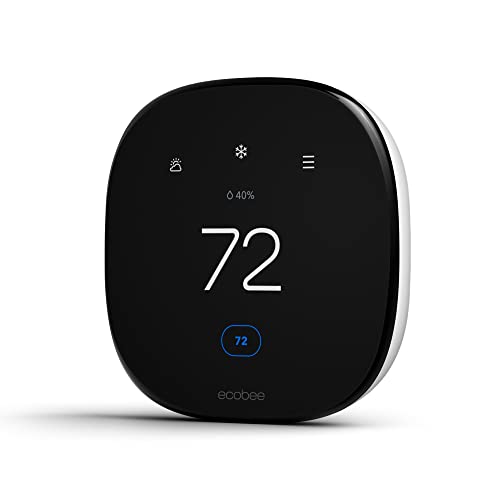
ecobee Enhanced is built around changing occupancy rather than a fixed schedule alone. Built-in radar detects presence, allowing temperature adjustments while you are away and preparing the home before you return.
That makes sense for households with staggered work hours, school pickups, or frequent short trips. Compared with the Essential, you get occupancy sensing and a Power Extender Kit in the box.
Everyday Advantages
- Radar occupancy detection responds to a changing household pattern.
- Schedule suggestions can reduce manual programming work.
- Power Extender Kit helps with certain no-C-wire installations.
- Supports Apple HomeKit, Google Assistant, SmartThings, and Apple Watch control.
- Compatible with 90% of systems.
Points To Note
- Compatibility should be checked before opening the installation materials.
The Honeywell Home X2S brings Matter support to a thermostat that also pays attention to the wall it lives on. Interchangeable white and gray accent pieces give you a small but useful way to coordinate with nearby trim or paint.
Beyond appearance, you can set filter reminders, view indoor humidity, and use auto-away behavior. For conventional systems or modest heat pumps, its supported staging is clearly defined.
Points In Its Favor
- Matter support can simplify connection across compatible home platforms.
- White and gray accent pieces offer a choice at installation.
- Indoor humidity monitoring gives more context than temperature alone.
- Flexible scheduling supports different weekly household patterns.
Softer Spots
- Heat-pump support stops at 2 heat and 1 cool stage.
- Verify system staging rather than assuming any heat pump will fit.
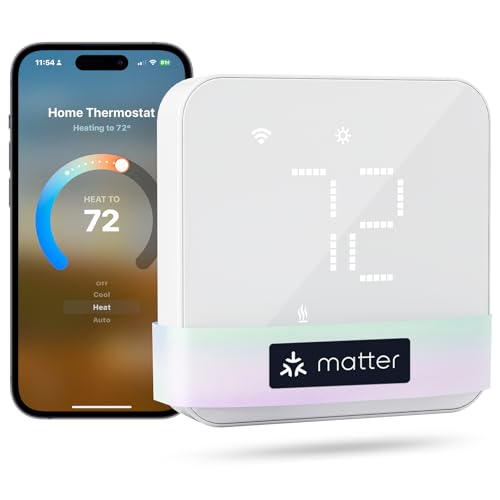
For Home Assistant users, the meross thermostat has the clearest stated integration path in this list through Matter. Matter is a smart-home connection standard that helps compatible devices communicate locally across supported platforms.
It supports a 24/7 flexible schedule, app management, and HVAC usage tracking. The key pre-installation task is checking wiring and system type, especially because electric baseboard, millivolt, and two-wire systems are outside its supported use.
The Practical Payoff
- Matter support includes Home Assistant among compatible platforms.
- Local platform integration can reduce dependence on separate apps.
- Usage tracking gives you a view of HVAC activity.
- Flexible schedules cover home, away, and sleep periods.
- Supports heat pumps, furnaces, air conditioners, boilers, humidifiers, and dehumidifiers.
Small Caveats
- A C-wire may be needed for certain wiring configurations.
- It does not fit 110V, 120V, or 240V electric baseboard heating.
- Two-wire and millivolt thermostat systems are incompatible.
Best Suited To
Home Assistant households with compatible central HVAC systems get the most direct platform fit.
A Better Fit Elsewhere
Cielo Smart Thermostat Eco Central HVAC suits homes that need an included C-wire adapter.
SASWELL focuses on making a multi-stage system upgrade less intimidating. Its included C-wire adapter is particularly useful for battery-powered, single-stage thermostat replacements where new wiring would be inconvenient.
The 3H/2C rating means it supports up to three heating stages and two cooling stages on compatible heat pump and conventional systems. A bright color touchscreen keeps schedules and current readings visible without opening an app.
Real Benefits
- Included C-wire adapter supports more wiring situations.
- 3H/2C support suits compatible multi-stage heat pumps.
- Color touchscreen gives you quick local access to settings.
- Seven-day programming separates weekday and weekend heating plans.
- Tuya Smart and Smart Life app support enables remote adjustments.
- Installation materials are designed for DIY setup.
Areas To Watch
- Confirm the existing system’s stage count before installation.
What Matters Before Adding a Thermostat to Home Assistant
Confirm HVAC Wiring First
Start at the existing wall plate and identify every connected terminal before choosing a thermostat. A C-wire provides continuous power, while some models include an adapter or Power Extender Kit for compatible homes that lack one. Heat pumps also need stage counts checked carefully, especially where auxiliary heat is present.
Put Platform Support Ahead of App Count
Matter support matters most for a Home Assistant setup because it offers a stated connection route across compatible smart-home platforms. meross names Home Assistant directly, while Honeywell Home X2S also supports Matter. App-based control still helps for remote adjustments, but it is not the same as a direct automation integration.
Match Automation to Your Daily Pattern
Fixed schedules work well for predictable office hours, school runs, and regular sleep times. Occupancy sensing makes more sense in homes where people leave and return at inconsistent times. Room sensors become more useful once a bedroom or office regularly differs from the hallway thermostat location.
Check System Limits Before Installation
A thermostat can support central HVAC yet still exclude your particular heating arrangement. Electric baseboard voltage, millivolt controls, two-wire systems, and high-stage heat pumps need close attention. The wall plate tells you more than the thermostat’s appearance ever will.
Small Details That Change the Fit
Common Shopping Slip Ups
Do not assume Wi-Fi control means Home Assistant integration. Check for stated Matter compatibility and verify your HVAC voltage, wiring, and stage count before removing the old thermostat.
Where the Extra Money Goes
Higher-tier models can add room sensors, occupancy detection, display integrations, and broader ecosystem support. Those additions matter most in larger homes or homes with changing occupancy patterns.
Frequently Asked Questions
Does Home Assistant Work With Matter Thermostats?
Yes, Home Assistant can work with compatible Matter thermostats. The meross model listed here specifically names Home Assistant among its supported platforms.
What Is a C-Wire on a Thermostat?
A C-wire is a common wire that supplies continuous power to a thermostat. Some listed models require it, while others include an adapter or Power Extender Kit for compatible installations.
Can a Smart Thermostat Work With a Heat Pump?
Yes, many smart thermostats support heat pumps. You need to match the thermostat’s supported heating, cooling, and auxiliary-stage limits to your equipment.
Are Schedules Better Than Occupancy Sensing?
Schedules suit predictable daily routines. Occupancy sensing can be more helpful for homes with irregular departures and arrivals.
Do Room Sensors Matter for Smart Thermostats?
Room sensors matter where the thermostat’s hallway location does not reflect your priority room. They can help guide adjustments using conditions in a bedroom, office, or living room.
