

You want reliable smoke protection that actually works just as it matters, and choosing the right brand can cut false alarms and speed detection of both smoldering and fast flames. I’ll compare top options—battery, hardwired, combo and sealed 10-year units—so you can pick what fits your home and routine, plus the key features to watch for that most homeowners overlook.
| First Alert SM500V Battery-Operated Smoke Alarm with Voice Alerts |
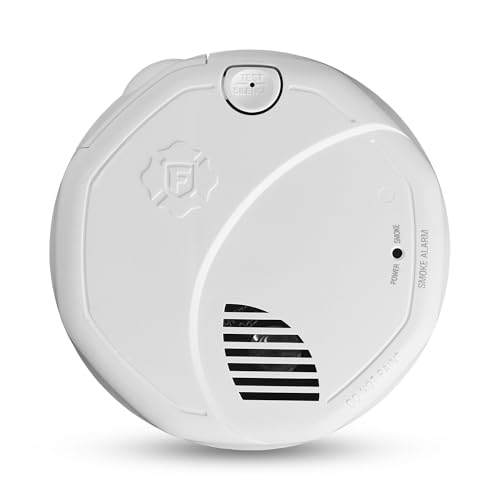
| Best for Families | Power Type: Battery-operated | Detection Type: Smoke detection (photo/advanced precision sensing) | Interconnectivity: Interconnects with compatible alarms (early warning) | VIEW LATEST PRICE | Read Our Analysis |
| BRK First Alert 9120BFF Hardwired Smoke Detector |

| Professional Grade | Power Type: Hardwired 120V with 9V battery backup | Detection Type: Smoke detection (ionization sensor) | Interconnectivity: Connects/links with other compatible BRK/First Alert detectors | VIEW LATEST PRICE | Read Our Analysis |
| First Alert Smoke & Carbon Monoxide Alarm (SMCO100) |

| Dual-Protection Pick | Power Type: Battery-operated | Detection Type: Smoke and carbon monoxide (combination) | Interconnectivity: (Not explicitly stated as wired interconnect) — compatible with alarm network concepts via standard consumer models (battery-operated combination; no hardwired interconnect specified) | VIEW LATEST PRICE | Read Our Analysis |
| First Alert 9120B Hardwired Smoke Detector 3-Pack |

| Best for Whole-Home | Power Type: Hardwired with battery backup | Detection Type: Smoke detection (ionization sensor) | Interconnectivity: Interconnects with compatible BRK/First Alert detectors | VIEW LATEST PRICE | Read Our Analysis |
| Kidde 10-Year Battery Smoke & Carbon Monoxide Detector |

| Low-Maintenance Champion | Power Type: Built-in 10-year battery (sealed) | Detection Type: Smoke and carbon monoxide (combined) | Interconnectivity: (Not stated) — no wired interconnect specified (sealed 10-year unit) | VIEW LATEST PRICE | Read Our Analysis |
More Details on Our Top Picks
First Alert SM500V Battery-Operated Smoke Alarm with Voice Alerts
Provided you want a reliable, easy-to-install battery smoke alarm that cuts down on cooking false alarms and tells you where the danger is, the First Alert SM500V is a smart choice—its Precision Detection tech meets new industry standards and its voice alerts call out the location so you can act fast. You’ll get advance warning interconnect so all compatible alarms sound whenever one detects smoke. It’s battery-operated, comes in a single-pack, and reduces nuisance cooking alarms while providing timely alerts for escape. Installation’s straightforward, maintenance is simple, and the test/silence button makes checks and temporary silencing easy and quick.
- Power Type:Battery-operated
- Detection Type:Smoke detection (photo/advanced precision sensing)
- Interconnectivity:Interconnects with compatible alarms (early warning)
- User Controls:Test/silence button
- Nuisance False-Alarm Reduction:Precision Detection reduces cooking nuisance alarms
- Audible Alarm Level / Notification:Voice alerts specifying location (voice + alarm)
- Additional Feature:Voice-location alerts
- Additional Feature:Battery-operated portability
- Additional Feature:Test/silence button
BRK First Alert 9120BFF Hardwired Smoke Detector
Provided you want reliable, code-ready protection that keeps working during outages, the BRK Premier Alert 9120BFF is a solid pick — it’s a hardwired 120V smoke alarm with a 9V battery backup and an ionization sensor that responds quickly to fast-flaming fires. You’ll get an 85-decibel alarm, a single test/silence button, and a side-load battery compartment for easy maintenance. It links with other compatible BRK/First Alert units so all alarms sound together, and a universal mounting bracket plus tamper-resistant locking brackets simplify installation. Rigorously UL-tested, it comes from a trusted brand that’s led residential smoke protection since 1958.
- Power Type:Hardwired 120V with 9V battery backup
- Detection Type:Smoke detection (ionization sensor)
- Interconnectivity:Connects/links with other compatible BRK/First Alert detectors
- User Controls:Single test/silence button
- Nuisance False-Alarm Reduction:(Not specifically stated) ionization focuses on fast-flaming detection (less specific about nuisance reduction)
- Audible Alarm Level / Notification:85 dB alarm
- Additional Feature:Hardwired with backup
- Additional Feature:Tamper-resistant brackets
- Additional Feature:Side-load battery compartment
First Alert Smoke & Carbon Monoxide Alarm (SMCO100)
In case you want a straightforward, battery-powered combination alarm that cuts down on cooking nuisance alerts while also sensing carbon monoxide, the First Alert SMCO100 is a strong pick for apartments, kitchens-adjacent bedrooms, or rental units. You’ll get dual protection—smoke and CO—with Precision Detection technology that meets updated industry standards and reduces false alarms from cooking. The unit’s battery operation keeps installation and maintenance simple. Use the test/silence button to check function or temporarily silence nuisance alerts. An end-of-life warning tells you when to replace the alarm, helping guarantee continuous, reliable prompt warning for home fire emergencies.
- Power Type:Battery-operated
- Detection Type:Smoke and carbon monoxide (combination)
- Interconnectivity:(Not explicitly stated as wired interconnect) — compatible with alarm network concepts via standard consumer models (battery-operated combination; no hardwired interconnect specified)
- User Controls:Test/silence button
- Nuisance False-Alarm Reduction:Precision Detection reduces cooking nuisance alarms
- Audible Alarm Level / Notification:Voice alerts/test/silence; provides audible smoke and CO warnings (level not specified)
- Additional Feature:Combination smoke/CO
- Additional Feature:End-of-life warning
- Additional Feature:Battery-operated convenience
First Alert 9120B Hardwired Smoke Detector 3-Pack
Should you want a reliable, job-site friendly hardwired alarm, the Initial Alert 9120B 3-pack is a solid pick — it pairs ionization sensing for fast flaming fires with hardwired power plus battery backup so you’re covered during outages. You’ll get 85-decibel alerts and the ability to interconnect with compatible BRK/First Alert units so all alarms sound together. Installation’s straightforward: side-load battery, universal mounting and tamper-resistant brackets, plus a single test/silence button for quick checks. It’s UL-tested and geared for fast turnarounds on jobsites. Place one per level and in bedrooms to guarantee thorough protection for your home.
- Power Type:Hardwired with battery backup
- Detection Type:Smoke detection (ionization sensor)
- Interconnectivity:Interconnects with compatible BRK/First Alert detectors
- User Controls:Single test/silence button
- Nuisance False-Alarm Reduction:(Not specifically stated) ionization sensor for flaming fires (nuisance reduction not specified)
- Audible Alarm Level / Notification:85 dB alarm
- Additional Feature:Pack of three
- Additional Feature:Job-site friendly install
- Additional Feature:Tamper-resistant brackets
Kidde 10-Year Battery Smoke & Carbon Monoxide Detector
Should you want a low-maintenance, code-ready alarm that handles both smoke and carbon monoxide, the Kidde 10-Year Battery Smoke & Carbon Monoxide Detector is a strong choice—its sealed 10-year battery and combined detection make it ideal for homeowners, property managers, and contractors who need long-term, reliable protection without regular battery changes. You get 2-in-1 sensing with advanced technology that detects smoke over 25% faster and reduces false alarms from cooking or steam. The unit emits an 85 dB alarm, shows status via a red LED, and meets UL 217/2034 and FCC standards. It includes a 10-year limited warranty and measures five inches.
- Power Type:Built-in 10-year battery (sealed)
- Detection Type:Smoke and carbon monoxide (combined)
- Interconnectivity:(Not stated) — no wired interconnect specified (sealed 10-year unit)
- User Controls:(Implied) built-in test/reset functionality (standard for 2-in-1 detectors)
- Nuisance False-Alarm Reduction:Advanced sensing reduces false alarms from cooking/steam
- Audible Alarm Level / Notification:85 dB alarm
- Additional Feature:Built-in 10-year battery
- Additional Feature:10-year limited warranty
- Additional Feature:Red LED status light
Factors to Consider When Choosing a Smoke Detector Brand
Upon selecting a smoke detector brand, you’ll want to compare detection technologies (ionization vs. photoelectric vs. dual-sensor) and choose the power source that fits your needs—hardwired, battery-powered, or sealed 10-year units. Check interconnectivity features and false-alarm reduction options so devices communicate reliably and don’t nuisance-trigger. Also consider installation and maintenance requirements to guarantee long-term performance and compliance.
Detection Technology Types
Because different fires produce different particles and behaviors, the sensor type you pick will determine how quickly and reliably an alarm will warn you. Ionization sensors react fastest to small, fast-flaming fires by sensing charged combustion particles, so they’re strong for paper- or grease-fueled fires. Photoelectric sensors detect larger smoke particles from smoldering sources—like upholstery or electrical faults—by sensing light scatter, making them better for slow, smoky fires. Dual-sensor alarms combine both technologies to give broader coverage and quicker overall response. Aspirating and multisensor units add active air sampling, heat or CO sensing, and algorithmic correlation to cut false alarms and enhance early detection in demanding settings. Match response traits, nuisance susceptibility, and code requirements to your home and rooms.
Power Source Options
Although power source needs vary across home and room, choosing the right type of smoke detector affects placement, reliability, and long‑term costs. You can pick battery-operated units for flexible placement and guaranteed operation during outages, but you’ll need to replace batteries regularly or heed low-battery alerts. Hardwired 120V detectors give continuous power and are ideal for permanent installations; make sure they include battery backup so they work during blackouts. Long‑life sealed 10‑year batteries remove routine replacements and annoying chirps, though you’ll replace the whole unit at end of life. Combination approaches — hardwired with backup or battery units with interconnect capability — offer a balanced mix of reliability and installation flexibility. Factor in maintenance and lifecycle costs whenever choosing.
Interconnectivity Features
Should you’re outfitting a whole house, make sure your detectors can interconnect—wired or wireless—so one alarm triggers every unit for immediate, whole‑home notice. Check whether the system uses a proprietary protocol or a standardized wireless RF so replacements and additions stay compatible. Confirm the max number of linkable devices and range limits to cover multi‑level or larger homes. Verify interconnect supports both smoke and carbon monoxide signals and that combined alarms deliver the correct voice or alert type for each hazard. Look for voice location alerts and signal redundancy to help you identify the source quickly. Finally, guarantee battery backup keeps interconnect communication alive during power loss so alarms still coordinate in an emergency.
False Alarm Reduction
Frequently, nuisance alarms are what push homeowners to disable or remove detectors, so pick a brand that minimizes false positives without sacrificing safety. Choose units with photoelectric or multi-criteria sensing rather than ionization-only models, since they cut cooking and steam-related nuisance triggers. Prefer detectors with advanced signal-processing or “precision detection” algorithms that analyze particle patterns to distinguish real fires from benign sources. Combination alarms—photoelectric plus electrochemical CO or dual-sensor/multi-criteria devices—fuse inputs so alarms require corroborating evidence, reducing false positives. Look for configurable sensitivity and a reliable hush/test/silence function that temporarily mutes nuisance alerts without disabling protection. Finally, verify updated industry certifications (for example, current UL standards), because newer testing protocols often enforce stricter false-alarm and nuisance-mitigation performance.
Installation And Maintenance
While selecting a smoke detector brand, consider how you’ll install and maintain the units over time: decide between battery-powered, hardwired-with-backup, or sealed 10-year models based on your wiring and how often you want to change batteries; check whether alarms interconnect (wireless or wired) so one trigger alerts the whole house; and favor designs with easy-mount brackets, side-load batteries, clear test/silence buttons, end-of-life warnings, tamper-resistant features, and visible status indicators to keep upkeep simple and reliable. Choose detectors that match your skill level and home’s wiring to avoid costly professional installs. Prioritize models with clear manuals and universal bases for faster replacement. Plan battery schedules or sealed-unit replacement at end-of-life, use tamper locks where needed, and test monthly to confirm readiness.
Certification And Standards
Because certified detectors have been independently tested, you can trust they meet minimum safety and performance requirements, so check for UL listing (or an equivalent third‑party mark) and the specific standards referenced—like UL 217 for smoke and UL 2034 for CO. Beyond that, make sure the device complies with the latest edition of those standards, since updates improve detection and reduce nuisance alarms. Should you want long‑life units, verify they’re tested and labeled to a 10‑year standard and clearly state end‑of‑life behavior or warranty terms. For combo smoke/CO units, confirm independent certification to both standards so each sensor was evaluated separately. Finally, review local codes and insurance mandates for required certifications, interconnect rules, and installation practices to stay compliant.
