

About 68% of budget buyers prioritize upgradeability over flash specs, so you’ll want options that grow with you. You’ll see compact All‑in‑Ones, mini PCs with laptop‑class CPUs, small Ryzen or N‑series boxes, entry business towers, refurbished kits, and modular small towers—each pairing cost, connectivity and future upgrades differently. Pick the right trade‑offs next to learn which setup fits your workload and upgrade plans.
| HP 22″ All-in-One PC — 13th Gen Intel 16GB | Space-Saving Everyday | Processor: 13th Gen Intel N100 (4-core, up to 3.4 GHz) | Memory (RAM): 16 GB DDR5 | Storage: 128 GB UFS internal + 500 GB external HDD included | VIEW LATEST PRICE | Read Our Analysis | |
| ACEMAGIC M1 Mini PC i9-11900H (32GB 1TB) |
| Powerhouse Mini | Processor: Intel Core i9-11900H (8-core, up to 4.9 GHz) | Memory (RAM): 32 GB DDR4 (2×16 GB), expandable to 64 GB | Storage: 1 TB M.2 SSD + extra M.2 slot (expandable) | VIEW LATEST PRICE | Read Our Analysis |
| KAMRUI Pinova P1 Mini PC (Ryzen 4300U) |

| Efficient Multitasker | Processor: AMD Ryzen 4300U (4-core, up to 3.7 GHz) | Memory (RAM): 16 GB DDR4 (single-channel, upgradable to dual-channel, up to 64 GB) | Storage: 256 GB M.2 SSD + two M.2 slots (expandable) | VIEW LATEST PRICE | Read Our Analysis |
| Dell Slim Desktop ECS1250 — Intel Core Ultra 5 PC |
| AI-Ready Workhorse | Processor: Intel Core Ultra 5-225 (multi-core with AI features) | Memory (RAM): 16 GB (type not specified, likely DDR4/DDR5) | Storage: 512 GB M.2 SSD | VIEW LATEST PRICE | Read Our Analysis |
| Dell OptiPlex 3050 SFF Desktop PC i5 16GB |

| Refurbished Value | Processor: Intel Core i5-6500 (quad-core, up to 3.6 GHz) | Memory (RAM): 16 GB DDR4 | Storage: 256 GB SSD (refurbished) | VIEW LATEST PRICE | Read Our Analysis |
| Lenovo IdeaCentre Business Tower Desktop — Intel Ultra |

| Business Performance | Processor: Intel Core Ultra 5-225 (10-core, up to 4.9 GHz) | Memory (RAM): 16 GB DDR5 | Storage: 512 GB PCIe 4.0 NVMe SSD + 500 GB HDD | VIEW LATEST PRICE | Read Our Analysis |
More Details on Our Top Picks
HP 22″ All-in-One PC — 13th Gen Intel 16GB
Space-Saving Everyday
View Latest PriceShould you want a compact, budget-friendly all-in-one that handles everyday tasks and light multitasking, the HP 22″ All‑in‑One with a 13th Gen Intel N100 and 16 GB DDR5 is a smart pick — it boots fast from UFS storage, runs multiple browser tabs and office apps smoothly, and keeps your desk clutter-free with its integrated 21.5″ Full HD display and built-in speakers. You’ll get efficient 4-core performance, integrated UHD graphics, and 128 GB UFS plus a 500 GB external drive for media. Connectivity covers USB-C, HDMI-out, Ethernet, Wi‑Fi 6, Bluetooth 5.3, HD webcam with shutter, and Windows 11.
- Processor:13th Gen Intel N100 (4-core, up to 3.4 GHz)
- Memory (RAM):16 GB DDR5
- Storage:128 GB UFS internal + 500 GB external HDD included
- Graphics / Display Support:Integrated Intel UHD Graphics; built-in 21.5″ FHD display (1920×1080)
- Networking (Wi‑Fi & Ethernet):Wi‑Fi 6 + RJ‑45 Gigabit Ethernet
- Operating System / Software:Windows 11 (64-bit) pre-installed
- Additional Feature:Built-in HD webcam
- Additional Feature:Privacy shutter included
- Additional Feature:WOWPC 3-in-1 drive
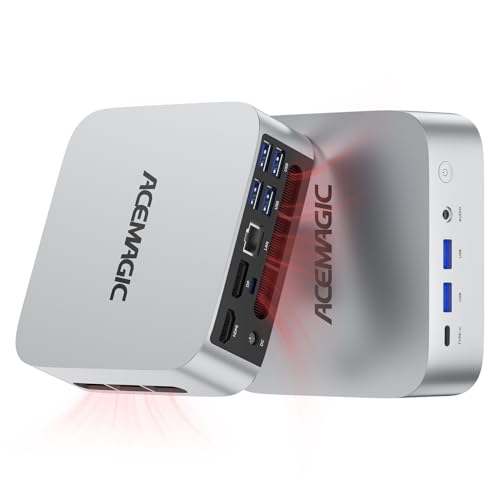
ACEMAGIC M1 Mini PC i9-11900H (32GB 1TB)
Should you need a compact workstation that packs desktop-class power, the ACEMAGIC M1 Mini PC with an i9-11900H delivers—its 8-core/16-thread CPU and 32 GB of DDR4 make it a strong fit for photo/video editing, 3D modeling, and multi-monitor productivity without taking up a full tower. You’ll get an i9-11900H (turbo to 4.9 GHz) with integrated Intel UHD graphics, triple 4K@60 Hz outputs, Wi‑Fi 6, Bluetooth 5.2, and Gigabit Ethernet. Storage starts at a 1 TB M.2 SSD with another slot and up to 4 TB total possible. Cooling uses copper heat pipes and a centrifugal fan; warranty covers three years.
- Processor:Intel Core i9-11900H (8-core, up to 4.9 GHz)
- Memory (RAM):32 GB DDR4 (2×16 GB), expandable to 64 GB
- Storage:1 TB M.2 SSD + extra M.2 slot (expandable)
- Graphics / Display Support:Intel UHD Graphics (11th Gen); triple 4K output (HDMI 2.0, DP1.4, Type-C)
- Networking (Wi‑Fi & Ethernet):Wi‑Fi 6 + Gigabit RJ‑45 Ethernet
- Operating System / Software:Compatible with Windows and Linux/Ubuntu (OS options supported)
- Additional Feature:Triple 4K outputs
- Additional Feature:Full-featured USB-C DP
- Additional Feature:3-year limited warranty
KAMRUI Pinova P1 Mini PC (Ryzen 4300U)
Who needs a compact, always-on mini PC that can handle multi-screen productivity and light media work? You do, should you want the KAMRUI Pinova P1. It packs a Ryzen 4300U (4c/4t, 2.7–3.7 GHz) with Radeon graphics up to 1.4 GHz, offering noticeably better multi-thread and 3–4× GPU performance versus basic UHD chips. It ships with 16 GB DDR4 and a 256 GB M.2, but supports dual-channel DDR4-3200 up to 64 GB and two M.2 slots for SSDs up to 4 TB. Triple 4K outputs, six USB 3.2 ports, GbE, Wi‑Fi 5, and wake features make it ideal for HTPCs, NAS, digital signage, and light business servers.
- Processor:AMD Ryzen 4300U (4-core, up to 3.7 GHz)
- Memory (RAM):16 GB DDR4 (single-channel, upgradable to dual-channel, up to 64 GB)
- Storage:256 GB M.2 SSD + two M.2 slots (expandable)
- Graphics / Display Support:AMD Radeon integrated graphics; triple 4K output (HDMI2.0, DP1.4, USB-C)
- Networking (Wi‑Fi & Ethernet):Wi‑Fi 5 (802.11ac) + Gigabit Ethernet
- Operating System / Software:(OS not explicitly stated) designed for typical desktop use — supports common OS deployments (implied Windows/Linux)
- Additional Feature:Auto power-on/RTC wake
- Additional Feature:Dual M.2 slot design
- Additional Feature:24/7 stability tested
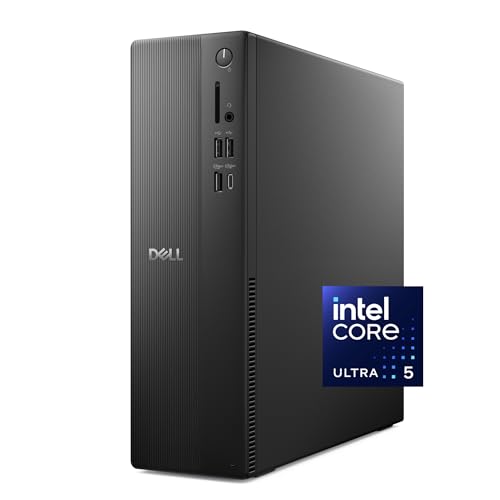
Dell Slim Desktop ECS1250 — Intel Core Ultra 5 PC
Should you need a compact, budget-friendly PC that still handles everyday multitasking and light AI-accelerated tasks, the Dell Slim Desktop ECS1250 — with its Intel Core Ultra 5 CPU and 16 GB of RAM — is a strong pick. You’ll get an Intel Core Ultra 5-225 with built-in AI acceleration, 512 GB M.2 SSD, and Intel UHD Graphics. It supports up to four FHD monitors via DisplayPort 1.4a or two 4K screens with HDMI 2.1 plus DisplayPort. Security includes TPM, lock slot, and padlock loop. Tool-less access eases upgrades; Windows 11 Home and one-year onsite service complete the package.
- Processor:Intel Core Ultra 5-225 (multi-core with AI features)
- Memory (RAM):16 GB (type not specified, likely DDR4/DDR5)
- Storage:512 GB M.2 SSD
- Graphics / Display Support:Intel UHD Graphics; up to four FHD or two 4K displays supported
- Networking (Wi‑Fi & Ethernet):(Not explicitly listed for Wi‑Fi) includes Gigabit Ethernet; modern Dell desktop typically has Wi‑Fi options (spec lists wired networking and service)
- Operating System / Software:Windows 11 Home
- Additional Feature:Hardware TPM security
- Additional Feature:Tool-less internal access
- Additional Feature:1 Year onsite service
Dell OptiPlex 3050 SFF Desktop PC i5 16GB
Built for budget-minded professionals who need reliable multitasking, the Dell OptiPlex 3050 SFF pairs a quad‑core i5‑6500 with 16 GB of DDR4 and a 256 GB SSD, so you’ll get snappy everyday performance and quick boot times for office work, web browsing, and light content tasks. As a certified refurbished unit with Windows 11 Pro, it’s inspected, cleaned, and supported with a minimum 90-day warranty. You’ll appreciate dual‑display support up to 4K, plentiful USB ports, DisplayPort and HDMI, plus Ethernet. It includes a keyboard, mouse, USB Wi‑Fi adapter and a 30‑day Office trial—solid value for cost-conscious buyers.
- Processor:Intel Core i5-6500 (quad-core, up to 3.6 GHz)
- Memory (RAM):16 GB DDR4
- Storage:256 GB SSD (refurbished)
- Graphics / Display Support:Integrated graphics supporting 4K and dual displays (DP + HDMI)
- Networking (Wi‑Fi & Ethernet):USB Wi‑Fi adapter included + Gigabit Ethernet (RJ‑45)
- Operating System / Software:Windows 11 Pro (certified refurbished)
- Additional Feature:Certified refurbished unit
- Additional Feature:Includes USB WiFi adapter
- Additional Feature:Ships with keyboard/mouse
Lenovo IdeaCentre Business Tower Desktop — Intel Ultra
Ideal for small businesses and schools needing reliable, budget-friendly workstations, the Lenovo IdeaCentre Business Tower with Intel Core Ultra 5 225 pairs competent multi‑core performance with practical expandability. You’ll get a 10‑core (6P+4E) / 10‑thread CPU with up to 4.9 GHz and 20 MB cache, making multitasking, productivity, and everyday content creation smooth. The system includes 16 GB DDR5, a 512 GB PCIe 4.0 NVMe SSD plus a 500 GB HDD for fast boots and ample storage. Wi‑Fi 6E, Bluetooth 5.2, gigabit Ethernet, USB‑C/A, HDMI 2.1 and Windows 11 Pro guarantee flexible deployment and connectivity.
- Processor:Intel Core Ultra 5-225 (10-core, up to 4.9 GHz)
- Memory (RAM):16 GB DDR5
- Storage:512 GB PCIe 4.0 NVMe SSD + 500 GB HDD
- Graphics / Display Support:Intel integrated graphics; HDMI 2.1, multiple display ports (multi-monitor support)
- Networking (Wi‑Fi & Ethernet):Wi‑Fi 6E + Gigabit Ethernet
- Operating System / Software:Windows 11 Pro
- Additional Feature:Includes 500GB HDD
- Additional Feature:Wi‑Fi 6E support
- Additional Feature:Front USB‑C port
Factors to Consider When Choosing a Low Cost Desktop Computer
Whenever picking a low-cost desktop, you’ll want to balance performance versus price so you get the speed you need without overspending. Check memory and storage sizes, examine available connectivity and ports, and inspect build quality to guarantee reliability. Also consider future upgradeability so the PC can grow with your needs.
Performance Versus Price
Balance performance with price through focusing on the components that affect everyday responsiveness the most: CPU cores and clock speed, adequate RAM, and fast storage, then weigh graphics needs and upgradeability against cost. You’ll get the best value with a modern quad-core CPU around 2.5–4.0 GHz enhancement for multitasking and light content work. Match RAM to your habits—8 GB can suffice, but moving to 16 GB often makes multitasking noticeably smoother for a modest extra outlay. Prioritize an NVMe or UFS SSD over larger HDDs; even 128–256 GB feels much snappier. Use integrated graphics for office tasks and HD video, and only opt for discrete GPUs provided you’ll game or edit heavily. Favor systems with spare slots or standard interfaces to extend service life and value.
Memory And Storage
You’ve picked the core components that shape responsiveness; now look at memory and storage, which determine how smoothly your system actually feels day to day. For general use, aim for 8–16 GB of RAM so multitasking won’t force constant swapping. Prefer DDR4 or DDR5 based on the platform, and favor dual‑channel kits (2×8 GB) to enhance integrated‑graphics and multitasking performance. Use an SSD—NVMe M.2 provided that supported—for the OS and apps; 256–512 GB hits the sweet spot between speed and cost. Keep a secondary HDD or external drive for large media and backups. Before buying, verify upgradeability: free RAM slots, max supported memory, and available M.2/SATA bays so you can expand cheaply later.
Connectivity And Ports
Covering the ports and wireless features ahead of time will save you headaches later: make sure the system includes at least one USB‑C (5–10 Gbps) and several USB‑A ports (mix of USB 3.2/10 Gbps and USB 2.0) to handle fast drives and legacy gear, plus an HDMI or DisplayPort (ideally HDMI 2.0/2.1 or DP 1.4) to drive modern monitors at 4K@60Hz or multiple displays. Also verify Gigabit Ethernet and recent Wi‑Fi (Wi‑Fi 5/6/6E) plus Bluetooth 5.x for reliable wired and wireless networking. Check audio I/O—3.5 mm combo jacks and, should you require better fidelity, optical S/PDIF or dedicated line‑out. Finally, confirm expansion options: extra M.2/SATA slots, available PCIe or USB ports, and RJ‑45 with Wake‑on‑LAN for upgrades and remote management.
Build Quality And Reliability
Ports and networking matter, but the case and internals determine whether your cheap desktop lasts and stays usable — so pay attention to build quality and reliability from the start. Choose chassis and internal parts made from steel or thick aluminum rather than thin plastic to resist flex, drops, and wear. Verify cooling design: fan count, heat pipes, and clear airflow paths to avoid throttling and extend component life. Prefer tool-less or simple access to drive bays, RAM, and M.2 slots so you can repair, clean, or replace parts safely. Check warranty length and coverage—parts, labor, onsite support—to reduce downtime and total ownership cost. Finally, inspect component indicators like socketed vs soldered CPUs, ECC or higher-grade memory options, and branded capacitors for stability.
Future Upgradeability
Whenever planning a budget desktop, anticipate ahead about upgrade paths so you won’t be forced into a full replacement later: check how many RAM slots the board has and its max supported capacity, confirm spare M.2 or SATA connectors and drive bays, verify the CPU socket and chipset support for future generations, and make certain the power supply and case can handle bigger CPUs or a discrete GPU. You should pick a board with dual‑channel memory and room to reach 32–64 GB, so you can add modules without tossing existing sticks. Confirm at least one free M.2 or SATA and space for a 2.5″/3.5″ drive. Check CPU socket/chipset compatibility and PSU wattage/connectors. Make sure the case fits full‑height cards and offers effective cooling and mounting points.
