

Did you know house fires kill more than 2,500 people in the U.S. each year? You can cut that risk tonight through picking the right alarms for bedrooms, hallways and every level of your home. I’ll walk you through five highly rated options—battery, hardwired, combo and photoelectric—so you can choose what fits your house and schedule quick, practical steps to get them working where they’ll matter most.
| 2-Pack Battery Smoke Alarms with Test and Silence Buttons | Nuisance-Alarm Reducer | Power Type: Battery operated (replaceable batteries) | Smoke Sensing Technology: Photoelectric (optical) sensor | Audible Alarm Level / Sound: Audible alarm (standard household level; test button present) | VIEW LATEST PRICE | Read Our Analysis | |
| First Alert 9120B Hardwired Smoke Detector 6-Pack |
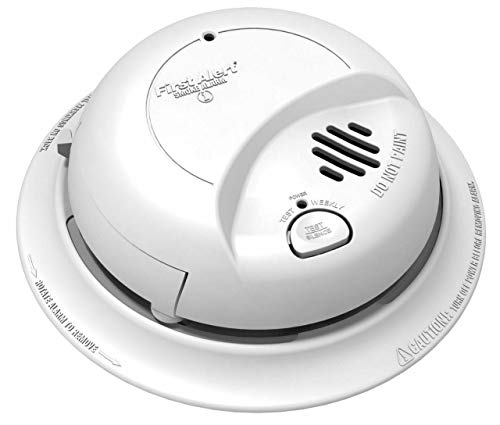
| Contractor’s Choice | Power Type: Hardwired with battery backup | Smoke Sensing Technology: Ionization sensor | Audible Alarm Level / Sound: 85 dB alarm (T3 pattern) | VIEW LATEST PRICE | Read Our Analysis |
| 2-in-1 Smoke and Carbon Monoxide Alarm (Battery) | Dual-Protection Combo | Power Type: Battery operated (3 × AA) | Smoke Sensing Technology: Photoelectric sensor | Audible Alarm Level / Sound: Beeps when detecting smoke/CO (standard audible alarm) | VIEW LATEST PRICE | Read Our Analysis | |
| Kidde Hardwired Smoke & CO Detector with 10-Year Backup |

| Long-Term Reliability | Power Type: Hardwired 120V AC with 10-year backup battery | Smoke Sensing Technology: Advanced smoke sensing (photoelectric/fast detection claims) | Audible Alarm Level / Sound: 85 dB alarm with voice alerts | VIEW LATEST PRICE | Read Our Analysis |
| Photoelectric Smoke Detectors 4-Pack with 9V Batteries | Family Safety Pack | Power Type: 9V battery operated | Smoke Sensing Technology: Photoelectric sensor | Audible Alarm Level / Sound: 85 dB alarm | VIEW LATEST PRICE | Read Our Analysis |
More Details on Our Top Picks
2-Pack Battery Smoke Alarms with Test and Silence Buttons
Nuisance-Alarm Reducer
View Latest PriceShould you want reliable, easy-to-use protection for everyday home risks, this 2-pack of battery smoke alarms with test and silence buttons is a smart choice — they’re built for homeowners and renters who need prompt warning of slow, smoldering fires without constant false alarms. You’ll get advanced photoelectric sensors tuned to detect thick white smoke from smoldering fires, reducing nuisance alerts from cooking. Large test buttons let you verify operation; press-and-hold hush for 5 seconds to silence false alarms. LED indicators show status and low-battery flashing prompts replacement. Install via removable base plate on ceilings away from direct sunlight, drafts, or humidity.
- Power Type:Battery operated (replaceable batteries)
- Smoke Sensing Technology:Photoelectric (optical) sensor
- Audible Alarm Level / Sound:Audible alarm (standard household level; test button present)
- Test / Hush Controls:Test button; Hush/silence hold 5 seconds
- Low-Battery / End-of-Life Warning:Low-battery warning: red LED flashes
- Installation / Mounting:Removable base plate; ceiling mount with screws; twist-and-lock
- Additional Feature:Large test button
- Additional Feature:Removable base plate
- Additional Feature:LED visual status
First Alert 9120B Hardwired Smoke Detector 6-Pack
In case you’re outfitting a multi-bedroom home or preparing multiple units on a job site, the Initial Alert 9120B 6-pack delivers a straightforward, hardwired smoke solution with battery backup that lets you link alarms so the whole house sounds together. You’ll get ionization sensors tuned for fast, flaming fires and an 85 dB T3-pattern alarm that connects with compatible BRK/First Alert units. Install quickly using universal and tamper-resistant brackets; the side-load battery drawer lets you replace batteries without removing the unit. Follow placement recommendations—one per level and bedroom—and confirm the neutral connection in junction boxes to avoid malfunctions.
- Power Type:Hardwired with battery backup
- Smoke Sensing Technology:Ionization sensor
- Audible Alarm Level / Sound:85 dB alarm (T3 pattern)
- Test / Hush Controls:Test button (side-load battery; easy-access)
- Low-Battery / End-of-Life Warning:Battery backup and battery-access design; implies low-battery alerts
- Installation / Mounting:Universal mounting brackets; tamper-resistant locking brackets
- Additional Feature:Hardwired with backup
- Additional Feature:Tamper-resistant brackets
- Additional Feature:Side-load battery drawer
2-in-1 Smoke and Carbon Monoxide Alarm (Battery)
Dual-Protection Combo
View Latest PriceShould you want a single, battery-powered unit that reliably detects both smoke and carbon monoxide, this 2-in-1 alarm is a great choice because it pairs a photoelectric smoke sensor with an electrochemical CO sensor and a clear digital display. You’ll get precise detection with minimized false alarms, audible beeps for events, and a low-level blink showing it’s working. It runs on three AA batteries, installs easily, and warns with continuous beeping every 30 seconds for low power or end-of-life. Certified to UL217 and UL2034 standards, it’s suited for bedrooms, kitchens, garages, RVs, travel, and BBQ or market use.
- Power Type:Battery operated (3 × AA)
- Smoke Sensing Technology:Photoelectric sensor
- Audible Alarm Level / Sound:Beeps when detecting smoke/CO (standard audible alarm)
- Test / Hush Controls:Test function (digital display; low-level blink shows working)
- Low-Battery / End-of-Life Warning:Low-battery warning: continuous beeping every 30 seconds
- Installation / Mounting:Easy to install (battery-powered; suitable for travel/RV)
- Additional Feature:Digital display readout
- Additional Feature:Electrochemical CO sensor
- Additional Feature:Suitable for travel/RV
Kidde Hardwired Smoke & CO Detector with 10-Year Backup
Provided you want a single detector that handles both smoke and carbon monoxide reliably, the Kidde hardwired unit with a 10-year battery backup is a smart choice. You get 2-in-1 sensing with advanced tech that detects smoke over 25% faster and reduces false alarms from cooking or steam. It runs on 120V AC with a sealed 10-year backup battery and warranty. An 85 dB alarm, red LED, and voice alerts announce “Fire” or “Warning, Carbon Monoxide.” It meets UL 217/2034 and FCC standards and interconnects with other Kidde alarms for whole-home notification—ideal for homeowners and pros seeking dependable, code-compliant protection.
- Power Type:Hardwired 120V AC with 10-year backup battery
- Smoke Sensing Technology:Advanced smoke sensing (photoelectric/fast detection claims)
- Audible Alarm Level / Sound:85 dB alarm with voice alerts
- Test / Hush Controls:Test button/voice alerts (interconnect capable)
- Low-Battery / End-of-Life Warning:10-year battery backup and end-of-life/standard warnings per specs
- Installation / Mounting:Hardwired installation; interconnect wiring for whole-home
- Additional Feature:Voice evacuation alerts
- Additional Feature:10-year sealed battery
- Additional Feature:Interconnect capable
Photoelectric Smoke Detectors 4-Pack with 9V Batteries
Family Safety Pack
View Latest PriceYou’ll appreciate these photoelectric smoke detectors should you need reliable prompt warning for smoldering fires, since their sensors are tuned to detect light smoke and slow, smoldering combustion before flames spread. You get a 4-pack of 9V battery-powered units in fire-retardant ABS V0 housings that sound an 85 dB alarm and flash a red LED upon triggered. A chirp and LED flash every 32 seconds signal low battery; swap batteries immediately. Test weekly whenever holding the center button for five seconds and clean dust every six months (use a fan assuming needed). A 10-year warranty and 24-hour support back them.
- Power Type:9V battery operated
- Smoke Sensing Technology:Photoelectric sensor
- Audible Alarm Level / Sound:85 dB alarm
- Test / Hush Controls:Test button (press center 5 seconds)
- Low-Battery / End-of-Life Warning:Low-battery chirp every 32 seconds with red LED flash
- Installation / Mounting:Ceiling/wall mount with standard installation (includes test/maintenance guidance)
- Additional Feature:Fire-retardant ABS housing
- Additional Feature:Rapid red LED flash
- Additional Feature:10-year warranty
Factors to Consider When Choosing Fire Alarms for House
Upon choosing fire alarms for your house, consider the detection technology (ionization vs. photoelectric), power source options, and where each unit will be placed for full coverage. You’ll also want alarms that resist false triggers and can interconnect or integrate with other safety and smart-home systems. These factors help you pick reliable, low-maintenance devices that actually protect your home.
Detection Technology Type
Pick sensors based on the kinds of fires and false alarms you expect: photoelectric (optical) sensors catch slow, smoldering fires and resist nuisance triggers from cooking, while ionization sensors react faster to fast-flaming fires with fine particles, and combination alarms pair both to cover a wider range; recall CO electrochemical sensors are for odorless, colorless carbon monoxide—not smoke—so include them provided CO is a risk in your home. Choose photoelectric units for bedrooms and near communal areas where smoldering fires can develop undetected. Put ionization or combination units where rapid flame spread is likely, like garages or rooms with lots of combustibles. Balance sensitivity to reduce false alarms: photoelectric units typically yield fewer nuisances, ionization triggers sooner for flaming fires, and combinations offer the best comprehensive coverage.
Power Source Options
Power source choice shapes how reliably your alarms protect the home and how much upkeep they’ll need. You’ll pick among battery-powered, hardwired, and sealed-lithium options. Battery units (9V or AA/AAA) keep working during outages but demand regular replacements and will chirp whenever low. Hardwired alarms tied to your 120V system provide continuous power and usually include battery backup for outages. Sealed 10-year lithium alarms remove annual battery swaps—after a decade you replace the whole unit. For interconnected systems, make certain your chosen power arrangement lets every alarm sound together even though one loses primary power; connections can be hardwired or wireless. Also weigh installation and maintenance access: removable battery compartments simplify swaps, while sealed units favor long-term reliability at end-of-life replacement.
Placement And Coverage
Because smoke rises and spreads vertically, you should cover every level of your home and install alarms where people sleep and travel—inside each bedroom, outside sleeping areas, and on every floor including basements. Mount alarms on ceilings or high on walls (ceiling center preferred); provided wall-mounted, place the top edge 4–12 inches from the ceiling to avoid dead air. Keep detectors at least 10 feet from cooking appliances to reduce nuisance trips while still protecting the kitchen. In multi-level homes, put a detector at the top of each stairway and in finished attics or basements with fuel-burning appliances to guarantee vertical coverage. Don’t place alarms near windows, doors, ceiling fans, bathrooms, or other high airflow or humid areas where smoke or steam won’t reach.
False Alarm Resistance
At the point you’re choosing home smoke alarms, prioritize models built to resist false alarms so they actually warn you at the moment it matters. Choose photoelectric (optical) sensors for areas prone to slow, smoldering fires; they’re less likely than ionization types to react to cooking fumes or steam. Look for listed false-alarm reduction or stabilization features—advanced optics or algorithms that ignore brief, low-density particulate events. Install detectors away from kitchens, bathrooms, vents, and direct sunlight to avoid triggers from high airflow or humidity. Pick units with a hush/silence or temporary-mute function so you can pause a nuisance alarm without disabling protection. Maintain detectors with monthly tests and periodic dust cleaning; buildup and neglected batteries are common causes of false alarms.
Interconnect And Integration
For whole-home protection, prioritize alarms that can interconnect so a single detection sets off every unit, alerting people on other floors or in distant rooms. Choose wired (hardwired 120V) or wireless systems based on your home: wired often needs a pro but is resilient; wireless is easier to retrofit. Confirm all devices use compatible interconnect protocols—voltage, signaling standard, or wireless frequency—so the network won’t fail. Make sure mixed-function networks (smoke, CO, combo units) will trigger the intended whole-home response for both smoke and CO events. Plan topology and power backup to avoid a single point of failure: include battery backup or sealed 10-year power solutions so alarms still notify when AC power is lost.
Maintenance And Lifespan
Although alarms can seem low‑maintenance, you’ll need a regular routine to keep them reliable. Replace batteries in battery‑operated units at least once a year or immediately upon low‑battery chirps start. Test every alarm monthly whenever pressing the test button to confirm the sensor, horn, and power source work. Clean alarms every 6–12 months—vacuum vents and wipe exteriors—to remove dust that impairs sensors or triggers false alarms. For hardwired alarms, check the backup battery and wiring periodically; inspect connections, including the neutral, and fix loose or corroded contacts promptly to avoid malfunctions. Finally, replace all smoke and CO alarms at the manufacturer’s recommended end‑of‑life (typically 7–10 years) because sensors degrade over time.
Certification And Standards
Because certified alarms meet tested safety and performance criteria, you should always check for current standards and third‑party listings before you buy. Look for UL 217 for smoke and UL 2034 for CO to guarantee recognized protection. Confirm devices comply with the latest edition (for example UL 217 10th Edition) since updates affect sensitivity, nuisance-alarm resistance, and interoperability. Verify listings through an accredited NRTL such as UL or an ILAC‑accredited lab to assure independent evaluation. Should you want interconnected protection, make sure units meet relevant interconnect standards so alarms trigger whole‑home alerts. Finally, check battery backup, end‑of‑life signaling, and audible output (dB) specs against local codes so your alarms provide continuous, effective notification.
