

Nearly 60% of home fire deaths happen in properties without working smoke alarms, so you can’t afford guesswork. You’ll want devices that spot smoke and carbon monoxide fast, keep power during outages, and send alerts while you’re away. I’ll walk you through five top options—from sealed 10‑year alarms to expandable smart kits—so you can pick what fits your home and habits and sleep easier tonight.
| 5-in-1 Plug-In Smoke & Carbon Monoxide Detector | Most Versatile | Smoke detection: Yes (part of 5-in-1 smoke detection) | Carbon monoxide detection / compatibility: Yes (CO detection included) | Audible alarm / siren: Yes (audible alarm ≥85 dB) | VIEW LATEST PRICE | Read Our Analysis | |
| WiFi Smoke & CO Detector 3-Pack with App Alerts | Smart Home Pick | Smoke detection: Yes (2-in-1 smoke & CO detector) | Carbon monoxide detection / compatibility: Yes (CO detection included) | Audible alarm / siren: Yes (85 dB audible alarm) | VIEW LATEST PRICE | Read Our Analysis | |
| tolviviov 15-Piece WiFi Home Alarm System |
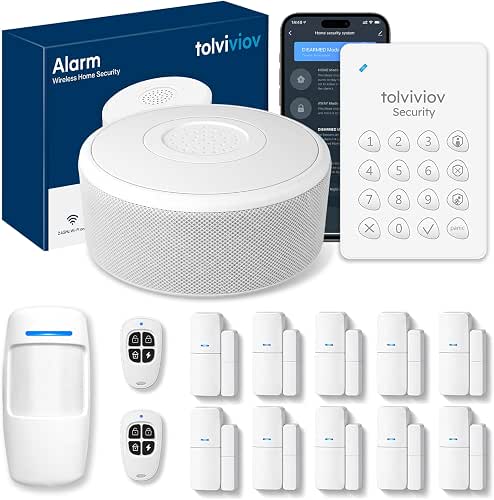
| Best for Coverage | Smoke detection: Not a dedicated smoke sensor (security system focused on intrusion; no smoke sensor included) | Carbon monoxide detection / compatibility: Not built-in (security system focuses on intrusion; no CO sensor included) | Audible alarm / siren: Yes (120 dB siren on alarm base station) | VIEW LATEST PRICE | Read Our Analysis |
| First Alert 10-Year Sealed Battery Smoke Alarm (SMI110) |

| Low-Maintenance Choice | Smoke detection: Yes (dedicated smoke alarm) | Carbon monoxide detection / compatibility: No (smoke-only, no CO detection) | Audible alarm / siren: Yes (built-in smoke alarm sound) | VIEW LATEST PRICE | Read Our Analysis |
| Ring Alarm 14-Piece Wireless Smart Home Security Kit |

| Best for Integration | Smoke detection: Integrates with Ring ecosystem (Ring kits support smoke/CO device integration; kit itself does not include a smoke sensor) | Carbon monoxide detection / compatibility: Compatible (Ring supports CO detectors in ecosystem; kit does not include CO sensor) | Audible alarm / siren: Yes (alarms/notifications via base station and compatible devices) | VIEW LATEST PRICE | Read Our Analysis |
More Details on Our Top Picks
5-in-1 Plug-In Smoke & Carbon Monoxide Detector
Most Versatile
View Latest PriceShould you want compact, travel-ready protection that monitors more than just smoke, the 5-in-1 Plug-In Smoke & Carbon Monoxide Detector is a smart pick — it combines CO and smoke detection with temperature and humidity readings plus a loud audible alarm, so you get broad, real-time alerts in one plug-and-play unit. You’ll see dynamic data on the LCD, adjust brightness and volume across three levels, and rely on a dual alarm (≥85 dB plus flashing red) that triggers CO at 150 PPM. Plug it in, wait 180 seconds, press Test for a self-test, and use the backup battery slot for outages.
- Smoke detection:Yes (part of 5-in-1 smoke detection)
- Carbon monoxide detection / compatibility:Yes (CO detection included)
- Audible alarm / siren:Yes (audible alarm ≥85 dB)
- Digital display / app alerts:Yes (LCD displays temperature, humidity, CO/smoke indicators)
- Battery backup / battery power:Plug-in with backup battery slot (battery not included)
- Portable / suitable for multiple locations:Portable, plug-and-play; suitable for home, RV, hotel, travel
- Additional Feature:Temperature & humidity sensing
- Additional Feature:Adjustable brightness levels
- Additional Feature:Flashing red visual alarm
WiFi Smoke & CO Detector 3-Pack with App Alerts
Smart Home Pick
View Latest PriceShould you want continuous, remote peace of mind, this WiFi smoke and CO detector 3-pack is ideal for busy households and frequent travelers who need instant app alerts and a clear LCD readout. You’ll get 2-in-1 smoke and carbon monoxide sensing with real-time digital levels shown on the LCD and immediate push notifications to your phone for any event. The units sound an 85 dB alarm and show visual alerts on the display. Battery-powered with replaceable cells, they need no wiring and install quickly; you can test them anytime. Portable and compact, they work well in bedrooms, kitchens, RVs, and campers.
- Smoke detection:Yes (2-in-1 smoke & CO detector)
- Carbon monoxide detection / compatibility:Yes (CO detection included)
- Audible alarm / siren:Yes (85 dB audible alarm)
- Digital display / app alerts:Yes (LCD digital display + smartphone notifications)
- Battery backup / battery power:Battery-powered with replaceable batteries
- Portable / suitable for multiple locations:Portable design; suitable for bedrooms, living rooms, kitchens, RVs, campers, travel
- Additional Feature:WiFi smartphone notifications
- Additional Feature:Battery-powered, no wiring
- Additional Feature:Pack of three units
tolviviov 15-Piece WiFi Home Alarm System
Supposing you want a straightforward, no-monthly-fee system you can set up yourself, the tolviviov 15-piece WiFi kit is a strong pick — it commonly appeals to renters and small homeowners who want app control and Alexa voice commands without professional installation. You’ll get a base station, keypad, motion sensor, ten door/window sensors, two remotes, and support materials. The kit sends real-time smartphone alerts, runs on 2.4 GHz WiFi, and triggers a 120 dB siren to deter intruders. You can expand to 20 sensors and five remotes, customize alarm settings, and avoid monthly fees while retaining DIY flexibility.
- Smoke detection:Not a dedicated smoke sensor (security system focused on intrusion; no smoke sensor included)
- Carbon monoxide detection / compatibility:Not built-in (security system focuses on intrusion; no CO sensor included)
- Audible alarm / siren:Yes (120 dB siren on alarm base station)
- Digital display / app alerts:Yes (app remote control with smartphone alerts)
- Battery backup / battery power:Base station powered (typically mains) with wireless sensors that use batteries; system marketed as no monthly fees (sensors are battery-operated)
- Portable / suitable for multiple locations:Designed for home DIY installation; portable components and expandable for different rooms
- Additional Feature:Alexa voice control compatible
- Additional Feature:120 dB siren
- Additional Feature:Supports up to 20 sensors
First Alert 10-Year Sealed Battery Smoke Alarm (SMI110)
Should you want a low-maintenance smoke alarm that lasts without battery changes, the First Alert SMI110 with its 10-year sealed battery is a great fit for most homes. You get Precision Detection advanced sensing that reduces cooking nuisance alarms while providing prompt warning for real fire emergencies. It meets current industry standards and eliminates yearly battery swaps and low-battery chirps for the life of the unit. A test/silence button makes testing and temporary suppression simple, and an end-of-life warning tells you once to replace the alarm. Install and maintain it per manufacturer guidance for reliable residential protection.
- Smoke detection:Yes (dedicated smoke alarm)
- Carbon monoxide detection / compatibility:No (smoke-only, no CO detection)
- Audible alarm / siren:Yes (built-in smoke alarm sound)
- Digital display / app alerts:No digital display (test/silence button only; no LCD)
- Battery backup / battery power:10-year sealed battery (built-in, non-replaceable for life of unit)
- Portable / suitable for multiple locations:Designed for residential installation (not specifically travel-friendly; intended for fixed home placement)
- Additional Feature:10-year sealed battery
- Additional Feature:Reduces cooking nuisance alarms
- Additional Feature:End-of-life replacement warning
Ring Alarm 14-Piece Wireless Smart Home Security Kit
Should you want a starter security setup that’s ready to go in a 2–4 bedroom home and can grow as your needs change, the Ring Alarm 14‑piece kit fits the bill. You get a Base Station, two Keypads, eight Contact Sensors, two Motion Detectors and a Range Extender for reliable coverage. Arm or disarm locally with keypads, get mobile notifications whenever sensors trigger, and monitor all Ring devices in the Ring app. The system can keep protecting you during Wi‑Fi outages with a compatible plan. Optional Ring Protect subscription adds 24/7 professional monitoring, remote features and Alexa voice controls.
- Smoke detection:Integrates with Ring ecosystem (Ring kits support smoke/CO device integration; kit itself does not include a smoke sensor)
- Carbon monoxide detection / compatibility:Compatible (Ring supports CO detectors in ecosystem; kit does not include CO sensor)
- Audible alarm / siren:Yes (alarms/notifications via base station and compatible devices)
- Digital display / app alerts:Yes (mobile notifications via Ring app)
- Battery backup / battery power:Base station and sensors are battery/wireless (includes battery-powered sensors; range extender/units have power options)
- Portable / suitable for multiple locations:Designed for whole-home use and expandability across rooms (sensors placed where needed; suitable for 2–4 bedroom homes)
- Additional Feature:Range extender included
- Additional Feature:Integrates with Ring app
- Additional Feature:Professional monitoring option
Factors to Consider When Choosing a Home Fire Alarm System
Upon selecting a home fire alarm system, you’ll want to match detection types to your home’s risks—smoke, heat, and CO sensors serve different needs. Check alarm loudness and power source options so alerts are audible and reliable, and consider smart connectivity for remote alerts and integration with other devices. Finally, plan installation and placement carefully to guarantee coverage without false alarms.
Detection Types Needed
Because fires and combustion hazards produce different threats, you’ll want detectors that cover both smoke and carbon monoxide and that suit each room’s risks. Install smoke and CO units in inhabited areas and near sleeping rooms: smoke alarms spot combustion particles, CO sensors catch the odorless, colorless gas from incomplete combustion. Use photoelectric smoke sensors in kitchens and living spaces to cut cooking false alarms, and ionization or dual-sensor alarms in bedrooms for quicker response to smoldering and fast-flaming fires. Consider detectors that monitor temperature and humidity to give background and detect rapid temperature rise. Guarantee sensitivity meets UL or equivalent standards and use interconnected units, hardwired or wireless, so one activation alerts the entire home.
Alarm Loudness Levels
Although alarm loudness is often summarized through a single decibel rating, you need to keep in mind how that number translates into real-world audibility throughout your home. Alarms are usually rated in dB—residential smoke and CO units commonly list about 85 dB at 10 feet, which will wake most sleeping adults. Recall each 10 dB jump roughly doubles perceived loudness, so a 95 dB alarm sounds about twice as loud as an 85 dB one. Placement matters: sound drops with distance and obstacles, so install alarms on every level and inside sleeping areas to preserve effective volume where people sleep. For hearing-impaired occupants or noisy spaces, add strobes or bed shakers. Finally, check local codes for minimum dB and testing requirements.
Power Source Options
In choosing a fire alarm, consider both how it’s powered and how reliable that power will be during outages. You can pick hardwired units tied to your household electrical system for continuous mains power; they usually need professional installation and often include battery backup for outages. Battery-powered detectors—either replaceable or sealed long-life—are simple to install and move, but you’ll replace batteries or the sealed unit when it reaches end of life. Plug-in alarms offer constant mains power plus portability, and many include a backup battery slot. Dual-power systems combine mains with a rechargeable or replaceable backup battery to keep protection 24/7. Should you reside in rural or storm-prone areas, favor sealed long-life batteries or resilient backup-capable systems.
Smart Connectivity Features
Once you pick a smart fire alarm, confirm it actually works with your home’s Wi‑Fi band (many devices only support 2.4 GHz) and that it can send push notifications so you get real‑time smoke or CO alerts while you’re away. Also check voice‑assistant and smart‑home platform integration so you can trigger routines or ask for status hands‑free. Verify local backup—battery or cellular—and offline functionality so the alarm still sounds and logs events should connectivity drop. Look for secure communication: encrypted transmissions, strong account authentication, and regular firmware updates to prevent unauthorized access. Finally, confirm alert latency and whether notifications include clear instructions or contact options so you can act immediately whenever an event occurs.
Installation And Placement
After you’ve picked a smart alarm that communicates reliably and securely, you’ll need to place and install it so it can actually detect danger fast. Install smoke alarms on every level, inside each bedroom, and outside sleeping areas to meet safety guidelines and maximize prompt warning. Mount smoke detectors on ceilings at least 4 inches from walls or on walls 4–12 inches below the ceiling to avoid dead-air space. Keep smoke alarms at least 10 feet from cooking appliances and away from steamy bathrooms to reduce nuisance triggers. Place CO alarms outside sleeping areas and on every level, but never directly above fuel-burning appliances or in garages. Avoid windows, doors, and ducts that cause drafts, and follow manufacturer spacing—typically one unit per 225–320 sq ft.
Maintenance And Lifespan
Because detectors only work provided they’re maintained, you’ll need a clear plan for testing, cleaning, and replacing units to keep your home protected. Test every alarm monthly and after power outages, battery changes, relocations, or maintenance, and record test dates so you can spot issues. Replace or service non-sealed battery alarms at least yearly; keep fresh batteries on hand and swap them immediately whenever low-battery chirps start. Clean devices every 6–12 months—vacuum vents and wipe housings to prevent dust-related false alarms or sensitivity loss. Follow manufacturers’ end-of-life guidance—most smoke detectors need replacement after 7–10 years—because sensing elements degrade and whole units, not just batteries, should be replaced. Sealed-battery units cut battery chores but still require end-of-life replacement.
Budget And Expandability
During the evaluation of system options, start from setting a firm upfront budget that covers devices and installation plus about 20–30% extra for accessories and initial testing. With that baseline, compare systems on expandability: pick ones that let you add detectors, door/window sensors, cameras, or modules as needs change. Factor long-term costs — sealed 10-year batteries reduce replacement hassle but might cost more up front, while replaceable cells mean recurring purchases. Don’t forget potential monitoring or app subscription fees and routine maintenance. Favor modular platforms so you can phase upgrades, beginning with essential smoke/CO detectors and adding security sensors later. Finally, verify compatibility and capacity limits (sensors, remotes, zones) so you can scale without replacing the whole system.
