

You want speed, you want color accuracy, and you want room to grow. You’ll find six practical desktop setups that balance those needs for 2026, from compact all‑in‑ones to expandable towers with GPU acceleration. Each option fits different workflows and budgets, and the right tweaks—RAM, NVMe scratch, and a calibrated panel—make a big difference. Keep going to match a setup to how you actually edit.
| STGSivir 22″ All-in-One Desktop PC Core i5 |

| Space-Saving Workhorse | Processor: Intel Core i5 (up to 3.0 GHz) | Memory (RAM): 16 GB | Primary Storage: 512 GB SSD | VIEW LATEST PRICE | Read Our Analysis |
| STGAubron Gaming PC — Ryzen 7 5700X RTX 3050 |

| Performance for Creators | Processor: AMD Ryzen 7 5700X (3.4–4.6 GHz) | Memory (RAM): 16 GB DDR4 | Primary Storage: 1 TB SSD | VIEW LATEST PRICE | Read Our Analysis |
| Renewed HP Elite 6300 Tower PC i5 16GB 3TB |
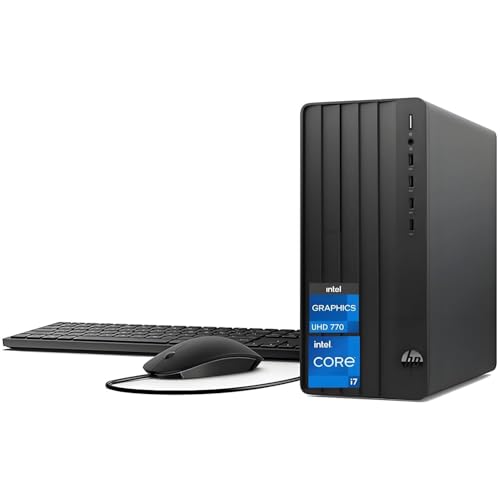
| Massive Storage Bargain | Processor: Intel Core i5-3470 (3.2 GHz) | Memory (RAM): 16 GB DDR3 | Primary Storage: 3 TB HDD | VIEW LATEST PRICE | Read Our Analysis |
| Dell OptiPlex 7050 SFF i7-7700 32GB 1TB SSD |

| Professional Powerhouse | Processor: Intel Core i7-7700 (3.6 GHz) | Memory (RAM): 32 GB DDR4 | Primary Storage: 1 TB SSD | VIEW LATEST PRICE | Read Our Analysis |
| HP 27″ FHD Touchscreen All-in-One PC Ryzen 5 |

| Touchscreen Creative Hub | Processor: AMD Ryzen 5 7520U (up to 4.3 GHz) | Memory (RAM): 16 GB | Primary Storage: Up to 2 TB PCIe SSD | VIEW LATEST PRICE | Read Our Analysis |
| Dell OptiPlex 5060 Desktop PC — Intel i5 32GB |

| Content-Creation Performer | Processor: 8th Gen Intel Core i5 (hexa-core, 3.2 GHz) | Memory (RAM): 32 GB DDR4 | Primary Storage: 500 GB SSD | VIEW LATEST PRICE | Read Our Analysis |
More Details on Our Top Picks
STGSivir 22″ All-in-One Desktop PC Core i5
Should you need a compact, ready-to-use photo-editing station that won’t eat up desk space, the STGSivir 22″ All-in-One is a strong choice—its 22″ Full HD display and Core i5 with 16 GB RAM give you smooth image adjustments and fast file handling right out of the box. You’ll appreciate the clear, natural 1920×1080 panel for accurate detail and the 512 GB SSD for snappy project loads. Built-in Wi‑Fi, Bluetooth 5.0, HDMI, VGA and Ethernet keep transfers flexible. The integrated webcam and speakers simplify setups, and included RGB peripherals, one-year parts coverage, plus lifetime tech support round out a practical editing rig.
- Processor:Intel Core i5 (up to 3.0 GHz)
- Memory (RAM):16 GB
- Primary Storage:512 GB SSD
- Operating System:Windows 11 Home (64-bit)
- Connectivity (Networking / Bluetooth):Wi‑Fi (built-in) + Bluetooth 5.0 + Ethernet (RJ-45)
- Included Peripherals / Extras:RGB keyboard, RGB mouse, RGB mouse pad, built-in webcam, built-in speaker
- Additional Feature:22″ Full HD display
- Additional Feature:Built-in webcam/speakers
- Additional Feature:RGB keyboard, mouse, pad
STGAubron Gaming PC — Ryzen 7 5700X RTX 3050
Should you need a balanced desktop that handles both photo editing and everyday gaming, the STGAubron Gaming PC delivers with an 8-core Ryzen 7 5700X and an RTX 3050—power that lets you edit large RAW files, run GPU-accelerated filters, and still play modern titles at 60+ FPS depending on settings. You get 16GB DDR4 and a 1TB SSD for responsive multitasking and plenty of project storage. Windows 11 Home, Wi‑Fi 6, Bluetooth 5.2, and multiple display outputs keep your workflow connected. Included RGB peripherals and cooling add flair; one-year warranty and lifetime support protect your investment.
- Processor:AMD Ryzen 7 5700X (3.4–4.6 GHz)
- Memory (RAM):16 GB DDR4
- Primary Storage:1 TB SSD
- Operating System:Windows 11 Home (64-bit)
- Connectivity (Networking / Bluetooth):Wi‑Fi 6 + Bluetooth 5.2 + Ethernet (RJ-45)
- Included Peripherals / Extras:RGB keyboard, RGB mouse, RGB fans x4
- Additional Feature:NVIDIA RTX 3050 GPU
- Additional Feature:Wi‑Fi 6 / BT5.2
- Additional Feature:Four RGB cooling fans
Renewed HP Elite 6300 Tower PC i5 16GB 3TB
Should you need a reliable, budget-friendly desktop for basic to moderate photo editing, the renewed HP Elite 6300 Tower fits the bill: its quad-core i5-3470 at 3.2 GHz and 16 GB of DDR3 RAM let you handle batch adjustments and layer work without constant lag. You’ll appreciate the 3 TB HDD for extensive image archives and the DVD-ROM for older media. Integrated Intel HD Graphics 4000 limits heavy GPU-accelerated tasks, so stick to Lightroom, Photoshop basics, and small RAW edits. It runs Windows 10 Pro, includes Wi‑Fi and USB connectivity, and makes a practical, low-cost editing station.
- Processor:Intel Core i5-3470 (3.2 GHz)
- Memory (RAM):16 GB DDR3
- Primary Storage:3 TB HDD
- Operating System:Windows 10 Pro (64-bit)
- Connectivity (Networking / Bluetooth):Wi‑Fi + USB ports (Ethernet implied)
- Included Peripherals / Extras:(none specifically listed beyond tower) — includes DVD-ROM; renewed unit
- Additional Feature:3 TB HDD storage
- Additional Feature:DVD-ROM optical drive
- Additional Feature:Integrated HD Graphics 4000
Dell OptiPlex 7050 SFF i7-7700 32GB 1TB SSD
In case you edit large RAW files or run multiple apps at once, the OptiPlex 7050 SFF with its Intel i7-7700 and 32 GB of DDR4 memory gives you the sustained responsiveness you need for smooth photo workflows. You’ll get fast boot and load times from the 1 TB SSD and reliable multi-monitor support via HDMI and DisplayPort. Windows 11 Pro, Ethernet, Bluetooth and a USB WiFi adapter keep file transfers and tethering flexible. It ships professionally renewed with a 90-day seller warranty, wired keyboard, mouse and power cord. Ports include USB 3.0/2.0 and audio I/O for peripherals.
- Processor:Intel Core i7-7700 (3.6 GHz)
- Memory (RAM):32 GB DDR4
- Primary Storage:1 TB SSD
- Operating System:Windows 11 Pro (64-bit)
- Connectivity (Networking / Bluetooth):USB Wi‑Fi adapter included + Bluetooth + Ethernet
- Included Peripherals / Extras:Wired keyboard and mouse, power cord
- Additional Feature:Small form factor chassis
- Additional Feature:Dual-monitor support
- Additional Feature:USB Wi‑Fi adapter included
HP 27″ FHD Touchscreen All-in-One PC Ryzen 5
Should you want a streamlined all-in-one that balances a large touch display with solid everyday performance, the HP 27″ FHD Touchscreen All‑in‑One with a Ryzen 5 is a great pick for photo editors who value space-saving design and responsiveness. You get a 27″ FHD IPS touch screen with three-sided micro-edge and anti-glare coating, paired with an AMD Ryzen 5 7520U (4 cores/8 threads, turbo to 4.3 GHz) and integrated Radeon graphics. With 16 GB RAM and up to a 2 TB PCIe SSD, plus USB-C, four USB-A ports, Ethernet, HDMI, Wi‑Fi, Bluetooth, Windows 11, keyboard, mouse, and a PLUSERA hub, it handles everyday editing, conferencing, and light creative work smoothly.
- Processor:AMD Ryzen 5 7520U (up to 4.3 GHz)
- Memory (RAM):16 GB
- Primary Storage:Up to 2 TB PCIe SSD
- Operating System:Windows 11
- Connectivity (Networking / Bluetooth):Wi‑Fi + Bluetooth + Ethernet
- Included Peripherals / Extras:Wireless keyboard and mouse, PLUSERA 8-in-1 hub
- Additional Feature:27″ touch IPS display
- Additional Feature:Three-sided micro-edge screen
- Additional Feature:PLUSERA 8-in-1 hub included
Dell OptiPlex 5060 Desktop PC — Intel i5 32GB
Should you need a reliable, no-frills workstation for serious photo editing, the Dell OptiPlex 5060 with an 8th‑gen hexa‑core i5 and 32GB of RAM delivers smooth multitasking and fast render times without breaking the bank. You’ll get Intel HD 630 for basic GPU acceleration, a 500GB SSD for quick boot and app loads, and room to expand storage via four internal SATA connectors. Windows 11 Pro readiness, Wi‑Fi and Ethernet keep you connected. Multiple USB ports, Type‑C and dual DisplayPorts support multi‑monitor setups. Renewed through Microsoft’s refurbisher program, it’s supported, sustainable, and cost‑effective for serious editors.
- Processor:8th Gen Intel Core i5 (hexa-core, 3.2 GHz)
- Memory (RAM):32 GB DDR4
- Primary Storage:500 GB SSD
- Operating System:Windows 11 Professional ready
- Connectivity (Networking / Bluetooth):Wi‑Fi adapter included + Ethernet (RJ-45)
- Included Peripherals / Extras:(none specific) Wi‑Fi adapter included; quality refurbisher support
- Additional Feature:Multiple USB ports (x9+)
- Additional Feature:Dual DisplayPort outputs
- Additional Feature:Microsoft refurbished unit
Factors to Consider When Choosing Desktop Computer Photo Editing
Upon choosing a desktop for photo editing, you’ll want to prioritize processor performance and GPU acceleration to handle complex edits and speeding up previews. Make sure you’ve got plenty of RAM and fast storage (NVMe SSDs) so large files open quickly and multitasking stays smooth. Don’t forget display quality — accurate color, contrast, and resolution make the final difference in your edits.
Processor Performance
Because photo editing mixes quick interactive tasks with heavy batch work, you’ll want a processor that balances strong single-core speed and multithreaded performance—ideally a CPU with at least four physical cores and multithreading (e.g., 4c/8t), high base and turbo clocks (3.0+ GHz base, 4.0+ GHz turbo), and ample L3 cache and memory bandwidth to keep large RAW files and multi-layer previews responsive. You should prioritize chips with excellent per-core performance for brush strokes, layer edits, and UI snappiness, while also valuing additional cores for exports, renders, and batch jobs. More L3 cache and wider memory bandwidth reduce latency whilst juggling big files. Finally, factor in thermal design and cooling headroom so sustained high clocks don’t throttle during long export or batch sessions.
GPU Acceleration
Use GPU acceleration to cut processing times and make edits feel immediate: modern photo apps can offload filters, sharpening, and viewpoint corrections to the graphics card, often speeding supported operations 2–10×. You should pick a GPU that matches your workflow and app support—check for OpenCL, CUDA, or Metal compatibility so filters and plugins actually use the card. VRAM matters: aim for 4–6 GB for HD work and 8+ GB whenever you handle large files, panoramas, or many layers to avoid memory swaps. Favor newer designs and higher core counts for snappier scrubbing, zooming, and previews. Finally, keep drivers and your editing software current—updates regularly add optimizations and expanded GPU-accelerated features.
RAM Capacity
GPU power makes filters and previews fly, but RAM determines how many big files and background tasks you can handle at once. Aim for at least 16 GB to run Photoshop or Lightroom smoothly with large RAW files, multiple layers, and adjustments. Should you work with panoramas, gigapixel images, or batch-process thousands of high-resolution photos, choose 32 GB or more to cut swapping and speed workflows. Use faster DDR4/DDR5 modules in matched dual-channel pairs to improve throughput and yield noticeable gains. Leave 20–30% headroom beyond current needs for plugins, virtual machines, or simultaneous apps. Pair ample RAM with fast SSDs so the OS and editing software avoid slow disk-based virtual memory during intensive sessions.
Storage Type
Whenever you’re setting up a photo-editing workstation, pick storage that keeps your OS and active projects on a fast NVMe PCIe SSD while relegating archives and backups to larger, slower drives; this dual-storage approach cuts load, preview, and export times without breaking the bank. Use a 250–1,000 GB NVMe (or SATA SSD provided budget dictates) for system, apps, and current catalogs, and a 2 TB+ HDD or high-capacity SSD for archives. Estimate capacity from RAW file sizes—many are 1–2 GB each—multiplied across shoots between backups plus workspace overhead. Check SSD endurance (TBW) and sustained write benchmarks to avoid throttling during long exports or cache writes. Maintain reliable backups on separate physical media and at least one off-site or cloud copy.
Display Quality
Having your OS and active projects on a fast NVMe SSD speeds up workflow, but the monitor is how you’ll actually judge color, detail, and contrast—so pick a display that reproduces images reliably. Choose an IPS or VA panel with at least 100% sRGB; in case you print, aim for high Adobe RGB too. Native Full HD is the minimum, but 27″ QHD or 4K gives finer detail and more workspace. Prefer panels with wide gamut and either factory calibration or hardware-calibration support (ΔE < 2 ideal) so colors stay consistent across devices. Target ≥300 nits brightness and a strong contrast ratio for shadow and highlight detail, use an anti-glare finish, and verify ≥178° viewing angles plus uniformity to avoid shifts whenever you move.
Color Accuracy
Color accuracy is the foundation of reliable photo editing, because what you see on-screen directly guides your tonal corrections and color choices. You should pick an IPS or OLED panel with a wide gamut—at least 100% sRGB and preferably 90%+ Adobe RGB or DCI-P3—so saturated hues reproduce correctly. Aim for factory-calibrated panels with Delta E ≤ 2 (≤1 ideal), or get one you can calibrate with a hardware colorimeter. Prefer true 10-bit support (8-bit + FRC minimum) to avoid banding in gradients. Check for uniformity compensation and low Delta E variance so center-to-edge shifts don’t betray edits. Finally, make sure ICC profile support and that your OS and apps honor those profiles for consistent cross-device color management.
Connectivity Options
Because file sizes and peripheral demands can make or break your workflow, connectivity is a vital factor while choosing a desktop for photo editing. You’ll want at least one USB 3.x port (≈5 Gbps) for fast transfers from card readers and external HDDs/SSDs. A USB-C with Thunderbolt 3/4 is ideal: up to 40 Gbps, low latency, external NVMe support, and daisy-chaining dual monitors. Make sure multiple video outputs—HDMI, DisplayPort, or USB-C with DisplayPort Alt Mode—to drive dual or ultrawide displays at 1080p/1440p/4K for extended workspace and accurate grading. Include Gigabit Ethernet (RJ-45) for steady, high-speed network storage backups. Built-in Bluetooth is handy for peripherals, but use wired connections for mission-critical devices needing the lowest latency and maximum reliability.
Expandability Options
While you’ll focus on CPU and GPU power, don’t overlook expandability—choose a desktop with spare M.2 slots and drive bays so you can add NVMe scratch disks and high-capacity HDD archives, plenty of RAM slots and headroom to reach 32–64+ GB, and free PCIe lanes and PSU capacity to drop in a discrete GPU later; check internal drive bays and M.2 slots to separate fast scratch SSDs from bulk SATA archives. Verify RAM slot count, memory type (DDR4/DDR5) and max supported GB so you can upgrade as workloads grow. Confirm free PCIe slots and adequate PSU headroom for GPU upgrades. Look for multiple display outputs to run dual or ultrawide monitors, and confirm external ports and internal headers for fast external drives, card readers, and calibration tools.
