

Consider a thermostat as the compass for your home’s comfort — it points you to steady warmth or cool relief. You’ll want a unit that matches your voltage, safety needs, and how much control you want, so choosing carefully pays off. I’ll outline seven reliable 2026 options and the key specs that matter, so you can pick the right fit for your wiring and lifestyle.
| Honeywell TL7235A1003 240V Line-Volt Digital Thermostat |

| Quiet & Reliable | Voltage Rating: 240 V line-voltage | Control Type: Electronic digital, non-programmable | Intended Use / Application: Single-stage 240V heating systems / line-voltage heaters | VIEW LATEST PRICE | Read Our Analysis |
| Lux WIN100 Programmable 5-2 Day Thermostat |
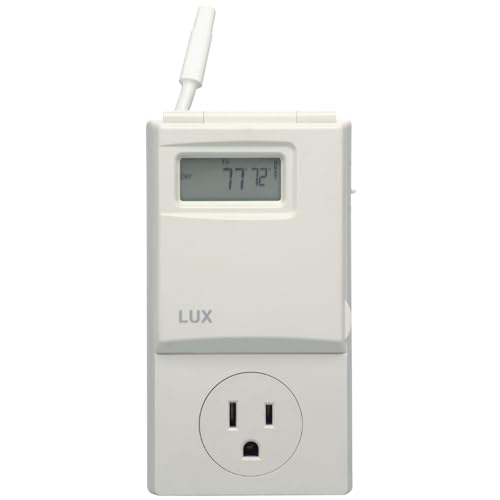
| Best Programmable Pick | Voltage Rating: 120 V (plug-in line voltage / low voltage noted) | Control Type: Programmable digital (5-2 day) | Intended Use / Application: Portable space heaters, window ACs, circulating fans; mechanically controlled ACs and space heaters | VIEW LATEST PRICE | Read Our Analysis |
| Line Voltage Mechanical Thermostat Cooling Only 110 to 125VAC 1 Stage |

| Simple Cooling Solution | Voltage Rating: 110–125 VAC (nominal 120 VAC) | Control Type: Mechanical (bi-metal) single-stage | Intended Use / Application: Cooling-only line-voltage applications (fans/AC) with suspension mount | VIEW LATEST PRICE | Read Our Analysis |
| Honeywell T410A1013 Electric Baseboard Heat Thermostat |

| Durable Economy Choice | Voltage Rating: 230 V line-voltage | Control Type: Manual snap-action (micro switch) | Intended Use / Application: Electric baseboard / zone heaters (line-voltage) | VIEW LATEST PRICE | Read Our Analysis |
| Cadet Double Pole Mechanical Wall Thermostat T522-W |

| Heavy-Duty Basic | Voltage Rating: 120 V / 208 V / 240 V (compatible) | Control Type: Mechanical twist-dial | Intended Use / Application: Electric baseboard and wall heaters | VIEW LATEST PRICE | Read Our Analysis |
| Lux ELV4 Line Voltage Programmable 5-2 Day Thermostat |

| Best for Scheduling | Voltage Rating: Line-voltage (designed for line-voltage heaters; specific voltage not listed) | Control Type: Programmable digital (5-2 day) | Intended Use / Application: Line-voltage electric heating (1 heat); not for element+blower combos | VIEW LATEST PRICE | Read Our Analysis |
| Honeywell CT410B 4-Wire Baseboard/Line Volt Thermostat |

| Professional-Grade Control | Voltage Rating: 120–277 Vac line-voltage | Control Type: Manual dial (mechanical) 4-wire | Intended Use / Application: Electric baseboards, convectors, non-inductive fan-forced heaters | VIEW LATEST PRICE | Read Our Analysis |
More Details on Our Top Picks
Honeywell TL7235A1003 240V Line-Volt Digital Thermostat
Should you need a straightforward, reliable line-voltage controller for 240V single-stage heating, the Honeywell TL7235A1003 gives you electronic temperature control without programming fuss—its on-demand backlight and heating indicator make it easy to read and confirm status, and its soundproof operation avoids the clicking noise you’d get from mechanical thermostats. You’ll get a non-programmable digital thermostat that manages heat consistently for single-stage 240V systems. Installation suits standard line-voltage wiring in homes or businesses. The simple interface supports set-and-forget use, while visual feedback improves usability. Choose it whenever you want dependable, quiet control without complex features.
- Voltage Rating:240 V line-voltage
- Control Type:Electronic digital, non-programmable
- Intended Use / Application:Single-stage 240V heating systems / line-voltage heaters
- Number of Stages / Heat Outputs:Single-stage (1 heat)
- Mounting / Installation Type:Wall-mounted line-voltage wiring
- On/Off or Positive-Off Safety Feature:Heating indicator (shows when heat is on) / on-demand control
- Additional Feature:On-demand backlight
- Additional Feature:Soundproof operation
- Additional Feature:Heating indicator light
Lux WIN100 Programmable 5-2 Day Thermostat
Should you need a simple, reliable programmable option for 120V space heaters or window ACs, the Lux WIN100 is built for steady residential use—you’ll get 5-2 day scheduling, a large backlit digital display, and an easy Speed Dial for quick program setup. You’ll control temperature with touch keys and a slide switch; the WIN100 suits mechanically controlled heaters, window ACs, and fans. It runs on 120V (up to 1800W) and uses 2 AA batteries plus optional plug-in power. Accuracy is factory-set at ±0.5°F/°C. Lightweight and wall-mountable, it ships with batteries and includes manufacturer warranty info.
- Voltage Rating:120 V (plug-in line voltage / low voltage noted)
- Control Type:Programmable digital (5-2 day)
- Intended Use / Application:Portable space heaters, window ACs, circulating fans; mechanically controlled ACs and space heaters
- Number of Stages / Heat Outputs:Single-stage control (typical portable/heater control)
- Mounting / Installation Type:Wall mount / plug-in (corded or battery-powered versions noted)
- On/Off or Positive-Off Safety Feature:Programmable on/off scheduling (explicit on/off control)
- Additional Feature:5-2 day programming
- Additional Feature:Patented Speed Dial
- Additional Feature:Battery + plug-in power
Line Voltage Mechanical Thermostat Cooling Only 110 to 125VAC 1 Stage
Should you need a simple, durable cooling control for a single 120 VAC line-voltage circuit, this mechanical thermostat is a great choice because it uses a reliable bi‑metal sensor and a SPST “close on rise” switch that handles typical fan or compressor loads. You’ll get one-stage cooling with a control range from -10°F to 100°F and a 6–8°F differential, suitable for basic spaces. It’s rated 110–125 VAC, ~13.8 A resistive/inductive (locked rotor 58.8 A). The black steel enclosure includes a 6 ft HSJ cord with piggyback plug and suspension chain or wire. ETL C/US certified, made in China.
- Voltage Rating:110–125 VAC (nominal 120 VAC)
- Control Type:Mechanical (bi-metal) single-stage
- Intended Use / Application:Cooling-only line-voltage applications (fans/AC) with suspension mount
- Number of Stages / Heat Outputs:1 stage (single switch)
- Mounting / Installation Type:Suspension mount (chain or wire) with HSJ cord and piggyback plug
- On/Off or Positive-Off Safety Feature:Switch action closes on rise (on/off mechanical control)
- Additional Feature:Bi-metal sensor
- Additional Feature:Includes 6 ft HSJ cord
- Additional Feature:Suspension chain mount
Honeywell T410A1013 Electric Baseboard Heat Thermostat
In case you need a simple, rugged line‑voltage control for electric baseboard or zone heaters, the Honeywell T410A1013 delivers with a long‑lasting snap‑action micro switch and straightforward manual push‑button temperature control. You’ll install this wall‑mounted, two‑wire thermostat for 230V resistive baseboard or zone heating; it’s aimed at new construction and includes a rugged plastic mounting base with a vented cover. The unit has 6‑inch color‑coded leads, a manual push‑button controller and a compact rectangular design (30D x 8W x 6H). It’s an economy, durable option whenever you desire reliable, no‑frills line‑voltage control.
- Voltage Rating:230 V line-voltage
- Control Type:Manual snap-action (micro switch)
- Intended Use / Application:Electric baseboard / zone heaters (line-voltage)
- Number of Stages / Heat Outputs:Single-stage / two-wire line-voltage thermostat (heat only)
- Mounting / Installation Type:Wall-mounted / baseboard-style mounting
- On/Off or Positive-Off Safety Feature:Heating circuit closes on temperature fall (on/off snap action)
- Additional Feature:Micro Switch snap-action
- Additional Feature:Vented one-piece cover
- Additional Feature:6 in. color leads
Cadet Double Pole Mechanical Wall Thermostat T522-W
Provided that you need a straightforward, reliable line-voltage thermostat for electric baseboard or wall heaters, the Cadet T522-W delivers with a mechanical twist dial and a positive off position you can trust. You’ll get a double-pole, 4-wire design rated for 120, 208, or 240 V and 22 amps, suitable for most line-voltage wall-mounted thermostats. The simple twist control makes temperature adjustment intuitive, and the positive off gives clear shutoff. Color-coded wires ease installation, and its white housing blends into typical interiors. Choose the T522-W whenever you want dependable, no-frills control for electric heaters.
- Voltage Rating:120 V / 208 V / 240 V (compatible)
- Control Type:Mechanical twist-dial
- Intended Use / Application:Electric baseboard and wall heaters
- Number of Stages / Heat Outputs:Single-stage mechanical (on/off thermostat)
- Mounting / Installation Type:Wall-mounted (replaces line-voltage wall thermostats)
- On/Off or Positive-Off Safety Feature:Positive off position (explicit off)
- Additional Feature:Double-pole 4-wire
- Additional Feature:22 A high capacity
- Additional Feature:Positive off position
Lux ELV4 Line Voltage Programmable 5-2 Day Thermostat
Should you need a straightforward programmable line-voltage thermostat for a simple electric heat circuit, the Lux ELV4 is a solid choice—it’s a 1-heat, line-voltage unit designed for homes or rooms without combined resistive heating and blower fans. You’ll get 5-2 day programming with four periods per day, separate weekday/weekend schedules, and a temporary override for quick changes. The on-screen programming is simple, and a positive off switch prevents accidental operation. Front battery access and a low-battery indicator simplify maintenance, and UL approval guarantees safety. Use flexible scheduling to enhance comfort and energy efficiency without fuss.
- Voltage Rating:Line-voltage (designed for line-voltage heaters; specific voltage not listed)
- Control Type:Programmable digital (5-2 day)
- Intended Use / Application:Line-voltage electric heating (1 heat); not for element+blower combos
- Number of Stages / Heat Outputs:1 Heat (single-stage)
- Mounting / Installation Type:Wall-mounted line-voltage thermostat
- On/Off or Positive-Off Safety Feature:Positive off switch / temporary override (explicit off)
- Additional Feature:4 periods per day
- Additional Feature:Temporary override function
- Additional Feature:Front battery access
Honeywell CT410B 4-Wire Baseboard/Line Volt Thermostat
Should you need a simple, rugged line-voltage control for electric baseboards or convectors, the Honeywell CT410B delivers a manual, 4-wire (double-pole) design that gives you true positive OFF and works across 120–277 Vac. You’ll get a non-programmable dial thermostat intended for heat-only electric baseboards, convectors, and non-inductive fan-forced heaters. It’s UL/CSA listed, supports up to 22 A (various watt ratings for voltage), and needs no minimum load. The plastic, rectangular white body includes an LED-backlit dial, mounting hardware, and install guide. No batteries are required; a one-year warranty applies. Dispose of any replaced mercury control properly.
- Voltage Rating:120–277 Vac line-voltage
- Control Type:Manual dial (mechanical) 4-wire
- Intended Use / Application:Electric baseboards, convectors, non-inductive fan-forced heaters
- Number of Stages / Heat Outputs:Heat-only (single heat output)
- Mounting / Installation Type:Wall-mounted (standard thermostat box / mounting hardware included)
- On/Off or Positive-Off Safety Feature:4-wire double-line break for positive OFF (positive off)
- Additional Feature:Wide 120–277 Vac range
- Additional Feature:Double-line break safety
- Additional Feature:LED backlight
Factors to Consider When Choosing a Line Voltage Thermostat
Before you pick a line-voltage thermostat, check that its voltage matches your system and that it can handle the load type and amperage you’re controlling. Decide whether you want a programmable model or a simple manual unit, and confirm the wiring configuration the thermostat requires. Finally, consider installation and mounting constraints so the unit will fit and perform safely where you need it.
Voltage Compatibility
Whenever picking a line-voltage thermostat, make certain its rated input voltage (120, 208, 240, 277 V, etc.) matches your supply so the control works safely and reliably; also check pole configuration, amp/watt ratings, and any inductive-load ratings to make certain the thermostat can handle your specific heater and wiring. You should verify the nominal circuit voltage with a multimeter whenever replacing a control and follow local wire-color conventions. Confirm single- or double-pole switching suits your wiring and safety needs. Make certain the thermostat’s maximum current or wattage rating at that voltage exceeds the combined heater load to avoid contact overload. In case your system includes motors or blowers, choose a control that’s rated for inductive loads or install a separate, appropriately rated control.
Load Type And Rating
Because different heaters draw and respond to power differently, you’ll need to match the thermostat’s voltage, amperage and switching type to the actual load you’re controlling. Confirm the thermostat’s voltage and amperage ratings meet or exceed the heater’s full‑load and resistive current—underspecifying (e.g., for common 20–22 A at 120–240 VAC baseboards) risks overheating or failure. Match control to load type: resistive loads work with most line‑voltage controls, while inductive loads (fan‑forced heaters, blowers, motors) need switches rated for motor/inductive duty. Choose the correct line‑break configuration (single vs double pole) for multi‑wire or double‑pole circuits to guarantee true disconnect and code compliance. Should one thermostat serve multiple heaters, sum wattage/current and verify the thermostat’s total capacity and wiring.
Programmable Versus Manual
Choosing between a programmable and a manual line‑voltage thermostat comes down to how predictable your usage is and how much you want the thermostat to manage for you. In case you have regular weekday/weekend routines, a programmable model lets you set 5-2 schedules and multiple daily periods to automatically setback temperatures and cut runtime. Programmables usually include temporary override or hold so you can circumvent a program briefly without losing settings. Manual thermostats give direct set-and-hold control via dial or simple digital input, relying on yourself to change temperatures as needed. Their mechanical snap-action or bi-metal designs mean fewer electronics, often simpler installation, and potentially longer mechanical life in harsh environments. Choose based on occupancy patterns and your willingness to program.
Wiring Configuration Required
While planning a line‑voltage thermostat install, start alongside matching the thermostat’s wiring configuration to your circuit: you’ll need to know whether the job calls for a single‑pole (2‑wire) unit that breaks only the hot leg, or a double‑pole (4‑wire) model that provides true positive‑off through switching both supply legs for 240V or higher‑safety applications. Next, verify supply voltage and conductor count at the installation point so the thermostat’s terminals match the circuit (120V commonly uses two conductors + ground; 240V often uses two hots ± neutral + ground). Check the thermostat’s voltage and amp rating against the heater load and confirm wiring gauge and breaker size. Also confirm whether the load is resistive or includes an inductive motor, and make certain lead length, color coding, and strain relief are appropriate.
Installation And Mounting
Should you’re mounting a line‑voltage thermostat, start upon confirming the device’s voltage and amp ratings match the circuit and that you have the correct single‑ or double‑pole wiring ready at the location. Next, verify whether the thermostat needs single‑pole (2‑wire) or double‑pole/4‑wire wiring so you can plan runs and guarantee a positive‑off disconnect whenever required. Choose a mounting spot with enough clearance for the enclosure, leads and wire nuts, avoiding drafts, direct sunlight or nearby heat sources that’ll skew sensing. Confirm the wall box depth and type will accommodate the thermostat’s lead length and terminals, and that color‑coded or labeled leads are accessible. Always turn power off at the breaker and hire a qualified electrician should you’re unsure.
User Interface Features
Because you’ll interact with the thermostat every day, the interface should match how you live and use the space: pick programmable models provided that you desire scheduled savings and non‑programmable ones for simple set‑and‑forget control, choose clear displays and backlighting for visibility, and opt for tactile or touch controls based on what’s fastest and most intuitive for occupants. You’ll want readable digits and backlight for dark rooms, plus concise feedback like a heating-on LED or quiet audible cues so you know state at a glance. Decide between dials/push-buttons and touch keys depending on who uses the thermostat most—some users react faster to tactile controls. Finally, prefer units with battery-accessible backups or low-battery alerts to protect stored schedules and avoid surprise resets.
Safety Listings And Certifications
Even though the thermostat looks simple, its safety listings and certifications are what keep your wiring and home protected—so always pick units with recognized marks like UL, ETL, or CSA. You should verify the listing covers the voltage and load type you’ll use—120–277 VAC and resistive versus inductive—so the certificate actually applies to your heater. Check for double‑pole or positive‑OFF ratings whenever code requires disconnecting both hot legs for safe servicing. In the event you’re combining resistive heat with a fan or motor, confirm the thermostat’s tested inductive‑load rating to avoid premature failure. Finally, make certain the device carries the agency label, model number, and rated amperage/voltage and complies with local electrical codes to ease inspection and guarantee legal installation.
Frequently Asked Questions
Can I Use a Line Voltage Thermostat With a Smart Home System?
Yes — you can, though setup varies. I once wired a space heater like syncing beats; many line-voltage thermostats need a compatible relay or smart relay hub (Z-Wave/zigbee) to integrate with your smart home system.
Are Line Voltage Thermostats Compatible With Solar-Powered Homes?
Yes — you can use line-voltage thermostats in solar-powered homes, but you’ll need to make certain the thermostat matches your system voltage, that your inverter/backup supports AC loads, and consider smart integration or auxiliary controls for efficient solar management.
Do Line Voltage Thermostats Require a Dedicated Circuit?
Yes — they usually need a dedicated circuit. I once wired a toaster to a lamp circuit and tripped breakers; similarly, line-voltage thermostats often demand their own breaker to handle high current safely and prevent nuisance trips or overloads.
How Do Line Voltage Thermostats Affect Indoor Humidity Levels?
They don’t directly control humidity; you’ll affect moisture indirectly through how heating cycles run. Short, frequent cycles dry air less than long, high-heat runs, so you’ll influence indoor humidity via adjusting setpoints and cycle length.
Can I Install a Line Voltage Thermostat Outdoors or in Damp Areas?
You can, but you shouldn’t: most line-voltage thermostats aren’t rated for outdoor or damp use without weatherproof enclosures, or you’ll risk failure and shorts — only install units specifically labeled for wet or outdoor locations.
