

About 68% of smart‑home owners say thermostats are their most used device, and I get why—small tweaks cut energy bills and enhance comfort. I’ve tested top HomeKit‑compatible thermostats for 2026, from high‑voltage options with built‑in safety to Matter‑certified models and AC controllers, and I’ll walk you through what stood out and why one could suit your setup. Keep going should you want the practical tradeoffs that matter.
Mysa Smart Thermostat for Electric In-Floor Heating
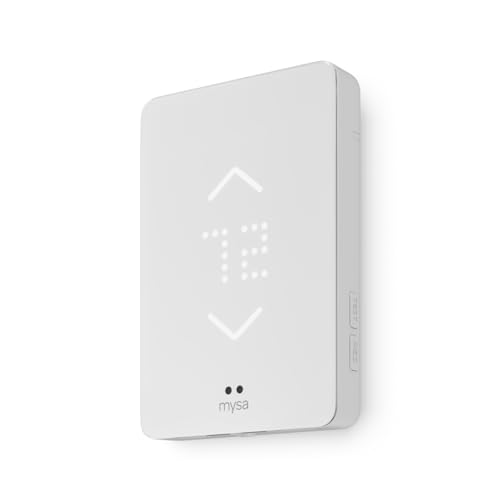
Should you’ve got high-voltage electric in-floor heating and want tight, app-based control that works with Apple HomeKit (plus Alexa and Google), the Mysa smart thermostat is built for you: you get a Wi‑Fi programmable controller made for 120–240V systems that isn’t compatible with hydronic setups. It includes a built-in Class A GFCI for added electrical protection and installs easily in typical electric in-floor configurations. You’ll control temperatures precisely via the app or voice (Siri, Alexa, Google Assistant) without any subscription. Mysa integrates cleanly into smart homes, giving reliable, safe, subscription-free management of your electric radiant floors.
Best For: Homeowners with high-voltage (120–240V) electric in-floor heating who want precise, app- and voice-controlled temperature management compatible with HomeKit, Alexa, and Google without a subscription.
Pros:
- Built specifically for 120–240V electric in-floor heating and offers precise temperature control.
- Built-in Class A GFCI enhances electrical safety for radiant floor installations.
- Wi‑Fi, app, and voice control (Siri/HomeKit, Alexa, Google) with no subscription required.
Cons:
- Not compatible with hydronic or water-based heating systems.
- Requires proper high/line-voltage wiring and installation (may need an electrician).
- Limited to electric radiant floor use, so not a universal thermostat replacement for other HVAC types.
meross Smart Garage Door Opener — HomeKit, Alexa, Google

Should you want a simple way to make your existing garage opener smart without swapping hardware, the meross Smart Garage Door Opener is a great pick — it works with HomeKit, Alexa, Google Assistant, CarPlay and more, so you can control your door through voice or from anywhere. You’ll find universal (MSG100HK) and Chamberlain/LiftMaster/Craftsman-specific (MSG150HK) versions supporting 200+ brands and 1600+ models (Security+ 1.0/2.0). Installation’s straightforward; it uses 2.4GHz Wi‑Fi, keeps original remotes functional, and offers local control during outages. The app gives remote control, real‑time status, notifications, and no monthly fees.
Best For: Homeowners who want an easy, affordable way to add smart control and voice/remote access to an existing garage door opener (especially Chamberlain/LiftMaster/Craftsman users) without replacing hardware.
Pros:
- Works with HomeKit, Alexa, Google Assistant, CarPlay and more for versatile voice and remote control.
- Supports 200+ brands and 1600+ models (Security+ 1.0/2.0) with both universal (MSG100HK) and model-specific (MSG150HK) options.
- Easy installation, preserves original remotes, provides real-time status/notifications, local control during outages, and no monthly fees.
Cons:
- Not compatible with Security+ 3.0 garage door openers.
- Requires a reliable 2.4 GHz Wi‑Fi signal in the garage (no 5 GHz support).
- May need optional accessories or Meross support for certain compatibility issues.
meross Smart Wi‑Fi Thermostat (Matter, Alexa, HomeKit)

Should you want a Matter-ready thermostat that plays nicely with Apple HomeKit and most HVAC setups, the meross Smart Wi‑Fi Thermostat (MTS300) is a strong pick—its Matter certification lets you control it locally with Home, Alexa, Google, SmartThings, or Home Assistant without relying on cloud bridges. You’ll get broad HVAC support (95% of systems) but verify compatibility for two-wire, millivolt, and electric baseboard setups; some installations need a C‑wire. The glass-panel unit offers 24/7 scheduling, energy tracking, smart alerts, and remote control via app or voice. Installation hardware and step-by-step app guidance are included.
Best For: Homeowners with modern HVAC systems who want a Matter-certified, HomeKit- and Alexa-friendly smart thermostat that offers local control, 24/7 scheduling, and energy tracking.
Pros:
- Broad compatibility with ~95% of HVAC systems (heat pumps, furnaces, AC, boilers, humidifiers/dehumidifiers) and Matter certification for local integration with Apple Home, Alexa, Google, SmartThings, and Home Assistant.
- Sleek glass-panel design (black or white), easy wall-mount installation with included hardware, and step-by-step app guidance plus customer support.
- Features 24/7 flexible scheduling, remote app/voice control, energy tracking, and smart alerts for filters and system issues.
Cons:
- Not compatible with 110V/120V/240V electric baseboard heaters, millivolt thermostats, or two‑wire systems.
- Some installations require a C‑wire, which may necessitate additional wiring or an adapter.
- No batteries included or required, but unit depends on low-voltage 24V HVAC power which can complicate setups without proper wiring.
Mysa Smart Thermostat for Mini-Split Heat Pumps & AC

Looking for a smart thermostat that works specifically with mini-split heat pumps and wall-mounted ACs? Mysa replaces remotes and gives you app control with no subscription fees, plus HomeKit, Alexa, and Google Home compatibility for voice and automation. You’ll set in-app schedules, use geofencing, and customize settings to cut electricity use — often qualifying for utility rebates. Climate+ improves comfort and air quality while filter-cleaning alerts keep systems efficient. Setup includes step-by-step videos and expert support; the unit offers touch temperature control and flexible mounting. Built for reliable 2.4 GHz and mesh Wi‑Fi, Mysa is engineered in Canada with strong cybersecurity.
Best For: homeowners or renters with mini-split heat pumps or wall-mounted ACs who want app and voice control, energy savings, and easy installation without subscription fees.
Pros:
- Replaces remotes with app control and works with HomeKit, Alexa, and Google Home for voice and automation.
- Energy-saving features (schedules, geofencing) and potential eligibility for utility rebates.
- Climate+ comfort enhancements, filter-cleaning alerts, and step-by-step setup with expert support.
Cons:
- Requires reliable 2.4 GHz Wi‑Fi (may need network adjustments for some setups).
- Designed specifically for mini-splits/wall ACs—won’t work with standard central HVAC systems.
- Touch unit and mounting options may not suit all décor or installation preferences.
Honeywell Home T9 WiFi Smart Thermostat with Sensor

Should you want room-across-room comfort without rewiring, the Honeywell Home T9 is a great choice owing to its wireless Smart Room Sensors and included power adapter that avoid a C‑wire in most homes. You’ll get ENERGY STAR efficiency and Auto Home/Away scheduling to cut energy use, plus potential utility rebates and Demand Response enrollment for extra savings. Sensors reach about 200 ft (varies by construction) to prioritize occupied rooms and improve sleep-zone control. You’ll control it via the Resideo app, HomeKit, Alexa, or Google Assistant. It supports most forced-air and heat-pump systems but not 120–240V baseboard heat.
Best For: tech-savvy homeowners who want multi-room temperature control and energy savings without rewiring, using wireless sensors and a low-voltage adapter for most HVAC systems.
Pros:
- Wireless Smart Room Sensors (≈200 ft range) allow targeted comfort and better sleep-zone control without running new wires.
- ENERGY STAR certified with Auto Home/Away scheduling and eligibility for utility rebates and Demand Response programs to lower energy costs.
- Works with Resideo app, Apple HomeKit, Alexa, and Google Assistant and supports most forced-air and heat-pump systems.
Cons:
- Not compatible with electric baseboard heating (120–240V).
- Heating-only oil furnace systems may require a C‑wire to function.
- Sensor range and performance can vary with home construction, potentially limiting effectiveness in larger or heavily obstructed layouts.
Emerson Sensi Pro Wi‑Fi Smart Thermostat (Energy Star)

Should you want reliable, energy-saving HomeKit control without a complicated install, the Emerson Sensi Pro is a strong pick — it’s ENERGY STAR certified and trims HVAC use approximately 23% through geofencing, 7‑day scheduling, and usage monitoring. You’ll get HomeKit support (c‑wire required) plus Alexa, Google Assistant, SmartThings, and Wink. The Sensi app gives remote control, usage reports, and smart alerts for extreme temps and humidity. DIY setup includes step‑by‑step guidance, mounting hardware, wire stickers, and a built‑in level; dimensions are compact. It handles multi‑stage heat pumps, includes a rechargeable battery, and offers a five‑year warranty with pro installs.
Best For: Homeowners and renters who want ENERGY STAR-rated, HomeKit-compatible smart thermostat features with easy DIY installation and remote app control.
Pros:
- ENERGY STAR certified and can reduce HVAC energy use by about 23% with geofencing, 7-day scheduling, and usage reports.
- Broad smart-home compatibility (Apple HomeKit with c‑wire, Alexa, Google Assistant, SmartThings, Wink) and voice control.
- Simple DIY installation with step-by-step app guidance, built‑in level, included mounting hardware, and compact size.
Cons:
- HomeKit support requires a C‑wire, which may need professional wiring in some homes.
- Some advanced installations (multi-stage systems) or warranty benefits may require professional installation.
- Uses a 24V power source and includes AA batteries/rechargeable battery—may need battery replacement or wiring verification.
Sensibo Air Smart AC Controller — Apple HomeKit Certified

In case you want a simple way to make a non-smart AC HomeKit-ready, the Sensibo Air is perfect: it lets you control any infrared air conditioner or heat pump via Apple HomeKit, Siri, Google Assistant, or Alexa, and adds smart features like geofencing and Climate React so your home adjusts automatically once you leave or once the weather changes. You’ll set it up quickly with QR scanning, mount it on a wall or surface, and connect via Wi‑Fi or Bluetooth. The compact polycarbonate unit runs on 230V, supports schedules, remote control through apps or voice, and includes manufacturer support and warranty.
Best For: homeowners or renters with infrared (non‑smart) air conditioners who want Apple HomeKit (and voice assistant) integration plus automatic energy‑saving features like geofencing and Climate React.
Pros:
- Adds HomeKit, Siri, Google Assistant, and Alexa control to IR ACs for seamless smart‑home integration.
- Supports geofencing, Climate React, and scheduling for automated energy savings and comfort.
- Easy, tool‑free setup with QR scanning, mountable design, and both Wi‑Fi and Bluetooth connectivity.
Cons:
- Requires a compatible IR air conditioner or heat pump; not for units without IR control.
- Runs on corded 230V power, which may limit placement without a nearby outlet.
- Advanced features depend on app/cloud services, which may raise privacy or reliability concerns.
Factors to Consider When Choosing a Thermostat for Apple HomeKit
Before you pick a HomeKit thermostat, I check a few key factors to make sure it actually works in my setup. I look at HomeKit compatibility, the thermostat’s supported HVAC systems and wiring/power requirements, and whether it plays nice with other smart devices and automations. I also confirm safety certifications and any manufacturer guarantees so I don’t run into compliance or reliability issues.
Compatibility With HomeKit
During the moment I’m choosing a thermostat for Apple HomeKit, I check that it explicitly lists HomeKit compatibility so it works seamlessly with the Home app and Siri. I also verify it supports local HomeKit control so basic commands and automations remain responsive in case the internet drops. Privacy matters, so I look for devices that support HomeKit Secure Video or improved Apple ecosystem security features to protect data. I confirm the thermostat can join existing HomeKit scenes and triggers so heating and cooling sync with lights, locks, and presence. Finally, I assess whether the maker provides firmware updates that preserve and expand HomeKit compatibility — updates keep integrations reliable and add new features over the device’s lifetime.
Device Compatibility Range
Because every home system is different, I start with matching a HomeKit thermostat to my HVAC type and wiring so it actually controls my heating and cooling. I confirm HomeKit support initially so the device appears in the Home app and works with Siri. Then I check compatibility with my specific system—electric, hydronic, heat pump, or mini-split—so features like staging and reversing valves function correctly. I also verify whether the unit needs a C-wire or offers wireless power options to avoid installation surprises. Local HomeKit control is a must for responsiveness and privacy, so I avoid devices that depend solely on cloud services. Finally, I consider other supported protocols (Zigbee, Thread, Wi‑Fi) to keep future interoperability flexible.
Wiring And Power Needs
At the moment I shop for a HomeKit thermostat, I always match the unit’s wiring and power needs to my HVAC so the device actually powers up and communicates reliably. Many smart thermostats need a common wire (C-wire) for continuous 24V power to run Wi‑Fi and smart features, so I check my wall plate and furnace control board initially. In case there’s no C-wire, I consider models that include a power extender kit or adapter, but I verify compatibility before buying. I also confirm whether my system is low‑voltage (typically 24V) or high‑voltage (120–240V) since baseboard heaters use different wiring. Finally, I factor installation complexity—additional wiring or a converter can add cost and time.
Smart Home Integrations
While I’m focused on aesthetics and HVAC compatibility, I also make sure the thermostat natively supports Apple HomeKit so it works seamlessly in the Home app and with Siri. I look for Matter certification next, since that improves interoperability and local connectivity between HomeKit and other smart devices. I verify it can join existing HomeKit scenes and automations so temperature changes sync with lights, shades, and routines. Remote access and notifications through the Home app are essential for real-time monitoring and alerts, so I confirm those functions work reliably. Finally, I check integration with HomePod and Apple Watch for convenient voice commands and adjustments on the go, making everyday control effortless and consistent.
Safety And Certifications
Before I evaluate thermostats for Apple HomeKit, safety and certifications are nonnegotiable: I check for electrical protections like built-in GFCIs on high-voltage units, verify UL or regional code compliance, and confirm ENERGY STAR where efficiency matters. I also insist on cybersecurity certifications or documented security practices to reduce hacking risk within a HomeKit ecosystem. Regional electrical-code compliance matters for safe installation and warranty validity, so I confirm local approvals before buying. Practical safety features—automatic alerts for system malfunctions, filter-change notifications, and overheat or short-circuit detection—help prevent damage and costly repairs. In short, I prioritize devices with recognized safety and security marks plus proactive alerting to keep my home and HVAC system protected.
Energy Savings Features
Having covered safety and certifications, I also weigh a thermostat’s energy-saving tools because they directly affect both bills and comfort. I look for scheduling that adjusts temperatures according to time and occupancy to cut waste, plus geofencing so settings change whenever I leave or return. Adaptive climate control that learns preferences and local conditions is a huge convenience — it trims energy use without constant tinkering. I value integration with utility demand-response programs, since participating can lower peak loads and earn rebates. Clear energy-usage reports and proactive alerts for filter changes or system faults help maintain efficiency and avoid costly inefficiencies. Together, these features determine long-term savings and make a thermostat genuinely smart for an Apple HomeKit setup.
Installation And Support
Because even the smartest thermostat is only useful provided it’s installed correctly, I prioritize models that make setup straightforward and well-supported. I look for clear step-by-step guides, video tutorials, and concise manuals so DIY installs don’t become a project nightmare. I confirm wiring requirements up front — whether a C‑wire is needed or an alternative power adapter is supplied — and verify voltage and system-type compatibility to avoid mismatches with geothermal, heat pump, or conventional systems. Included mounting plates, screws, anchors, and wiring labels save time and reduce trips to the hardware store. Finally, responsive customer support across phone, chat, and email is essential; quick, knowledgeable help during and after installation keeps the system reliable and gives me confidence in daily HomeKit use.
