

Consider upgrading your thermostat like swapping a bulky map for a responsive GPS—one installer I spoke with cut a home’s heating bills by 12% after a single setup. You’ll want a device that actually understands your system, works with your voice and smart hub, and won’t need constant babysitting. Below are seven options that balance cost, compatibility, and features so you can pick what fits your wiring and comfort goals.
| meross Matter Smart Thermostat for Electric Baseboard Heaters |
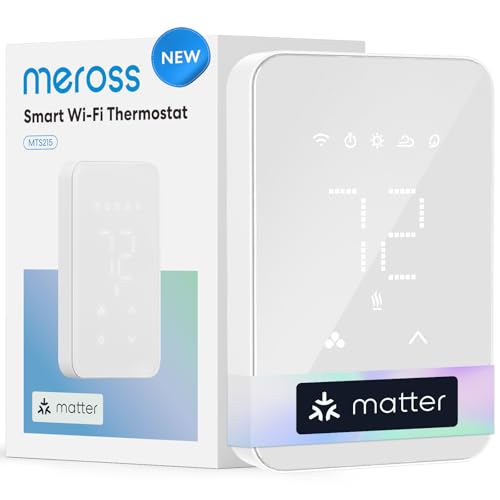
| Best for Baseboards | Connectivity: Wi‑Fi (Matter-compatible; app + voice) | App Control: Meross app | Voice Assistant Support: Alexa, Apple Home, Google, SmartThings (Matter) | VIEW LATEST PRICE | Read Our Analysis |
| Honeywell Home T5 WiFi Smart Thermostat (RTH8800WF) |

| Best Budget Smart | Connectivity: Wi‑Fi | App Control: Honeywell smartphone app | Voice Assistant Support: Alexa, Google Assistant, Apple HomeKit | VIEW LATEST PRICE | Read Our Analysis |
| Honeywell Lyric T6 Pro Wi‑Fi Programmable Thermostat |
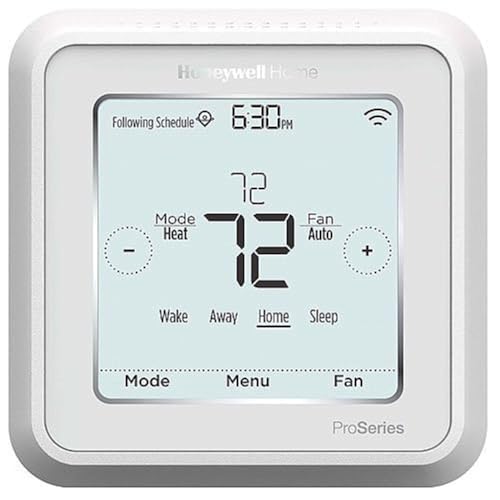
| Best for Pro Installers | Connectivity: Wi‑Fi | App Control: Honeywell (Lyric) app | Voice Assistant Support: Alexa, Apple HomeKit | VIEW LATEST PRICE | Read Our Analysis |
| MAXKOSKO WiFi Smart Touchscreen Thermostat for Floor Heating |

| Best for Floors | Connectivity: Wi‑Fi (Smart Life app) | App Control: Smart Life app | Voice Assistant Support: Alexa, Google Assistant | VIEW LATEST PRICE | Read Our Analysis |
| HEATIT WiFi Programmable Thermostat for Electric Radiant Floors |

| Best Energy Saver | Connectivity: Wi‑Fi (Warmme app) | App Control: Warmme app | Voice Assistant Support: Alexa, Google Assistant | VIEW LATEST PRICE | Read Our Analysis |
| Smart WiFi Programmable Thermostat with Room Sensor |

| Best with Remote Sensor | Connectivity: Wi‑Fi (2.4 GHz; BT Mesh supported) | App Control: Prodigytec app required | Voice Assistant Support: (Not explicitly named) supports voice assistants via platform integrations (implied) | VIEW LATEST PRICE | Read Our Analysis |
| Sensi Lite Smart WiFi Programmable Thermostat (ST25W) |

| Best Easy Install | Connectivity: Wi‑Fi | App Control: Sensi app (Android/iOS) | Voice Assistant Support: Alexa, Google Assistant, SmartThings | VIEW LATEST PRICE | Read Our Analysis |
More Details on Our Top Picks
meross Matter Smart Thermostat for Electric Baseboard Heaters
Should you use high‑voltage electric baseboard or convector heaters and want Matter compatibility across Alexa, HomeKit, Google, and more, the meross Matter Smart Thermostat is a clear choice — it’s built for 120–240 VAC systems, delivers unified smart‑home control without ecosystem lock‑in, and gives you real‑time energy tracking and schedule automation to cut waste and simplify comfort. You’ll set 24/7 visual schedules, create sleep/away profiles, and control heaters via voice or the Meross app over Wi‑Fi. Open‑window detection pauses heating to prevent waste, and historical consumption data helps you lower bills and carbon footprint. Not for 24V HVAC.
- Connectivity:Wi‑Fi (Matter-compatible; app + voice)
- App Control:Meross app
- Voice Assistant Support:Alexa, Apple Home, Google, SmartThings (Matter)
- Scheduling / Programmable:24/7 visual scheduling
- Energy / Usage Insights:Real‑time consumption tracking; historical usage
- Compatibility with Heating Types:High‑line electric baseboard / convector / fan‑forced (120–240VAC)
- Additional Feature:High‑line 120–240VAC
- Additional Feature:Open‑window detection
- Additional Feature:Real‑time consumption tracking
Honeywell Home T5 WiFi Smart Thermostat (RTH8800WF)
Should you want a budget‑friendly, ENERGY STAR‑rated thermostat that gives reliable remote control and flexible 7‑day scheduling, the Honeywell Home T5 (RTH8800WF2022) is a strong pick—especially should you need geofencing and simple Alexa/Google Assistant integration for automatic Home/Away adjustments. You’ll get Wi‑Fi control via Android/iOS, a backlit touchscreen, and auto changeover, fan control, vacation mode, and daylight‑savings readiness. It supports most heat/cool systems and heat pumps but might require a C‑wire for some installs and won’t work with heating‑only oil furnaces without one. Energy reports, potential utility rebates, and a two‑year warranty round it out.
- Connectivity:Wi‑Fi
- App Control:Honeywell smartphone app
- Voice Assistant Support:Alexa, Google Assistant, Apple HomeKit
- Scheduling / Programmable:7‑day flexible scheduling
- Energy / Usage Insights:Monthly energy reports; savings estimates
- Compatibility with Heating Types:Most low‑voltage heat/cool systems and heat pumps (24V)
- Additional Feature:Geofencing Home/Away
- Additional Feature:ENERGY STAR certified
- Additional Feature:7‑day flexible scheduling
Honeywell Lyric T6 Pro Wi‑Fi Programmable Thermostat
Should you want a straightforward, app‑controlled thermostat that works with Apple HomeKit and Alexa, the Honeywell Lyric T6 Pro Wi‑Fi is a solid pick. You’ll get reliable Wi‑Fi control, heat pump and conventional system support (up to 2 heat/2 cool on conventional), and a simple square matte design that blends into most homes. Installation includes a UWP mounting system, cover plate, adapters and screws, and it runs on AC/DC with two AA batteries. The Lyric’s backlit display and clock are practical, and compatibility with popular voice assistants makes daily scheduling and remote adjustments easy and efficient.
- Connectivity:Wi‑Fi
- App Control:Honeywell (Lyric) app
- Voice Assistant Support:Alexa, Apple HomeKit
- Scheduling / Programmable:Programmable schedules (Lyric T6 Pro)
- Energy / Usage Insights:Energy‑aware control (app-controlled; Lyric features)
- Compatibility with Heating Types:Heat pump (2H/1C) and conventional (2H/2C) systems
- Additional Feature:2H/2C or 2H/1C support
- Additional Feature:Apple HomeKit compatible
- Additional Feature:Includes UWP mounting
MAXKOSKO WiFi Smart Touchscreen Thermostat for Floor Heating
Should you want precise, app-driven control of electric underfloor heating, the MAXKOSKO WiFi Smart Touchscreen Thermostat is a strong pick—its Smart Life app and Alexa/Google Assistant support let you adjust temperatures remotely and through voice for better comfort and energy savings. You’ll program temperature schedules and modes to cut waste, view energy usage patterns in the app, and rely on a 15 ft floor sensor for accurate readings. The touchscreen LED is intuitive, the manual supports DIY installation, and it’s compatible with most 120V/240V electric floor warming systems. MAXKOSKO offers a manufacturer quality commitment for peace of mind.
- Connectivity:Wi‑Fi (Smart Life app)
- App Control:Smart Life app
- Voice Assistant Support:Alexa, Google Assistant
- Scheduling / Programmable:Precise temperature scheduling
- Energy / Usage Insights:App provides energy usage insights
- Compatibility with Heating Types:Electric underfloor / floor warming systems (120/240V)
- Additional Feature:Includes 15 ft sensor
- Additional Feature:Smart Life app support
- Additional Feature:For underfloor systems
HEATIT WiFi Programmable Thermostat for Electric Radiant Floors
Should you want precise, protected radiant-floor heating that you can control from anywhere, the HEATIT WiFi Programmable Thermostat is a smart pick—its dual room-and-floor sensing and 86°F floor limit make it ideal for homes with tile or wood floors and heat-sensitive materials. You’ll manage settings remotely via the Warmme app, use Alexa or Google Assistant, and review energy reports on your phone. The 7-day touchscreen schedule, Adaptive Learning, and Vacation Mode optimize comfort and efficiency. It supports 120–240V systems, includes a floor sensor, offers child lock and open-window detection, is DIY-friendly, supports 16A, and has a 4-year warranty.
- Connectivity:Wi‑Fi (Warmme app)
- App Control:Warmme app
- Voice Assistant Support:Alexa, Google Assistant
- Scheduling / Programmable:7‑day programmable touchscreen
- Energy / Usage Insights:Detailed energy usage reports; adaptive learning
- Compatibility with Heating Types:Electric radiant floor systems (120–240V); dual sensors
- Additional Feature:Dual room/floor sensors
- Additional Feature:Adaptive Learning runs
- Additional Feature:4‑year limited warranty
Smart WiFi Programmable Thermostat with Room Sensor
Should you want precise, room‑by‑room comfort and lower energy bills, this smart Wi‑Fi thermostat with an external room sensor is made for homes that need targeted temperature control. You’ll get compatibility with over 95% of 24VAC systems (3H/2C) — central AC, heat pumps, boilers, furnaces — though a C‑wire is required. Setup’s easier with a self‑test compatibility guide. It uses 2.4 GHz Wi‑Fi (BT Mesh supported) and falls back to local control in case your network drops. Pairing needs Wi‑Fi. Use the Prodigytec app and Provirtec sensor for whole‑home thermo‑hygrometer data, modes for Sleep/Home/Away, and a clear 3.95‑inch display.
- Connectivity:Wi‑Fi (2.4 GHz; BT Mesh supported)
- App Control:Prodigytec app required
- Voice Assistant Support:(Not explicitly named) supports voice assistants via platform integrations (implied)
- Scheduling / Programmable:Sleep/Home/Away modes with scheduling behavior
- Energy / Usage Insights:Body/location-based monitoring for efficiency
- Compatibility with Heating Types:24VAC central HVAC systems (3H/2C; heat pumps, boilers, furnaces)
- Additional Feature:Body‑location temperature sensing
- Additional Feature:Local fallback control
- Additional Feature:Requires C‑wire
Sensi Lite Smart WiFi Programmable Thermostat (ST25W)
Should you want an ENERGY STAR‑certified, budget‑friendly smart thermostat that’s easy to install yourself, the Sensi Lite ST25W is a solid pick—its Wi‑Fi remote control, simple scheduling, and Alexa/Google/SmartThings support make it ideal for renters or homeowners who want smart comfort without complicated setup. You get programmable automatic control, geofencing, usage reports, and privacy protections that avoid selling your data. It supports AC, furnaces, boilers, and heat pumps (C‑wire needed for some systems), runs on 2 AAA or C‑wire, and includes mounting hardware, labels, and a three‑year warranty for straightforward, reliable operation.
- Connectivity:Wi‑Fi
- App Control:Sensi app (Android/iOS)
- Voice Assistant Support:Alexa, Google Assistant, SmartThings
- Scheduling / Programmable:Flexible scheduling, geofencing
- Energy / Usage Insights:Usage reports; ENERGY STAR (savings & reports)
- Compatibility with Heating Types:Air conditioner, boiler, furnace, heat pump (24V)
- Additional Feature:Privacy protection policy
- Additional Feature:DIY friendly installation
- Additional Feature:Batteries included (2×AAA)
Factors to Consider When Choosing a Smart Thermostat for the Money
Upon choosing a smart thermostat for the money, you should check system compatibility so it actually works with your HVAC. Consider the energy savings potential and what sensors or control options it offers to balance comfort and cost. Also weigh installation requirements and smart home integration so setup and daily use fit your routine.
System Compatibility
Although smart thermostats can offer big savings and convenience, you’ll only get those benefits provided the unit actually matches your HVAC and wiring setup. Initially, verify voltage and wiring requirements—24 VAC for low‑voltage systems or 120–240 VAC for high‑line electric heaters—to avoid installation headaches. Confirm the thermostat supports your heating/cooling type: single‑ or multi‑stage heat, heat pumps (with or without auxiliary heat), electric baseboard, radiant floors, or hydronic boilers. Check whether a C‑wire or an external power source is required; some models work with batteries or power‑extenders. Make certain support for any extra sensors you plan to use—remote room, floor, or outdoor sensors—so multi‑zone sensing and floor‑limit controls function. For oil furnaces or two‑stage compressors, verify explicit support to prevent limited functionality.
Energy Savings Potential
Because a smart thermostat’s features directly influence how much energy you’ll save, weigh functionality as carefully as price. Prioritize learning or adaptive scheduling—these automate setbacks and typically cut HVAC runtime, providing about 8–16% annual heating and cooling bill savings compared with manual thermostats. Use geofencing and remote control to enforce precise setbacks whenever your home’s empty, reducing wasted conditioning. Choose units supporting multi‑zone setups or room sensors so you condition occupied areas only, avoiding overconditioning. Look for real‑time energy monitoring and historical reports; they reveal wasteful patterns and can produce another 5–10% savings through guiding setpoint and schedule tweaks. Also value open‑window detection and adaptive run‑time limits to prevent unnecessary cycles and lower both energy use and equipment wear.
Installation Requirements
Should you want a smart thermostat that actually works with your system and saves money, start matching it to your HVAC’s voltage, control type, and wiring — 24 VAC systems, line‑voltage heaters, multi‑stage furnaces, and heat pumps all require different terminal layouts and logic. Verify system voltage and type so you don’t buy an incompatible unit. Check for a C‑wire or plan to use a power adapter; many Wi‑Fi models need continuous 24 V. Confirm staging and control type so terminal mapping and control logic match your equipment. Measure wall and junction box space to make certain the mount and backing plate clear wiring, conduits, or enclosures. Finally, decide whether you need included or separate sensors and confirm sensor wire length or wireless range for accurate placement.
Smart Home Integration
Once your thermostat matches the HVAC wiring and mounting, consider how it’ll fit into the rest of your smart home — you want a unit that appears in the apps and automations you already use. Confirm support for the ecosystems and voice assistants you rely on so it shows up across platforms. Prefer devices using Matter, Thread, Zigbee, Z‑Wave, or Wi‑Fi to maximize interoperability and future proofing. Make sure it can join scenes, routines, and geofencing triggers so it participates in “away” and bedtime automations. Check for local-control APIs or integrations with IFTTT, Home Assistant, or open APIs to avoid vendor lock‑in and enable advanced automations. Finally, verify multi‑user access and permission levels so everyone has appropriate control.
Sensor And Control Options
Whenever picking a smart thermostat, consider beyond the wall unit and decide whether built‑in sensing is enough or whether remote and floor sensors will better match how you live; remote sensors read conditions in occupied rooms to reduce swings, floor probes protect radiant floors and cap temperatures (commonly around 86°F/30°C), and humidity sensors help manage moisture and dehumidification. You should weigh sensor types and placement: air sensors for general comfort, floor probes for radiant systems, and humidity probes for basements or humid climates. Check support for dual sensors and multi‑zone or external‑sensor integration whenever you need whole‑home balancing. Look for adaptive learning controls that adjust runtime to your home’s thermal response. Finally verify communication and pairing—Wi‑Fi, Bluetooth, or proprietary mesh—and thermostat compatibility for reliable remote sensing.
User Interface Simplicity
In case you want a thermostat that’s actually easy to live with, pick one with a clear, readable display (3–4″ or high‑contrast text) and simple physical or touch controls—think a single dial or clearly labeled zones—to cut down on taps and accidental mode changes. You should also make sure the mobile app mirrors the device layout and offers one‑tap adjustments for temperature, modes (Heat/Cool/Auto), and presets like Home/Away so you’re not hunting through menus. Prefer a straightforward 7/24 schedule editor with drag‑and‑drop or time‑block visuals to program routines quickly. Finally, choose an interface that shows situational feedback—current mode, next scheduled setpoint, and brief error messages—on the main screen to avoid deep wayfinding whenever troubleshooting.
Warranty And Support
Because a thermostat’s up-front price isn’t the only cost you’ll face, check warranty terms and support options prior to buying so you won’t be surprised at repairs or service limits. Look at warranty length and type—1–4 year limited versus lifetime—as longer coverage usually signals manufacturer confidence and lowers your repair risk. Read what’s covered: parts, labor, electronics, or only manufacturing defects, and observe exclusions like cosmetic damage or improper installation. Confirm whether the warranty requires professional installation or allows DIY fixes; some warranties void without certified installers. Evaluate customer support channels—phone, email, chat—plus response times and hours for timely troubleshooting and firmware or account help. Finally, check extended warranty costs, spare-part availability, and nearby authorized repair centers.
Frequently Asked Questions
Do Smart Thermostats Increase Home Insurance Premiums?
They usually don’t raise premiums; insurers possibly view smart thermostats as safety or efficiency upgrades and could even lower rates. You should check with your provider though, since discounts and policies vary per company and region.
Can Smart Thermostats Be Used in Vacation Rental Properties?
Yes — you can install smart thermostats in vacation rentals to control temperatures remotely, set guest-friendly schedules, prevent energy waste, and monitor system issues; just make certain you configure access, privacy settings, and clear guest instructions.
How Do Firmware Updates Affect Thermostat Performance?
Firmware updates improve performance via fixing bugs, adding features, and enhancing security; you won’t lose settings because updates usually preserve configurations, and you can schedule them so your thermostat won’t reboot at inconvenient times.
Are There Privacy Risks From Voice Assistant Integration?
Yes — you’ll face privacy risks as you integrate voice assistants: they can record conversations, share data with providers, and expose usage patterns. You should disable unnecessary features, review permissions, use local processing where possible, and enable strong privacy settings.
Do Smart Thermostats Work During Internet Outages?
Yes — many smart thermostats keep basic heating and cooling functions running locally during internet outages, but you’ll lose remote control, cloud automation, and voice assistant features until connectivity returns, so plan fallback schedules and manual access.
