

You’ll want accuracy, you’ll want savings, and you’ll want seamless control — and picking the right programmable thermostat makes all three possible. I’ll walk you through seven top 2026 models, compare features like C‑wire needs, multi‑stage compatibility, learning modes, and smart‑home support, and point out which setups fit simple homes versus complex systems. Keep going to find the best match for your HVAC and lifestyle.
| Honeywell Home TH6110D1021 – Programmable Thermostat |

| Budget Refurbished Pick | Power: Not specified (battery or low‑voltage typical for home HVAC) | Mounting: Wall mount (standard thermostat install) | Display: Display (programmable thermostat interface; details via manufacturer) | VIEW LATEST PRICE | Read Our Analysis |
| Honeywell Home Non-Programmable Single-Stage Thermostat |

| Simple & Reliable | Power: Battery powered (2 × AAA) | Mounting: Wall mount | Display: Large backlit LCD | VIEW LATEST PRICE | Read Our Analysis |
| Honeywell Home RTH7560E 7-Day Programmable Thermostat |
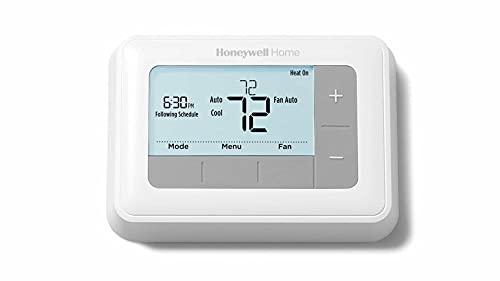
| Best Programming Flexibility | Power: Low‑voltage (standard thermostat wiring; program retention on power loss) | Mounting: Wall mount (UWP mounting system supported) | Display: Extra‑large backlit display | VIEW LATEST PRICE | Read Our Analysis |
| Google Nest Thermostat Smart Wi‑Fi Programmable (Snow) |

| Smart & Compact | Power: 24 V (requires low‑voltage; 2 × AAA included) | Mounting: Wall mount (steel plate included) | Display: LCD backlight | VIEW LATEST PRICE | Read Our Analysis |
| Nest T3016US – Programmable Thermostat |
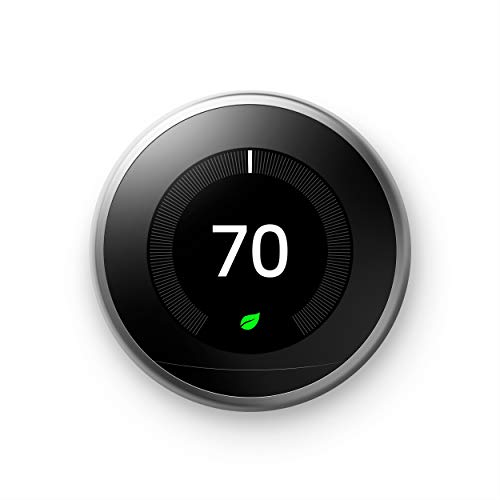
| Best Learning Thermostat | Power: 24 V (battery powered; 4 × AA included) | Mounting: Wall mount | Display: Large bright digital/LED display | VIEW LATEST PRICE | Read Our Analysis |
| Google Nest Learning Thermostat (3rd Gen Stainless Steel) |

| Premium Smart Choice | Power: 24 V (low‑voltage) | Mounting: Wall mount | Display: Big bright screen (digital) | VIEW LATEST PRICE | Read Our Analysis |
| Honeywell T5 WiFi Smart Thermostat (RTH8800WF2022) |

| Best Wi‑Fi Features | Power: 24 V (low‑voltage; requires C‑wire or adapter if no C‑wire) | Mounting: Wall mount (UWP mounting system included) | Display: LCD display with backlight | VIEW LATEST PRICE | Read Our Analysis |
More Details on Our Top Picks
Honeywell Home TH6110D1021 – Programmable Thermostat
Provided you want a simple, dependable programmable thermostat for basic home HVAC control, the Honeywell Home TH6110D1021 is a solid choice—its user-friendly programming and manufacturer-refurbished condition make it ideal for homeowners who need reliable temperature scheduling without extra smart features. You’ll get a Premier White unit with a compact 2.3-inch depth that fits most wall spaces. It’s certified refurbished with limited or no wear, includes all original accessories, and carries a 90-day limited hardware warranty. You’ll appreciate straightforward programming for daily schedules, basic HVAC compatibility, and the option to view more detailed specs from the manufacturer.
- Power:Not specified (battery or low‑voltage typical for home HVAC)
- Mounting:Wall mount (standard thermostat install)
- Display:Display (programmable thermostat interface; details via manufacturer)
- Compatibility (HVAC systems):Home HVAC systems (general programmable thermostat compatibility)
- Programmability / Smart Scheduling:Programmable thermostat (scheduling)
- Warranty:90‑day limited hardware warranty (refurbished)
- Additional Feature:Certified manufacturer refurbished
- Additional Feature:Includes original accessories
- Additional Feature:90-day hardware warranty
Honeywell Home Non-Programmable Single-Stage Thermostat
Should you want a straightforward, reliable thermostat without scheduling fuss, the Honeywell Home Non-Programmable Single-Stage Thermostat (RTH11B) is a solid pick—its large backlit LCD and simple touch/push-button controls make daily temperature adjustments quick and easy for users with 1 heat/1 cool systems. You’ll get clear custom display settings, a 32°F low-heat setpoint, and customizable air-filter alerts. It runs on two AAA alkaline batteries (not included), mounts to the wall and fits Honeywell UWP plates for future upgrades. Compatible with 750 mV, hot-water, and forced-air systems, it excludes electric baseboard heat and includes a one-year warranty.
- Power:Battery powered (2 × AAA)
- Mounting:Wall mount
- Display:Large backlit LCD
- Compatibility (HVAC systems):Single‑stage systems (1 heat / 1 cool); 750 mV, hot water, forced air; not for electric baseboard 120–240 V
- Programmability / Smart Scheduling:Non‑programmable (push‑button) — note: listed as non‑programmable
- Warranty:1‑year manufacturer warranty
- Additional Feature:Large backlit LCD
- Additional Feature:Change-filter reminders
- Additional Feature:Battery powered (2×AAA)
Honeywell Home RTH7560E 7-Day Programmable Thermostat
Provided you want a straightforward, customizable weekly schedule, the Honeywell Home RTH7560E is a solid pick — it lets you set different programs for each of the seven days (or use a weekend-only or single-week schedule) and uses Smart Response Learning to time heating and cooling so your home hits the set temperature at the moment you desire. You’ll appreciate the extra-large backlit display that shows time, room temperature, and set point at a glance, plus program retention during power outages. Installation’s simpler with the UWP mounting system, and maintenance alerts remind you about filter changes and low batteries. The unit comes in white.
- Power:Low‑voltage (standard thermostat wiring; program retention on power loss)
- Mounting:Wall mount (UWP mounting system supported)
- Display:Extra‑large backlit display
- Compatibility (HVAC systems):Works with standard home heating/cooling systems (heat/cool/heat pump compatibility implied)
- Programmability / Smart Scheduling:7‑day programmable (flexible scheduling, weekend/weekly options)
- Warranty:(Warranty not specified in summary)
- Additional Feature:Smart Response Learning
- Additional Feature:Extra-large backlit display
- Additional Feature:Program retention on outage
Google Nest Thermostat Smart Wi‑Fi Programmable (Snow)
In case you want an easy‑to‑install smart thermostat that saves energy and works with most smart home systems, the Google Nest Thermostat (Snow) is a strong choice. You’ll get a glossy, round polycarbonate unit with an LCD backlight, button controls, and two AAA batteries included. It connects via dual‑band Wi‑Fi and BLE, works with Google Home, Alexa, and Matter‑certified assistants, and supports web or app control. ENERGY STAR certified, it offers Auto‑Away, Savings Finder, Nest Renew integration, HVAC alerts, and maintenance notifications. Most homes don’t need a C‑wire; check compatibility before buying.
- Power:24 V (requires low‑voltage; 2 × AAA included)
- Mounting:Wall mount (steel plate included)
- Display:LCD backlight
- Compatibility (HVAC systems):Works with many HVAC systems; may need C‑wire for some setups
- Programmability / Smart Scheduling:Smart programmable (app scheduling, Auto‑away)
- Warranty:1‑year warranty
- Additional Feature:Wi‑Fi and Bluetooth
- Additional Feature:ENERGY STAR certified
- Additional Feature:App + voice control
Nest T3016US – Programmable Thermostat
Should you want a thermostat that practically programs itself, the Nest T3016US (Nest Learning Thermostat) is built for you—its Auto-Schedule learns your habits and creates a temperature plan so you don’t have to. You’ll get Home/Away Assist that trims settings whenever nobody’s home, remote control via the Nest app, and voice control with Google Assistant or Alexa (requires compatible device and internet). The stainless steel round design houses a bright LED display, Energy History and Nest Leaf energy prompts, plus HVAC alerts. It supports 24V systems, Wi‑Fi/Bluetooth connectivity, ships with batteries and mounting kit, and is ENERGY STAR certified.
- Power:24 V (battery powered; 4 × AA included)
- Mounting:Wall mount
- Display:Large bright digital/LED display
- Compatibility (HVAC systems):Works with many HVAC systems; compatibility check recommended
- Programmability / Smart Scheduling:Learning programmable (Auto‑Schedule)
- Warranty:(Warranty not listed in summary; check manufacturer)
- Additional Feature:Auto‑Schedule learning
- Additional Feature:Nest Leaf energy indicator
- Additional Feature:Stainless steel finish
Google Nest Learning Thermostat (3rd Gen Stainless Steel)
Who benefits most from the Nest Learning Thermostat (3rd Gen)? You will in case you want a smart, hands-off thermostat that learns your schedule and optimizes comfort and savings. Stainless steel, round metal design houses a big bright display and mounts to your wall with included hardware. It connects via dual-band Wi‑Fi, BLE, and wireless interconnect, and works with Alexa and Google Assistant for voice control. Use the app or remote controls, view Energy History, and get HVAC alerts and Home/Away Assist. Studies show average savings of 10–12% heating and 15% cooling; Nest Renew and sensors add targeted control.
- Power:24 V (low‑voltage)
- Mounting:Wall mount
- Display:Big bright screen (digital)
- Compatibility (HVAC systems):Works with typical home HVAC systems (heat/cool/heat pump compatibility implied)
- Programmability / Smart Scheduling:Learning programmable (learns schedule)
- Warranty:(Warranty not specified in summary)
- Additional Feature:Works with Nest Sensor
- Additional Feature:Home/Away Assist
- Additional Feature:Big bright screen
Honeywell T5 WiFi Smart Thermostat (RTH8800WF2022)
Should you want a simple, smart upgrade that saves energy and works with major voice assistants, the Honeywell T5 WiFi (RTH8800WF2022) is a solid pick. You’ll get a compact, touch‑grid thermostat with Wi‑Fi, Alexa, Google Assistant and HomeKit support, plus 7‑day scheduling or geofencing for Auto Home/Away. It displays temps on a backlit LCD, controls fan and auto changeover, and sends monthly energy reports and tips. ENERGY STAR certification and reported savings of 8–16% help justify the buy. It needs 24V power and a C‑wire (adapter available), includes mounting hardware, and carries a two‑year limited warranty.
- Power:24 V (low‑voltage; requires C‑wire or adapter if no C‑wire)
- Mounting:Wall mount (UWP mounting system included)
- Display:LCD display with backlight
- Compatibility (HVAC systems):Works with most heat/cool systems; check C‑wire requirement; not for some heating‑only oil furnaces without C‑wire
- Programmability / Smart Scheduling:7‑day flexible scheduling or geofencing (location‑based)
- Warranty:2‑year limited warranty
- Additional Feature:Geofencing (Auto Home/Away)
- Additional Feature:Apple HomeKit compatible
- Additional Feature:Monthly energy reports
Factors to Consider When Choosing a Programmable Home Thermostat
Before you pick a programmable thermostat, check that it’s compatible with your HVAC system and meets any power source requirements your setup needs. Consider the scheduling flexibility and energy-saving features you want, plus whether it’ll integrate smoothly with your smart-home devices. Those factors together determine how well the thermostat will save energy and fit your routine.
Compatibility With HVAC Systems
Upon choosing a programmable thermostat, make sure it matches your HVAC system type and wiring so you don’t end up with limited control or damaged equipment; check whether it supports single- or multi-stage systems, heat pumps, or zoning, and confirm power needs (battery vs. a 24V common/C wire) and compatibility with specific heat sources like forced air, boilers, millivolt, or high‑voltage electric baseboard. Next, verify the thermostat handles your system’s stages and any auxiliary or emergency heat connections—don’t assume one model fits 1H/1C, 2H/1C, or heat pump configurations. Should you use zoning, multiple thermostats, or remote sensors, confirm external sensor support and integration with your HVAC control framework. Mismatch risks control failures or equipment harm, so double‑check specs and consult installers when unsure.
Power Source Requirements
Power is a key factor whenever picking a programmable thermostat, so confirm whether it needs a 24‑VAC common “C” wire or can run on batteries; many smart models, touchscreens, and Wi‑Fi features require continuous 24‑VAC power, while battery units typically use 2–4 AA/AAA cells and need periodic replacement. Check your HVAC system voltage (usually 24 VAC) and whether the thermostat requires that supply for Wi‑Fi, relays, or touchscreen operation. Should you not have a C‑wire, choose a battery model, install a C‑wire, or use a power‑extender/C‑wire adapter. Compare expected battery life, low‑battery alerts, and replacement intervals. For multi‑zone systems or heat pumps, make certain the chosen power method supports remote connectivity, monitoring, and any learning features.
Programmability And Scheduling Options
Whenever you pick a programmable thermostat, consider about how many different schedules and daily periods you actually need—7‑day, 5‑2, or a single weekly program—and whether the unit offers multiple daily setpoints (wake, away, return, sleep) so you can tailor temperatures for occupancy and savings without constant adjustments. Choose 7‑day whenever each day differs, 5‑2 for a weekday/weekend split, or a single program for simplicity. Prefer models with multiple periods per day and stored schedules that survive power outages or battery changes. Look into adaptive learning that preheats or precools to hit setpoints on time, reducing tweaks. Should you want minimal manual programming, consider geofencing or location‑based overrides and remote app control to automate presence‑based adjustments.
Smart Home Integration
Consider how the thermostat will fit into your existing smart-home setup before you buy: make sure it speaks the same protocols (Wi‑Fi, Zigbee, Z‑Wave, Matter, etc.), can be controlled through your hub and voice assistant, and supports the remote features and routines you plan to use. You’ll want to verify compatibility with your automation platform so routines, geofencing, and remote control behave as expected. Check whether it shares sensor data—temperature, humidity, occupancy—with other devices to enable room-specific actions and proper HVAC staging. Decide whether you need local control versus cloud reliance for privacy and reliability, and confirm voice-assistant support. Finally, prefer models offering firmware updates and an open API or cloud integrations to keep the thermostat interoperable and future-proof.
Energy Saving Features
Many thermostats now include energy-saving features that help you cut runtime and utility bills without sacrificing comfort. Look for adaptive or learning algorithms that optimize run times so your system hits setpoints with minimal runtime—typically reducing heating ~10–12% and cooling ~15% on average. Remote control and geofencing switch to setback or eco temperatures whenever you’re away, preventing wasted conditioning. Choose flexible scheduling (7‑day, weekday/weekend, or multiple daily periods) to enable larger setbacks and finer control versus a single fixed schedule. Auto-changeover, fan control, and vacation modes stop unnecessary cycles and keep efficient setpoints during extended absences. Finally, energy reports, usage history, and maintenance alerts give actionable feedback so you can spot wasteful patterns and keep equipment running efficiently.
Installation And Mounting Ease
Start via checking power and mounting needs so installation won’t turn into a last‑minute headache: make sure your HVAC either supplies a C‑wire (or that the thermostat can use a reliable power adapter), the unit’s dimensions and depth will fit flush on your wall or box, and the model uses a universal wall plate or UWP-style mounting to simplify wiring alignment for future swaps. Next, confirm included mounting hardware, templates, and installer-friendly features like pre-labeled terminals, screw anchors, and a leveling guide so the job matches your DIY comfort level. Measure clearance for shallow boxes and nearby obstructions. Should you plan to use remote or app control, test Wi‑Fi at the intended location and avoid metal or HVAC gear that can block signals.
Frequently Asked Questions
Do Programmable Thermostats Work With Heat Pumps?
Yes — programmable thermostats work with heat pumps, as long as the thermostat supports heat pump configurations (including auxiliary/backup heat and reversing valve control). You’ll set appropriate staging and emergency heat to guarantee efficient, reliable operation.
Can I Control Multiple Thermostats From One App?
Yes — you can control multiple thermostats from one app. You’ll link each compatible thermostat to the manufacturer’s or third‑party app, assign zones, and manage schedules, temperature, and settings centrally from your phone or tablet.
How Long Do Thermostat Batteries Typically Last?
Usually around one to two years, but it can surprise you—depending on model, usage, and features like Wi‑Fi or backlight, batteries might drain faster, so check indicators and replace them promptly to avoid unexpected outages.
Will a Smart Thermostat Reduce My Energy Bills?
Yes — a smart thermostat can cut your energy bills through optimizing schedules, learning preferences, and adjusting while you’re away. You’ll see savings provided you set sensible temperatures, use geofencing, and maintain HVAC efficiency over time.
Are Professional Installers Required for Warranty Validity?
Typically you’re not required to use a professional installer for warranty validity, but manufacturers sometimes do require certified installation for full coverage or specific features, so check the warranty terms and registration before installing it yourself.
