

Should you’re replacing or upgrading baseboard controls in 2026, you’ll want a smart thermostat that matches your wiring, voltage and safety needs while still saving energy. I’ll compare seven top options—from line‑voltage Wi‑Fi models with GFCI protection to 24‑VAC and rugged mechanical units—so you can pick the right fit for your heaters, home layout and comfort preferences. Keep going to find the best match.
| Honeywell Home RTH6580WF Wi-Fi 7-Day Programmable Thermostat White |

| Best Wi‑Fi Pick | Voltage / System Type: 24V (central HVAC) — not for line‑voltage baseboards | Smart / Remote Control Capability: Wi‑Fi app control (Honeywell/TCC or Honeywell Home) + voice assistants | Mounting Type: Wall mount (standard thermostat wallplate) | VIEW LATEST PRICE | Read Our Analysis |
| Cadet Single Pole Built-In Thermostat Kit (BTF1W) |

| Best Built‑In Fit | Voltage / System Type: 120/208/240V (line‑voltage electric baseboard) | Smart / Remote Control Capability: No Wi‑Fi; manual single‑pole dial (built‑in thermostat kit) | Mounting Type: Built‑in mount on Cadet baseboard (mounts to heater end) | VIEW LATEST PRICE | Read Our Analysis |
| Honeywell T410A1013 Electric Baseboard Heat Thermostat |

| Best Simple Manual | Voltage / System Type: 230V (line‑voltage electric baseboard) | Smart / Remote Control Capability: Wired/manual push‑button (no smart app listed) | Mounting Type: Wall mount / baseboard style wall mounting | VIEW LATEST PRICE | Read Our Analysis |
| Programmable Auto Changeover Thermostat for Single-Stage Systems |

| Best Programmable Option | Voltage / System Type: 24V (central HVAC) — not for line‑voltage baseboards | Smart / Remote Control Capability: App compatible / smart‑home compatible (programmable) | Mounting Type: Wall mount (universal sub‑base) | VIEW LATEST PRICE | Read Our Analysis |
| Mysa Smart Thermostat for Electric In-Floor Heating |
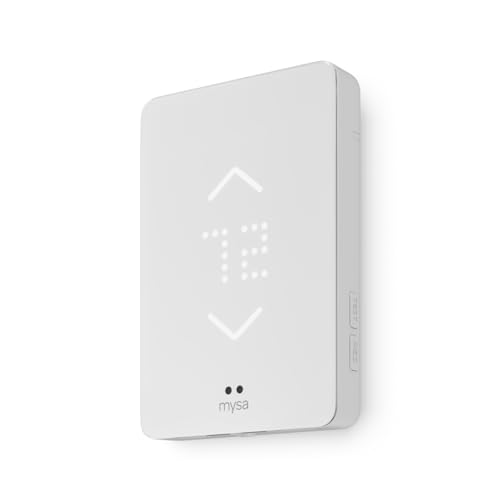
| Best High‑Voltage Smart | Voltage / System Type: 120–240V (line‑voltage electric in‑floor / high‑voltage) | Smart / Remote Control Capability: Wi‑Fi enabled with app + voice assistants (Alexa, Google, Siri) | Mounting Type: Wall mount (in‑wall / in‑place for in‑floor systems) | VIEW LATEST PRICE | Read Our Analysis |
| Mysa Smart WiFi Thermostat for Heating & Cooling |

| Best Smart HVAC | Voltage / System Type: 24V (central HVAC) — not for line‑voltage baseboards | Smart / Remote Control Capability: Wi‑Fi enabled with app, voice (Matter/HomeKit/Google/Alexa support) | Mounting Type: Wall mount (standard thermostat mounting) | VIEW LATEST PRICE | Read Our Analysis |
| Wi‑Fi Smart Thermostat for Electric Baseboard Heaters |

| Best App‑Controlled Choice | Voltage / System Type: 120–240V (line‑voltage electric baseboard) | Smart / Remote Control Capability: Wi‑Fi app control (Tuya/Smart Life) + Alexa/Google Home | Mounting Type: Wall mount (custom wall plate for electrical box) | VIEW LATEST PRICE | Read Our Analysis |
More Details on Our Top Picks
Honeywell Home RTH6580WF Wi-Fi 7-Day Programmable Thermostat White
Should you want a straightforward, Wi‑Fi enabled thermostat that’s easy to schedule and control remotely, the Honeywell RTH6580WF is a solid pick — especially should you’ve got a conventional low‑voltage HVAC system (not electric baseboard heat). You’ll get a compact white, wall‑mount unit with backlit LED display, 7‑day programming, Smart Response Technology, and ENERGY STAR efficiency. It needs a C‑wire (or adapter), runs on 24 VAC, and supports forced‑air, hot‑water, steam, and heat‑pump systems. Use the Honeywell Home app or voice assistants for remote control. Installation is DIY friendly; batteries and documentation are included.
- Voltage / System Type:24V (central HVAC) — not for line‑voltage baseboards
- Smart / Remote Control Capability:Wi‑Fi app control (Honeywell/TCC or Honeywell Home) + voice assistants
- Mounting Type:Wall mount (standard thermostat wallplate)
- Display Type:Backlit LED display
- Installation / DIY Friendly:DIY installation possible; includes wallplate and hardware
- Manufacturer / Brand:Honeywell Home
- Additional Feature:Smart Response Technology
- Additional Feature:ENERGY STAR certified
- Additional Feature:Voice assistant compatible
Cadet Single Pole Built-In Thermostat Kit (BTF1W)
Provided that you want a simple, built-in control that matches Cadet F-series baseboards, the Cadet BTF1W gives you a compact, manual dial thermostat rated to handle up to 22 amps at 120/208/240V and a 45–80°F set range—so you’ll get reliable, low-complexity temperature control without additional wiring. You mount it to either end of a Cadet F-series heater; it’s a single-pole, two-wire hand control with no backlight or connectivity, so it won’t integrate with smart systems. Plastic construction and a white finish blend with the heater. It’s easy to install, requires no batteries, and remains supported by Cadet.
- Voltage / System Type:120/208/240V (line‑voltage electric baseboard)
- Smart / Remote Control Capability:No Wi‑Fi; manual single‑pole dial (built‑in thermostat kit)
- Mounting Type:Built‑in mount on Cadet baseboard (mounts to heater end)
- Display Type:Manual dial (no backlight / no digital display)
- Installation / DIY Friendly:Simple install onto Cadet baseboard end (designed to match heater)
- Manufacturer / Brand:Cadet Manufacturing
- Additional Feature:22 Amp rating
- Additional Feature:Fits Cadet F‑series
- Additional Feature:Manual dial control
Honeywell T410A1013 Electric Baseboard Heat Thermostat
Should you want a simple, rugged line-voltage controller for resistive baseboard or zone heaters, the Honeywell T410A1013 delivers a straightforward manual push-button interface with a snap‑action micro switch that reliably closes the heating circuit as temperature falls. You’ll get a wall-mounted, baseboard-style thermostat in white with a one-piece ventilated cover and rugged plastic mounting base. It’s a 230V line-voltage unit intended for new construction and wired installations, tipping the scales at about 4 ounces. Controls are manual push-button; no backlight or app functionality despite some conflicting listings. The compact, no-frills design suits reliable, economical electric zone heating control.
- Voltage / System Type:230V (line‑voltage electric baseboard)
- Smart / Remote Control Capability:Wired/manual push‑button (no smart app listed)
- Mounting Type:Wall mount / baseboard style wall mounting
- Display Type:No backlight; push‑button / basic indicator (manual)
- Installation / DIY Friendly:Wall‑mount/new construction installation (basic wiring)
- Manufacturer / Brand:Honeywell
- Additional Feature:Snap‑action micro switch
- Additional Feature:One‑piece vented cover
- Additional Feature:Rugged plastic base
Programmable Auto Changeover Thermostat for Single-Stage Systems
In case you run a simple single-stage heating and cooling setup and want automatic mode switching without fuss, the Programmable Auto Changeover Thermostat (STN7105-White) gives you that—its auto changeover and 7-day/5/1/1 programming let you maintain comfort and efficiency with minimal intervention. You’ll get a rectangular, white thermostat that supports many single-stage systems (forced air, electric furnace, hot water/steam, gas fireplaces) but not line-voltage baseboard or heat pumps with emergency heat. It mounts on a universal sub-base, installs in about 30 minutes, and uses 24V power plus two AA batteries. The large backlit LCD and separate heating/cooling swing keep control straightforward.
- Voltage / System Type:24V (central HVAC) — not for line‑voltage baseboards
- Smart / Remote Control Capability:App compatible / smart‑home compatible (programmable)
- Mounting Type:Wall mount (universal sub‑base)
- Display Type:Extra‑large backlit LCD display
- Installation / DIY Friendly:DIY install ~30 minutes; includes screws/anchors and manual
- Manufacturer / Brand:Coiiwsei
- Additional Feature:Auto changeover feature
- Additional Feature:Large backlit LCD
- Additional Feature:7‑day and 5/1/1 programs
Mysa Smart Thermostat for Electric In-Floor Heating
Should you’ve got high‑voltage electric in‑floor heating, Mysa is built for you: it handles 120–240V systems, includes a Class A GFCI for safety, and gives you Wi‑Fi control plus voice support for Alexa, Google Assistant, and Siri. You’ll get a thermostat specifically for electric in‑floor systems—not for hydronic or water‑based heat. The companion app lets you program schedules without any subscription, while remote control and voice commands simplify daily use. Installation is straightforward for compatible setups, and the unit’s identity as the Mysa Smart Thermostat for Electric In‑Floor Heating 240V makes its purpose clear.
- Voltage / System Type:120–240V (line‑voltage electric in‑floor / high‑voltage)
- Smart / Remote Control Capability:Wi‑Fi enabled with app + voice assistants (Alexa, Google, Siri)
- Mounting Type:Wall mount (in‑wall / in‑place for in‑floor systems)
- Display Type:Digital app + minimalist adaptive display (touch/LED)
- Installation / DIY Friendly:Intended for easy install (electric in‑floor) — install required
- Manufacturer / Brand:Mysa
- Additional Feature:Built‑in Class A GFCI
- Additional Feature:120–240V line‑voltage
- Additional Feature:No subscription required
Mysa Smart WiFi Thermostat for Heating & Cooling
Provided that you want a modern, energy‑saving thermostat that’s easy to install and works with 24V systems, the Mysa Smart WiFi Thermostat is a strong pick — it’s Energy Star certified, supports geofencing and heat‑pump staging, and connects directly to Wi‑Fi so you can control schedules and view energy charts from the app without a hub. You’ll get real‑time temperature and humidity sensing, instant alerts, and lockable controls. The app offers 7‑day scheduling, vacation mode, shared access, and no subscription. DIY installation requires a C‑wire. Matter support is coming for streamlined voice and smart‑home integration.
- Voltage / System Type:24V (central HVAC) — not for line‑voltage baseboards
- Smart / Remote Control Capability:Wi‑Fi enabled with app, voice (Matter/HomeKit/Google/Alexa support)
- Mounting Type:Wall mount (standard thermostat mounting)
- Display Type:Adaptive LED display (glow on touch) + app UI
- Installation / DIY Friendly:DIY installation with app guidance and wiring videos
- Manufacturer / Brand:Mysa
- Additional Feature:Geofencing support
- Additional Feature:Energy charting in app
- Additional Feature:Humidity sensors included
Wi‑Fi Smart Thermostat for Electric Baseboard Heaters
Should you manage electric baseboard heating across rentals, vacation homes, or remote properties, this Wi‑Fi smart thermostat (AC603H) lets you control temperature and schedules from anywhere, cut wasted energy, and maintain a minimum setpoint to prevent freezing. You’ll install the KALOR TECH unit (AC603H) on 120–240V systems using the supplied custom wall plate, pigtails, and screws; it won’t work with 24V or single‑pole systems. Connect via 2.4 GHz Wi‑Fi and use the Smart Life/Tuya app, Alexa, or Google Home for voice and remote control. The LCD shows temp, time, target, and Wi‑Fi status; programming and support are included.
- Voltage / System Type:120–240V (line‑voltage electric baseboard)
- Smart / Remote Control Capability:Wi‑Fi app control (Tuya/Smart Life) + Alexa/Google Home
- Mounting Type:Wall mount (custom wall plate for electrical box)
- Display Type:LCD Fahrenheit screen with backlight
- Installation / DIY Friendly:Open‑and‑install kit with wall plate, wires, screws, instructions
- Manufacturer / Brand:KALOR TECH (Dorado Services, LLC)
- Additional Feature:Minimum temperature (freeze) setting
- Additional Feature:Custom wall plate included
- Additional Feature:2.4 GHz Wi‑Fi required
Factors to Consider When Choosing a Smart Thermostat for Baseboard Heaters
Upon choosing a smart thermostat for your baseboard heaters, check voltage compatibility and whether your home’s wiring meets the thermostat’s requirements. Consider which smart features you want, the installation complexity, and how much energy savings you can realistically expect. These factors will help you pick a model that’s safe, functional, and cost-effective.
Voltage Compatibility Check
Because baseboard heaters run on line voltage instead of the 24V used by most central systems, you’ll need to confirm a smart thermostat is rated for your heater’s voltage, wiring configuration, and current so it can safely and reliably control the load. Initially, verify the thermostat supports your line voltage—typically 120V or 240V—not 24V. Next, check whether it requires single‑pole (2‑wire) or double‑pole (3‑wire) control so it matches your heater and wiring. Confirm the thermostat’s amp rating meets or exceeds the circuit amperage (commonly 15–30 A) to avoid overheating or nuisance trips. Also make certain required safety features for line‑voltage use—internal GFCI or compatibility with external GFCI breakers—are present, and that it can be hard‑wired into your existing electrical box.
Wiring Requirements Needed
To install a smart thermostat on line‑voltage baseboard heaters, you’ll need to match the device’s wiring and power requirements to your heater’s circuit and box. Confirm the thermostat is rated for 120–240V line voltage and wired directly to the heater’s supply, not a 24V HVAC circuit. Check whether the unit needs a dedicated neutral or ground and verify your cable includes the required conductors (hot(s), neutral, ground). Determine whether your heater uses single‑pole (2‑wire) switching or a 240V dual‑pole (3‑wire) setup and buy a compatible thermostat. Make certain junction box space, breaker sizing, and the thermostat’s amp/volt ratings align; many models need hardwired line power and some include a GFCI. Finally, verify continuous low‑voltage power options in case the thermostat needs Wi‑Fi or smart features.
Smart Features Offered
Should you want remote control and real savings from baseboard heaters, pick a line‑voltage smart thermostat that offers Wi‑Fi connectivity, flexible scheduling (7‑day, 5/1/1, or custom), and frost‑protection or minimum‑temperature settings so you won’t risk frozen pipes. You’ll want voice‑assistant and smart‑home integration (Alexa, Google, Matter/Tuya) for hands‑free control and to include heating in automation routines. Look for energy‑reporting, geofencing, and adaptive learning that track usage, adjust setpoints, and optimize runtime to lower bills. Make certain the device explicitly supports 120–240V line‑voltage so it can directly control baseboard circuits. Prioritize an app that makes remote programming, minimum‑temperature overrides, and energy reports easy to access—those features deliver convenience and measurable savings without extra work on your part.
Installation Complexity Level
As you’re choosing a smart thermostat for baseboard heaters, weigh the installation complexity up front so you don’t end up with surprises or extra electrician time. To start, verify whether your system is line‑voltage (120–240V) or low‑voltage (24V)—line‑voltage thermostats wire directly to heater circuits and aren’t interchangeable with 24V smart units. Check the electrical box: is it accessible and large enough, and does the thermostat require a neutral or dedicated common (C) wire to power Wi‑Fi modules? Confirm single‑pole versus double‑pole requirements—many electric baseboards need double‑pole controls that break both hot legs. Plan for shutting off and working on the branch circuit; should you not be comfortable with mains wiring, hire a qualified electrician. Factor in wallplate, pigtail, or drywall work and 20–60+ minutes per install.
Energy Savings Potential
At the point you pick a smart thermostat for electric baseboards, focus initially on how much runtime you can realistically cut—these heaters burn energy continuously while held at a higher setpoint, so schedule‑based setbacks (7–10°F for several hours), geofencing, and adaptive features that trim heat during absences deliver the biggest gains. You’ll get the largest savings through using programmable schedules and extended setbacks to avoid continuous high‑power draw; smart remote scheduling and geofencing remove human error. Keep a minimum “keep‑above” temperature to prevent freezing without triggering full‑power reheats. Bear in mind savings scale with your home’s insulation and heat loss: well‑insulated homes see bigger percentage reductions, while poorly insulated homes still benefit but need complementary efficiency upgrades for maximum impact.
Frequently Asked Questions
Can a Smart Thermostat Reduce Electric Baseboard Heating Bills Significantly?
Yes — a smart thermostat can cut electric baseboard heating bills substantially when you program setbacks, use occupancy or learning features, and optimize schedules; you’ll typically see noticeable savings, especially with consistent behavior and proper insulation.
Are Smart Thermostats Compatible With Multi-Wire Baseboard Heater Setups?
Yes — you can use smart thermostats with multi-wire baseboard heater setups, but you’ll need compatible models or a relay/line-voltage interface, and you’ll likely want a qualified electrician to verify wiring and install safely.
Do Smart Thermostats Require a Neutral Wire for Baseboard Heaters?
No, many smart thermostats don’t require a neutral for baseboard heaters; you’ll need models designed for line-voltage systems or battery-powered options, and you’ll want to verify compatibility with your heater’s wiring and amp rating initially.
How Do Smart Thermostats Handle Power Outages and Manual Override?
They keep settings in memory, and they lose temporary power; they switch to local controls, and they let you override manually. You’ll get auto-reconnect after outage, and you can always flip the thermostat or breaker to force heat.
Are There Smart Thermostats Certified for Use in Cold Climates?
Yes — you can find smart thermostats certified for cold climates; manufacturers test for low-temperature operation and offer ENERGY STAR or regional cold-weather ratings, so you’ll want models rated to your lowest expected temperature for reliable performance.
