

In case you want Wi‑Fi that actually reaches every room, you’ll need a router built for coverage, capacity, and modern backhaul options. I’ll compare top picks from budget AC to cutting‑edge Wi‑Fi 7, explain which features matter for floors and concrete walls, and point out which models give the best value for dense device loads—so you can pick the right one for your home or small office and avoid common range pitfalls.
| NETGEAR R6700AX WiFi 6 AX1800 Dual-Band Router |

| Reliable Everyday | Wi‑Generation: Wi‑Fi 6 (AX) | Bands: Dual‑band | Coverage (sq. ft.): Up to 1,500 sq. ft. | VIEW LATEST PRICE | Our Analysis |
| NETGEAR Nighthawk RAX70 AX6600 WiFi 6 Router |
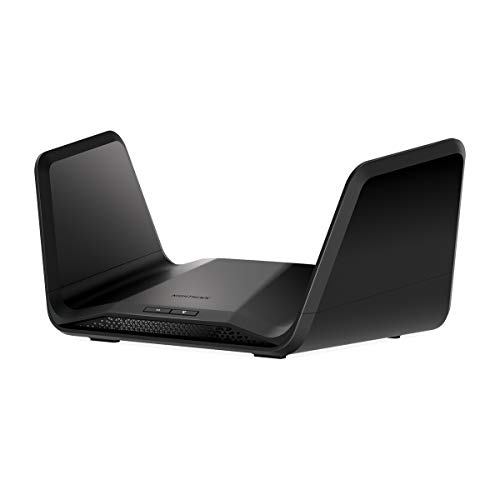
| Performance Powerhouse | Wi‑Generation: Wi‑Fi 6 (AX) | Bands: Tri‑band | Coverage (sq. ft.): Up to 2,500 sq. ft. | VIEW LATEST PRICE | Our Analysis |
| TP-Link Archer BE9700 Wi‑Fi 7 Tri‑Band Router |

| Cutting‑Edge Speed | Wi‑Generation: Wi‑Fi 7 | Bands: Tri‑band (6/5/2.4 GHz) | Coverage (sq. ft.): Up to 2,600 sq. ft. | VIEW LATEST PRICE | Our Analysis |
| NETGEAR Nighthawk WiFi 7 Router RS180 (Router Only) |

| Multi‑Gig Gaming | Wi‑Generation: Wi‑Fi 7 | Bands: Dual‑band | Coverage (sq. ft.): Up to 2,500 sq. ft. | VIEW LATEST PRICE | Our Analysis |
| TP-Link Archer A6 AC1200 Dual-Band Gigabit Router |

| Budget Coverage | Wi‑Generation: Wi‑Fi 5 (AC) — marketed as AC1200 | Bands: Dual‑band | Coverage (sq. ft.): (Not explicitly stated) — implied home coverage (suitable for whole‑home/extended coverage) | VIEW LATEST PRICE | Our Analysis |
More Details on Our Top Picks
NETGEAR R6700AX WiFi 6 AX1800 Dual-Band Router
Should you need reliable Wi‑Fi across a small to mid‑size home, the NETGEAR R6700AX delivers fast AX1800 performance and coverage up to about 1,500 sq. ft., making it a great pick for households with up to ~20 devices that stream, game, or video‑conference. You’ll connect this router to your existing cable modem (router only) and support ISPs up to 1 Gbps—cable, fiber, satellite, or DSL. Dual‑band WiFi 6 and four Gigabit Ethernet ports keep wired and wireless devices running smoothly. Built‑in security, regular updates, and free expert help simplify setup and protect your network.
- Wi‑Generation:Wi‑Fi 6 (AX)
- Bands:Dual‑band
- Coverage (sq. ft.):Up to 1,500 sq. ft.
- Wired Ethernet ports:4 × 1 Gbps LAN ports
- Security/Protection:Built‑in security and enhanced safety updates
- Router Only (needs modem for broadband):Router only — requires separate modem for cable/fiber/DSL
- Additional Feature:4‑stream Wi‑Fi 6
- Additional Feature:Supports up to 20 devices
- Additional Feature:Free expert help
NETGEAR Nighthawk RAX70 AX6600 WiFi 6 Router
In case you need fast, reliable Wi‑Fi for a busy household, the NETGEAR Nighthawk RAX70 AX6600 is built to handle up to 40 devices across roughly 2,500 sq. ft., providing tri‑band Wi‑Fi 6 speeds up to 6.6 Gbps for uninterrupted streaming, gaming, and video calls. You’ll get four Gigabit Ethernet ports and a USB 3.0 port for wired devices and storage. It replaces your current router but needs a separate modem or modem‑router and supports ISPs up to 2 Gbps. NETGEAR Armor adds malware and identity protection. Use the Nighthawk app for simple setup and management.
- Wi‑Generation:Wi‑Fi 6 (AX)
- Bands:Tri‑band
- Coverage (sq. ft.):Up to 2,500 sq. ft.
- Wired Ethernet ports:4 × 1 Gbps Ethernet ports
- Security/Protection:Built‑in NETGEAR security + NETGEAR Armor (30‑day trial)
- Router Only (needs modem for broadband):Router only — replace existing router; separate modem/router required
- Additional Feature:Tri‑band AX6600
- Additional Feature:NETGEAR Armor trial
- Additional Feature:USB 3.0 port
TP-Link Archer BE9700 Wi‑Fi 7 Tri‑Band Router
Should you need multi‑gig speeds and future‑proof Wi‑Fi 7 performance for a large, device‑packed home, the TP‑Link Archer BE9700 is built for that — it combines tri‑band MLO and 7‑stream design with a 10 Gbps WAN/LAN port plus multiple 2.5 Gbps ports to handle heavy wired and wireless loads, keeping 4K/8K streaming and AR/VR gaming running smoothly across up to 120 devices. You’ll get 6/5/2.4 GHz bands with up to 5,765/2,882/1,032 Mbps, MLO, Multi‑RUs, 4K‑QAM and 320 MHz channels. Six antennas and beamforming cover about 2,600 sq ft. HomeShield, VPN support, easy Tether setup and multi‑gig integration round out a solid, secure choice.
- Wi‑Generation:Wi‑Fi 7
- Bands:Tri‑band (6/5/2.4 GHz)
- Coverage (sq. ft.):Up to 2,600 sq. ft.
- Wired Ethernet ports:3 × 2.5 Gbps LAN + 1 × 10 Gbps WAN/LAN + 1 × 2.5 Gbps WAN/LAN (multi‑gig ports)
- Security/Protection:TP‑Link HomeShield (parental controls, IoT security) + VPN support
- Router Only (needs modem for broadband):Router only — designed to pair with multi‑gig modem (WAN ports provided)
- Additional Feature:Multi‑Link Operation (MLO)
- Additional Feature:10 Gbps WAN/LAN port
- Additional Feature:Supports 120 devices
NETGEAR Nighthawk WiFi 7 Router RS180 (Router Only)
Pick the RS180 should you want WiFi 7 speeds and wide coverage without a built-in modem—this compact Nighthawk delivers up to 5.5 Gbps (BE5500), blankets about 2,500 sq. ft., and handles up to 80 devices, making it a strong choice for gamers, streamers, and busy homes that use multi-gig or fiber internet (you’ll need a separate modem for cable/fiber service). You’ll get WiFi 7’s 1.2x speed enhancement over WiFi 6, low latency, and stable connections for video conferencing and entertainment. The sleek, small-footprint design hides high-performance antennas and a 2.5 GbE port for multi-gig WAN. Free expert help is available.
- Wi‑Generation:Wi‑Fi 7
- Bands:Dual‑band
- Coverage (sq. ft.):Up to 2,500 sq. ft.
- Wired Ethernet ports:1 × 2.5 Gbps internet port (multi‑gig) — plus typical LAN ports implied (router only)
- Security/Protection:Built‑in NETGEAR security features
- Router Only (needs modem for broadband):Router only — separate modem required
- Additional Feature:BE5500 Wi‑Fi 7
- Additional Feature:2.5 Gbps internet port
- Additional Feature:Compact high‑performance antennas
TP-Link Archer A6 AC1200 Dual-Band Gigabit Router
Should you need affordable whole-home Wi‑Fi that handles 4K streaming and several wired devices, the TP‑Link Archer A6 delivers with dual-band AC1200 speeds, four Gigabit LAN ports, and beamforming to keep connections strong where you use them most. You get 300 Mbps on 2.4 GHz and 900 Mbps on 5 GHz, MU‑MIMO on 5 GHz for simultaneous device throughput, and four external antennas to extend coverage. Use AP mode to turn a wired feed into Wi‑Fi, or build a OneMesh system with extenders for seamless roaming. WPA3 protects your network, and it works with most ISPs (modem required).
- Wi‑Generation:Wi‑Fi 5 (AC) — marketed as AC1200
- Bands:Dual‑band
- Coverage (sq. ft.):(Not explicitly stated) — implied home coverage (suitable for whole‑home/extended coverage)
- Wired Ethernet ports:4 × Gigabit LAN ports
- Security/Protection:WPA3 support and standard security features
- Router Only (needs modem for broadband):Router only — modem required for most providers
- Additional Feature:TP‑Link OneMesh support
- Additional Feature:Four external antennas
- Additional Feature:AP mode available
Factors to Consider When Choosing a Router For Coverage
Upon selecting a router for coverage, consider how large your area is and whether the antenna design suits open rooms or lots of walls. Check the device capacity limits and the wireless standard generation to make sure your network can handle current and future gadgets. Also look for wired backhaul options in case you want more stable links between units or mesh nodes.
Coverage Area Size
Start measuring the square footage of the area you need covered and choose a router whose advertised range meets or exceeds that number to minimize dead zones. For multi‑floor homes, add 20–30% to account for vertical loss from walls and floors. Should your building use concrete, brick, or metal, increase your target coverage or plan extra access points because those materials sharply cut range. Include patios, garages, and other outdoor spaces in your total; exterior coverage often needs higher transmit power or additional units due to open‑air loss and obstacles. Lastly, factor in device density—many simultaneous users can force denser placement of routers or extenders even when nominal square‑foot coverage seems sufficient.
Antenna Design Type
Antenna design matters because it directly shapes how far and how reliably your Wi‑Fi reaches different parts of your space. Choose external high‑gain antennas when you want stronger, more directional signals and longer range—you can physically aim them and benefit from larger elements that concentrate power. Internal antennas keep a cleaner look and reduce damage risk, but they tend to be smaller and more omnidirectional, giving shorter-range coverage. Detachable antennas let you upgrade to high‑gain or directional types to fix dead zones without swapping routers. Directional (Yagi/panel) antennas push energy in a focused arc for distant rooms, while omnidirectional antennas spread signal 360° for broad coverage. Also prefer routers with multi‑antenna MIMO and beamforming to steer streams, enhance throughput, and reduce dead spots.
Device Capacity Limits
Plan for how many devices you’ll actually use and then add headroom: routers list theoretical device capacities (20, 40, 80, 120, etc.), but real-world performance falls as more clients stream or call simultaneously, so pick a model with technologies like MU‑MIMO, OFDMA, or Multi‑Link Operation and a higher rated capacity than your current count to keep per‑device speeds acceptable. Check the stated maximum to cover smartphones, tablets, TVs, cameras and IoT, but don’t treat that number as guaranteed. In the event many devices transmit concurrently—video calls, 4K streams—expect per-client throughput to drop. For homes with dozens of low‑bandwidth sensors plus several heavy users, choose extra capacity or plan a mesh/multi‑AP layout to distribute load and preserve usable speeds.
Wireless Standard Generation
Once you’ve sized device capacity and added headroom, pick the wireless generation that matches your coverage goals and client mix. Choose Wi‑Fi 6 or 6E when you need better multi‑device handling and OFDMA efficiency; step to Wi‑Fi 7 for higher peak throughput, MLO, and wider channels. Expect newer standards’ 1024‑QAM/4K‑QAM, MU‑MIMO and multi‑stream support to raise real‑world speeds and concurrent connections, improving usable coverage in dense spaces. Recall wider 160–320 MHz channels and the 6 GHz band cut congestion but might shorten range at higher frequencies. Beamforming and adaptive resource units help steer signals and manage interference, extending reliable reach. Finally, plan for backward compatibility—older clients will connect, but will cap aggregate performance.
Wired Backhaul Options
While wireless mesh is convenient, wired backhaul gives you the most consistent, low‑latency backbone for extending coverage—so prioritize Ethernet links (Cat5e/Cat6/Cat6a) and multi‑gig ports provided you are able. Use Cat5e/Cat6/Cat6a between mesh nodes or access points to avoid wireless interference and latency. Choose routers and nodes with 2.5G/5G/10G ports so your backhaul won’t throttle gigabit or multi‑gig internet. Consider PoE to power remote APs over a single cable, simplifying placement where outlets are scarce. Plan topology: a star with quality switches reduces single‑point failures, while daisy chains need short runs and sturdy switches to limit latency. Respect cable grade and 100 m (328 ft) maximum runs; use shielded cable in electrically noisy environments to keep signals clean.
Interference And Obstacles
Because building materials and everyday electronics shape how far and fast your Wi‑Fi travels, you should assess interference and obstacles prior to picking a router. Thick walls and floors—concrete, brick, stone—can cut signal strength by 10–20+ dB, shrinking coverage versus open rooms. Metal objects and foil-backed insulation create reflections and multipath interference, hurting throughput and increasing latency on 5 GHz and 6 GHz. Appliances like microwaves, cordless phones, baby monitors, and Bluetooth gear crowd the 2.4 GHz band and cause intermittent packet loss. Large water bodies and dense furniture absorb RF energy, producing dead zones that worsen at higher frequencies. Keep in mind that attenuation rises with frequency: 2.4 GHz penetrates better, while 5/6 GHz give higher peak speeds but shorter, more obstacle-sensitive range.
Security And Updates
Obstacles and interference don’t just shrink Wi‑Fi range—they can also expose gaps attackers could exploit—so you should weigh a router’s security and update practices as carefully as its coverage. Pick models that offer automatic firmware updates or timely alerts so patches land quickly. Prioritize WPA3 support and the ability to disable legacy WEP/WPA to keep wireless traffic protected. Built-in firewall, intrusion detection/prevention, and guest network isolation help limit lateral movement assuming one device is compromised. Confirm secure remote management (HTTPS/SSH/VPN) and make sure you can disable remote admin access whenever not needed. Finally, check the vendor’s update cadence and end-of-life policy so your router receives security fixes for several years, not months.
