Clamps are fundamental tools in woodworking and metalworking. They secure your projects, providing essential stability and precision. Using the right clamps also ensures your safety, as proper clamping minimizes the risk of accidents during your work. Many types of clamps exist, each designed for specific tasks. Choosing the correct tools for the job is crucial. You need to understand these clamps and their applications to achieve the best results.
Key Takeaways
Clamps are important tools. They hold materials steady for tasks like drilling or gluing. This makes your work safe and precise.
Different clamps do different jobs. C-clamps are strong for general use. F-clamps work well for wider pieces. Parallel clamps give even pressure for flat surfaces.
Always pick the right clamp for your project. Think about the material and how much pressure you need. This helps you get good results and keeps you safe.
Clamp Fundamentals
Why Clamps are Essential
Clamps are vital tools in any workshop. You use them to hold wood, metal, or plastic firmly in place. These essential tools secure small workpieces during many tasks. For example, you need clamps when you drill, cut, or sand. They prevent your materials from moving. This stability ensures your work is precise. Clamps also keep your hands free, making your work safer. You can focus on the task at hand, knowing your material is secure. Without reliable clamps, many projects would be difficult or even impossible to complete accurately.
Basic Clamping Principles
All clamps work by applying pressure. They hold materials together tightly. You adjust a clamp to squeeze your workpiece. This pressure keeps parts from shifting. For instance, during an assembly, clamps hold pieces while glue dries or fasteners are added. Some types of clamps use simple screw mechanisms to create force. Others use more advanced systems. For example, some powerful clamps use hydraulic fluid. These clamps can create a lot of force from a small input. Pressure applied to a fluid transmits equally. This allows a small push to create a very strong squeeze. This principle helps these clamps generate significant holding power. All clamps, regardless of their design, aim to apply consistent pressure. This pressure holds your materials securely for various tasks and assembly steps.
Exploring Different Types of Clamps
You will encounter many common types of clamps in your workshop. Each type serves a specific purpose. Understanding these different types of clamps helps you choose the right tool.
C-Clamps and Variants
C-clamps are one of the most common types of clamps. They look like the letter “C”. You use a C-clamp to hold materials together. A large screw passes through the bottom of the “C”. You turn this screw to tighten the clamp. The screw presses against your workpiece. C-clamps are very strong. You can find them in many sizes. They are useful for holding metal or wood. You use c-clamps for general clamping tasks. These c-clamps provide a firm grip. You will often see c-clamps in welding shops. They are also popular in woodworking. You can use c-clamps to hold parts for drilling. You will find these c-clamps indispensable.
F-Style and Bar Clamps
F-style clamps and bar clamps are very versatile. They have a long metal bar. One jaw is fixed to the end of the bar. The other jaw slides along the bar. You tighten a screw to apply pressure. This design allows you to clamp wider pieces. F-style clamps are great for many projects.
You use them in woodworking for:
Wood joinery
Face gluing boards
Holding workpieces
In metalworking, you use these bar clamps for:
Welding
General metalworking tasks
Many people consider these bar clamps essential. A quick-grip clamp is a type of bar clamp. It lets you tighten with one hand. These bar clamps offer quick adjustments. You will find many uses for these bar clamps. The long bar gives you reach. You can clamp large panels with these bar clamps. The sturdy bar provides great support. You can extend the bar with accessories.
Parallel Clamps
Parallel clamps are special. They have jaws that stay parallel. This means they apply even pressure. You use parallel jaw clamps for precise work. These are also called cabinet clamps. They deliver consistent high-pressure clamping force. This force spreads across the entire surface. You use them for uniformly gluing boards. They help maintain flatness. Cabinet making often uses these tools. Panel assembly also benefits from them. Other large woodworking tasks use them too.
Parallel clamps maintain parallelism when tightened. This ensures even pressure across the entire workpiece surface.
They provide uniform pressure across large surfaces.
They ensure precise alignment and prevent warping.
Parallel jaws ensure even pressure distribution.
A large clamping surface helps prevent marring of the workpiece.
They minimize the risk of uneven pressure causing bowing in the center of the workpiece. This makes them excellent for gluing up panels or tabletops.
Jaws remain parallel under clamping pressure. This is perfect for keeping surfaces aligned in tasks like panel glue-ups.
They are robust and suitable for heavy-duty clamping tasks. This contributes to precise and professional results.
Hand Screw Clamps
Hand screw clamps are unique. They have two wooden jaws. Two separate screws control these jaws. You can adjust the jaws to be parallel or angled. This flexibility makes them useful for odd shapes. The jaws are typically crafted from close-grained hardwood. A significant advantage of these tools is their ability to prevent damage to the workpiece.
The seasoned-straight grain hard maple wood jaws protect against marring of finished surfaces. This woodworking clamp’s added benefit of protecting your materials is why many carpenters choose the adjustable handscrew as their go-to clamp for their building projects. You can apply pressure evenly. These tools are great for delicate work.
Edge Clamps
Edge clamps are designed for a specific job. They hold material to the edge of a workpiece. You use them in several scenarios:
Gluing hardwood edging to plywood.
Working in tight spaces, such as pre-assembled cabinets or finished casework.
Attaching narrow strips of solid wood to plywood edges.
Projects like cabinetry, shelving, and furniture where precise alignment and consistent pressure are needed for edging.
These tools ensure a strong bond along the edge.
Spring-Action Clamps
Spring-action clamps offer quick and easy clamping. You use them for tasks that need fast setup and release. These clamps rely on spring tension to hold your workpieces.
Spring Clamps
Spring clamps are very common. You will find them in many workshops. These spring clamps have two jaws and a strong spring. You squeeze the handles to open the jaws. Then you release them to grip your material. They provide a quick, temporary hold. You use these spring clamps for light-duty tasks. For example, you can hold small pieces while glue dries. You might also use them to secure a tarp. Ratcheting hand clamps are a type of spring clamp. They offer a stronger grip than basic spring clamps. You can adjust the pressure with a ratchet mechanism. These spring clamps are very handy for many small jobs.
Toggle Clamps
Toggle clamps provide strong, fast clamping action. You use them in jigs and fixtures. They work with an over-center locking mechanism. This gives you a powerful hold with a quick release. Different types of toggle clamps exist. Each type offers specific holding capacities.
Push-pull clamps: These clamps have some of the highest holding capacities. You can find options that hold from 300 to 850 pounds.
Vertical hold clamps: Their holding capacities vary. They can hold between 110 pounds and 750 pounds. You can get them in zinc-plated steel or stainless steel.
Latching clamps: These clamps can be very strong. Some steel latching clamps are rated for 2,182 pounds.
You can see the holding capacity for different sizes of toggle clamps in this chart: These clamps are essential for repetitive tasks. They ensure consistent pressure every time you use them. You will find toggle clamps useful for production work.
Strap and Band Clamps
Strap and band clamps offer unique solutions for holding irregular shapes or large assemblies. These clamps use flexible materials to apply pressure.
Web Clamps
Web clamps, also known as band clamps, use a flexible strap or band. This strap wraps around your workpiece. A tightening mechanism pulls the strap tight. You can use web clamps for many different projects. They are excellent for clamping oddly shaped items. You also use them for assembling frames or furniture with multiple sides. The flexible band applies even pressure around the entire object. This helps hold complex shapes securely. You will find them useful for gluing up picture frames or hexagonal boxes.
Corner Clamps
Corner clamps are special tools. You use them to hold two pieces of material at a perfect 90-degree angle. This is very important for making strong, square joints. These clamps ensure your corners are precise.
Corner clamps have specific design features to achieve this accuracy:
V-wedge jaws grip mating pieces securely. This ensures they sit at precise 90-degree angles.
Cast-aluminum pads press against the inside and outside faces of the pieces. This holds them firmly at a right angle.
Edge stops help align the edges of your pieces. This makes assembly accurate.
Some corner clamps use Automaxx® auto-adjust technology. This feature automatically closes the clamp with a preset pressure. It works regardless of material thickness. This helps hold pieces securely for precise angles.
A self-squaring design also helps achieve accurate 90-degree angles.
Robust aluminum alloy construction ensures pieces are perfectly aligned. You can comfortably nest these clamps into corners. This design holds wooden pieces firmly. It contributes to precise right angles. These clamps maintain their promise of precise right angles. You may only need occasional calibration.
Clamps for Woodworking Projects
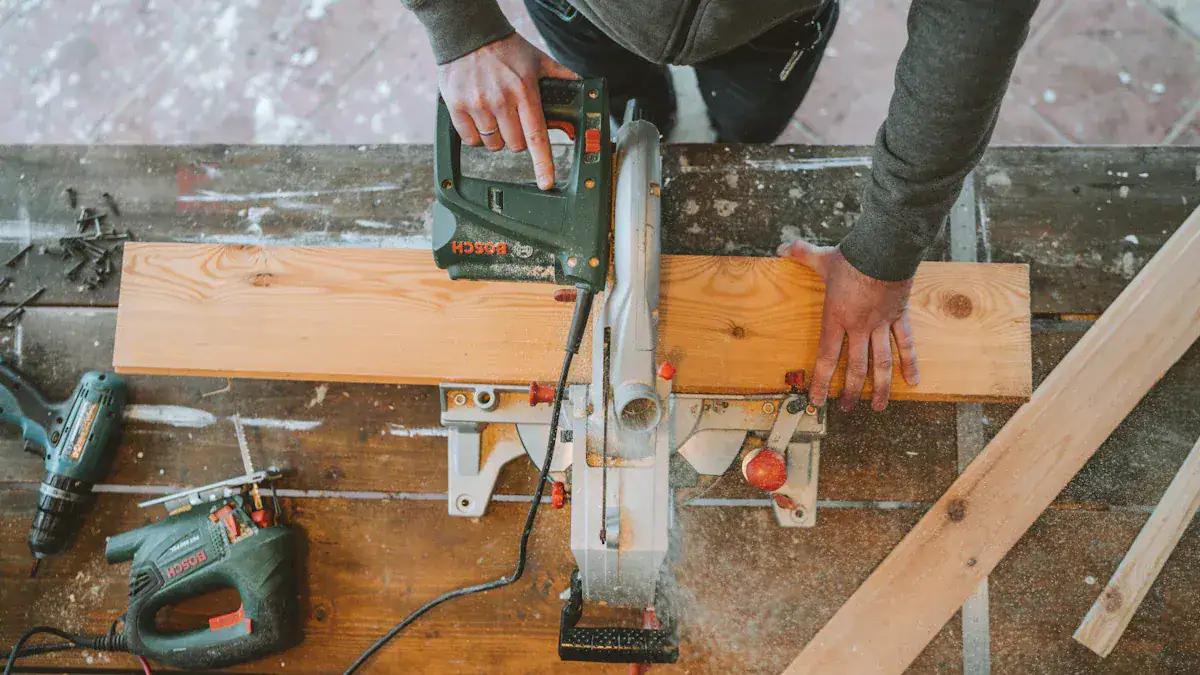
You need specific clamps for your woodworking projects. These clamps help you achieve precise results. They make your woodworking tasks easier and more accurate.
Miter Clamps
Miter clamps hold miter joints. People also call them corner clamps. Miter joints connect two boards at a 45-degree angle. This makes a 90-degree corner. You use them for picture frames and trim work. These clamps keep parts aligned. They make connections stable while glue dries.
You will find several types of miter clamps:
Spring Miter Clamps and Pliers: These clamps quickly secure mitered corners. They are great for frames and molding. They are made from strong steel. You can apply them by hand or with special pliers.
Light Duty Corner Clamp: This is an affordable option. It works for fixed 90-degree angles. You can use it for miter or butt joints. It adjusts to different wood sizes. It is for lighter woodworking tasks.
90° Angle / Corner Clamps: Brands like Bessey make these clamps. They hold, fix, and align material at a right angle. They adjust to different wood thicknesses automatically. They are accurate and strong. You use them for cabinetry and furniture assembly.
Right Angle Clamp: This clamp helps with 90-degree joints. It is especially good for pocket-hole construction. It holds parts while you drive screws. It has a steel pin that fits into a pocket hole. It also has a swiveling clamp pad.
Picture Frame Clamps
Picture frame clamps help you make tight corners. A specialized non-marring corner clamp is very useful. Rockler makes one such clamp. This clamp pushes the joint together as you tighten it. This ensures a snug fit. It has a large black knob. This knob tightens both jaws at the same time. It works on frames from 5/8″ to 2-7/8″ wide. White knobs let you tilt the outer jaws up to 1°. This helps correct slightly out-of-square joints. Its open design gives you easy access. You can fasten with brads or staples.
Fulton Miter Spring Clamps are another good choice. They offer an effective way to clamp mitered corners. These are strong steel clamps. You can apply them by hand or with Miter Spring Pliers. The pliers spread their sharp, pointed tips. You use them for quick application to corner joints. This is for wood projects like frames. They let glue dry or corners get brad-nailed. These spring clamps leave minimal marks. This makes the finishing process simpler. Spring-tensioned pliers have rubber grips. They make applying and removing clamps quick and easy. They give the perfect amount of tension. This holds corners together.
Pocket Hole Clamps
Pocket hole clamps are like a “helping hand” during assembly. They are very important for cabinet construction. They keep pieces aligned. This includes cabinet face frames. They ensure flush and smooth surfaces. Clamps with large, flat faces are best. Wood Project Clamps and Face Clamps are examples. They span across joints. They keep mating pieces flush while you drive screws. These clamps also stop pieces from separating. This happens when a self-tapping pocket-hole screw exits one piece and enters another. This is a common problem in pocket-hole assembly. They are also useful for holding large parts. This includes cabinet sides. They align corners during case construction. This makes a difficult task much simpler.
Veneer Clamps
Veneer clamps help you prevent bubbling. They ensure good adhesion. For best veneer installation, use white or yellow PVA glue. Use it with a hot, cold, or vacuum press. This is especially true for thinner 10-mil paperback veneer. If you use contact cement, choose a thicker veneer backing. Examples are 22 mil Bubble-Free Veneer, phenolic, or wood-on-wood. Do not use a J-Roller for pressure. Instead, use tools like a carpet tucker or wood block. These apply more concentrated pressure. When you apply pressure, start from the center. Slide evenly towards the edges.
Contact cement is generally not good for veneer. It is too flexible. It may not overcome veneer movement. Consider other options. Hot hide glue with a veneer hammer works well. You can also use yellow glue. Apply it to veneer, let it dry, then activate it with an iron. Avoid contact cement with raw veneer. This is especially true if you will apply solvents like lacquer. Solvents can neutralize the adhesive. This causes bubbles. For paper-backed veneer, contact cement is not the first choice. Phenolic-backed or wood-on-wood veneer might be better. A blocking layer of shellac might help. It can prevent solvent migration if you must use contact cement. PVA glue with a heater bar is another effective option.
You should use multiple clamps. This distributes pressure evenly across the veneer surface. Use edge clamps for flat surfaces. This ensures firm, even pressure. Do not overtighten them. Let the adhesive cure properly. Keep a stable temperature. Ideally, this is 65°F to 75°F for at least 24 hours. Keep humidity below 50%. High humidity can hurt adhesion. Contact cement is only good for paper-backed and 2-ply veneer. It is a common mistake for beginners. They use contact cement or yellow wood glue on raw wood veneers. These adhesives do not dry hard. Yellow glue can also bleed through.
Clamps for Metalworking Tasks
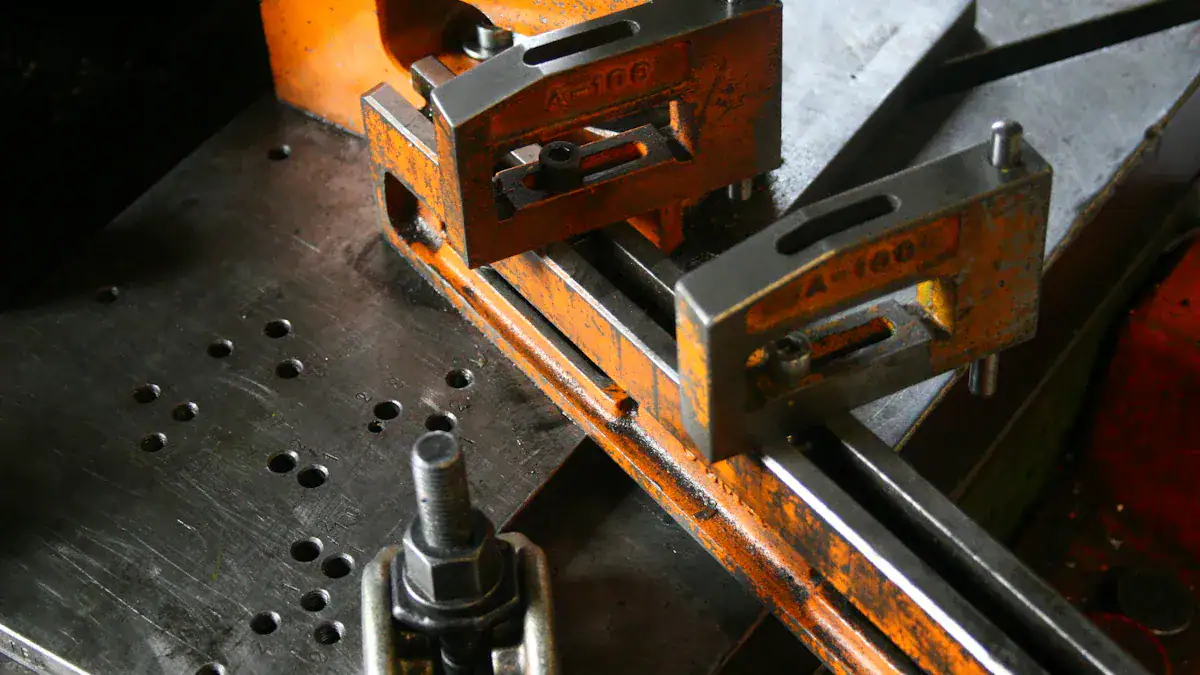
You need specialized tools for metalworking tasks. These tools hold metal pieces securely. They ensure precision and safety during welding or cutting.
Welding Clamps
Welding tools are crucial for metal fabrication. They hold your workpieces firmly in place. You use them to keep metal aligned before and during welding.
C-Clamps have a C-shaped frame. They hold two workpieces at a 90-degree angle. You can find them in many sizes. They work for small DIY jobs and heavy industrial welding.
F-Clamps (Bar Clamps) feature an F-shaped frame. They have an adjustable sliding jaw. These are great for securing large or unusually shaped workpieces. They offer a long reach.
Locking Pliers (Vise-Grips) lock onto a workpiece. You use them for holding small items. They also secure materials in tight spaces. You often use them for temporary holding during tack welding.
Pipe Clamps use a pipe with adjustable clamping heads. They are perfect for holding round or irregularly shaped objects. You use these pipe clamps in many welding applications.
Quick-Release Clamps allow fast holding and releasing. They are best for projects needing frequent adjustments. They save time in busy workshops.
Vise Grips
Vise grips are versatile locking pliers. They provide a strong, stable grip. You use them for various tasks.
Vise-Grip Straight Jaw Locking Pliers are ideal for general gripping. They hold flat, square, or hex surfaces firmly.
Vise-Grip Locking Sheet Metal Tools grip sheet metal. They keep sheets aligned during cutting or bending.
Vise-Grip Locking C-Clamps hold large pieces together. They secure metal panels or a pipe. You use them during welding or assembly.
Welding tools (a type of vise grip) hold metal pieces together. They ensure precise alignment and stability during welding.
Pipe Clamps
Pipe clamps are excellent for holding round objects. They are especially useful for pipe work. A pipe clamp consists of a pipe and two adjustable jaws. You slide one jaw along the pipe. The other jaw tightens with a screw. This design allows you to hold various sizes of pipe. You use a pipe clamp to hold a pipe for cutting. You also use a pipe clamp for welding two pieces of pipe together.
Magnetic Clamps
Magnetic tools use strong magnets. They hold metal pieces together. You use them for quick, temporary holds. They are great for positioning metal before welding. They keep your hands free.
Specialized Clamping Systems
You will find specialized clamping systems for unique tasks. These systems offer advanced ways to hold your workpieces. They often use different forces than traditional clamps.
Vacuum Clamping
Vacuum clamping uses air pressure to hold materials. It creates a vacuum between your workpiece and a flat surface. This vacuum holds your material very securely. You often use vacuum clamping in woodworking. It is great for holding large, flat panels without leaving marks. You can achieve strong vacuum pressure levels with these systems. For example, some systems reach a maximum vacuum of 25.5″ of Hg at sea level. You can adjust the vacuum for different projects. The EVS-2 and V4 kits allow adjustments from 10.5″ to 25.5″ of Hg. Excel 1, 3, and 5 systems offer a range from 5″ to 25.5″ of Hg. For most veneer projects, an ideal setting is 18″ to 21″ of Hg. This precise control helps you work with delicate materials.
Air Clamps
Air clamps, or pneumatic clamps, use compressed air. They provide quick and consistent clamping force. These clamps are very useful in high-production environments. Pneumatic systems significantly enhance speed and efficiency in CNC manufacturing. They allow quick clamping and unclamping. This is crucial for high-volume production lines. Manual systems are much slower. They demand physical effort and time for each clamping action. This reduces overall production. David Vilcek, a manager for CLR, notes a significant limitation of manual clamps. He states they often produce variations in clamping force. This inconsistency can lead to irregular parts and more scrap material.
Pneumatic clamps offer several benefits for high-volume assembly:
Quickness: They enable rapid clamping and unclamping.
Cleanliness: They suit environments needing minimal contamination.
Cost-effectiveness: They provide an economical solution for high-volume operations.
Ease of Installation: Many models feature simple plug-and-play installation.
Maintainability: You can often repair them in the field.
Flexibility: They come with a modular design.
Pneumatic toggle clamps are common in automated processes. They use pneumatic cylinders instead of manual handles. This allows quick, repeatable, and synchronized clamping. You can integrate these clamps into complex control systems. They work well for assembly lines, robotic cells, and automated testing fixtures. They provide consistent force without needing operator intervention.
Selecting the Right Clamp
Choosing the correct clamp is important for your work. You need to match the clamp to your specific task. This ensures safety and good results for your projects.
Project Considerations
You must think about your project first. What are you trying to hold? How big is it? What material is it? Different projects need different types of clamps. For example, a small woodworking project needs different clamps than a large metal welding job. Consider the environment where you work. High humidity or corrosive substances need special materials. Aluminum or stainless steel clamps resist rust. Always check the manufacturer’s load specifications. This ensures your clamp can handle the weight. Think about the cost. Sometimes, a more expensive clamp lasts longer. This saves you money later. Easy installation and low maintenance also save time.
Material and Pressure Needs
The material you clamp affects your choice. You also need to think about how much pressure you need.
Environmental Conditions: Clamps in wet or harsh areas need strong materials. Saltwater areas need corrosion-resistant clamps.
Load Requirements: Each job has specific weight demands. Choose clamps with the right load capacity. Always check what the maker says.
Cost Considerations: Balance the price with how long the clamp will last. Better clamps can cost more but save money on repairs.
Installation and Maintenance: Easy-to-install clamps save time. Clamps needing little care make your work smoother.
Strength vs. Weight: For hanging things, strength is key. Weight matters for moving and setting up. Find a good balance for your needs.
You can see how different materials perform:
Material | Pros | Cons |
|---|---|---|
Steel | High strength | Heavier, can rust (needs coatings) |
Aluminum | Lightweight, resists rust | |
Composites | Lightweight, resists rust, non-conductive, customizable | More expensive, may not be as strong as metal |
Stainless Steel | Resists rust, strong | |
Plastics | Lightweight, non-conductive | Good for specific jobs where weight and no electricity are important |
Reach and Jaw Capacity
You need to consider the clamp’s reach. This is how far the clamp can extend. You also need to know its jaw capacity. This is how wide the jaws can open. A deep reach helps you clamp far from the edge. A large jaw capacity lets you hold thick or wide workpieces. Make sure your chosen clamp can fit around your material. This ensures a secure hold.
You have learned about many different types of clamps. These essential tools are crucial for both woodworking and metalworking. Each clamp offers unique strengths for your projects. Selecting the right clamp ensures professional results. It also keeps you safe and enhances efficiency in your woodworking tasks. Build a versatile collection of clamps. Always consider your specific project demands.
FAQ
What is the most versatile clamp for general use?
You will find F-style clamps and bar clamps very versatile. They offer a long reach and adjust quickly. You can use them for many woodworking and metalworking tasks. They are great for holding large pieces or for general assembly.
What clamp should you use for delicate materials?
You should use hand screw clamps for delicate materials. Their wooden jaws prevent marring. You can also adjust the jaws to fit odd shapes. This makes them ideal for projects needing gentle, even pressure.
What is the main difference between C-clamps and F-clamps?
C-clamps have a fixed C-shaped frame. They are very strong for general gripping. F-clamps have a sliding jaw on a bar. This allows you to clamp wider workpieces. F-clamps offer more reach and flexibility for larger projects.
What is the best way to glue a tabletop?
You should use parallel clamps for gluing a tabletop. They apply even pressure across the entire surface. This prevents bowing and ensures a flat, strong joint. For a large tabletop, you might wonder how many clamps do I need to glue a tabletop. Use one clamp every 6 to 8 inches along the glue line.
What are the advantages of vacuum clamping?
Vacuum clamping holds materials without leaving marks. It uses air pressure to secure your workpiece to a flat surface. This system is excellent for large, flat panels. It provides strong, even pressure without traditional clamp jaws.