Do you want to add unique charm to your succulent collection? You can easily bring personality to your space. Creating your own diy succulent planters offers so much joy. Succulents are beautiful, low-maintenance plants, perfect for any home. You save money and personalize your decor. You also practice sustainability, turning old items into new succulent planters. Get ready to explore many creative container ideas. You will find practical tips for success with your next succulent project.
Key Takeaways
Making your own succulent planters saves money and lets you show your unique style.
Good drainage is very important for succulents; always use pots with holes and fast-draining soil.
You can turn many old items like teacups, books, or even old boots into creative succulent homes.
Succulents need the right amount of light and careful watering to stay healthy.
You can easily fix common succulent problems like pests by using simple methods.
Why DIY Succulent Planters?
You might wonder why you should make your own succulent homes. There are many great reasons! Creating your own diy succulent planters brings more than just beauty to your space.
Cost-Effective Solutions
Making your own planter saves you money. Store-bought options can be pricey. You can create a stunning succulent display for much less. For example, a fancy planter that looks like a high-end design might cost over $2,500 in a store. You can make a similar one yourself for about $250. That’s a huge saving, around 90%! You can often find pots for free or cheap, then add your beautiful succulents.
Personalizing Your Decor
Your home should reflect you. DIY planters let you show off your unique style. You choose the colors, textures, and materials. This means your succulent arrangements will be truly one-of-a-kind. You can match them perfectly to your room’s look. No one else will have the exact same plants as you!
Sustainable Upcycling
Do you like helping the planet? Upcycling old items into new homes for your plants is a fantastic way to be green. You give new life to things that might otherwise end up in the trash. This reduces waste and helps our environment. It’s a smart way to be creative and sustainable.
Therapeutic Benefits
Working with your hands and nature is good for you. Gardening activities can make you feel better. They improve your quality of life and even help you sleep. Many people find that gardening reduces feelings of stress and anxiety. It can also boost your happiness and self-esteem. When you care for your succulent, you connect with nature. This helps you relax and feel calm. It’s a wonderful way to de-stress and enjoy a peaceful hobby.
Essential Planter Considerations
You are ready to create your own succulent masterpiece. Before you start, think about a few key things. These tips help your succulent thrive in its new home.
Ensuring Proper Drainage
Good drainage is super important for your succulent. Why? Because too much water can cause root rot. This is a common problem that can kill your plant. You want water to flow out easily.
Here is how you ensure good drainage:
Use the right soil: Your soil needs to drain fast. You can buy special succulent and cactus mixes. Or, you can make your own. Just add pumice, perlite, or coarse sand to regular potting soil. This helps absorb extra moisture.
Drill drainage holes: Always pick a planter with holes at the bottom. If your chosen planter does not have them, you need to add them. This lets excess water escape. Avoid decorative pots without holes. They trap water.
Water correctly: When you water your potted succulent, pour until water comes out the bottom. Then, remove any pot saucers. This stops roots from sitting in water. You can also elevate your pots with small feet. This helps air flow around the base and dries out extra moisture.
Material Suitability
The material of your planter matters. Different materials hold water differently. This affects how often you need to water your succulent.
Here is a quick look at common materials:
Material | Porosity/Breathability | Moisture Retention | Pros | Cons |
|---|---|---|---|---|
Concrete | Porous | Water evaporates quickly | Durable, insulates against temperature | Heavy |
Terracotta/Ceramic | Porous, breathable | Water evaporates quickly | Good for outdoor/indoor, especially unventilated areas | Heavy |
Plastic | Not as breathable | Retains moisture more | Lighter, less fragile, variety of colors | Less breathable |
Porous materials like terracotta and concrete let water evaporate faster. This is great for succulents that hate wet feet. Plastic containers hold moisture longer. If you use plastic, make sure your soil drains extra fast.
Matching Planter Size
Choosing the right size planter is also important. You do not want a pot that is too big or too small. A pot that is too large holds too much soil. This means it holds too much water, which can lead to root rot. A pot that is too small will not give your succulent roots enough room to grow. Pick a planter that is just a bit larger than your succulent’s root ball. This gives it space to grow without holding too much moisture.
Creative Succulent Planter Ideas
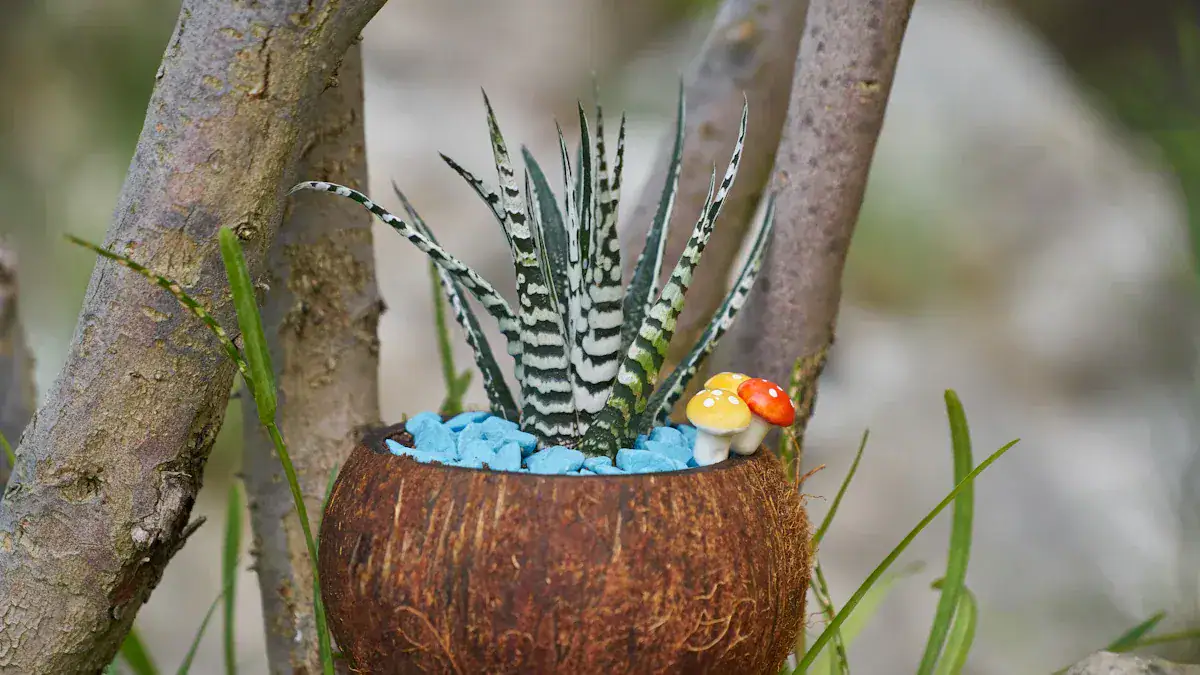
You want to give your succulent a truly special home. This section gives you many creative ideas for unique containers. You can mix and match these concepts. Make something that truly shows your style.
Upcycled Treasures
Look around your home. You probably have many items you can turn into fantastic succulent planters. Giving old things new life is fun and eco-friendly.
Here are some common household items you can repurpose:
Kitchenware: Old teacups, colanders, and even old kettles make charming homes for small succulents. You can also use baking dishes, bread pans, and cookie tins.
Glassware: Mason jars, discarded lamps, and even broken glass-topped tables can become unique displays. You can also use glasses and bowls.
Metal Items: Tin cans are easy to decorate. Iron pipe ends offer an industrial look. Fine silver pieces add elegance.
Books: Hollow out old books to create a hidden garden.
Toys: A toy truck can carry a tiny succulent garden.
Birdcages: These offer a whimsical, airy home for your plants.
Footwear: Old boots can become quirky planters.
Pottery: Broken pottery pieces can form a mosaic-like succulent display.
Wood: Wooden boxes give a rustic feel. You can also use wooden pallets. To repurpose a pallet, you can stand it upright. Then, attach small wooden boxes or fabric pockets to the slats. Plant your succulents inside these. This creates a vertical garden.
Other Items: Milk jugs, plastic bottles, and candlesticks also work well.
Natural Elements
Bring the outdoors in with succulent homes made from nature itself. These planters blend seamlessly with your plants. They create a very organic look.
Consider these natural options:
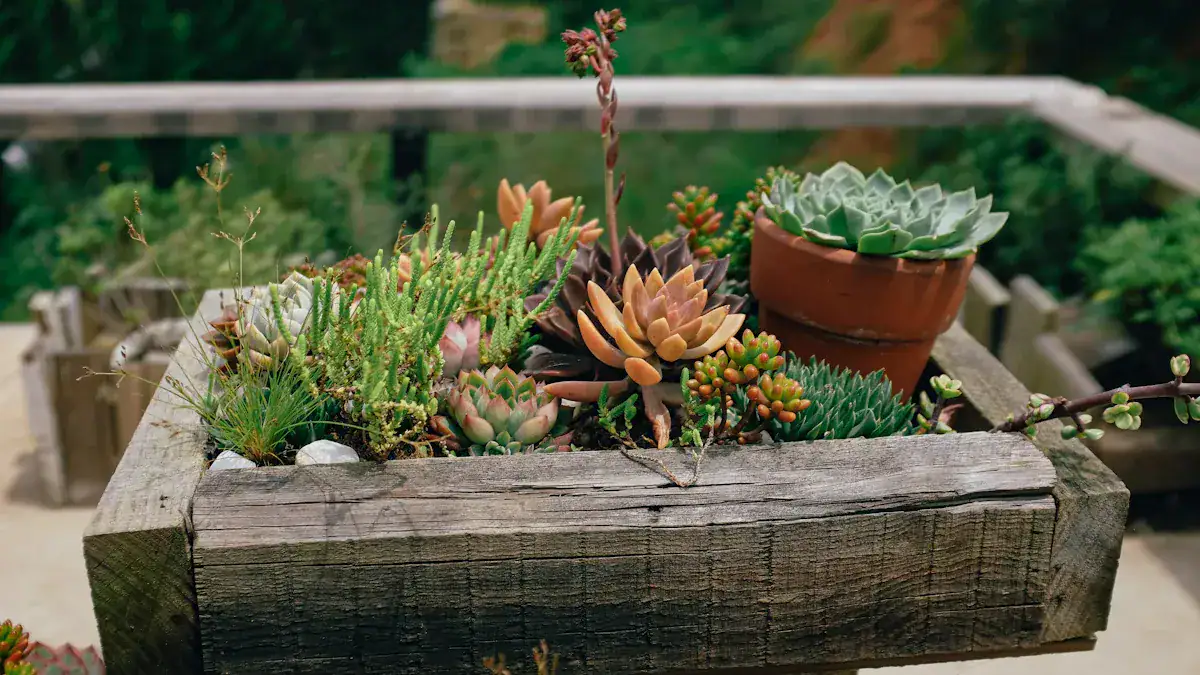
Wood: Hollowed logs and pieces of driftwood make stunning, rustic succulent displays. You can also use bark pieces.
Rocks: Natural rock formations with crevices can hold small succulents.
Seashells: Large seashells and sea urchin shells are perfect for tiny succulents. They create a beautiful, beachy vibe.
Undersea Gardens: Combine these shells with sand and small succulents. You create a miniature undersea-themed garden.
Artistic Choices
You can also get truly artistic with your succulent displays. These diy succulent planters let you craft something truly unique.
Explore these artistic ideas:
Concrete Molds: You can make your own concrete planter molds. This lets you create custom shapes and sizes.
Open Terrariums: Place succulents in elegant glass containers. Add moss or granular soil. You can even pair them with candles for a soft glow.
Fabric and Rope: Macrame hangers let you suspend your succulents. You can also create fabric-covered pots.
Creative Arrangements:
Succulent Cupcake Stand: Arrange succulents in layers on a cupcake stand. This makes a three-dimensional centerpiece.
Natural Wood Centerpiece: Secure succulents with glue onto logs. Use moss to keep them moist.
Succulent Table: Cut out the center of an old wooden table. Install a wooden box underneath. Plant succulents directly into it.
Succulent Bowl Centerpiece: Create an arrangement in a shallow bowl. This works for both indoor and outdoor spaces.
Moss and Rocks: Arrange succulent cuttings, moss, and rocks directly on a tabletop. You do not even need a traditional planter.
Wine Glass Succulents: Repurpose unused wine glasses. Arrange succulents inside them.
Wooden Box Arrangement: Use a wooden box planter instead of a flower vase. Fill gaps with moss and leaves.
Galvanized Platter: Plant succulents in a galvanized container. Put larger plants in the center. Place smaller cuttings around the sides.
You can combine these ideas. For example, put a teacup succulent inside a birdcage. The possibilities are endless.
Planting Succulents in DIY Planters
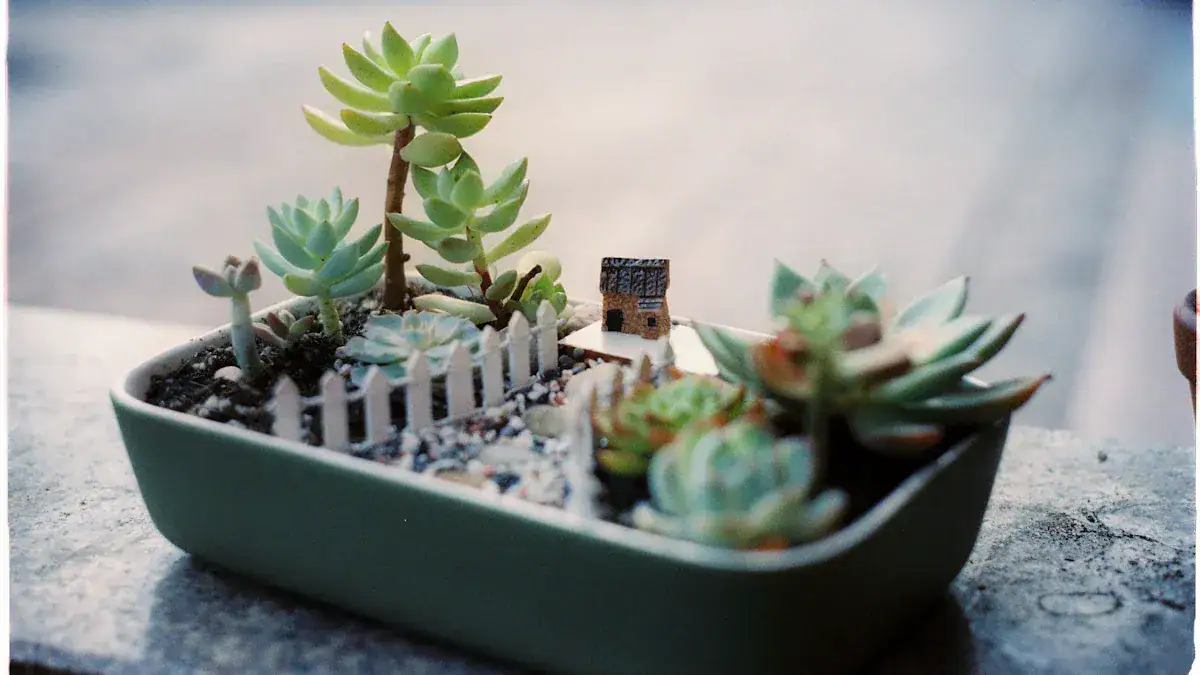
You have your creative container ready. Now, you need to plant your succulents. This part is exciting! You give your plants a new home.
Choosing the Right Soil
The right soil is key for your succulent’s health. Succulents need soil that drains fast. This stops root rot. A good soil mix has larger particles. These particles prevent compaction. They let water drain quickly. The best soil pH for succulents is between 6.0 and 6.5. You want a loose, rocky, and nutrient-rich soil.
For your diy succulent planters, use a potting mix made for succulents and cacti. You can also make your own. Mix organic materials with mineral materials. Organic parts give nutrients and hold some water. Mineral parts improve drainage.
Here are some good soil components:
Organic Materials (1 part) | Mineral Materials (2 parts) |
|---|---|
Potting Soil (avoid peat) | Coarse grit sand (not beach sand) |
Pine bark, coconut coir, compost | Perlite (light, airy volcanic glass) |
Gravel (1/8″ to ¼” particle size, rinse dust) | |
Diatomaceous earth, chicken grit |
Pumice and perlite are great additions. Pumice improves soil structure. It guides moisture to roots. Perlite is airy. It helps drainage and aeration. Coarse sand also boosts drainage. Avoid fine sands. They hold too much water.
Gentle Planting Techniques
Planting your succulent needs a gentle touch. This helps your plants adjust.
Gather Your Tools: Get your new pot, fresh succulent soil, gloves, a small trowel or spoon, and clean scissors.
Remove from Old Pot: Loosen the soil around your succulent. Gently ease the plant out. Support the stem. Try to save all the roots.
Inspect Roots: Look at the roots. Check for pests or rot. Trim any long or tangled roots.
Fill New Pot: Add a layer of small stones or gravel for drainage. Then, fill about one-third of the pot with your fresh succulent soil mix.
Position Your Succulent: Place the plant in the center. The stem base should be slightly above the rim. Fill with more soil. Leave some space for watering.
Initial Watering After Planting
After planting, your succulent needs time to settle. Wait a day before you water. This lets any damaged roots heal. Then, water thoroughly. Pour water until it drains from the bottom of your planter. Check the soil daily. Water again only when the soil is completely dry. You can also give your succulents a little boost. Add a pinch of sugar mixed with water. This provides extra nutrients.
Care for Succulent Planters
You have planted your beautiful succulent in its new home. Now, you want to keep it healthy and happy. Caring for your succulent is easy once you know a few key things.
Watering Schedule
Watering your succulent correctly is very important. You should water your succulent when its soil is almost or completely dry. Always water thoroughly. Let the extra water drain out of your planter. Then, let the soil dry out completely before you water again. Overwatering can cause root rot, which is bad for your plants. Less water is often better, especially for indoor succulents.
Here is a general guide for watering, but remember, factors like light and temperature change things:
Climate/Location | Container Type | Watering Frequency (Warmer Months) | Watering Frequency (Cooler Months) |
|---|---|---|---|
Indoors | General | Every 1-2 weeks | Every 3-4 weeks |
Sonoran Desert | Larger pots | Approximately every 7 days | Every 2 weeks |
California Coast | Containers | Approximately every 7 days | Every 3-4 weeks |
Light Requirements
Your succulent needs the right amount of light to thrive. Different types of succulents prefer different light conditions.
Aloe, Haworthia & Gasteria: These succulents like bright, indirect sunlight.
Jade (Crassula ovata): Give your jade plant at least four hours of direct sunlight. It can also handle bright indirect light.
Echeveria: This succulent needs about six hours of indirect, bright sunlight each day.
Cacti & Sempervivum: These plants love full sun for most of the day.
Snake Plants (Sansevieria): They can tolerate low light. However, they grow best in moderate to bright, indirect lighting.
Troubleshooting Common Issues
Sometimes, your succulents might face problems. You can usually fix these issues easily.
Pests:
Mealybugs: These look like white, cottony spots. They suck plant juices. You can spray them with 70% isopropyl alcohol. Use a cotton swab for small groups.
Scale: These appear as tiny dome-shaped shells. They make leaves shrivel. Scrape them off or wash your plants with insecticidal soap.
Spider Mites: You might see tiny brown dots or fine webbing. They also sap plant juices. Wash the foliage with a strong spray of water.
Diseases:
Fungal Disease: This happens in humid, cool places. It can cause spots or rot. Make sure your succulent has good air circulation and proper watering.
Viral Infections: Insects can spread these. You might see abnormal growth. Unfortunately, these are incurable. You should discard the plant to stop it from spreading to other succulents.
You now know anyone can create beautiful and unique diy succulent planters from everyday objects. We hope these creative ideas inspire you! Look at common items with a new, imaginative perspective. It feels so rewarding to personalize your home decor and nurture these low-maintenance succulent plants. Caring for your plants brings joy. Your unique succulent planters will look amazing. Share your own creations and enjoy your personalized succulent displays!