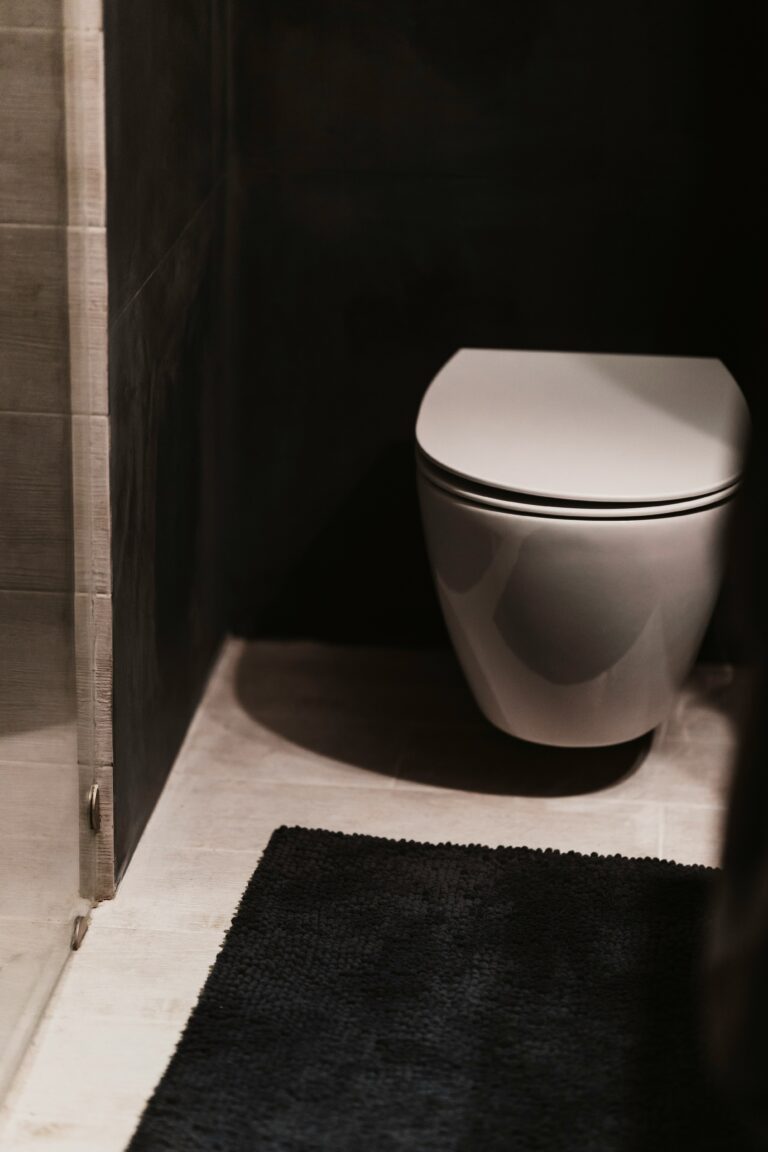
Urine residue, mineral scale, stale tank buildup, and sewer gas should be removed before any fragrance is added to the bowl or room. Clean under the rim, around hinges, and near the base, then check the toilet tank and nearby drains for hidden odor reservoirs.
This practical walkthrough helps you identify bathroom odors, clean the overlooked areas safely, improve airflow, and recognize plumbing problems that need repair rather than stronger fragrance.
Odor Location Identifies the Most Likely Source
Start with the smell itself because ammonia, mildew, stagnant water, and sewer gas leave different clues. For how to make a toilet smell good without masking a repair issue, identify where the odor is strongest before choosing a cleaner.
Location narrows the likely source
Stand directly over the toilet bowl, beside the toilet base, and near the sink, shower, or floor drain. Close the bathroom door for 15 minutes, return, and compare the strongest odor point. That short check keeps you from scrubbing the entire room while residue remains in one narrow area.
| Odor and strongest location | Likely source | Next move |
|---|---|---|
| Ammonia near floor or wall | Urine residue on grout, caulk, bolt caps, or the toilet base | Use an enzyme cleaner on compatible nonporous surfaces. |
| Stale water from the bowl | Toilet bowl biofilm, mineral scale, or buildup under the rim | Brush the rim, jet holes, toilet trap, and bowl with a toilet-safe cleaner. |
| Musty odor near towels or wall | Humidity, damp fabric, or mildew on nearby surfaces | Wash textiles and run the bathroom exhaust fan. |
| Rotten-egg odor from tank water | Stagnant water, sediment, or biofilm inside the toilet tank | Drain and wipe the tank with a tank-safe method. |
| Sewer odor at base or nearby drain | Dry P-trap, failed wax ring seal, toilet flange issue, or venting fault | Restore drain water seals and arrange plumbing help for persistent odor. |
Hidden surfaces hold more residue than the bowl
A toilet has more odor-holding surfaces than its water line suggests. Inspect the underside of the rim, rim jets, toilet seat hinges, exterior trapway, floor seams, wall behind the tank, tank interior, and every drain in the room.
Urine crystals can remain in a narrow grout line like salt after seawater dries. A bowl can look bright while a sharp smell rises every time the seat lifts, which usually points to hinge residue or splash marks below the seat rather than the water.
Your next step is to clean the fixture exterior and floor zone before treating the bowl again. That approach is the practical foundation for how to get rid of toilet odor that returns after a normal wipe-down.
That targeted approach also makes it easier to spot overlooked residue collecting around the toilet’s exterior.
Residue Around the Toilet Retains Urine Odor
With the odor location identified, inspect the floor, base, and exterior porcelain closely. Small droplets travel farther than their size suggests, and dried residue can remain on the wall at knee height, base caulk, bolt caps, and the front of the exterior trapway.
Urine splashes settle beyond the bowl
The room may smell fine from the doorway but turn sour close to the base. Uric acid salts remain after water evaporates, and bacteria can feed on organic material left in those deposits. That is why perfume fades in minutes while a targeted enzyme cleaner can produce a lasting change.
Enzymes break larger organic residues into smaller compounds that rinse away more easily. You can use an enzyme cleaner on sealed tile, glazed porcelain, vinyl, and other compatible nonporous surfaces. Saturate the affected area, leave it wet for the label-stated dwell time, then wipe or rinse as directed.
A full surface sequence reaches odor reservoirs
- Clear the area Remove bath mats, trash, the brush holder, and loose items so you can reach each floor edge.
- Lift hinge caps Open the small caps at the toilet seat hinges and wipe beneath them with a damp cloth and suitable cleaner.
- Work under the rim Apply toilet cleaner beneath the rim, wait for the label dwell time, then scrub the rim jets with a toilet brush.
- Brush the trap Push the toilet brush into the curved outlet at the bottom of the bowl where residue can collect.
- Wipe the exterior Clean the seat underside, lid, tank front, flush handle, bolt caps, and exterior trapway.
- Clean the floor zone Treat grout, floor seams, wall splashes, and base caulk before mopping the full floor.
Never pour enzyme formulas, bleach, white vinegar, or foaming cleaners into the toilet tank unless the manufacturer specifically states that tank use is suitable. Tank parts include rubber seals that can wear faster after repeated chemical exposure.
Hard-water scale needs a separate method. Calcium and magnesium deposits make the porcelain rough below the rim, allowing toilet bowl biofilm to grip more tightly. Use a toilet-safe descaler for scale, follow its contact-time directions, and flush before using a different product.
This detailed cleaning sequence shows how to remove urine smell from around a toilet without relying on fragrance. Once exterior residue is gone, a remaining stale smell may lead you to the toilet tank.
If the air still seems musty after that cleanup, the hidden water reservoir deserves a closer look.
A Stale-Smelling Tank Needs a Careful Reset
After the exterior is clean, isolate odors coming from the water reservoir. Lift the lid and smell the water without leaning over the opening. A swampy, stale, or sulfur-like note strongest inside the toilet tank points toward sediment or biofilm.
Tank odor follows a distinct pattern
Minerals settle at the bottom of a tank, while biofilm can form on damp interior walls and moving parts. Biofilm is a thin layer of microorganisms held together by a slick matrix, so a quick flush does not remove it. Physical wiping is needed, not a fragrance tablet.
Odor rising from the floor, bowl outlet, or shower drain has a different source. You can save time by confirming that the tank is the strongest odor point before shutting off the water supply.
A controlled reset protects working parts
- Shut off water Turn the supply valve clockwise, then flush to lower the tank water level.
- Inspect surfaces Look for brown sediment, slippery film, rust marks, cracked parts, and black residue around the fill valve.
- Wipe gently Use a soft sponge and tank-safe cleaner on reachable porcelain surfaces without soaking rubber components.
- Refill and flush Turn the valve back on, allow the tank to fill, and flush twice to rinse loosened material.
- Check operation Watch the flapper and fill valve for smooth movement before replacing the lid.
Routine in-tank tablets are a poor long-term choice. Their concentrated additives sit against flappers, gaskets, and seals between flushes, and those rubber components can become stiff or brittle. A slow leak can waste water and leave a recurring tank odor.
Tank water can develop a mild sulfur smell after a bathroom sits unused for weeks. This is how to clean a smelly toilet tank safely, but it will not correct sewer gas entering around the toilet base. That distinction leads to the drain system.
When odor persists beyond the tank, the culprit may lie in the drain path or failing seal below.
Sewer Odors Need Drain and Seal Inspection
Once the tank is ruled out, plumbing odors need repair rather than stronger cleaner. Every nearby drain needs water in its curved trap because a P-trap holds a small pool of water that blocks sewer gas from entering the room.
Water seals block sewer gas
A seldom-used shower, guest-bath sink, tub, or floor drain can dry out and leave a direct pathway for odor. Pour 2 to 4 cups of water into each seldom-used drain, then run the faucet or shower briefly. The goal is to refill the trap, not flood the fixture.
A teaspoon of mineral oil on top of the water can slow evaporation in a drain left unused for long stretches. This step is useful in guest bathrooms, basement bathrooms, and seasonal homes where fixtures may sit unused for several weeks.
Base odor can point to a failed seal
A wax ring seal sits between the toilet outlet and the toilet flange in the floor. It blocks sewer gas and wastewater at that joint. A loose toilet can compress or shift that seal, leaving an odor that returns after flushing.
| What you find | What it can mean | Appropriate response |
|---|---|---|
| Odor near an unused drain | Dry P-trap | Add water and check the room again after several hours. |
| Toilet rocks under gentle pressure | Loose mounting, damaged flange, or disturbed wax ring | Stop using force and arrange a plumbing inspection. |
| Dampness at base | Leak at the wax ring, supply line, or condensation source | Dry the area, document recurrence, and call a plumber. |
| Odor returns after trap refill | Venting, drain-line, or seal fault | Schedule professional diagnosis rather than adding fragrance. |
| Slow drains elsewhere | Shared drain-line restriction or venting issue | Seek plumbing service, especially with backups or gurgling. |
A common pattern is a room that smells clean after mopping, then develops a sewer odor after the next flush while a faint wet ring appears at the base. Cleaning was not the issue. The toilet may need lifting so a plumber can inspect the wax ring seal, toilet flange, and drain connection.
Persistent sewer odor, a leaking base, a wobbling fixture, repeated drain backups, or gurgling drains belongs in a plumber’s work order. Do not tighten floor bolts aggressively because porcelain can crack under uneven pressure.
A toilet that smells like sewer gas needs a drain or seal diagnosis, not a room spray. Once the fixture is stable and the water seals hold, ventilation and odor control can keep your bathroom neutral between cleanings.
With plumbing concerns addressed, the choice between eliminating odors and merely masking them becomes more important.
Neutralizers and Pleasant Scents Serve Different Roles
With plumbing problems ruled out, cleaning and ventilation can do their intended work. Fragrance changes what reaches your nose, while source cleaning removes the material producing the odor. Activated charcoal and baking soda absorb some airborne compounds, but neither corrects urine in grout or sewer gas at a failed seal.
Each method has a separate purpose
| Method | What it does | Where it fits |
|---|---|---|
| Toilet cleaner | Removes bowl residue and mineral buildup | Under the rim, in the bowl, and around rim jets |
| Enzyme cleaner | Breaks down organic urine residue | Sealed floors, porcelain exteriors, and compatible walls |
| Activated charcoal | Absorbs some ambient odor molecules | Near the trash bin or in a ventilated cabinet |
| Baking soda | Absorbs mild room odor | In an open dish away from splashes and children |
| Bathroom exhaust fan | Moves humid, odorous air outdoors | During use and for 20 minutes afterward |
| Room spray or diffuser | Adds scent without removing residue | Only after cleaning and ventilation are complete |
After-use habits reduce odor quickly
- Run the fan Switch on the bathroom exhaust fan before use and leave it running for 20 minutes afterward.
- Flush promptly Flush as soon as practical, then close the lid before flushing to reduce outward spray.
- Use barrier spray A pre-use product such as Poo-Pourri forms a scented film on bowl water that traps some odor.
- Ventilate the room Open a window or door after use when outdoor conditions allow it.
- Empty the bin Remove tissues, wipes, and hygiene waste before the trash becomes the odor source.
Bathroom ventilation matters because humid air clings to towels, mats, and painted walls. The Home Ventilating Institute describes bathroom fans as a way to exhaust moisture and odors outdoors. Your fan should vent outside, not into an attic or wall cavity where moisture can collect.
Light citrus, eucalyptus, and clean-linen scents can feel fresh without creating a heavy perfume cloud. For how to make a bathroom smell good after pooping, remove the odor first, run the fan, then use mild fragrance only after fresh air has replaced the stale air.
That order also explains how to make a toilet smell good naturally: baking soda, airflow, and clean surfaces work best together. Product safety still matters, especially in a small room with limited airflow.
Even gentle-smelling solutions require thoughtful use, particularly where confined air and plumbing materials share the same space.
Safe Product Choices Protect People and Plumbing
Because bathroom products work in close quarters, using one formula at a time is the safest approach. Bleach must never meet white vinegar, ammonia, acidic toilet cleaner, or another cleaning product. Chlorine bleach can release hazardous gases after contact with acids or ammonia-containing products.
One product at a time avoids hazardous reactions
The safest routine uses one product, a full water rinse, and fresh air before another product enters the room. Open the window or run the bathroom exhaust fan before spraying. Wear gloves, keep bottles in their original containers, and follow the label for dwell time and surface limits.
Renters should review lease rules before changing caulk or loosening a fixture. You should stop using a product immediately if the label excludes your surface material or warns against enclosed spaces.
Household ingredients have narrow roles
- Baking soda Absorbs mild ambient odor and adds gentle scrub texture, but it cannot repair a dry P-trap.
- White vinegar Loosens some mineral residue on compatible surfaces, but it does not solve a failed wax ring seal.
- Enzyme cleaner Targets urine residue on compatible nonporous surfaces, but it is not a scale remover.
- Toilet-bowl cleaner Works inside the bowl and under the rim, but it should not be used on every exterior finish.
- Hydrogen peroxide cleaner Can help with surface grime on compatible materials, subject to label directions and spot checks.
Clorox and Lysol sell products made for different surfaces, so the front label alone is not enough. Check whether your chosen formula is meant for porcelain, grout, painted walls, or vinyl before use. OdoBan enzyme products are made for organic odor residues, but the exact surface still needs label confirmation.
Never use a toilet brush that sits in a puddle of dirty water. Rinse it after use, allow it to drip over the bowl, then return it to a clean holder. That small habit supports a routine that prevents odors from rebuilding.
Consistent care turns that simple brush practice into a broader schedule for keeping odors from taking hold.
A Small Routine Keeps Bathroom Odors From Returning
After cleaning and safe product use become routine, residue is easier to remove before it dries into seams and grout. Seven focused minutes each week is more useful than a heavy scent plug-in. That consistency is what makes how to make a toilet smell good a maintenance task instead of an emergency cleaning job.
Weekly tasks stop residue from settling
- Brush the bowl Reach beneath the rim and into the toilet trap with a dedicated toilet brush.
- Wipe touch points Clean the seat, lid, hinge area, flush handle, and tank exterior with a suitable surface product.
- Mop the base Work along grout lines, wall edges, and the narrow floor strip behind the toilet.
- Refresh airflow Run the bathroom exhaust fan during use and for 20 minutes after bathing or showering.
- Empty waste Remove trash before damp paper, wipes, or hygiene products develop a stale smell.
Monthly checks reveal moisture and plumbing clues
Wash bath mats and towels every month, then clean the trash bin and sanitize the toilet brush holder. Fabric holds humidity and skin oils, while a brush holder can become an odor reservoir. This routine helps you keep a toilet smelling fresh without depending on air freshener.
- Fill quiet drains Add water to seldom-used shower, sink, and floor drains to refresh each P-trap seal.
- Inspect the base Check for rocking, loose bolt caps, new caulk gaps, dampness, or discoloration at the floor joint.
- Wash textiles Launder towels, bath mats, and washable shower curtains before they hold a musty smell.
- Clean the holder Empty, wash, and dry the toilet brush holder rather than storing the brush in standing water.
- Check fan flow Hold a square of tissue near the fan grille to see whether it draws air upward.
Call a plumber for sewer odor, unexplained dampness, a wobbling toilet, odor that returns after thorough cleaning, drain gurgling, or backups elsewhere in the home. Those signs point beyond surface care. Repair, not stronger fragrance, is your next step.
These repair thresholds also answer the most common toilet-odor questions.
FAQ
With the main odor categories clear, you can match each smell to the right cleaning or plumbing response.
How do I make my toilet stop smelling?
Start by locating the strongest odor point: under the rim, around hinges, at the base, inside the tank, or near a drain. You can remove urine residue with an enzyme cleaner on compatible surfaces, scrub mineral buildup from the bowl, refill dry P-traps, and call a plumber for sewer odor or leaks.
Why does my toilet smell even after I clean it?
A clean-looking bowl can still leave residue beneath the rim, in rim jets, inside the toilet trap, under hinge caps, or in floor grout. Your odor may also come from stale tank water, damp textiles, a dry drain trap, or a failing wax ring seal rather than the bowl itself.
How do I clean under the toilet rim to remove urine and mineral buildup?
Apply a toilet-safe cleaner beneath the rim and leave it in place for the label-stated dwell time. Scrub the underside of the rim and the jet holes with a toilet brush, then flush. Use a toilet-safe descaler for mineral buildup, and do not mix it with bleach, vinegar, or another cleaner.
How do I remove urine smell from around a toilet?
Remove mats and clean the floor, grout, wall behind the bowl, bolt caps, exterior trapway, and base caulk with an enzyme cleaner suitable for each surface. Leave the formula wet for its label-stated dwell time. Your mop alone may spread residue without breaking down the organic material.
Why does my bathroom smell like sewer gas?
Sewer gas can enter through a dry P-trap in an unused drain or through a damaged toilet wax ring seal. Add water to every seldom-used drain, then watch for odor return. You need professional inspection for a rocking toilet, moisture at its base, recurring smell, or drain backups.
Can baking soda and vinegar make a toilet smell better?
Baking soda can absorb mild room odor, and white vinegar can loosen some mineral residue on suitable surfaces. Neither product fixes urine trapped in grout, heavy hard-water scale, a dry P-trap, or a failed wax ring seal. Never mix vinegar with bleach or any cleaner containing bleach.
Final Thoughts
A source-first method is the reliable answer to how to make a toilet smell good for more than a few minutes. Clean urine residue from the floor and fixture exterior, remove bowl scale and biofilm, refresh dry drain traps, and inspect the toilet tank only when the smell begins there.
Your bathroom should smell neutral after cleaning, not heavily perfumed. A persistent sewage odor, damp toilet base, rocking fixture, or repeated drain gurgle calls for a plumber because the problem sits inside the plumbing system, not on the porcelain.