
Shelf liners play a vital role in keeping your home organized and protected. They help prevent damage to shelves while also providing a clean surface for your items. When you choose the best shelf liner, consider factors like material, adhesive properties, and where you’ll use it.
You might wonder about common issues like moisture retention, which can lead to mold, or whether adhesive liners will leave a sticky residue. Do you need a liner that stays put, or one that allows for easy repositioning? The right choice can make all the difference in maintaining your space.
Key Takeaways
Choose between adhesive and non-adhesive shelf liners based on your need for durability and ease of use.
Select the right material, such as plastic, fabric, or paper, to match your specific needs and environment.
Ensure the shelf liner fits your shelves completely to avoid gaps and ensure maximum protection.
Pick colors and patterns that reflect your personal style and enhance the look of your space.
Consider the maintenance requirements of the liner material to keep your shelves clean and organized.
How to Choose the Best Shelf Liner Types
When it comes to selecting the right shelf liner, you have two main options: non-adhesive and adhesive shelf liners. Each type has its own set of advantages and disadvantages, so let’s break them down to help you choose the best shelf liner for your needs.
Non-Adhesive Shelf Liners
Non-adhesive shelf liners are a popular choice for many homeowners. They’re easy to use and can be replaced without any hassle. Here are some key benefits:
Usability: You can simply lay them down on your shelves. When it’s time to clean or replace them, just lift them up and swap them out.
Reusability: If you’re a renter or like to rearrange your space often, non-adhesive liners are perfect. You can reuse them multiple times without losing their effectiveness.
Stability: These liners often feature grippy textures that keep your items from sliding around. They stay in place effectively while protecting your shelves underneath.
For example, products like Gorilla Grip offer excellent traction and durability, making them a favorite among users. Plus, they come in various colors and patterns, allowing you to add a touch of style to your shelves.
Adhesive Shelf Liners
On the other hand, adhesive shelf liners, often referred to as contact paper, provide a different experience. Here’s what you should know:
Application: Adhesive liners require careful application. You need to measure and cut them to fit your shelves perfectly. This can be a bit tricky, especially if you’re not used to working with sticky materials.
Aesthetics: One of the biggest draws of adhesive liners is the variety of designs available. You can find everything from classic wood grain to vibrant patterns, making them visually appealing for any space.
Stability: These liners stick firmly to your shelves, ensuring they won’t budge. However, once applied, they’re not as easy to remove or reposition.
EasyLiner is a well-known brand that offers a range of adhesive options. Many users appreciate the stylish designs and the way they enhance the look of their cabinets and shelves.
Material Options for Shelf Liners
When you’re choosing the best shelf liner, the material plays a crucial role in performance and usability. Let’s explore the three main types: plastic, fabric, and paper.
Plastic Shelf Liners
Plastic shelf liners are a popular choice for many reasons. They’re durable, affordable, and easy to clean. Here are some key characteristics:
Water Resistance: Plastic liners repel liquids and stains, making them highly water-resistant. This feature is especially useful in areas prone to spills, like kitchens and bathrooms.
Longevity: They last longer than fabric liners, which tend to wear out over time. You can expect plastic liners to maintain their integrity even with regular use.
Maintenance: Cleaning is a breeze! You can simply wipe them down with soap and water. Some options, like the Clear Classic Easy Liner, are even dishwasher safe.
Material | Characteristics | Performance Impact |
|---|---|---|
Vinyl | Durable, affordable, easy to clean | Good for general use, but less resistant to spills |
Ethylene Vinyl Acetate (EVA) | Thicker, water and oil resistant | Ideal for areas prone to spills, like under sinks |
Polypropylene (PP) | Smooth, easy to wipe down, BPA and phthalate-free | Provides a firm surface, great for wire shelves |
Fabric Shelf Liners
Fabric shelf liners offer a different set of benefits. They can add a touch of elegance to your shelves, but they come with some considerations:
Moisture Absorption: Fabric liners absorb spills, which can lead to lower water resistance. This makes them less ideal for humid environments unless you choose moisture-absorbing options.
Slip Resistance: Many fabric liners come with rubber bottoms, enhancing their grip. This feature helps keep your items in place, reducing the risk of slips and falls.
Feature | Description |
|---|---|
Slip Resistance | The rubber bottom provides a sturdy grip, enhancing slip resistance compared to traditional plastic liners. |
Durability | Rubber matting remains strong over time, unlike plastic which can crack with age. |
Cost-Effectiveness | Priced per linear foot, offering competitive pricing without the need for bulk purchases. |
Paper Shelf Liners
Paper shelf liners are an eco-friendly option that many people overlook. Here’s what you should know:
Biodegradability: Unlike plastic, paper liners are biodegradable and recyclable, making them a better choice for the environment.
Ease of Installation: They’re easy to install and replace. You can cut them to size without the hassle of adhesive backing.
Material | Biodegradability | Recyclability | Environmental Footprint |
|---|---|---|---|
Paper | Yes | Yes | Lower |
Plastic | No | Limited | Higher |
Key Features to Consider
When you’re on the hunt to choose the best shelf liner, several key features can make a significant difference in your decision. Let’s dive into thickness and durability, easy maintenance, and design and aesthetics to help you make an informed choice.
Thickness and Durability
The thickness of your shelf liner plays a crucial role in its durability and protective capabilities. A thicker liner often provides better cushioning and support for your items. For instance, the NextClimb Non-Slip Shelf & Drawer Liner boasts a thickness of 2 millimeters, making it a sturdy option that can withstand daily wear and tear.
Protection: Thicker liners, like the Drymate Premium Shelf & Drawer Liners, are made from ultra-absorbent material that can soak up to four times their weight in moisture. This feature is especially beneficial in areas prone to spills, as the waterproof backing prevents liquids from seeping through, enhancing surface protection.
Slip Resistance: Many thicker liners also come with slip-resistant features, helping to keep your items securely in place and reducing the risk of damage. ESD safe shelf liners provide a softer surface that helps prevent scratches and damage to stored products.
Easy Maintenance
You want a shelf liner that doesn’t add to your cleaning chores. Fortunately, many options are designed for easy maintenance. Here are some materials that stand out:
Vinyl: Water-resistant and easy to wipe clean.
Plastic: Simply use a damp cloth or sponge for quick clean-ups.
Silicone: Offers cushioning and grip while being easy to maintain.
EVA Foam: Provides grip and is also easy to clean.
If you lead a busy lifestyle, look for liners that are machine washable. These options make it simple to keep your shelves looking fresh without much effort. Durable liners can withstand regular use without fading, ensuring they remain functional and attractive over time.
Design and Aesthetics
Let’s face it: the look of your shelf liner matters! The right design can enhance the overall appearance of your space. Here are some factors to consider:
Variety of Designs: From classic wood grain to vibrant patterns, the options are endless. Eye-catching designs can improve the chances of being selected over competitors.
Color Psychology: Colors evoke specific emotions and can influence how you perceive products. For example, red can create urgency, while blue is associated with trust and reliability. Choosing the right colors can enhance shelf visibility and influence your purchase intent.
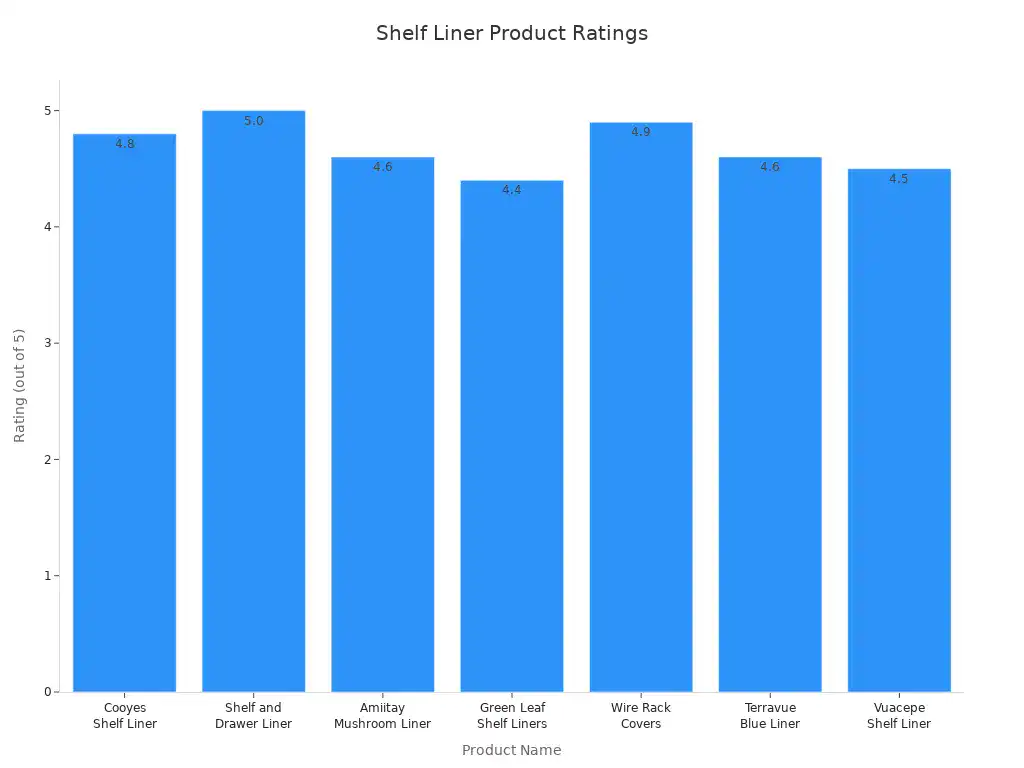
Here’s a quick look at some popular shelf liner products and their ratings:
Product Name | Rating | Price |
|---|---|---|
Cooyes Shelf Liner – Non-Slip Cabinet & Drawer Liner | 4.8 out of 5 stars | $8.99 |
Shelf and Drawer Liner for Kitchen Cabinet | 5.0 out of 5 stars | $16.99 |
Amiitay Mushroom Shelf Liners | 4.6 out of 5 stars | $9.99 |
Green Leaf Shelf Liners | 4.4 out of 5 stars | $9.99 |
Wire Rack Covers for Shelves | 4.9 out of 5 stars | $129.99 |
Terravue Blue Shelf Liner | 4.6 out of 5 stars | $8.99 |
Vuacepe Shelf and Drawer Liner | 4.5 out of 5 stars | $8.09 |
By considering thickness, maintenance, and design, you can confidently choose the best shelf liner that meets your needs and enhances your home’s aesthetic.
Use Cases for Shelf Liners
Shelf liners can transform various areas of your home, making them more organized and functional. Let’s explore how you can use them effectively in different spaces.
Kitchen Shelves
In the kitchen, spills and stains are common. Using waterproof shelf liners can help protect your cabinets and shelves. Here’s a quick comparison of two great options:
Feature | Waterproof Kitchen Cabinet Liner | 24 Inch x 20 Ft Kitchen Cabinet Liner |
|---|---|---|
Material | BPA Free EVA | BPA Free EVA |
Non-slip Design | Yes | Yes |
Easy to Clean | Yes, wipe with damp sponge | Yes, easy to cut and install |
Anti-Oil & Waterproof | Yes | Yes |
Multifunctional Use | Yes, can be used in various areas | Yes, suitable for multiple applications |
These liners not only keep your surfaces clean but also simplify maintenance. You can quickly wipe up spills, keeping your kitchen hygienic.
Bathroom Cabinets
In the bathroom, moisture can lead to mold and mildew. Antimicrobial shelf liners are a smart choice here. They help prevent moisture accumulation, protecting your items and surfaces.
Feature | Description |
|---|---|
Antimicrobial Agent | Inhibits mold and mildew growth |
Protection | Safeguards the shelf liner from moisture damage |
Using these liners keeps your bathroom organized and looking tidy. They also protect surfaces from spills and stains, ensuring everything stays fresh.
Craft and Hobby Areas
For your craft and hobby areas, you want stability and protection. Look for shelf liners that offer grip and cushioning. Here’s what to consider:
Feature | Description |
|---|---|
Grip | Prevents items from slipping, ensuring stability in craft and hobby areas. |
Cushioning | Provides protection for delicate items, reducing the risk of damage. |
Versatility | Can be used in various applications, enhancing its utility in different tasks. |
Before installing any shelf liner, remember to let it relax. This step improves performance and ensures a better fit. By choosing the right shelf liners for each area, you can enhance organization and protect your belongings effectively.
Choosing the right shelf liner can make a big difference in your home organization. Here are some key takeaways to keep in mind:
Stickiness: Decide between adhesive and non-adhesive options based on your need for durability and ease of installation.
Material: Consider vinyl, plastic, fabric, or foam, each offering unique benefits.
Size: Ensure the liner fits your shelves completely to avoid gaps.
Design: Pick colors and patterns that reflect your style.
Shelf Type: Match the liner to your shelf material for the best results.
Price: Balance your budget with quality and quantity.
Cleanliness: Think about how easy it is to clean the liner based on its material.
Before you buy, take a moment to measure your surfaces. Calculate the total length of liner needed and determine how many rolls to purchase. By assessing your specific needs, you’ll find the perfect shelf liner that enhances both functionality and style in your home!
FAQ
What is the best type of shelf liner for kitchens?
For kitchens, choose waterproof shelf liners. They protect against spills and stains. Look for options made from BPA-free EVA or vinyl for easy cleaning and durability.
How do I install adhesive shelf liners?
To install adhesive shelf liners, measure your shelves, cut the liner to size, and peel off the backing. Press it down firmly, smoothing out any bubbles as you go.
Can I wash my shelf liners?
Yes! Many shelf liners are washable. Check the manufacturer’s instructions. Most plastic and fabric liners can be wiped down or machine washed for easy maintenance.
How often should I replace my shelf liners?
Replace your shelf liners when they show signs of wear, stains, or odors. Regularly check them, especially in high-use areas like kitchens and bathrooms.
Are shelf liners eco-friendly?
Some shelf liners, like paper and certain fabric options, are eco-friendly. They are biodegradable and recyclable, making them a better choice for environmentally conscious consumers.