

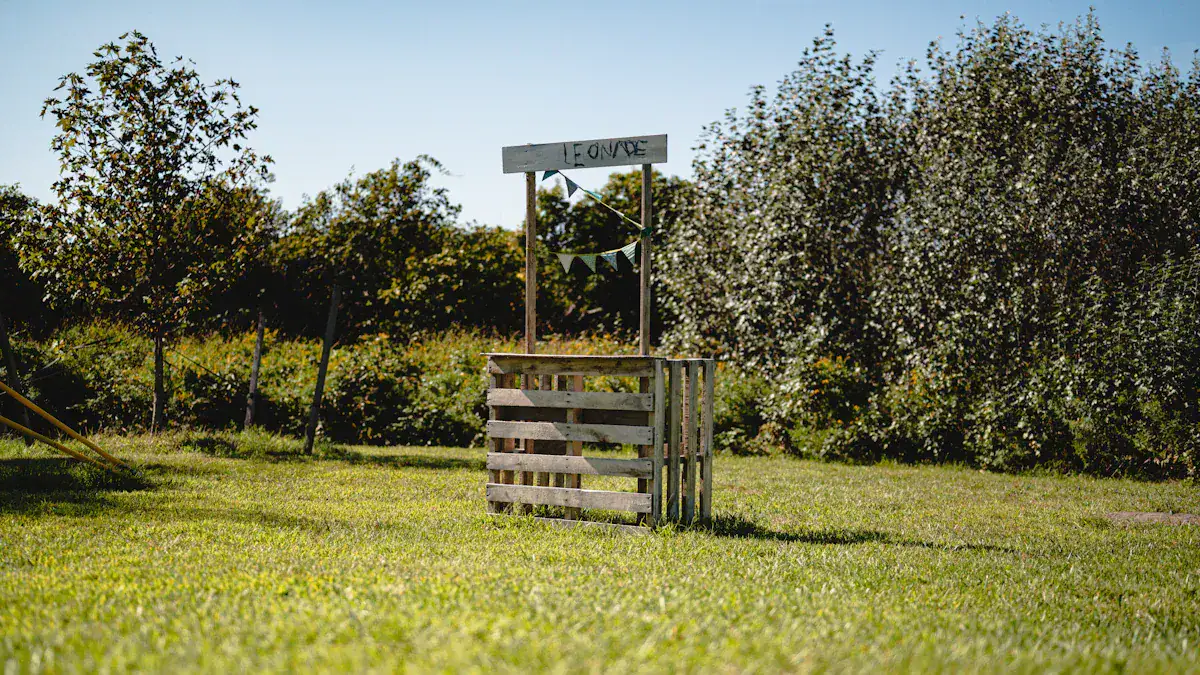
Imagine the joy on your child’s face as they proudly sell their first cup of lemonade! Building a lemonade stand is a classic summer activity, full of fun and valuable lessons. This guide offers easy-to-follow instructions, making the process simple and achievable for anyone, no matter your DIY experience. You’ll create lasting memories, teach valuable entrepreneurship skills, and complete a fantastic family project. Our detailed DIY lemonade stand plans provide a clear tutorial, outlining common materials and every step you need to succeed.
Key Takeaways
Building a lemonade stand is a fun family project. It teaches kids about business and creativity.
Plan your stand design first. Decide on its size and sketch your ideas before you start building.
Gather your materials like wood, screws, and basic tools. You can use reclaimed materials to save money.
Follow step-by-step instructions to cut wood, assemble the base, and attach the tabletop. Always sand edges for safety.
Personalize your stand with paint, an awning, and a unique sign. This makes your stand special and inviting.
Why Build Your Own Stand

Building your own lemonade stand offers so much more than just a place to sell drinks. It creates a fantastic experience for everyone involved. You get to enjoy quality time together and watch your young entrepreneurs grow.
Fun for All Ages
A DIY lemonade stand project brings families together. Grandparents, parents, and children can all contribute. This kind of intergenerational project helps children learn new skills from older adults. They gain valuable knowledge and experience. You will see them develop better communication skills and learn to respect different perspectives. These shared goals also build understanding between age groups. Children learn about life stories and wisdom from seniors. This helps them feel safe and cared for, reducing anxiety and stress. It is a truly rewarding experience for everyone.
Learning and Creativity
Building a lemonade stand for kids is a powerful learning tool. You will watch your children develop an entrepreneurial spirit. Early exposure to business operations helps them think creatively and solve problems. They learn about basic economics and business principles. This lays a strong foundation for their future financial security. As they build, they manage emotions hands-on. They foster resilience and adaptability. You will see them improve self-awareness and self-management skills.
During the build, your kids will face challenges. They will learn conflict resolution when deciding on tasks or roles. They practice negotiation and compromise when setting prices or choosing who handles money. This hands-on experience teaches them to brainstorm solutions and find common ground. They even learn scientific experimentation by trying different lemonade recipes. They understand customer preferences and ingredient ratios. This project helps them build confidence in proposing and modifying their ideas.
Customization Potential
When you build your own stand, you have endless customization ideas. You are not stuck with a pre-made design. You can choose colors, add unique features, or even incorporate a theme. This allows your children to express their creativity fully. They can design a stand that truly reflects their personality and vision.
Planning Your Stand Design
Before you grab your tools, take a moment to plan your lemonade stand. A little planning saves you time and makes the building process much smoother. Thinking through your design helps you create a stand that is both functional and fun.
Stand Structure
Every great lemonade stand needs a few key parts. First, you need a flat tabletop. This is where you will place your lemonade pitcher, cups, and money jar. Next, you need strong legs to hold up the tabletop. These legs keep your stand stable so it does not wobble. Finally, you want a sign support. This frame holds your “Lemonade for Sale!” sign high for everyone to see. You can also think about adding shelves or a small counter for extra storage.
Ideal Dimensions
Choosing the right size for your stand is important. You want it to be stable and easy for your child to use. A good starting point is a stand that is about 3 feet wide, 2 feet deep, and 4 feet tall. This size offers enough space for selling without being too big or bulky. However, you have many options! Look at these examples of popular lemonade stand ideas:
Product Name | Height | Width | Depth |
|---|---|---|---|
Lemonade Stand for Kids | 62″ | 64″ | 43″ |
Children’s Lemonade & Cocoa Small Business Stand | 60” | 39” | 20.3” |
Lemonade Stand Outdoor Playhouse | 58″ | 45″ | 48″ |
These dimensions show you can adjust based on your space and your child’s height. Make sure your child can comfortably reach the tabletop.
Sketching Your Design
Now for the fun part: sketching your design! Grab a pencil and paper. Draw out your stand from different angles. Think about where the tabletop will go, how tall the legs should be, and where your sign will sit. This is a great time to brainstorm any special features or unique ideas you have. Sketching helps you visualize your diy lemonade stand plans and catch any potential problems before you start cutting wood. It is like a blueprint for your project!
Materials and Tools Needed
Building your lemonade stand means you get to pick all the right stuff! Knowing what materials and tools you need makes the whole process smooth and fun. You will feel prepared and ready to create something amazing.
Wood Materials
You need good wood to build a sturdy stand. For the main frame, you should think about using 2x4s. These are strong and easy to work with. For flat surfaces like your tabletop or shelves, plywood works great. It gives you a smooth, even area.
When you pick your wood, consider how long you want your stand to last, especially if it will be outside a lot. Here is a quick guide to help you choose:
Wood Type | Durability for Outdoor Use | Cost-Effectiveness |
|---|---|---|
Pine or Fir | Standard construction lumber | Affordable |
Red-toned 2x Lumber | Recommended for framing | N/A |
Pressure-treated 2x Lumber | Recommended for framing | N/A |
Cedar | Recommended for decking | N/A |
Cedar Fence Pickets | Recommended for decking | N/A |
Pine or fir are common and budget-friendly choices. If you want extra durability, especially for outdoor use, pressure-treated lumber is a smart pick for the frame. For surfaces that will see a lot of weather, cedar or cedar fence pickets offer good resistance.
After you build your stand, you should protect the wood. Sealing is super important for both acacia and eucalyptus wood, and it applies to other outdoor woods too. It keeps out moisture, stops rot, and prevents splinters. You should also think about a water-resistant treatment. This is crucial for outdoor durability. UV protection helps prevent fading from the sun. Regular cleaning and oiling also keep the wood looking good and prevent cracking. Experiments show that sealed wood resists moisture and rot much better. Skipping sealing can lead to problems like mildew spots or faster fading.
Fasteners
Fasteners hold your stand together. Screws and nails are your main choices. Screws give you a stronger hold and you can remove them if you make a mistake. Nails are faster to use.
For joining 2x4s, you will want strong screws. Many people recommend 2 1/2-inch construction screws. These work well because they penetrate each piece of wood enough to create a strong bond. Some even suggest 2 3/4-inch square drive screws or 2 1/2-inch Robertson screws, often #12 gauge. These have proven to hold up for years without coming apart.
You can also use special joints for extra strength:
Pocket-hole joints: These involve drilling an angled hole and using screws. They create strong connections and make your joints more durable. They are quick and simple to do. You can even add glue for more strength. Woodworkers often use them because they are reliable and adaptable. The angled screws make a very secure connection.
Mortise and tenon joints: These are very strong and reliable. One piece of wood has a square hole (mortise), and another piece has a matching protrusion (tenon). They offer great strength, especially under pressure.
Essential Tools
You need a few basic tools to get your stand built. These tools help you cut, measure, and assemble everything correctly.
Saw: You need a way to cut your wood. An electric circular saw is a great choice. It is portable and can make straight, curved, or rip cuts easily. A sliding miter saw is also a game-changer for accurate angled cuts. It helps you make precise cuts for your frame. A jigsaw is super versatile for curved edges and patterns. A table saw is also a fundamental tool for precise cuts in many woodworking projects.
Drill: A drill helps you make holes and drive screws. It makes assembly much faster and easier.
Measuring Tape: You need to measure everything accurately. “Measure twice, cut once” is a good rule to follow!
Pencil: Mark your cuts and drill spots clearly.
Sandpaper: Sanding makes your stand smooth and safe. It removes rough edges and splinters.
Optional Supplies
These items are not strictly necessary, but they can make your stand look amazing and add extra features. These are the extra supplies needed to make lemonade stand truly special.
Paint: Bright colors make your stand inviting. You can use exterior paint for durability.
Chalkboard Paint: Paint a section with chalkboard paint. Your kids can write daily specials or prices.
Fabric for an Awning: An awning adds charm and provides shade. You can use a colorful fabric to make it pop.
Casters for Mobility: Wheels on the bottom make it easy to move your stand around.
Decorations: Think about string lights, banners, or even fake flowers to make your stand stand out.
How to Make a Lemonade Stand: Step-by-Step
Building your own lemonade stand is a rewarding project. These instructions will guide you through each step. You will create a sturdy and attractive stand. This tutorial makes the process straightforward.
Cut Wood Pieces
First, you need to cut your wood. A detailed cut list for all your wood pieces is essential. Always remember to “Measure Twice, Cut Once.” This saves you from costly errors. Use a quality tape measure. A rigid, one-inch-wide blade offers better accuracy.
💡 Tip: When measuring, the hook on your tape measure slides. It slides out when hooked over a board. It compresses when butted against one. To avoid misreading, start your measurement from the one-inch mark. Then, subtract that inch from your total.
A common mistake is cutting wood too short. This happens because of the “kerf.” The kerf is the material your saw blade removes. If you cut directly on your marked line, the blade’s width reduces your wood’s length. Align your blade next to your measurement mark. Make sure the blade cuts into the waste side of the wood. Do not cut into the part you want to keep.
Assemble Base Frame
Now, you will assemble the base frame. This forms the foundation of your stand. You want strong, square joints for stability.
Drill Pilot Holes and Countersinks: Drill pilot holes first. This prevents wood splitting. Countersinks ensure your screws sit flush.
Apply Strong Adhesives: Use woodworking glue for robust bonds. Apply extra glue to end grain. Epoxy resin also works well for strong bonds and fills gaps.
Dry-Fit Assembly: Always test the fit of your components. Do this before you apply glue or fasteners. This allows for adjustments.
Proper Clamping: Use appropriate clamps. Apply even pressure. Use cauls or alignment jigs to keep everything in place.
Reinforce Corners: For extra strength, especially with 4×4 lumber, use rebar and construction adhesive.
Gather construction adhesive, 3/4 inch rebar, a heavy hammer, a glue gun, a drill bit matching the rebar’s diameter, and a heavy-duty drill.
Mark and drill a hole. For 4×4 lumber, center the hole on the joint. Drill at least twice the wood’s thickness (about 8 inches). Clean out any shavings.
Insert the glue nozzle deep into the hole. Squeeze to fill it. Withdraw while squeezing to spread glue along the top side.
Insert the rebar dowel into the hole. It should resist. Drive it in with a hammer until it is flush with the wood face. Glue will squeeze out. Wipe off the excess.
Allow the joint to cure. This method provides strength similar to a half-lap joint.
⚠️ Avoid These Mistakes:
Neglecting to Square Components: Ensure all workpiece edges are square. This makes for tight-fitting joints.
Improper Glue Application: Apply glue evenly and thoroughly. Too little leads to weak joints. Too much causes squeeze-out.
Over-tightening Clamps: Apply just enough pressure to secure the joint. Do not distort the wood.
Insufficient Glue-Up Time: Follow the manufacturer’s recommendations for curing time. This ensures a strong bond.
Attach Tabletop
Next, you will attach the tabletop. Wood naturally expands and contracts. This happens due to changes in moisture. You must allow for this movement. This prevents the tabletop from splitting or bowing. Directly screwing a tabletop to the frame without allowing movement often causes damage.
Use free-moving fastening methods. These allow for wood expansion and contraction. This prevents deformation and cracking.
Button fasteners: These are easy to make and install. They slide within a groove. This allows two-directional movement.
Metal table clips (Z fastener, S-shaped clips): These are inexpensive and easy to install. They accommodate significant wood movement.
Flat twin circle clip (figure 8 clip): These are easy to install and inexpensive. They pivot with tabletop expansion and contraction.
Cleat with slotted hole (wooden blocks): Glue these to the apron. Screw them to the tabletop. Design them with long grain glued to the apron. This allows movement.
The thickness of these fasteners is crucial. They ensure a secure, vice-like grip. Your tabletop remains flat and firmly connected.
Build Sign Support
Now, build your sign support. This frame holds your “Lemonade for Sale!” sign. You want it visible to everyone. Create a simple frame from lighter wood. Attach it securely to the back of your stand. You can use screws or small brackets. Make sure it stands tall enough for your sign to be seen from a distance. This is a key part of your diy lemonade stand plans.
Add Storage
Consider adding storage. Shelving or compartments make your stand more functional. You can add a small shelf under the tabletop. This holds extra cups or lemons. A small box attached to the side can hold change. Use small pieces of plywood or thin boards. Secure them with screws or nails. This keeps your stand organized.
Sand Edges
Finally, sand all rough edges. This is important for safety and aesthetics. You want your stand smooth and splinter-free.
Begin with 150 grit sandpaper. This removes roughness. It gently rounds the edges.
Transition to 220 grit. This smooths the surface. It eliminates any sanding marks.
Conclude with a light sanding using 320 grit. This creates a silky finish. It prepares the wood for any coating.
Sanding makes your stand safe for little hands. It also gives it a professional look.
Personalizing Your DIY Lemonade Stand

You built the basic structure. Now comes the really fun part! You get to make your diy lemonade stand truly yours. Personalizing your stand makes it stand out. It also shows off your creativity.
Painting and Decorating
Paint is an easy way to add personality. What colors do you like? You can choose bright, cheerful colors. Think about classic yellow and white. Or maybe you want something bold like teal or pink. You can paint stripes or polka dots. Stencils are also great for adding fun shapes or letters. Consider a theme. A beach theme might use blues and sand colors. A garden theme could have green and floral designs. This is where your unique lemonade stand ideas come to life.
Adding an Awning
An awning adds charm and provides shade. It makes your diy lemonade stand look professional. You can use a colorful fabric. Choose a pattern that matches your stand’s theme. Attach the fabric to a simple wooden frame. Then, secure the frame to the top of your stand. This gives your customers a nice, shady spot.
Creating a Sign
Every great stand needs a great sign! Your sign tells people what you sell. It also shows your prices. You can use a simple piece of plywood. Paint your message on it. “Lemonade for Sale!” is a classic. You can also use chalkboard paint. This lets you change your message daily. Get creative with your lettering. Add some fun drawings. Make sure your sign is easy to read from a distance.
Unique Features
Think about other special touches. What unique ideas can you add? You could attach a small bell. Customers can ring it for service. Maybe add a small flower box. Fill it with bright, cheerful flowers. You could even build a small shelf for extra cups. A tip jar is also a good idea. These small details make your stand memorable. They also make your diy lemonade stand plans truly special.
Budget-Friendly Options
You do not need a big budget to build a fantastic lemonade stand. You can create a charming and functional stand without spending a lot of money. These budget-friendly lemonade stand ideas help you save cash.
Using Crates as a Base
Wooden crates offer a great starting point for your stand. They are often inexpensive or even free. You can stack them to create a sturdy base. Many crates feature a solid block-pallet construction. This design supports heavy loads well. It also withstands a lot of use. This robust foundation gives you stability. It reduces the risk of structural failure.
For extra strength, you can reinforce your crates. Hardwoods like oak or maple offer superior durability if you find them. For heavy loads, wood planks should be at least ¾ inch thick. This reduces bending. It also enhances load-bearing capacity. You can add metal corner brackets to prevent edges from splitting. Steel bands or straps provide external support. Crossbars across panels distribute weight evenly. They prevent bending. Internal vertical or horizontal supports prevent inward collapse. This gives you a robust framework. Screws are more durable than nails for fastening.
Reclaimed Materials
Using reclaimed materials is a smart way to save money. You also help the environment. You can find free or low-cost wood in many places. Look for piles of wood on the side of the road during bulk trash collection days. These piles might include lumber from old fences or workshops. Habitat for Humanity ReStores and salvage stores often have lumber and trim at good prices. Check your own scrap wood piles first. You might have leftover wood from previous projects. Home improvement stores sometimes have bins of discounted or scrap lumber. Facebook Marketplace and Craigslist are also great places. Many people give away wood they no longer need. Ask your friends and family too. They might have scrap wood in their garages. These ideas help you find materials for free.
Simple Designs
A simple design can be very effective. You do not need a complex structure. A basic tabletop with sturdy legs works perfectly. You can focus on decorations to make it appealing. A simple sign and a colorful tablecloth can transform a basic stand. Sometimes, the best lemonade stand ideas are the simplest ones. You can add charm with paint and a few accessories. This keeps costs down. It still creates a memorable experience.
Safety Tips for Your Build
Building your lemonade stand is exciting, but safety comes first. You want to keep everyone safe during the project. Following these tips helps prevent accidents and makes the build fun for everyone.
Child Supervision
Always keep a close eye on children during your DIY project. Young children, around 3-6 years old, can help with safe tasks. They can use child-sized screwdrivers, hammers, paintbrushes, and tape measures. They can also help with prep work like covering baseboards with painter’s tape. Toddlers (ages 0-3) can do simpler things like finger painting with non-toxic paint or using a toy hammer. Make sure you keep children and pets out of the main work area. This prevents them from getting hurt by tools or falling objects.
Using Safety Gear
Wearing the right safety gear is super important for both adults and kids. You should always protect your eyes. Safety goggles or glasses stop dust, debris, and wood splinters from getting into your eyes. Loud tools can hurt your ears, so use earplugs or earmuffs. When you cut or sand wood, small dust particles fly around. A dust mask or respirator keeps these out of your lungs. Wear cut-resistant gloves to protect your hands from splinters and minor cuts. Steel-toe boots keep your feet safe from falling wood or sharp objects on the floor. Remember, even simple tools like a hammer can cause injury without proper technique. Always learn how to use your equipment correctly.
Ensuring Stability
A stable stand is a safe stand. You need to build a strong base for your lemonade stand. Make sure all your joints are tight and secure. Use professional-grade temporary support systems if you need them. Always check that everything is aligned and distributing weight evenly. This helps prevent your stand from wobbling or falling over. Keep your work area clear of clutter. Organize extension cords to prevent trips and falls. When you work with tools, set them up on stable surfaces. Use manufacturer-provided guards on saws. These steps help you build a safe and sturdy stand.
You will feel immense pride and satisfaction building your own lemonade stand. This easy tutorial and our comprehensive diy lemonade stand plans make the process simple and fun for everyone. You create lasting memories and teach valuable skills like entrepreneurship and creativity. So, grab your tools, start building your stand, and get ready to sell some lemonade! 🍋
FAQ
How long does it take to build this lemonade stand?
You can usually build the basic stand in a single afternoon. ☀️ Painting and decorating might add another day, depending on your design. It is a fun weekend project for you and your family.
What kind of wood should you use for the frame?
You should use 2x4s for the frame. Pine or fir are budget-friendly options. If you plan for outdoor use, you might choose pressure-treated lumber for extra durability. This keeps your stand strong.
Can you make the stand portable?
Yes, you can! You can add casters (wheels) to the bottom of the legs. This makes it easy for you to move your stand around. Just make sure the casters lock so your stand stays put when selling.
What if you do not have many tools?
You can still build a great stand! You can ask a local hardware store to cut your wood pieces for you. Then, you only need a drill, screws, and sandpaper for assembly. This simplifies the process for you.
How can you make your stand unique?
You can get creative with paint colors and patterns. Add a fabric awning or a chalkboard sign. You can also include special features like a small bell or a flower box. These touches make your stand special. ✨