Choosing the best deck material for your home can feel overwhelming. Many homeowners wonder about the best wood for decks. There is no single best decking material for everyone. Your ideal choice depends on your specific needs. This guide introduces two main contenders: traditional lumber and modern composite decking. We will compare these deck materials comprehensively. This helps you make an informed decision for your deck. You will understand the benefits of both lumber and composite.
Key Takeaways
Your best deck material depends on your needs. There is no single perfect choice for everyone.
Wood decks cost less at first. They need more work like staining and sealing every year. This adds to the cost over time.
Composite decks cost more to buy. They need very little care. This saves you time and money in the long run.
Composite decking lasts longer and resists rot, splinters, and fading. Wood decks can splinter and need more protection from weather.
Think about your budget, how much work you want to do, and the look you like. This helps you pick the right deck material.
Decking Materials Overview
You have many deck material options when planning your outdoor space. Understanding the basics of each type helps you choose wisely. This section introduces the main choices: wood and composite. You can also find PVC as another option, but we will focus on the two most common.
Wood Decking Basics
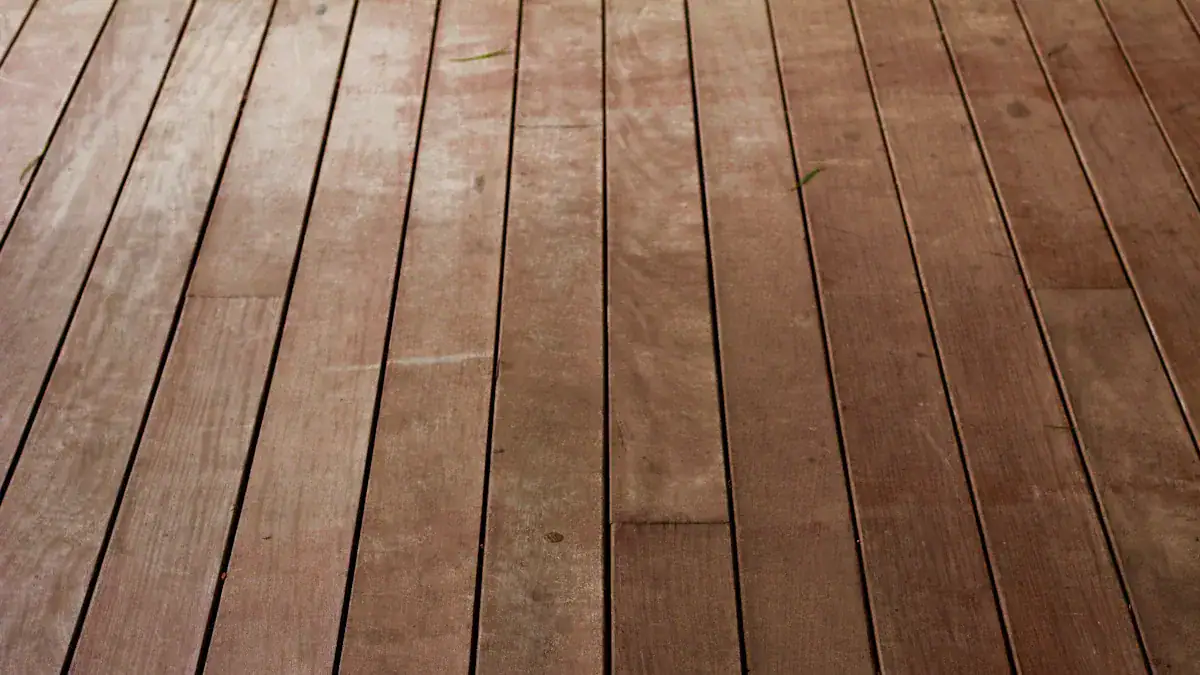
Wood decking offers a classic, natural look. Many homeowners choose wood for its timeless appeal. You will find several popular types of wood decking. Pressure-treated wood is a common and affordable choice. Manufacturers treat this wood with chemicals to resist rot, decay, and insects. It often comes from southern yellow pine. Tropical hardwoods like Ipe, Cumaru, and Teak are very dense. They naturally resist insects and decay, making them extremely durable. Redwood and cedar are also popular. These woods offer natural beauty and resist rot and insects. However, they are softer and can scratch easily. Mahogany is another high-quality hardwood. It has a rich color and fine grain. Each wood type provides different benefits for your deck.
Composite Decking Basics
Composite decking provides a modern alternative to traditional wood. This deck material combines different components to create a durable product. Manufacturers make composite from a mix of plastic and wood fibers. The plastic is often recycled polypropylene or polyethylene. It protects against rot, moisture, and insect damage. Wood fibers come from sawdust and other wood waste. Additives are also part of the mix.
These include UV stabilizers to prevent fading and colorants for various looks. The manufacturing process involves several steps. First, they prepare the wood fibers and plastic. Then, they mix these materials precisely. An extruder heats and combines the mixture. This process melts the plastic around the wood fibers. The extruder shapes the composite into boards. Finally, the boards cool and receive finishing touches like surface texturing. This process ensures each composite board meets standards for durability and appearance. You get a strong, low-maintenance deck with composite.
Wood and Composite Decking Comparison
You face a significant choice when you consider the cost of your new deck. The initial price tag often guides your decision. Let’s look at how wood and composite compare.
Cost Differences
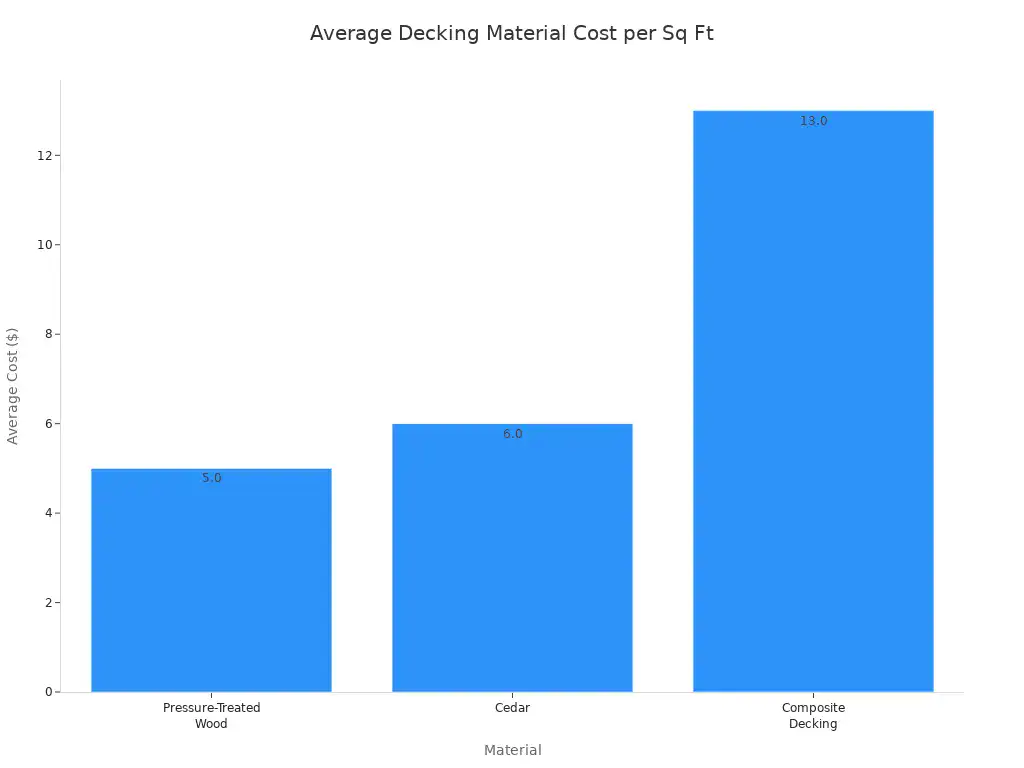
For materials alone, pressure-treated wood is usually the most affordable option. You can expect to pay between $2 and $8 per square foot for this material. Cedar lumber costs more, typically ranging from $4 to $8 per square foot. Composite decking has a higher upfront cost. You will find prices for composite materials between $8 and $18 per square foot.
Material | Material Cost (per sq ft) |
|---|---|
Pressure-Treated Wood | $2.00 – $8.00 |
Cedar | $4.00 – $8.00 |
Composite Decking | $8.00 – $18.00 |
However, you should also consider the long-term costs. A wood deck might seem cheaper at first, but it requires ongoing maintenance. Over 10 years, the costs can change significantly.
Feature | Wood Deck (Pressure-Treated) | Composite Deck |
|---|---|---|
Initial Cost | $20,000 – $25,000 | $30,000 – $40,000 |
Maintenance | Significant: Annual staining/sealing (30-40 hours/year) | Minimal |
Durability | Prone to warping, bowing, rot; lasts 15-20 years before major repairs/replacement | Highly durable, resistant to wear/tear; lasts 30-40 years |
10-Year Costs | Initial cost + 10 years of annual maintenance (financial & labor) | Higher initial cost + minimal ongoing maintenance |
Long-Term Cost (30-40 years) | Costs equalize with composite due to maintenance/replacement | Costs equalize with wood due to higher initial investment |
Hassle Factor | High due to ongoing maintenance | Low due to minimal upkeep |
You can see that a wood deck has a lower initial cost. But you will spend many hours and more money on maintenance over time. A composite deck costs more initially. Yet, you save money and time on maintenance in the long run. Over 30 to 40 years, the total costs for both materials often become similar.
Maintenance Needs
Maintenance is a major difference between wood and composite. You will find that wood requires much more attention.
Decking Type | Annual Maintenance Requirements |
|---|---|
Wood Decking | Cleaning, staining, and sealing annually to protect from environmental factors, prevent decay, warping, and color fading. Staining and sealing may be required every 2 to 5 years. |
Composite Decking | Minimal upkeep; regular sweeping and thorough cleaning twice a year. No staining or sealing is required. |
For a wood deck, you need to clean, stain, and seal it regularly. This protects it from sun, rain, and snow. Staining helps maintain its appearance. Sealing protects against decay and warping. You might need to stain and seal your deck every 2 to 5 years.
For Wood Decking:
You need annual staining, sometimes more often. This maintains its appearance. It also protects against UV rays, rain, and snow.
After staining, you must seal the deck. This doubles your labor. However, it offers only minimal, short-lasting protection.
Composite decking, on the other hand, needs very little care. You simply sweep it regularly. You should also clean it thoroughly twice a year. You do not need to stain or seal composite. This saves you a lot of time and effort.
Durability and Lifespan
The durability of your deck material affects how long it lasts. It also impacts how well it stands up to daily use and weather.
Natural wood decks have varying lifespans. Pressure-treated wood typically lasts 10 to 20 years. Cedar can last 20 to 25 years. Redwood offers a lifespan of 25 to 30 years. Tropical hardwoods, like Ipe, are very durable. Ipe can last 40 years or more, even up to 75 years in ideal conditions.
Material | Average Lifespan (Years) |
|---|---|
Pressure-Treated | 15-20 |
Cedar | 20-25 |
Redwood | 25-30 |
Tropical Hardwoods | 30-50+ |
Ipe | 40+ (up to 75 in optimal conditions) |
Composite decking offers excellent durability. It resists many common problems that affect wood. You will find composite resists splintering, warping, and rotting. It also resists insect damage. Composite maintains its color better than wood, resisting fading from sun exposure. You will also find it resists stains from food and spills. Many composite products come with warranties of 25 years or longer. This shows their expected longevity.
Feature | Composite Decking | Natural Wood |
|---|---|---|
Splintering | No splinters, safe for bare feet. | Prone to splintering, requires regular sanding. |
Warping/Rotting | Resists warping, rotting, and insect damage. | Susceptible to warping, rotting, and insect infestation. |
Fading | Resists fading, maintains color over time. | Fades and grays with sun exposure, requires staining/sealing. |
Staining | Resists stains from food, spills, and mold. | Easily stained, requires immediate cleaning and regular sealing. |
Scratch Resistance | Generally more scratch-resistant than many softwoods. | Can be easily scratched and dented, especially softer woods. |
UV Resistance | Formulated with UV inhibitors to resist sun damage. | UV rays break down wood fibers, leading to graying and deterioration. |
Moisture Absorption | Low moisture absorption, preventing swelling and cracking. | Absorbs moisture, leading to expansion, contraction, and cracking. |
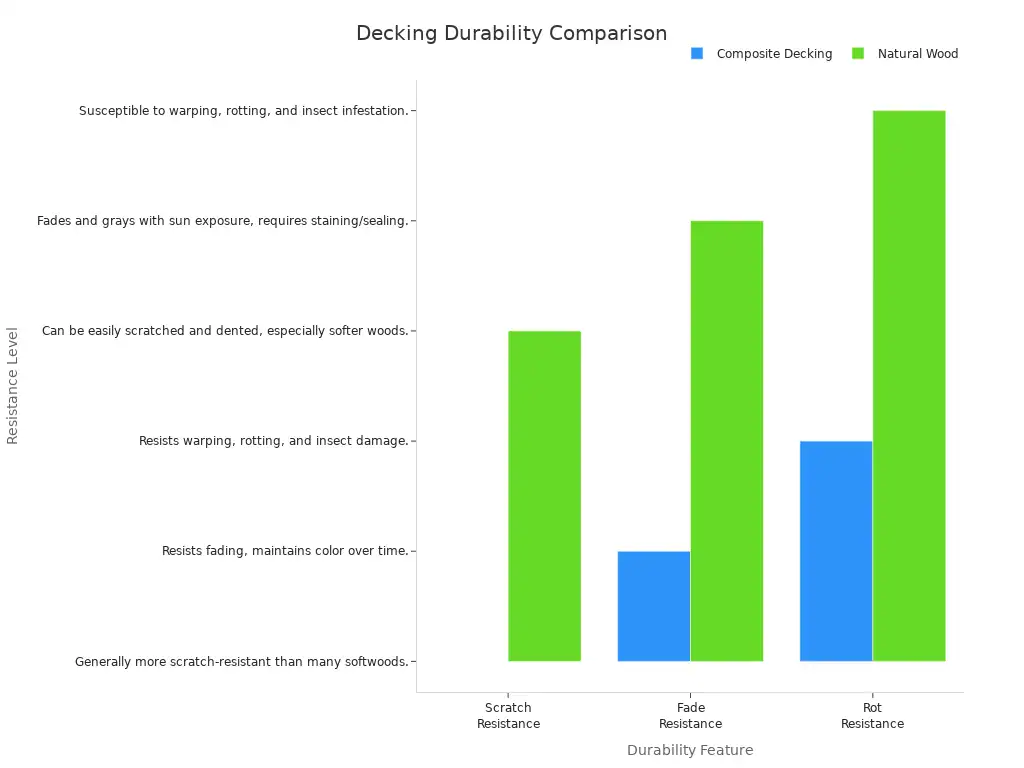
This chart clearly shows composite’s superior resistance in these areas.
Aesthetics and Design
You want your deck to look good. Both wood and composite offer different aesthetic appeals.
Wood provides a natural, classic look. Each wood species has unique colors and grain patterns. Ipe wood, for example, has classic medium to dark brown hues. Jatoba wood, also known as Brazilian Cherry, shows lovely pinkish to reddish-brown tones. These colors deepen with sun exposure. FSC Machiche offers colors from light to reddish-brown and medium chocolate brown. Thermally modified woods, like ThermaWood, have a heat-deepened medium to dark brown color.
Wood Species | Aesthetic Variations (Color/Grain) | Design Limitations/Considerations |
|---|---|---|
Ipe Wood | Classic medium to dark brown hues. | Exceptional toughness and density, benchmark for other options, outstanding resistance to fungi, decay, and termites. |
Jatoba Wood (Brazilian Cherry) | Lovely pinkish to reddish-brown tones, intensifying with UV exposure. | Robust and durable, recognized for toughness and density, often substitutes Ipe, outstanding resistance to fungi, moisture, rot, mold, and insects. |
FSC Machiche | Colors ranging from light to reddish-brown and medium chocolate brown. | Exclusively heartwood, sustainably harvested, remarkable resistance to insect damage, rot, mold, and decay. |
ThermaWood / ThermaWood FR | Heat-deepened medium to dark brown color range. | Undergoes patented steam and heat process, surpasses kiln-dried lumber in strength and flexibility, reduced brittleness, excellent alternative to hardwood, outstanding resistance to fungi, decay, and termites. |
Softwoods like cedar and treated pine are not ideal for all deck designs. They are less resistant to moisture and insects. Hardwoods and thermally modified woods offer better stability. They resist moisture, mold, rot, and insects much better. This makes them great for low-clearance or rooftop decks.
Composite decking offers a wider range of colors and styles. Manufacturers design composite to mimic the look of various wood grains. You can choose from many shades, from light grays to deep browns. This consistency means you get a uniform look across your entire deck. You also do not have to worry about natural imperfections found in wood.
Environmental Impact
You might care about the environmental impact of your decking choice. Both materials have different effects.
For wood, sustainable sourcing is important. Some wood products, like Machiche wood decking, are FSC® Certified and Rainforest Alliance Certified. This means they come from responsibly managed forests. Companies like Mataverde commit to sourcing all wood from such forests. They emphasize sustainable practices. This helps preserve natural resources.
Composite decking often uses recycled materials. Manufacturers use wood fibers and plastic from waste products. This reduces the demand for new materials. It also helps keep waste out of landfills. The production process for composite can reduce greenhouse gas emissions. This happens if companies use renewable energy. Local sourcing of materials also lowers the carbon footprint. Composite reduces deforestation by using agricultural waste.
At the end of its life, composite can often be recycled. This further reduces landfill waste. It also decreases the need for virgin materials. Some composite products can even include biodegradable additives. This allows for natural breakdown. You can see that composite offers many eco-friendly options.
This wood and composite decking comparison helps you understand the differences. You can now weigh the costs, maintenance, durability, aesthetics, and environmental factors. This information helps you choose the best decking material for your home.
Exploring Wood Decking Options

You have many choices when you pick wood for your deck. Each type offers different benefits.
Pressure-Treated Wood
You often see pressure-treated wood on many decks. It is a popular choice because it costs less. Manufacturers treat this wood with chemicals. These chemicals help the wood resist rot, decay, and insects. This makes it last longer outdoors.
You will often find it used for the frame of a deck. Different chemicals protect the wood. For example, Alkaline Copper Quaternary (ACQ) is a modern choice. It uses copper and ammonium compounds. This protects against rot and insects. Copper Azole (CA) is another popular option. It uses copper and azole compounds. This protects against many fungal threats. Chromated Copper Arsenate (CCA) was once common. However, the EPA restricted it for residential use in 2003 due to health concerns. It still appears in industrial settings.
Cedar and Redwood
Cedar and redwood offer natural beauty for your deck. These woods naturally resist weather. They also look attractive. Cedar has natural oils and acids, called polyoxyphenols. These give it a distinct aroma. They also help it resist moisture, decay, and insects. Western Red Cedar is very durable. It has low density and shrinkage. This makes it stable. Redwood is also resistant to water damage. It has higher density.
Property | Cedar | Redwood |
|---|---|---|
Weather Resistance | Excellent resistance to moisture, decay, and insect damage due to natural oils. | More resistant to water damage due to higher density and fewer pitch pockets. |
Density | Lightweight, making it easier to work with. | Heavier than cedar. |
Appearance | Coloration ranges from light yellowish-browns to reddish hues; Western Red Cedar has finer grains. | More uniform dark tone; California Redwoods can be coarser. |
This makes them good choices for wood decking.
Hardwoods Like Ipe
For the best wood for decks, consider hardwoods like Ipe. Ipe is known for its exceptional durability. It also comes with a premium cost. This wood has a dark brown walnut color. Sometimes you see red and amber hues. It has a fine texture. Ipe is extremely dense and tight-grained. It can last over 75 years. The U.S. Forest Products Laboratory rates it as “Very Durable.” It resists decay, fungi, mold, and termites very well.
Characteristic/Metric | Value/Rating |
|---|---|
Janka Hardness (12% moisture) | 3,680 lb |
Bending Strength | 22,560 psi |
Maximum Crushing Strength | 10,350 psi |
Decay Fungi/Mold/Termite Resistance | Very Resistant |
Lifespan | 75+ years |
U.S. Forest Products Laboratory Rating | Very Durable (25 years – highest rating) |
Termite Resistance (in ground) | 15 years without attack (highest rating) |
Slip Resistance (wet environment) | Exceeds ADA requirements |
These wood decking pros make Ipe a top choice for long-lasting wooden decks.
Pine and Other Softwoods
Pine is a less expensive option for your deck. It is abundant. Treated pine decking can last 10 to 15 years. It needs minimal maintenance. Pine offers a rustic look. You will see natural knots and rough edges. Pine is eco-friendly. You can safely burn it at the end of its life. It also absorbs less heat. This keeps your deck cooler in hot weather. However, pine needs proper treatment. Without it, it can rot, stain, and mark easily. You must paint, varnish, or lacquer it to protect its finish.
Composite Decking Pros and Cons
Advantages of Composite Decking
You will find many benefits with composite decking. These are the composite decking pros. It offers low upkeep. You do not need to stain or seal your deck. Simple soap and water clean it easily. This material resists rot and splintering.
You get a consistently smooth and safe surface. Composite is very durable. It withstands heavy use, time, and various weather conditions. It resists fading, staining, and water damage. Your deck will not warp, crack, or splinter, even with heavy foot traffic. This material lasts 25 to 30 years or more. You get long-term value with fewer repairs or replacements. Composite also offers many styles. You can choose from various colors and finishes. This allows for personalized designs. Your composite deck maintains its color longer than wood, which tends to fade or discolor.
Disadvantages of Composite Decking
However, composite decking has some drawbacks. These are the composite decking cons. You will notice a higher initial cost. A 200 sq ft composite deck might cost $14,000–$16,000. A natural wood deck costs less upfront. Composite decking can also get hotter than natural wood. Darker colors absorb more heat. This happens because composite materials retain heat more due to a lack of natural ventilation. Walking barefoot on a hot surface can be uncomfortable. You can add shade, like umbrellas or pergolas. You can also choose lighter colors. Some manufacturers offer “cooler” technology. Composite is durable, but it can scratch. Heavy furniture, sharp objects, or pet claws can cause marks. Older composite materials sometimes faded. Newer premium brands show improved performance in resisting this issue.
Choosing the Best Decking Material
You need to consider several factors when you choose the best decking material for your home. Your personal needs and preferences guide this decision. This section helps you navigate the options. You will find the best deck material for your specific situation.
Budget Considerations
Your budget often guides your initial choices. You will find various deck material options at different price points.
For budget-conscious homeowners, pressure-treated lumber is a popular choice. It protects against rot and insects. Installation costs are low because you use common tools and techniques. However, you must perform regular maintenance. This includes annual cleaning, staining, and sealing. With proper care, it lasts 15 to 25 years. Standard pine decking offers the lowest initial cost. It requires the most maintenance. Pine works well for covered decks or areas with minimal weather exposure. It accepts stains and finishes well. You need annual treatments to prevent warping, cracking, or rot. Pine is good for temporary solutions or skill-building projects.
For mid-range solutions, consider cedar decking. It offers natural weather resistance, a beautiful grain, and warm coloring. Natural oils protect it against insects and moisture. Installation costs are reasonable. Maintenance is moderate. Cedar can weather to gray or you can maintain its color with periodic treatments.
It lasts 20 to 30 years with proper care. Redwood decking offers exceptional beauty with rich color and a distinctive grain. It has excellent natural weather resistance. Availability and pricing vary by region. West Coast homeowners often find better deals. Redwood can age naturally or you can maintain it with regular treatments. Its tannins protect against insects and decay.
Several factors affect the price you pay. Manufacturing processes, material scarcity, and transportation costs influence prices at the lumber yard. Labor costs also vary. Some materials need specialized tools or techniques.
This increases installation complexity. Long-term maintenance expenses often outweigh initial material costs. Materials needing frequent staining, sealing, or board replacement may cost more over time. This happens despite lower upfront prices. Your climate also plays a role. Harsh winters, intense sun, and high humidity challenge different materials uniquely. This influences your material choice and associated costs. Your durability expectations matter. Homeowners planning to stay for decades might choose premium materials. Those moving soon might opt for more affordable options. Your maintenance tolerance also guides material selection. You might prefer annual care or minimal upkeep.
Here is a quick look at material costs:
Decking Material | Cost per Square Foot (Materials Only) |
|---|---|
Cedar wood | $4 to $9 |
Composite | $15 to $36 |
Pressure-treated wood | $15 to $25 |
Redwood | $4 to $6 |
Composite decking typically has a higher upfront cost than wood. This is due to its manufacturing process. However, homeowners often find the higher initial investment in composite decking worthwhile. It lasts much longer than wood. This leads to long-term savings on maintenance. Wood decking prices can fluctuate significantly. This depends on lumber availability and local demand. Different wood types like pine, cedar, redwood, and exotic woods vary greatly in price. Composite decking prices tend to be more stable.
Desired Look and Feel
The aesthetic appeal of your deck is very important. You want a deck that complements your home and personal style.
Natural wood offers a gorgeous woodgrain. You can stain or paint it to meet your aesthetic needs. This offers endless possibilities for color and tone customization. It provides a classic, timeless look.
Composite offers a wider range of design options. You can choose from:
Natural Wood Tones: These mimic the warm hues of traditional wood. Think rich browns, honey tones, and weathered grays. They blend well with various architectural styles.
Bold and Vibrant Hues: These offer contemporary looks. Colors like vibrant reds, deep blues, and rich greens add personality to your deck.
Monochromatic Elegance: These feature subtle variations of grays. They create a sophisticated and timeless aesthetic.
Distressed and Weathered Looks: These capture the charm of aged wood. You get a rustic appearance without compromising durability.
Intricate Embossed Designs: These mimic natural grain patterns and textures of real wood. They enhance visual appeal and provide improved traction.
Mixing and Matching Patterns: You can combine various styles for a unique and personalized deck.
Maintenance Commitment
Your willingness to maintain your deck is a crucial factor. Some materials demand more of your time than others.
Decking Material | Homeowner Commitment Required |
|---|---|
Traditional Wood (Cedar, Pressure-Treated) | Annual upkeep including sealing, staining, and occasional board replacement; vulnerable to rot, warping, splintering, and insect damage. |
Composite Decking | Minimal routine maintenance; resists moisture, fading, and mildew; no sanding or staining required. |
Traditional wood decks, like cedar or pressure-treated wood, require significant annual upkeep. You must seal, stain, and sometimes replace boards. These woods are vulnerable to rot, warping, splintering, and insect damage. Pressure-treated wood needs proper maintenance for longevity. Annual sealing or resurfacing is often needed. Cedar and redwood decking need less chemical treatment due to natural resistance. However, annual sealing or resurfacing is still often required.
Decking Material | Homeowner Commitment Required |
|---|---|
Pressure-Treated Wood | Requires proper maintenance for longevity; annual sealing or resurfacing often needed. |
Cedar and Redwood Decking | Less chemical treatment needed due to natural resistance; annual sealing or resurfacing often required. |
Aluminum Decking | Minimal maintenance; occasional washing is sufficient; can last over 50 years. |
Composite Decking | Minimal upkeep required. |
PVC Decking | Fully weatherproof; minimal maintenance. |
Composite decking requires minimal routine maintenance. It resists moisture, fading, and mildew. You do not need to sand or stain it. You simply wash it occasionally. This saves you a lot of time and effort over the years.
Climate and Local Conditions
Your local climate and specific site conditions greatly influence the best wood for decks or other materials. Different materials perform differently under various environmental stresses.
Feature | Composite Decking | Wood Decking |
|---|---|---|
Moisture Resistance | Highly resistant to moisture absorption, preventing rot, mold, and mildew. | Susceptible to moisture absorption, leading to rot, warping, and fungal growth if not properly maintained. |
Temperature Fluctuations | Designed to withstand extreme temperature changes without significant expansion, contraction, or cracking. | Can expand and contract with temperature changes, potentially leading to warping, cracking, and fastener pops. |
UV Resistance | Engineered with UV inhibitors to resist fading and degradation from sun exposure, maintaining color and structural integrity. | Prone to fading, graying, and surface damage from prolonged UV exposure, requiring regular staining or sealing. |
Insect and Pest Resistance | Impervious to insect infestations like termites and carpenter ants due to its synthetic composition. | Vulnerable to insect damage, which can compromise structural integrity and require costly treatments. |
Wind and Storm Resistance | Generally more stable and less prone to splintering or breaking under high winds and impacts from debris. | Can be damaged by strong winds and impacts, leading to splintering, cracking, or dislodged boards. |
Maintenance | Low maintenance; requires only occasional cleaning with soap and water. No sanding, staining, or sealing needed. | High maintenance; requires regular cleaning, sanding, staining, or sealing to protect against weather damage and maintain appearance. |
Durability | Long-lasting with a typical lifespan of 25-30 years or more, often backed by extensive warranties. | Lifespan varies greatly depending on wood type and maintenance, typically 10-15 years, but can be shorter without diligent care. |
Appearance Retention | Maintains its aesthetic appeal over time with minimal effort, resisting common weather-related wear. | Appearance degrades over time due to weathering, requiring significant effort to restore and maintain its look. |
Environmental Impact | Often made from recycled materials, reducing waste. Some brands use sustainable manufacturing processes. | Can be sourced from sustainable forests, but deforestation and chemical treatments for preservation can be concerns. |
Cost | Higher initial cost, but lower lifetime cost due to minimal maintenance and longer lifespan. | Lower initial cost, but higher lifetime cost due to ongoing maintenance expenses and potential for earlier replacement. |
Composite decking is highly resistant to moisture absorption. This prevents rot, mold, and mildew. It withstands extreme temperature changes without significant expansion or cracking. Composite also resists fading and degradation from sun exposure. It is impervious to insect infestations. Wood decking, however, is susceptible to moisture, temperature changes, UV damage, and insects.
Local building codes may impose additional requirements beyond national standards. These codes can dictate specific deck materials better suited for local environmental conditions. They might also mandate extra safety measures in areas prone to particular hazards. Local building codes vary significantly based on geographic location.
A beachfront property has different needs than an inland cabin. Environmental factors like exposure to saltwater or extremely dry climates influence material choices. These conditions may specifically affect the selection of fasteners or the overall deck design. You should always check with your local building department before making a final decision on deck material options.
The best decking material is truly subjective. Your specific needs, preferences, and budget determine the best deck material for you. For many, the best wood for decks offers natural beauty but requires more upkeep.