

Plug your laptop into a QINLIANF surge protector and notice how neatly your cables stay apart. You’ll want wall plugs that balance safety, charging speed, and outlet spacing for everyday use. I’ll compare five top picks for 2026 — from compact travel extenders to multiport surge units — so you can pick the right setup for home, office, or travel and avoid common power and charging pitfalls.
| QINLIANF 5-Outlet Surge Protector with 4 USB Ports |
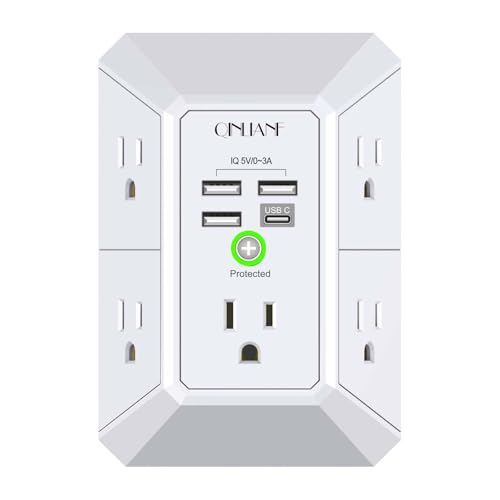
| Best for Power & Ports | Outlet Expansion: 5 AC outlets (arranged on 3 sides) | USB Ports: 4 USB ports (3×A, 1×C; total 4.8A) | Surge Protection: Yes — 3‑level surge protection (TVS, MOV, GDT), 1680J | VIEW LATEST PRICE | Read Our Analysis |
| TROND 3-Way Angled Wall Outlet Extender (2-Pack) |

| Space-Saving Extender | Outlet Expansion: Converts 1 outlet into 3 AC sockets | USB Ports: None (no USB ports) | Surge Protection: No surge protection (power extender only) | VIEW LATEST PRICE | Read Our Analysis |
| TESSAN Multi Plug Surge Protector with USB-C |
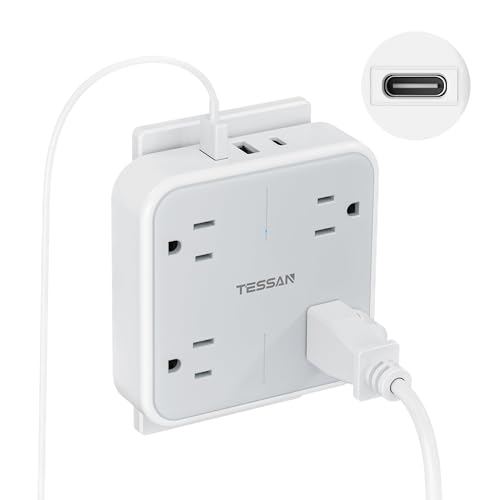
| Bulky-Plug Friendly Protector | Outlet Expansion: Converts 2 sockets into 4 electrical outlets | USB Ports: 3 USB ports (2×A, 1×C) | Surge Protection: Yes — built‑in surge protector | VIEW LATEST PRICE | Read Our Analysis |
| AILKIN 2-Pack Dual Port USB Wall Chargers |
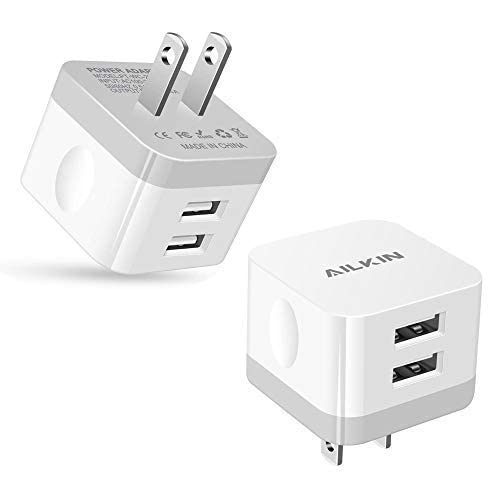
| Compact Everyday Charger | Outlet Expansion: N/A (USB-only wall charger; no AC outlet expansion) | USB Ports: 2 USB ports (2×A) | Surge Protection: No (basic USB charger; protection features listed are overcharge/overcurrent/overheat) | VIEW LATEST PRICE | Read Our Analysis |
| AILKIN 4-Port USB Wall Charger Cube (4.8A) |

| Best Multi-Device Charger | Outlet Expansion: N/A (USB-only wall charger cube; no AC outlet expansion) | USB Ports: 4 USB ports (4×A; total 4.8A) | Surge Protection: No dedicated surge protector (USB charger with charging protections) | VIEW LATEST PRICE | Read Our Analysis |
More Details on Our Top Picks
QINLIANF 5-Outlet Surge Protector with 4 USB Ports
Should you need a compact wall-mounted hub that combines wide outlet spacing and multi-port USB charging, the QINLIANF 5-Outlet Surge Protector alongside 4 USB Ports is a smart pick—its three-sided outlet layout and 2.1-inch spacing handle bulky adapters while the four USB ports (including a 3A USB-C) keep phones and tablets topped off. You’ll mount it flush using the back groove and central screw (works only on duplex outlets), enjoy 4.8A total USB output with smart detection, and rely on 3-level surge protection (TVS, MOV, GDT) with 1680J absorption. It’s ETL certified and backed by a 12-month warranty.
- Outlet Expansion:5 AC outlets (arranged on 3 sides)
- USB Ports:4 USB ports (3×A, 1×C; total 4.8A)
- Surge Protection:Yes — 3‑level surge protection (TVS, MOV, GDT), 1680J
- Safety Certification:ETL certified
- Compatibility / Outlet Type Notes:Fits duplex outlets only; not for GFCI or multi‑parallel outlets
- Portability / Size Consideration:Compact wall‑mount design; requires 1–2″ outlet spacing; dimensions 5.46 × 3.77 × 0.01 in; 7.4 oz
- Additional Feature:Central screw attachment
- Additional Feature:3-level surge tech
- Additional Feature:Wide 2.1″ spacing
TROND 3-Way Angled Wall Outlet Extender (2-Pack)
Should you need to fit multiple bulky chargers into a tight space, the TROND 3-Way Angled Outlet Extender (2-pack) is a smart choice — its trapezoid design places three AC sockets on different faces so large plugs won’t block each other, letting you power up to three devices per extender (six with the pair) within a compact, travel-friendly footprint. You’ll convert one outlet into three AC sockets rated 1875W, 125V/15A, ideal for laptops, phones, cameras, and shavers. At 3.48 x 1.73 x 1.42 inches it fits behind furniture and in luggage, is ETL listed, cord-free, and cruise-approved.
- Outlet Expansion:Converts 1 outlet into 3 AC sockets
- USB Ports:None (no USB ports)
- Surge Protection:No surge protection (power extender only)
- Safety Certification:ETL listed
- Compatibility / Outlet Type Notes:Standard outlet compatible (designed for normal wall outlets; cruise‑ship approved)
- Portability / Size Consideration:Small, travel‑friendly; 3.48 × 1.73 × 1.42 in (2‑pack)
- Additional Feature:Trapezoid multi-sided shape
- Additional Feature:Cruise-ship approved
- Additional Feature:Compact travel-sized
TESSAN Multi Plug Surge Protector with USB-C
Should you need a compact outlet solution that charges multiple devices fast, the TESSAN Multi Plug Surge Protector with USB-C is a strong pick — it converts two sockets into four widely spaced outlets so four bulky plugs fit without blocking. You get one USB-C (3A/15W) and two USB-A ports (one at 2.4A) for phones and tablets; keep in mind the USB-C won’t support devices needing 14–22V. Built-in surge protection shields electronics, and a stabilizing rod keeps it firmly attached. It fits standard and decorator outlets, suits indoor rooms, but won’t work with GFCI or 2-prong outlets.
- Outlet Expansion:Converts 2 sockets into 4 electrical outlets
- USB Ports:3 USB ports (2×A, 1×C)
- Surge Protection:Yes — built‑in surge protector
- Safety Certification:(Not explicitly stated) — stabilizing rod; compatibility noted (no explicit certification)
- Compatibility / Outlet Type Notes:Compatible with standard and decorator outlets; not compatible with GFCI or 2‑prong outlets
- Portability / Size Consideration:Wall‑mounted stabilizing rod; suitable for home/travel use (no exact dimensions provided)
- Additional Feature:Stabilizing rod mount
- Additional Feature:Converts 2→4 outlets
- Additional Feature:Decorator outlet compatible
AILKIN 2-Pack Dual Port USB Wall Chargers
Looking for a compact, family-friendly charger that won’t block neighboring outlets? The AILKIN 2-pack offers thin, flat blocks with 90-degree plug pins and USB ports that sit flush, cutting cord clutter and reducing hazards for kids and pets. Each unit has dual USB-A ports (5V, 2.4A max per port, shared total) so you can charge two devices at the same time—no Quick Charge 3.0. It’s universally compatible with modern iPhones, Samsungs, Pixels, Kindles, and more. CE and FCC certified, rated 100–240V input, and backed with a 1-year warranty plus 24/7 customer support.
- Outlet Expansion:N/A (USB-only wall charger; no AC outlet expansion)
- USB Ports:2 USB ports (2×A)
- Surge Protection:No (basic USB charger; protection features listed are overcharge/overcurrent/overheat)
- Safety Certification:CE and FCC certified
- Compatibility / Outlet Type Notes:Works with standard wall outlets (USB charger block)
- Portability / Size Consideration:Thin, flat block design for behind‑furniture stability; travel friendly (2‑pack)
- Additional Feature:90-degree port orientation
- Additional Feature:Thin flat block
- Additional Feature:Worldwide 100–240V input
AILKIN 4-Port USB Wall Charger Cube (4.8A)
Should you need to charge several phones or tablets at once, the AILKIN 4-Port USB Wall Charger Cube is a compact, budget-friendly choice that delivers up to 4.8A across four ports so everyone stays topped up. You’ll plug it into any standard 100–240V outlet and charge four devices simultaneously, from iPhones and iPads to Samsung Galaxy, Google Pixel, Kindle Fire HD and other USB-powered gadgets. Its protection system guards against overcharge, over-current, and overheating, and it stops charging as soon as devices are full to preserve battery health. The pure white, lightweight cube fits easily in bags or on desks.
- Outlet Expansion:N/A (USB-only wall charger cube; no AC outlet expansion)
- USB Ports:4 USB ports (4×A; total 4.8A)
- Surge Protection:No dedicated surge protector (USB charger with charging protections)
- Safety Certification:(Not explicitly stated) — safety protection features described, no specific listing
- Compatibility / Outlet Type Notes:Works with standard wall outlets (USB charger block)
- Portability / Size Consideration:Compact cube design; portable for home/office use
- Additional Feature:Auto charge stop
- Additional Feature:Total 4.8A output
- Additional Feature:Pure white compact cube
Factors to Consider When Choosing a Wall Plug
Before you pick a wall plug, consider how many outlets and what USB port types you actually need to power your devices. Check the surge protection level and whether the outlet spacing and mounting will fit your power strip, chargers, or bulky adapters. Also make sure the plug mounts securely and sits flush so it won’t wobble or strain cords.
Outlet Count Needed
At the moment you plan how many outlets you need, count the devices you typically plug in simultaneously and factor in bulky adapters that can block neighboring sockets; then map locations where you actually use power. Choose outlet designs with widely spaced sockets if you frequently use large adapters or power bricks. Keep in mind that more outlets increase convenience but can require extra wall space and might not fit every faceplate or recess. In case space is limited, consider multi-outlet extenders or surge protectors to expand capacity—just be aware they might include additional features like USB ports or surge protection. Finally, match outlet count to your circuit’s capacity so you don’t overload wiring; whenever in doubt, consult an electrician.
USB Port Types
Once you’ve mapped outlet locations and counts, consider the USB ports built into modern wall plugs—choices like USB-A and USB-C affect charging speed, device compatibility, and how many devices you can charge simultaneously. You’ll find USB-A typically provides up to 5V/2.4A, more than enough for most smartphones and tablets, while USB-C often delivers up to 5V/3A, speeding charge for compatible gear. Keep in mind some USB-C ports won’t support higher-voltage fast-charge protocols (9–22V), so check device requirements. Smart ports that detect connected devices and adjust current improve efficiency and safety. Balance the mix of port types to match your phone, tablet, and accessory lineup, ensuring adequate outputs per port for simultaneous charging.
Surge Protection Level
Because power surges can fry sensitive gear in an instant, pay close attention to a wall plug’s surge protection level—measured in joules—which tells you how much energy it can absorb before failing. You should match the joule rating to the value and sensitivity of your devices: higher joules for expensive or critical electronics, lower might suffice for lamps or chargers. Prefer plugs that combine defenses—TVS, MOVs, and gas discharge tubes—so different surge types get handled. Multi-level circuits react faster and more reliably than single-stage designs, reducing let-through voltage. Also check for certification from recognized safety organizations to confirm performance and safe failure modes. Finally, bear in mind that surge protection degrades over time, so plan replacements after major events or years of use.
Outlet Spacing Requirements
During the period of planning a wall plug layout, consider outlet spacing carefully so bulky adapters and oversized heads don’t block neighboring sockets; you’ll want wider gaps—around 2 inches or more—to prevent adjacent sockets from being blocked. Standard spacing is typically about 1.5 inches, which often won’t fit larger adapters or plugs with oversized heads. Proper spacing guarantees you can insert all plugs simultaneously without interference, improving day-to-day usability. In case you plan to mount devices flush to the wall, allow 1 to 2 inches or more between outlets so plug extenders or surge protectors align and fit securely. Spacing also affects compatibility with wall-mounted chargers and multi-port surge protectors that need clearance to support multiple plugs and USB ports.
Mounting And Stability
How will your wall plugs stay put as things get tugged or bumped? You’ll want secure attachment mechanisms—central screws or similar fasteners—that keep plugs from unplugging whenever cords are pulled. Check compatibility with your outlet type: some mounts fit standard duplex outlets but not GFCI or multi-socket configurations. Prefer flush-mount designs with grooves or flat backs so the plug sits close to the wall, cutting force that causes wobble. Wide spacing between sockets prevents bulky adapters from crowding neighbors and maintains reliable connections. Look for added support like stabilizing rods or intentionally thin, flat profiles that brace the plug against the outlet. These features together give firmer attachment and reduce loosening, falling, or intermittent contact during everyday use.
Power Rating Limits
At the moment you pick a wall plug, make sure its power rating meets or exceeds the total wattage of everything you’ll run from it simultaneously; most standard plugs are rated for about 15 amps at 125 volts (roughly 1,875 watts). Check device labels and add peak draws—especially for motors or heaters—so you don’t exceed the limit. Overloading causes overheating, damage, and fire risk, so choose plugs and add-ons with clear power specs. In case a plug includes USB ports, include their combined output in your calculations. While using surge protectors or extensions, confirm their maximum wattage and amp ratings match your combined load. Should your setup approaches the rating, upgrade to a higher-capacity outlet or redistribute devices to other circuits.
Device Compatibility Notes
Considering whether a wall plug will actually work with your devices? You should initially verify it supports your devices’ voltage and amperage so charging stays safe and efficient. Verify the USB outputs: many devices expect 5V/2.4A on USB-A and up to 5V/3A on USB-C. Confirm the USB-C port supports required protocols—some ports won’t handle Quick Charge or higher-voltage modes like 9–22V. Check physical fit: bulky adapters or multiple plugs can block adjacent sockets, so pay attention to outlet spacing and multi-sided arrangements. Finally, make certain the plug suits the outlet type in your home—duplex, standard, or GFCI—since some designs aren’t compatible with GFCI or oversized sockets.
Safety Certifications Required
Because a wall plug sits between mains power and your devices, you should prioritize verified safety certifications like ETL, CE, and FCC—these prove the unit was tested against recognized electrical standards and includes protections such as overcurrent, overcharge, and overheating shutoffs. Check certified surge protectors for specific energy absorption ratings (joules) so they can handle voltage spikes without failing. Certification also verifies mechanical safety: secure attachment, proper insulation, and reduced risk of accidental unplugging or shorting. Avoid uncertified units; they can cause shocks, fires, or damage connected gear. While shopping, look for clear markings, a manufacturer’s test report or listing number, and buy from reputable brands or retailers to guarantee the plug’s claimed protections are genuine.
Final Thoughts
At the time of choosing one of these top wall plugs, you’ll want safety, capacity, and convenience—like QINLIANF’s wide spacing and surge protection or TROND’s travel-friendly angled design. Consider that nearly 60% of households now have five or more internet-connected devices, so multi-outlet and multi-port solutions aren’t just handy—they’re essential. Pick a certified surge protector with enough wattage and USB-C support, and you’ll keep devices powered and protected without clutter or compromise.
