

Picture you’ve saved 20% on your heating bill this winter after swapping an old thermostat for a Nest Learning Thermostat (3rd Gen). You’ll want a Google Home–friendly unit that learns your schedule, works with multiroom sensors, and lets you change temps via voice or app. Below are seven top picks for 2026 that balance smart features, easy installs, and energy savings—keep going to find which one fits your setup and budget.
| Google Nest Learning Thermostat (3rd Gen) – Renewed |

| Best Learning Thermostat | Smart Home Compatibility: Works with Alexa; Google ecosystem (Nest) compatible | Connectivity: Wi‑Fi | App Control: App control supported | VIEW LATEST PRICE | Read Our Analysis |
| Honeywell Home Programmable Single-Stage Thermostat (RTH20B) |

| Best Basic Programmable | Smart Home Compatibility: Smart Home compatible (BACnet MS/TP noted) | Connectivity: Wired (BACnet MS/TP listed) | App Control: Programmable via interface; smart‑home/app compatibility noted | VIEW LATEST PRICE | Read Our Analysis |
| Google Nest Thermostat (Renewed) |

| Smart Value Pick | Smart Home Compatibility: Works with Google Assistant and Alexa; Nest/Google Home app compatible | Connectivity: Wi‑Fi (dual‑band) and Bluetooth | App Control: App control via Nest or Google Home app | VIEW LATEST PRICE | Read Our Analysis |
| Google Nest Programmable Smart Learning Thermostat (White) |
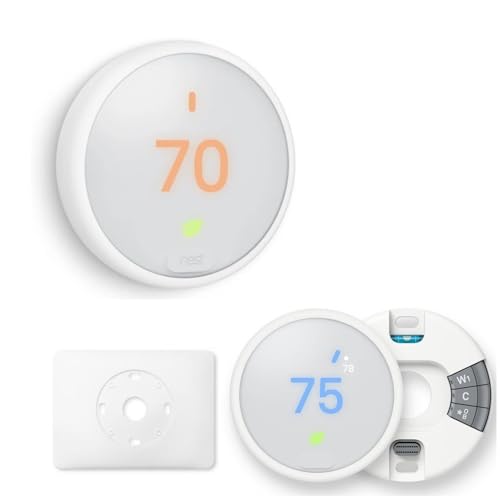
| Editor’s Choice | Smart Home Compatibility: Smart home compatible; app and voice control supported | Connectivity: Wi‑Fi | App Control: App control via Nest app | VIEW LATEST PRICE | Read Our Analysis |
| Google Nest Temperature Sensor (2nd Gen) |

| Best Room Sensor | Smart Home Compatibility: Works with Nest thermostats via Google Home app (Google ecosystem) | Connectivity: Wi‑Fi | App Control: App control via Google Home app | VIEW LATEST PRICE | Read Our Analysis |
| Emerson Sensi Touch Wi‑Fi Smart Thermostat (ST75) |

| Best Touchscreen Option | Smart Home Compatibility: Works with Alexa, Google Assistant, Apple HomeKit, SmartThings | Connectivity: Wi‑Fi | App Control: App control supported (Sensi app) | VIEW LATEST PRICE | Read Our Analysis |
| Mysa Smart Thermostat LITE for Electric Baseboard Heaters |
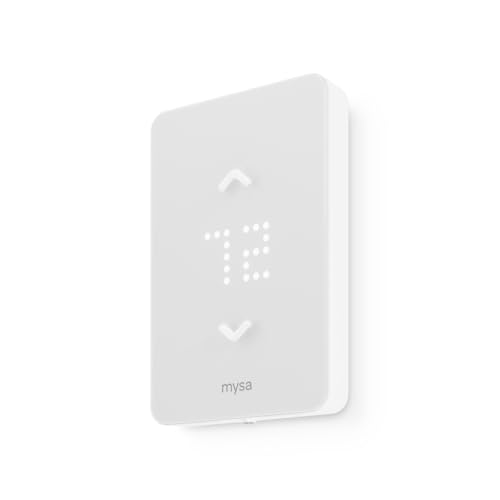
| Best For Electric Baseboards | Smart Home Compatibility: Works with Apple HomeKit, Alexa, Google Assistant | Connectivity: Wi‑Fi (and Bluetooth) | App Control: App control supported (Mysa app) | VIEW LATEST PRICE | Read Our Analysis |
More Details on Our Top Picks
Google Nest Learning Thermostat (3rd Gen) – Renewed
Should you want a smart, energy-aware thermostat that learns your schedule and works with Google Home (and Alexa), the renewed Google Nest Learning Thermostat (3rd Gen) is a compact, polished-steel choice that brings programmable heating/cooling, Wi‑Fi control, and a backlit LCD to homes with low‑voltage systems—it’s battery powered, mounts to the wall, and includes a lithium‑ion battery and extended warranty for immediate setup. You’ll program temperature routines via app, push button, or voice, track energy savings (Energy Star spec met), and rely on a 24V, 34.72W unit weighing 1.59 pounds. Package includes smart plugs and warranty.
- Smart Home Compatibility:Works with Alexa; Google ecosystem (Nest) compatible
- Connectivity:Wi‑Fi
- App Control:App control supported
- Energy Saving / ENERGY STAR or Claims:Energy Star specification met
- Mounting Type:Wall mount
- Voice Control:Voice control supported
- Additional Feature:Polished steel finish
- Additional Feature:Includes extended warranty
- Additional Feature:Alloy steel construction
Honeywell Home Programmable Single-Stage Thermostat (RTH20B)
Should you want a simple, budget-friendly thermostat that works with single-stage heating and cooling and integrates into smart-home setups, the Honeywell Home RTH20B fits the bill. You’ll get a wired, single-stage controller compatible with 1 heat/1 cool systems, hot water, forced air and 750 mV systems (not electric baseboard). It offers a 5-2 programmable schedule or non-program mode, large backlit LCD, filter-change alerts and extended low-heat setpoint to 32°F. Installation’s easier with the UWP wall plate; it runs on two AA batteries. It’s a direct replacement for RTH2300, backed with a one-year warranty.
- Smart Home Compatibility:Smart Home compatible (BACnet MS/TP noted)
- Connectivity:Wired (BACnet MS/TP listed)
- App Control:Programmable via interface; smart‑home/app compatibility noted
- Energy Saving / ENERGY STAR or Claims:Optimized for single‑stage systems (no ENERGY STAR listed)
- Mounting Type:Wall mount (UWP wall plate)
- Voice Control:Smart Home/voice compatibility implied
- Additional Feature:5-2 day scheduling
- Additional Feature:Change filter reminders
- Additional Feature:UWP easy-install wallplate
Google Nest Thermostat (Renewed)
Should you want a budget-friendly smart thermostat that still saves energy and works with Google Home, the renewed Google Nest Thermostat (Snow) is a strong choice — it’s a professionally refurbished GA01334‑US that’s ENERGY STAR certified, supports remote control via Wi‑Fi and Google Assistant, and can run without a C‑wire in most homes. You’ll get programmable schedules, Auto‑Away, alerts, dual‑band Wi‑Fi, Bluetooth and voice control. Check compatibility—some heat‑only, cool‑only, zone or heat‑pump systems might need a C‑wire or power accessory. It’s compact, wall‑mounted, and comes with a wiring plate, screws and batteries, and qualifies for Amazon Renewed support.
- Smart Home Compatibility:Works with Google Assistant and Alexa; Nest/Google Home app compatible
- Connectivity:Wi‑Fi (dual‑band) and Bluetooth
- App Control:App control via Nest or Google Home app
- Energy Saving / ENERGY STAR or Claims:ENERGY STAR certified; energy‑saving features
- Mounting Type:Wall mount (wiring plate included)
- Voice Control:Voice control via compatible devices
- Additional Feature:Auto-Away energy saving
- Additional Feature:Works without C‑wire
- Additional Feature:Nest Renew integration
Google Nest Programmable Smart Learning Thermostat (White)
In case you want a thermostat that learns your schedule and adjusts itself to save energy, the Google Nest Learning Thermostat (3rd Gen, white) is a great pick — it’s ideal for busy households or anyone who prefers set‑and‑forget climate control. You’ll get a frosted round display, Wi‑Fi control via the Nest app, and Home/Away Assist that shifts to Eco whenever you’re out. It supports voice control with a compatible device and works with an optional Temperature Sensor to target rooms. Installation takes 30–60 minutes; most HVAC systems (95%) are supported. Studies show average energy savings; warranty details from Google.
- Smart Home Compatibility:Smart home compatible; app and voice control supported
- Connectivity:Wi‑Fi
- App Control:App control via Nest app
- Energy Saving / ENERGY STAR or Claims:Energy savings studies cited (10–15% est.); ENERGY‑type claims
- Mounting Type:Wall mount
- Voice Control:Voice control supported with compatible device
- Additional Feature:Frosted round display
- Additional Feature:Works with Temperature Sensor
- Additional Feature:Learning/self-programming
Google Nest Temperature Sensor (2nd Gen)
Should you live with hot or cold spots and want room-by-room control, the Google Nest Temperature Sensor (2nd Gen) makes it easy to prioritize the temperature where you spend the most time. You place this compact, battery‑powered sensor in any room — wall‑mounted or on a shelf — and it reports temperature to a compatible Nest thermostat (sold separately). You’ll need the Google Home app and Wi‑Fi for remote control and some features. Each thermostat supports up to six sensors, letting you prioritize one room or average several. Expect up to three years of battery life; actual life might differ.
- Smart Home Compatibility:Works with Nest thermostats via Google Home app (Google ecosystem)
- Connectivity:Wi‑Fi
- App Control:App control via Google Home app
- Energy Saving / ENERGY STAR or Claims:Designed to improve comfort/efficiency; implied energy optimization with scheduling
- Mounting Type:Wall mount option (or shelf/placement)
- Voice Control:Voice control via Google Assistant/Alexa (when paired)
- Additional Feature:Up to three-year battery
- Additional Feature:Supports six sensors
- Additional Feature:Small porcelain form
Emerson Sensi Touch Wi‑Fi Smart Thermostat (ST75)
Choose the Emerson Sensi Touch ST75 provided you want a user‑friendly, touchscreen smart thermostat that plays nicely with Google Home and other major platforms. You’ll get a 4.3″ color touchscreen in a compact rectangular black plastic body (also white or silver), easy DIY installation with a built‑in level and illuminated terminals, and Wi‑Fi control via app or voice. It supports HVAC systems needing a C‑wire, is ENERGY STAR certified, and promises about 23% HVAC savings through scheduling, geofencing, and usage reports. Emerson won’t sell your data, offers HVAC expert support, and backs it with a three‑year warranty.
- Smart Home Compatibility:Works with Alexa, Google Assistant, Apple HomeKit, SmartThings
- Connectivity:Wi‑Fi
- App Control:App control supported (Sensi app)
- Energy Saving / ENERGY STAR or Claims:ENERGY STAR certified; estimated HVAC energy savings ~23%
- Mounting Type:Wall mount
- Voice Control:Voice control with Alexa, Siri (HomeKit), Google Assistant
- Additional Feature:4.3″ color touchscreen
- Additional Feature:Built-in installation level
- Additional Feature:Usage reports & alerts
Mysa Smart Thermostat LITE for Electric Baseboard Heaters
In case you want precise, Wi‑Fi-enabled control for line‑voltage electric baseboard or wall heaters, the Mysa Smart Thermostat LITE delivers simple app, touch, and voice control (works with Google Assistant, Alexa, and HomeKit) without needing a hub. You’ll install it in a four‑wire junction box for 120V–240V systems (single‑pole operation only) and replace standard line‑voltage thermostats in about 15 minutes using the video guide. The Wi‑Fi/Bluetooth app offers scheduling, geofencing, vacation mode, runtime reports, and multi‑zone monitoring. Expect up to 26% claimed savings, UL safety certification, a two‑year warranty, and North American support.
- Smart Home Compatibility:Works with Apple HomeKit, Alexa, Google Assistant
- Connectivity:Wi‑Fi (and Bluetooth)
- App Control:App control supported (Mysa app)
- Energy Saving / ENERGY STAR or Claims:Claims up to ~26% heating cost reduction via scheduling
- Mounting Type:Wall mount (replaces wall thermostat)
- Voice Control:Voice control with Siri, Alexa, Google Assistant
- Additional Feature:Line-voltage support (120–240V)
- Additional Feature:Four-wire DIY install
- Additional Feature:Monthly runtime reports
Factors to Consider When Choosing a Thermostat For Google Home
Upon choosing a thermostat for Google Home, check that it explicitly lists Google Assistant compatibility so you won’t run into pairing problems. Make sure voice control is reliable, your wiring and power setup (including C‑wire needs) match the thermostat, and that it’s rated for your HVAC type. Also confirm the manufacturer’s app and ecosystem support offer the features and integrations you want.
Google Home Compatibility
How will the thermostat fit into your Google Home setup? Make sure it supports Google Assistant so you can use voice commands, routines, and device groups. Confirm you can link the thermostat to the Google Home app and account for remote control, scheduling, and inclusion in automations and home/away routines. Check connectivity—Wi‑Fi, Bluetooth, or hub requirement—matches your network and allows persistent cloud or local control via Google Home. Verify the thermostat exposes needed controls (temperature setpoint, mode, fan, sensors) through Google Home so those functions can be used in scenes and routines. Finally, choose a model that supports multi‑device setups and room assignment so you can place, prioritize, and manage thermostats and sensors per room.
Voice Control Reliability
Because voice control is often the quickest way you’ll interact with a thermostat, pick a model that routes commands natively through the same assistant protocol your Google speaker uses and keeps reliable cloud and local connectivity so commands execute fast and consistently. Also confirm stable broadband and dual‑band Wi‑Fi support so neither device loses its link. Prioritize thermostats with local‑processing for common tasks—setting temperature, switching modes, or toggling schedules—so they still respond during short cloud outages. Check multi‑user recognition or account linking so personalized adjustments and security‑sensitive actions route correctly and only to authorized voices. Finally, verify the documented voice command scope and phrasing (setpoints, HVAC modes, sensor targeting) to avoid unsupported requests and inconsistent results.
Wiring And Power Needs
Provided that your smart thermostat is going to work reliably with Google Home, start starting by confirming the wiring and power your HVAC system can actually supply. Check for a C‑wire (common 24V); most smart thermostats and continuous Wi‑Fi need that stable power rather than just batteries. Count conductor wires at the wall — R, W, Y, G, C — and verify a wiring terminal board exists for dedicated connections. If ever you have line‑voltage electric baseboards or wall heaters, confirm the thermostat supports 120–240V wiring and separate high‑voltage configuration. Identify whether your setup is single‑stage, multi‑stage, or a heat‑pump/zone system, since control wires differ. Finally, decide whether you need a power‑extender, adapter, or a model with reliable battery or power‑steal support.
HVAC System Compatibility
While choosing a Google Home–compatible thermostat, start via matching the device to your HVAC framework and control wiring so you don’t buy a unit that can’t actually drive your equipment. Verify your system type — single‑stage heat/cool, heat pump, multi‑stage, or line‑voltage electric — since not every thermostat or integration supports every architecture. Check whether a common (C) wire or power accessory is required; many Wi‑Fi thermostats and Google Home setups need steady 24V power. Confirm support for specialized controls like millivolt, 750 mV, or zone control, because low‑voltage and unique circuits often need dedicated models. Make sure the thermostat handles your fuel and equipment type (furnace, boiler, heat pump, baseboard). In case you employ zoning or remote sensors, verify prioritization and multi‑thermostat coordination.
App And Ecosystem Support
How will the thermostat’s app and ecosystem fit into your Google Home setup? You’ll want an app that’s the same smart‑home platform Google Home uses so you can control the thermostat and build routines directly. Confirm the app exposes full features to Google Home—voice control, scheduling, temperature sensors, and away modes—not just basic on/off or set‑point changes. Check whether the app demands a separate account or cloud service and make certain it links to Google Home without third‑party bridges or frequent reauthorization. Verify mobile notifications, firmware updates, and multi‑user access so routines and alerts stay reliable across devices. Finally, look for clear documentation showing how app functions map to Google Home (target temperature versus HVAC mode) to avoid surprises.
Remote And Multiroom Sensors
App compatibility matters, but room-level sensing determines how comfortable your house actually feels. You’ll want a thermostat and sensors that support multi-sensor pairing so you can prioritize or average readings across rooms—note common limits of 4–6 sensors per thermostat. Verify remote sensors use the same protocol (Wi‑Fi, Bluetooth, or the thermostat’s proprietary link) to guarantee reliable data. Check battery life and replacement type—small sensors can last months to years depending on chemistry and reporting frequency. Make certain the thermostat app lets you assign sensor priorities, build location-based schedules, or use averaged temperatures for better control. Finally, plan sensor placement away from sunlight, drafts, and heat sources, and confirm wireless range covers distances to the thermostat or hub.
Energy Saving Features
Because energy use drives both bills and comfort, pick a Google Home–compatible thermostat that actively shrinks wasted runtime: look for adaptive learning or auto‑scheduling, presence detection/geofencing to set eco setbacks whenever nobody’s home, and remote‑sensor or multi‑zone support so the system conditions occupied spaces instead of the whole house. Choose models with adaptive algorithms—these typically cut heating about 10–12% and cooling roughly 15% through optimizing setpoints. Use geofencing or presence detection to trigger Eco modes and avoid needless cycles. Prioritize smart scheduling, weather‑aware adjustments, and night/away setback periods for predictable savings. Also get energy reporting, usage history, and alerts (filter changes, faults) so you can spot inefficiencies and take corrective maintenance or behavior steps that improve overall performance.
Security And Privacy Controls
Saving energy is only part of the equation—you also need to protect the data and access that let your Google Home thermostat work. Choose models with end‑to‑end encryption for cloud traffic and support for WPA2/WPA3 Wi‑Fi to secure remote control and telemetry. Verify granular user permissions and multi‑user account controls so you can limit who changes settings or views history. Prefer devices offering local control or offline scheduling so basic functions run without cloud dependence. Check privacy settings for clear data‑retention and telemetry options — ability to opt out, delete historical data, and disable voice/audio logging should be explicit. Finally, make sure firmware updates are automatic or easy to apply and the vendor publishes timely security advisories and patches.
Frequently Asked Questions
Can a Thermostat Integrate With Google Home and Apple Homekit Simultaneously?
Absolutely — you’ll feel like a maestro conducting two orchestras at once; you can have a thermostat link to Google Home and Apple HomeKit simultaneously, though it must explicitly support both platforms or use a bridge to translate.
Will a Smart Thermostat Work With My Radiant Floor Heating System?
Yes — many smart thermostats work with radiant floor heating, but you’ll need a model that supports low-voltage or hydronic systems and wiring/relay compatibility; check installer advice, manufacturer specs, and controller programming before buying or installing.
Do Thermostats Store My Personal Voice Commands or Usage Data?
Absolutely — they can. While it might sound like a telegram-era warning, your thermostat can store voice commands and usage data; you’ll control sharing via settings, privacy policies, and through limiting cloud storage or using local-only modes whenever available.
Can I Control Multiple Thermostats as Separate Zones via Google Home?
Yes — you can control multiple thermostats as separate zones via Google Home. You’ll set up each thermostat as its own device, assign rooms or groups, and issue distinct voice commands to manage temperatures independently.
Are There Subscription Fees for Advanced Thermostat Features?
Yes — some makers charge subscription fees for advanced features; you’ll sigh, pay, and get extra analytics, remote HVAC diagnostics, or voice automations. You can often skip subscriptions and still use core smart-thermostat functions.
