

You may speculate whether swapping to a solid‑state drive really turns your desktop into a speed demon or in case it’s just marketing hype. Upgrading will cut boot and load times dramatically, but the right choice depends on capacity, interface, and endurance—so you’ll want to pick carefully to get the most real‑world gain. Keep going to compare five top SSDs that balance price, performance, and reliability.
| Crucial BX500 1TB 2.5″ SATA Internal SSD |

| Reliable Budget Pick | Interface: SATA (2.5″ SATA) | Capacity: 1 TB | Form Factor: 2.5″ SATA drive | VIEW LATEST PRICE | Read Our Analysis |
| Samsung 870 EVO 1TB SATA III 2.5″ SSD |
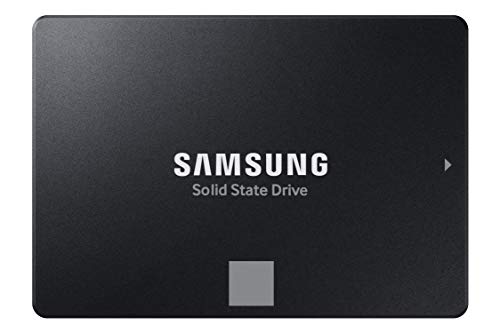
| Best for Reliability | Interface: SATA III (2.5″ SATA) | Capacity: 1 TB | Form Factor: 2.5″ SATA drive | VIEW LATEST PRICE | Read Our Analysis |
| Crucial P3 Plus 4TB PCIe Gen4 NVMe SSD |

| Best For Capacity | Interface: PCIe Gen4 NVMe | Capacity: 4 TB | Form Factor: M.2 (NVMe) / PCIe add-in form factor for laptops/desktops | VIEW LATEST PRICE | Read Our Analysis |
| fanxiang S101 1TB SATA III 2.5″ SSD |

| Affordable Performer | Interface: SATA III (2.5″ SATA) | Capacity: 1 TB | Form Factor: 2.5″ SATA drive | VIEW LATEST PRICE | Read Our Analysis |
| Crucial P310 1TB PCIe Gen4 NVMe M.2 SSD |

| Best for Gaming | Interface: PCIe Gen4 NVMe (M.2) | Capacity: 1 TB | Form Factor: M.2 2280 (NVMe) | VIEW LATEST PRICE | Read Our Analysis |
More Details on Our Top Picks
Crucial BX500 1TB 2.5″ SATA Internal SSD
Should you want an inexpensive, reliable upgrade that makes everyday tasks feel snappier, the Essential BX500 1TB SATA SSD is a solid pick—you’ll get up to 540 MB/s sequential reads, Micron 3D NAND endurance, and noticeably faster boot and file loads compared with a hard drive, all backed with a 3‑year limited warranty. You’ll swap your mechanical drive for a Fundamental BX500 1TB 2.5″ SATA SSD (CT1000BX500SSD1) and feel every improvement: faster boots, snappier app launches, and improved system responsiveness. It’s up to 300% quicker and 45× more energy efficient than a typical HDD, leveraging Micron’s 3D NAND.
- Interface:SATA (2.5″ SATA)
- Capacity:1 TB
- Form Factor:2.5″ SATA drive
- NAND Type / Manufacturer Technology:Micron 3D NAND
- Warranty / Support:3-year limited warranty
- Primary Benefit:Faster boot/load times and improved responsiveness (up to 540 MB/s read)
- Additional Feature:Micron 3D NAND
- Additional Feature:3-year limited warranty
- Additional Feature:Up to 540 MB/s read
Samsung 870 EVO 1TB SATA III 2.5″ SSD
Should you want a reliable, high-capacity SATA drive for everyday computing or heavier workloads like 8K editing, the Samsung 870 EVO 1TB is a smart choice—its 2.5″ form factor and up to 560/530 MB/s sequential speeds give you plug-and-play compatibility with most desktops while Samsung’s Intelligent TurboWrite and a 600 TBW warranty-supported endurance make sustained transfers and long-term use worry-free. You’ll get AES 256-bit encryption, S.M.A.R.T. support, and Samsung Magician software for firmware, health checks, and optimization. It’s easy to install in any standard 2.5″ bay, broadly tested for compatibility, and covered by a five-year warranty.
- Interface:SATA III (2.5″ SATA)
- Capacity:1 TB
- Form Factor:2.5″ SATA drive
- NAND Type / Manufacturer Technology:Samsung V-NAND (proprietary flash; Samsung in-house)
- Warranty / Support:5-year limited warranty (or TBW)
- Primary Benefit:High sustained SATA performance, reliability, and encryption/support tools (up to 560/530 MB/s)
- Additional Feature:Intelligent TurboWrite technology
- Additional Feature:600 TBW endurance
- Additional Feature:Samsung Magician software
Crucial P3 Plus 4TB PCIe Gen4 NVMe SSD
Should you need fast, roomy storage without breaking the bank, the Crucial P3 Plus 4TB delivers PCIe Gen4 speeds (up to 4,800 MB/s) and plenty of space for games, apps, and media. You’ll get PCIe Gen4 NVMe performance that speeds bootups, app launches, and file transfers, while staying backward compatible with Gen3 systems. With 4 TB of capacity you can store large libraries on laptops or desktops. Micron 3D NAND and an MTTF over 1.5 million hours mean reliable endurance. Acronis True Image cloning and a one-month Adobe Creative Cloud trial sweeten the package from a trusted Micron manufacturer.
- Interface:PCIe Gen4 NVMe
- Capacity:4 TB
- Form Factor:M.2 (NVMe) / PCIe add-in form factor for laptops/desktops
- NAND Type / Manufacturer Technology:Micron 3D NAND
- Warranty / Support:Manufacturer support (Micron; reliability spec MTTF >1.5M hours) — includes software (Acronis)
- Primary Benefit:Very high PCIe Gen4 speeds for fast transfers and app load (up to 4,800 MB/s read)
- Additional Feature:PCIe Gen4 speeds 4,800 MB/s
- Additional Feature:MTTF >1.5 million hours
- Additional Feature:Acronis cloning software included
fanxiang S101 1TB SATA III 2.5″ SSD
Should you want a reliable, budget-friendly upgrade that squeezes noticeably faster boot and load times out of an older PC, the fanxiang S101 1TB SATA III 2.5″ SSD is a solid choice—its 3D NAND TLC delivers up to 550 MB/s read/write and a longer write lifespan than typical QLC drives, making it well suited for everyday desktop use. You’ll see boots at least 50% faster than HDDs, smoother app launches, and responsive multitasking. It fits desktops, laptops, and all-in-ones, supports Windows, Linux, and macOS, and comes with three-year after-sales coverage plus lifetime technical support.
- Interface:SATA III (2.5″ SATA)
- Capacity:1 TB
- Form Factor:2.5″ SATA drive
- NAND Type / Manufacturer Technology:3D NAND TLC
- Warranty / Support:3-year after-sales service
- Primary Benefit:HDD replacement with much faster boot and read/write up to 550 MB/s
- Additional Feature:3D NAND TLC flash
- Additional Feature:Read/write up to 550 MB/s
- Additional Feature:Lifetime technical support
Crucial P310 1TB PCIe Gen4 NVMe M.2 SSD
Should you want blistering Gen4 speeds without breaking the bank, the Vital P310 1TB delivers — PCIe Gen4 NVMe performance with up to 7,100 MB/s read and 6,000 MB/s write that noticeably cuts game load times, bootups, and app launches for desktop gamers and power users. You’ll get 1TB of space ideal for AAA titles, media, and multitasking, with up to twice the responsiveness of Gen3 drives. The M.2 2280 fits desktops, many laptops, and select handhelds, and falls back to Gen3 whenever necessary. Micron G8 NAND and thermal control keep performance steady, and Acronis software aids recovery.
- Interface:PCIe Gen4 NVMe (M.2)
- Capacity:1 TB
- Form Factor:M.2 2280 (NVMe)
- NAND Type / Manufacturer Technology:Micron (G8) NAND
- Warranty / Support:Manufacturer support (includes Acronis; typical Micron warranty terms)
- Primary Benefit:Ultra-fast Gen4 performance for gaming and heavy workloads (up to 7,100 MB/s read / 6,000 MB/s write)
- Additional Feature:Up to 7,100 MB/s read
- Additional Feature:Integrated thermal control
- Additional Feature:Acronis data recovery included
Factors to Consider When Choosing an SSD For Desktop PC
Before you pick an SSD, consider how much storage you actually need and whether your PC supports NVMe M.2, SATA, or a 2.5-inch drive. Check read/write performance and endurance ratings to match your workload, and verify compatibility with your motherboard and available slots. Balancing capacity, interface, speed, and reliability will get you the best fit for your desktop.
Storage Capacity Needs
Many desktop users find 250–512 GB adequate for web browsing, office work, and media, but should you game or do demanding work you’ll want 1 TB or more to avoid constant cleanups. Pick 250–512 GB in case your needs are light; choose 1 TB+ should you store many games or heavy apps. Bear in mind modern AAA titles can be 50–200+ GB each, so tally your library plus OS and software before buying. Provided you edit high‑res video or raw photos, target 2 TB or larger to hold projects and scratch space. Always leave about 10–20% of the SSD free to preserve performance and longevity. Finally, factor in future growth and prefer the next common tier to delay upgrades.
Interface And Form Factor
Provided that you’ve picked the right capacity, the next big decision is how the drive will connect and fit in your case—interface and form factor determine speed, cooling, and where the SSD actually mounts. You’ll choose between SATA (2.5″ or mSATA) and NVMe (M.2 or PCIe). SATA caps around 550–600 MB/s due to the interface; NVMe on PCIe Gen4 hits multiple GB/s. Match form factor to your chassis: 2.5″ fits SATA bays and is easier to cool, M.2 2280 slides into motherboard slots, and NVMe add-in cards use PCIe slots. Verify your motherboard’s M.2 support (SATA vs NVMe) and PCIe generation—Gen4 drives on Gen3 reduce peak throughput. Keep in mind M.2 thermal needs and differing power/cable requirements.
Read/Write Performance
Whenever you care about responsiveness and large-file transfers, focus on both sequential speeds and random IOPS: sequential read/write (MB/s) governs boot times and big file copies, while 4KB random IOPS determine how quickly your OS and apps handle many small operations. You’ll want higher sequential read for faster boot/load and higher sequential write for large saves, but don’t ignore random IOPS — they make multitasking and small-file access feel snappy. Match interface bandwidth to needs: SATA tops out around 500–600 MB/s, while PCIe Gen3/Gen4 NVMe delivers multiple GB/s. Check cache design too: DRAM-backed controllers and sizable SLC/TurboWrite buffers enhance short-burst and sustained write speeds, whereas DRAM-less or QLC designs could restrict under heavy continuous writes.
Endurance And Reliability
While you’re shopping for speed, don’t overlook endurance and reliability — they determine how long an SSD will actually last under your workload. Check the drive’s endurance rating (TBW) to estimate lifespan; higher TBW means more total writes before warranty limits. Also note MTTF/MTBF figures—many consumer NVMe SSDs exceed a million hours, which signals expected reliability. Favor TLC or MLC NAND over QLC whenever you need longevity, and choose controllers with good over-provisioning to reduce write amplification and wear. Strong data-protection features—ECC, power-loss protection, and wear-leveling—help maintain integrity and extend usable life. Finally, review warranty terms and whether they’re TBW-limited; longer warranties with higher TBW thresholds give greater confidence for heavy desktop use.
Compatibility With System
How will the SSD fit and work in your PC? To start, check your motherboard for supported interfaces—SATA for 2.5″ drives or PCIe/NVMe for M.2 slots—since SATA III caps around 6 Gb/s (~550 MB/s) while PCIe Gen4 NVMe hits multiple GB/s. Verify physical form factor and connector compatibility: case space, M.2 2280 sizing, and keying matter. Confirm BIOS/UEFI can boot from NVMe when you’ll install the OS on an M.2 PCIe SSD. Inspect lane allocation and slot sharing: some M.2 slots disable SATA ports or share PCIe lanes with the GPU, affecting performance. Finally, make certain you have proper SATA power/data cables or M.2 standoffs and headers to avoid installation headaches.
Price Versus Value
Should you want the best long‑term result, weigh price per gigabyte against durability and real‑world performance rather than chasing the lowest sticker price. Compare cost per GB (price divided by usable capacity) to judge raw storage value, not just headline capacity. Balance upfront cost with endurance metrics like TBW or MTTF so a bargain drive with low TBW doesn’t force earlier replacement. Match performance to tasks: pay more for higher sequential and random I/O when you move large files or run I/O‑heavy apps; for browsing and office work a cheaper SATA SSD usually suffices. Factor warranty length, bundled software, and firmware support—longer warranties and reliable tools raise value. Finally, confirm interface compatibility (SATA vs NVMe/PCIe Gen3/Gen4) to avoid overspending.
