

Assuming you want basement protection that actually works, you’ll want detectors built for smoldering fires, reliable CO sensing, and power that won’t fail during an outage. I’ll compare four top options—covering sealed 10-year batteries, photoelectric sensors, and combo units—so you can pick what fits your layout and budget. Keep this in mind before you install, because placement and false-alarm filtering matter more than you could imagine.
| Kidde 5″ AA Battery Smoke Detector 3-Pack |

| Best for Multiple Rooms | Sensor Type: Photoelectric (advanced sensing technology) | Power Source / Battery: Two AA batteries (included) | Alarm Volume: 85 dB | VIEW LATEST PRICE | Read Our Analysis |
| Kidde Smoke and Carbon Monoxide Detector Combo (10-Year) |
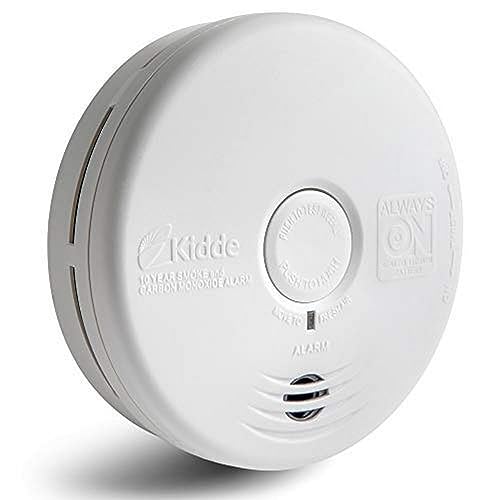
| Best Long-Life Combo | Sensor Type: Photoelectric smoke + electrochemical CO | Power Source / Battery: 10-year lithium battery (included) — 3 V | Alarm Volume: 85 dB | VIEW LATEST PRICE | Read Our Analysis |
| 2-Pack Smoke and Carbon Monoxide Detector Combo | Best Smart Combo | Sensor Type: Photoelectric smoke + electrochemical CO | Power Source / Battery: Battery-operated (batteries included/required) | Alarm Volume: Over 85 dB | VIEW LATEST PRICE | Read Our Analysis | |
| 3-Pack Battery Operated Photoelectric Smoke Detectors | Best Budget Backup | Sensor Type: Photoelectric | Power Source / Battery: One 9V battery (included) | Alarm Volume: Pulsating alarm (high-volume; standard smoke alarm level implied) | VIEW LATEST PRICE | Read Our Analysis |
More Details on Our Top Picks
Kidde 5″ AA Battery Smoke Detector 3-Pack
Should you want a reliable, no-fuss smoke detector for a basement, the Kidde 5″ AA Battery Smoke Detector 3-Pack is ideal for homeowners and property managers who need quick, code-compliant protection without wiring—its dual AA battery power and simple install make it a plug-and-play choice. You’ll get model 20SAR units that detect smoke over 25% faster*, sound an 85 dB alarm, and show a red LED visual warning. Advanced sensing cuts false alarms while keeping detection quick. You can test functionality, hush nuisances temporarily, and rely on UL 217 compliance plus a 10-year limited warranty.
- Sensor Type:Photoelectric (advanced sensing technology)
- Power Source / Battery:Two AA batteries (included)
- Alarm Volume:85 dB
- Test / Hush Function:Test button; Hush button to silence nuisance alarms
- LED Status Indicators:Red LED visual warning
- Intended Installation / Use:Home use — battery, no-wiring setup (suitable for bedrooms, basements, homes)
- Additional Feature:Red LED visual warning
- Additional Feature:Two AA batteries included
- Additional Feature:10-year limited warranty
Kidde Smoke and Carbon Monoxide Detector Combo (10-Year)
Should you want a low‑maintenance, long‑life alarm for a basement where nuisance smoke from dust or dampness can be an issue, the Kidde P3010K-CO combo is a strong choice because its photoelectric smoke sensor catches smoldering fires and its 10‑year sealed lithium battery eliminates frequent battery changes. You get combined smoke and electrochemical CO detection in one UL‑listed unit, an 85 dB alarm, Smart Hush/test button, and automatic activation on the mounting bracket. It’s tamper‑resistant, meets NFPA standards, and includes a 10‑year limited warranty. Reminder: manufacturer lists this model as discontinued; verify availability before relying on purchase.
- Sensor Type:Photoelectric smoke + electrochemical CO
- Power Source / Battery:10-year lithium battery (included) — 3 V
- Alarm Volume:85 dB
- Test / Hush Function:Smart-Hush/Test button (silences nuisance alarms ~8 minutes)
- LED Status Indicators:Red LED for smoke/fire; green LED flashes every 60s in standby
- Intended Installation / Use:Home use — combination smoke/CO for dwelling installation (meets residential codes)
- Additional Feature:2-in-1 smoke + CO
- Additional Feature:10-year sealed lithium battery
- Additional Feature:Meets UL 2034 & 217
2-Pack Smoke and Carbon Monoxide Detector Combo
Best Smart Combo
View Latest PriceShould you want reliable protection for inhabited spaces and less-used areas like basements, the 2-pack smoke and carbon monoxide combo is a smart pick—each unit uses a photoelectric smoke sensor and an electrochemical CO sensor to pick up real threats quickly. You’ll get quick, accurate alerts with a red LED and an alarm over 85 dB. The LCD displays smoke or CO levels but stays off in standby to save battery; a green LED blinks every 60 seconds to show it’s operational. Installation’s simple on wall or ceiling with included screws. Test with the built-in button; low battery triggers sound and red flashes.
- Sensor Type:Photoelectric smoke + electrochemical CO
- Power Source / Battery:Battery-operated (batteries included/required)
- Alarm Volume:Over 85 dB
- Test / Hush Function:Test button (silence/nuisance control implied)
- LED Status Indicators:Red LED for alarm; green flashes every 60s in standby; yellow for faults; LCD for levels
- Intended Installation / Use:Home use — wall or ceiling installation for home rooms (kitchen, basement, bedroom)
- Additional Feature:LCD displays smoke/CO
- Additional Feature:Yellow fault indicator
- Additional Feature:Wall or ceiling mountable
3-Pack Battery Operated Photoelectric Smoke Detectors
Best Budget Backup
View Latest PriceShould you want a simple, reliable option for finished basements where slow, smoldering fires are the main risk, this 3-pack of battery-operated photoelectric smoke detectors is a smart choice because the photoelectric sensor is tuned to pick up light, smoky fires that can smolder for hours before flaming. You’ll get three portable units with one 9V battery each, mounting brackets, and screws for quick installation. The alarm pulses and a red LED flashes whenever triggered; a silence/test button helps during false alarms. Test weekly, clean to avoid dust buildup, and note these units don’t detect heat, flame, or gas.
- Sensor Type:Photoelectric
- Power Source / Battery:One 9V battery (included)
- Alarm Volume:Pulsating alarm (high-volume; standard smoke alarm level implied)
- Test / Hush Function:Test and Silence button
- LED Status Indicators:Red LED flashes rapidly when alarm active; red LED for low-battery flashes
- Intended Installation / Use:Home use — install in rooms/finished attics/basements; battery-operated portable install
- Additional Feature:9V battery included
- Additional Feature:Travel portable design
- Additional Feature:Pulsating alarm behavior
Factors to Consider When Choosing a Smoke Detector for Basement
Upon selecting a basement smoke detector, you’ll want to weigh sensor type, whether you need carbon monoxide detection, and what power source fits your setup. Consider where a unit will provide full coverage and how well it resists false alarms from dust or humidity. These factors help you pick a reliable, low-maintenance model that actually protects your space.
Smoke Sensor Type
How do you pick the best sensor for a basement? You’ll usually want a photoelectric (optical) sensor because it detects slow-smoldering, smoky fires from upholstery, wiring, or stored items sooner than ionization units. Should your basement sees dust, humidity, or adjoins a garage, choose photoelectric models with advanced signal processing or filtered inlets to cut false alarms and preserve sensitivity. Dual-sensor alarms that pair photoelectric with ionization (or photoelectric plus CO) give broader coverage for both smoldering and fast-flaming fires, useful should conditions vary. For finished basements or sleeping areas, pick units that meet UL standards and deliver at least an 85 dB alarm so occupants reliably wake and respond.
CO Detection Need
Besides choosing the right smoke sensor, you should also consider about carbon monoxide protection for basements that house fuel-burning appliances or attach to garages. In case your basement contains a furnace, water heater, dryer, or provides vehicle access, CO can accumulate unnoticed — it’s colorless and odorless and can reach dangerous levels (70 ppm causes effects over hours; 150–200 ppm can be life‑threatening). Install a combined smoke/CO unit or a separate CO alarm at least 5 feet above the floor or per manufacturer guidance, near sleeping areas or the basement door. Pick electrochemical CO sensors that meet UL 2034 (or equivalent). Test alarms monthly and replace units according to end‑of‑life instructions (typically 5–10 years) to make certain reliable detection.
Power Source Options
Evaluate power options carefully, since the source you pick affects reliability, maintenance, and suitability for basement conditions. You’ll choose between battery, hardwired, or combination systems. Battery models (AA, AAA, 9V) work during outages, but sealed 10-year lithium units give the longest, low-maintenance protection and cut down on nuisance low-battery chirps. Hardwired (AC) detectors tied to your home circuit usually include battery backup, so they keep working through power failures. Combination setups—hardwired with backup or interconnected battery units—deliver both dependable power and whole-house alarm interconnectivity. Bear in mind basement temperature and humidity: cold or damp environments can reduce battery performance, so pick units rated for those conditions. For hard-to-access basements, sealed 10-year battery units are often the best practical choice.
Placement And Coverage
While planning detector placement and coverage for a basement, consider about where smoke will travel as it rises and how people will escape—install at least one smoke alarm on the ceiling near the top of the stairs so escaping occupants hear it initially. Place detectors on ceilings when possible; provided wall-mounted, keep them 4–12 inches down from the ceiling and out of dead-air corners. In finished basements with bedrooms or sleeping areas, put a detector inside each bedroom and another immediately outside. For large or multi-level basements, follow manufacturer and local codes—typically space units no more than 30 feet apart in open areas. Keep alarms at least 3 feet from heating, cooking appliances, vents, and windows to guarantee reliable detection.
False-Alarm Resistance
Often, you’ll want a basement smoke detector that resists nuisance alarms so you don’t ignore or disable it; choose a photoelectric or advanced dual-sensor model and look for alarm algorithms that require sustained particle levels, not brief spikes from cooking, steam, dust, or aerosols. Pick detectors that explicitly filter brief particle bursts and insect or dust interference. Use units with a temporary “hush” silence—about eight minutes—so you can investigate without turning the device off. Position units away from HVAC vents, bathroom or kitchen doors, and garage openings (follow 10–20 foot guidance) to reduce steam, exhaust, and fume triggers. Prefer models that separate fault indicators (yellow LED) and give clear low-battery or maintenance alerts so you can fix causes of false or intermittent alarms promptly.
Maintenance And Lifespan
Even with good false-alarm resistance, you’ll need a regular upkeep plan so your basement detector actually works once smoke appears. Replace batteries at least once a year for battery-powered units and immediately when low-battery chirps start. Test alarms monthly with the built-in button and clean vents every 6–12 months—vacuum or use compressed air to remove dust and cobwebs that blunt sensitivity. Replace the entire detector every 10 years from manufacture or initial power-on because sensors degrade and can miss smoke. Keep a maintenance log of installation dates, battery swaps, tests, and faults to track service life. Should a unit shows frequent false alarms, intermittent operation, or fails tests despite fresh batteries, replace it promptly rather than repeatedly repairing.
