

A thermostat becomes more useful when your morning routine, workdays, and evenings do not follow the same pattern. HomeKit control can put temperature changes alongside your existing Apple Home routines, while remote access helps you adjust settings before arriving home. The right match depends first on your heating equipment, because electric baseboard systems and 24V central HVAC systems need very different hardware.
How The Shortlist Stacks Up

meross Matter Smart Thermostat for Electric Baseboard Heaters

Aqara Smart Thermostat W200

ecobee Smart Thermostat Premium

ecobee Smart Thermostat Essential

ecobee Smart Video Doorbell Camera
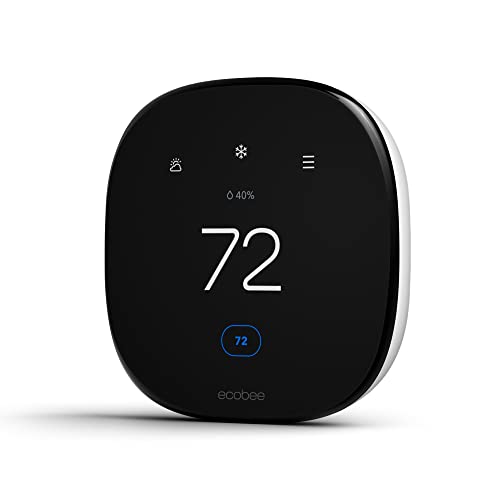
ecobee Smart Thermostat Enhanced

Aqara Thread/Zigbee Smart Climate Sensor W100

Google Nest Learning Thermostat (4th Gen, 2024) Polished Gold

Sensi Smart Thermostat ST55
More Details On Our Top Picks
Electric baseboard heat needs a line-voltage thermostat, meaning it switches the higher-voltage power used by baseboard, convector, and fan-forced heaters. The meross model supports 120V to 240V systems and adds Matter, a smart-home connection standard that lets compatible platforms work together.
For a home using electric heat room by room, the visual weekly schedule and consumption tracking may make daily adjustments easier to understand. The honest read is that this is a specialist choice, not a replacement for a conventional 24V heating and cooling thermostat.
The Helpful Details
- Matter support fits Apple Home alongside several other compatible platforms.
- Electricity-use history helps you spot how heating routines change over time.
- Open-window detection pauses heating during fresh-air breaks.
- Scheduled temperatures suit bedrooms and rarely used rooms.
Things To Consider
- Designed for 120V to 240V electric heating, not 24V HVAC equipment.
- Confirm your heater type and voltage before installation.
Aqara’s W200 centers on Apple Adaptive Temperature, which can adjust temperatures around home, sleep, away, and extended-away activity states. That approach may suit you better than maintaining a detailed weekly timetable.
The feature requires a compatible Apple home hub plus an iPhone or Apple Watch running version 26 or later. Compared with the line-voltage meross model, this one aims at central HVAC rather than electric baseboard circuits.
Points In Its Favor
- Apple activity states can reduce manual schedule editing.
- Adaptive changes suit households with irregular work hours.
- Clean Energy Guidance is available in the contiguous U.S.
Worth Noting
- Adaptive Temperature needs an Apple home hub and supported personal devices.
- Check HVAC compatibility before replacing an existing controller.
- Clean Energy Guidance has a regional availability limit.
Who It Suits Best
You benefit most with an Apple home hub already handling routines for a central HVAC system.
Where Another Pick Suits Better
ecobee Smart Thermostat Enhanced suits you more when occupancy sensing matters more than Apple activity states.
Rooms far from the main thermostat can feel different from the hallway where it sits. ecobee Smart Thermostat Premium includes a SmartSensor that gives the system another room-temperature reference, helping focus comfort where you spend time.
It also supports Apple Home and can display a wired ecobee doorbell camera feed. For homes using compatible central systems, the feature set is broad without turning the wall control into a mystery.
Everyday Advantages
- The included SmartSensor helps address rooms that run warmer or cooler.
- Apple Home compatibility keeps thermostat control within your existing routines.
- A built-in air-quality monitor adds indoor-condition awareness.
- Compatible wired doorbell feeds can appear on the thermostat display.
- Geofencing can respond to your location-based household routine.
Trade Offs
- Apple voice control requires an Apple home hub.
Not every household needs a sensor-led setup or doorbell integration. ecobee Smart Thermostat Essential focuses on touchscreen adjustments, app control, and a schedule that changes temperature around your time away from home.
That makes sense for a straightforward central HVAC upgrade, especially where a familiar wall thermostat remains important. Compared with ecobee Smart Thermostat Premium, you trade its extra monitoring and sensor hardware for a more pared-back approach.
Well-Handled Touches
- The color touchscreen gives you direct temperature control at the wall.
- App access supports adjustments while you are away.
Minor Gripes
- Compatible with 85% of systems, so check your HVAC wiring first.
- It does not include the SmartSensor supplied with the Premium model.
- Scheduled operation suits routines better than frequently changing plans.
Made For
You get the most from it with a compatible central HVAC system and a predictable weekday schedule.
Consider Something Else When
ecobee Smart Thermostat Premium suits you more when another room needs its own temperature sensor.
This is not a thermostat, but it can be a useful companion for ecobee Smart Thermostat Premium. A compatible Premium thermostat can show its live doorbell feed, turning the climate control screen into a practical point for checking the entrance.
The wired camera captures 1080p HDR video, supports two-way talk, and uses radar for activity tracking. For an entry with existing doorbell wiring, that integration may feel more useful than another separate app screen.
Notable Gains
- Live video can appear on ecobee Smart Thermostat Premium.
- Two-way talk supports conversations from a phone or thermostat.
- Motion zones help narrow alerts to relevant parts of your entrance.
- The 175-degree vertical view is designed to show more of the doorstep.
Room For Improvement
- Requires wired installation at the door.
- Package detection requires an ecobee Smart Security subscription.
- It complements a thermostat rather than controlling HVAC equipment.
- Premium thermostat viewing depends on that specific ecobee model.
Right Fit For
You benefit most with existing doorbell wiring and an ecobee Smart Thermostat Premium already on your wall.
Not Your Match When
Google Nest Learning Thermostat (4th Gen, 2024) Polished Gold suits you more for direct HVAC temperature management.
ecobee Smart Thermostat Enhanced uses built-in radar occupancy sensing to adjust around whether people are home. That can be a practical middle ground between the W200’s Apple activity approach and the Premium model’s room-sensor-led setup.
Its included Power Extender Kit can help with installations where the existing wiring lacks a C-wire, the continuous power wire smart thermostats often use. Households with changing work patterns may appreciate its automated away settings.
What Stands Out
- Radar occupancy sensing can react to an empty home.
- Suggested schedule updates reduce routine maintenance.
- The included Power Extender Kit supports more installation situations.
- Apple Home compatibility fits mixed smart-home routines.
- Preheating or precooling can prepare the home before arrival.
- It supports 90% of systems, subject to a compatibility check.
Points To Note
- Check your system before installation despite broad compatibility.
The W100 is a climate sensor and remote controller rather than a direct wall thermostat. Its 3.4-inch LCD shows local temperature and humidity, while three programmable buttons support up to nine distinct actions through single, double, and long presses.
Thread is a low-power smart-home network, while Zigbee is another low-power device protocol. For a room with an Aqara setup, the W100 can place climate information and scene controls within arm’s reach.
Good Reasons To Consider
- The display shows temperature and humidity without opening an app.
- Nine programmable actions can trigger room scenes and device controls.
- Thread and Zigbee modes support different smart-home setups.
Softer Spots
- Thread mode requires both a Matter controller and Thread border router.
- Zigbee mode needs an Aqara hub.
Google Nest Learning Thermostat (4th Gen, 2024) Polished Gold learns preferred temperatures as routines shift, then uses those patterns to shape its schedule. The included Nest Temperature Sensor adds another reference point, much like ecobee’s included SmartSensor.
It works with many 24V systems, including forced-air, heat-pump, and radiant setups. Most homes may install it without a C-wire, though checking the specific HVAC system remains the sensible first step.
Real Benefits
- Learning behavior suits homes where routines change through the week.
- The included sensor helps consider temperatures beyond the hallway.
- Apple Home compatibility supports control from Apple Home routines.
- Most compatible homes do not need a C-wire for installation.
Small Caveats
- Designed for 24V systems, not electric baseboard heater circuits.
- Confirm compatibility before removing your existing thermostat.
- Its learning approach may not suit households wanting fixed schedules only.
Sensi Smart Thermostat ST55 takes a more conventional route, with guided installation in its app and a built-in level to help position the wall unit straight. That detail matters during a first thermostat replacement, where small setup steps can feel more intimidating than the app itself.
Its privacy approach states that personal information is not sold to third parties. For a compatible HVAC system and a household seeking less automation, it may be the easier fit.
Where It Excels
- The built-in level supports a neater wall installation.
- Step-by-step app guidance gives structure to DIY replacement work.
- Its stated privacy policy avoids selling personal information to third parties.
- Mobile control supports temperature changes away from home.
Areas To Watch
- Confirm your HVAC system is compatible before starting installation.
- It has fewer room-focused features than ecobee Smart Thermostat Premium.
Best Suited To
You benefit most as a first-time DIY installer with compatible central HVAC and a preference for guided setup.
A Better Fit Elsewhere
Aqara Smart Thermostat W200 suits you more with Apple Home activity-based temperature changes already planned.
What Matters Before Adding a HomeKit Thermostat
Match the Electrical System
Start with the equipment already heating and cooling your home. Central HVAC typically uses 24V controls, while electric baseboard, convector, and fan-forced heaters use line voltage. A 24V thermostat cannot replace a line-voltage model, so identify your system before considering app features.
Check Home Hub Needs
Apple Home automation can need a compatible home hub for certain functions. Adaptive controls and voice features may also depend on current software versions and connected Apple devices. Your thermostat can still be useful with basic app control, but advanced automations deserve a quick compatibility check first.
Think About Room Temperature
A single hallway thermostat cannot always represent a bedroom, office, or upper floor. A separate sensor can help a compatible thermostat account for a room where you spend more time. Homes with stable temperatures may not need that extra layer.
Consider Installation Hardware
A C-wire supplies continuous power for many smart thermostats. Some models include a Power Extender Kit or can operate without a C-wire in many installations, but wiring layouts differ. Take a clear photo of your current thermostat wiring before you remove anything.
Small Details That Change the Fit
Common Shopping Slip Ups
Do not confuse a smart climate sensor with a thermostat that directly controls HVAC equipment. Also check whether your heating uses 24V controls or line voltage before selecting a model.
Where the Extra Money Goes
Higher-tier thermostats can add room sensors, occupancy detection, air-quality monitoring, and screen integrations. Those additions matter most in larger homes, uneven-temperature rooms, or homes with shifting schedules.
Frequently Asked Questions
Does HomeKit Work With Every Smart Thermostat?
No, HomeKit compatibility varies by model. Check the listed platform support before installation.
Can You Use a Baseboard Thermostat With Central Air Conditioning?
No, line-voltage baseboard thermostats are not designed for 24V central HVAC. Match the controller to your heating and cooling equipment.
What Does a C-Wire Do?
A C-wire provides continuous electrical power to a thermostat. Some models include alternatives for homes without one.
Do Room Sensors Replace the Main Thermostat?
No, room sensors add temperature information from another location. The main thermostat still controls the HVAC system.
Is a Smart Climate Sensor the Same as a Thermostat?
No, a climate sensor measures room conditions and can support automations. Direct HVAC control requires compatible thermostat hardware.
