

Assuming you want reliable proximity sensing in 2026, consider the Taiss LJ12A3-4-Z/AX for metal detection with a sturdy metal shell and 4 mm range. For versatile object detection, the HiLetgo IR modules offer adjustable 2–30 cm range with easy hookup. The M12 NPN NO sensors suit fast metal targets, while NJK-5002C Hall effect sensors detect magnetic fields up to 10 mm. For longer distances, HC-SR04 ultrasonic sensors cover 2–500 cm with precision. Investigate these options to match your needs precisely.
| Taiss LJ12A3-4-Z/AX Inductive Proximity Sensor (2pcs) |

| Reliable Metal Detection | Sensor Type: Inductive proximity (NPN NC) | Detection Distance / Range: 4 mm ±10% | Output Type: NPN Normally Closed (NC) | VIEW LATEST PRICE | Read Our Analysis |
| HiLetgo 10pcs IR Obstacle Avoidance Sensor Modules |
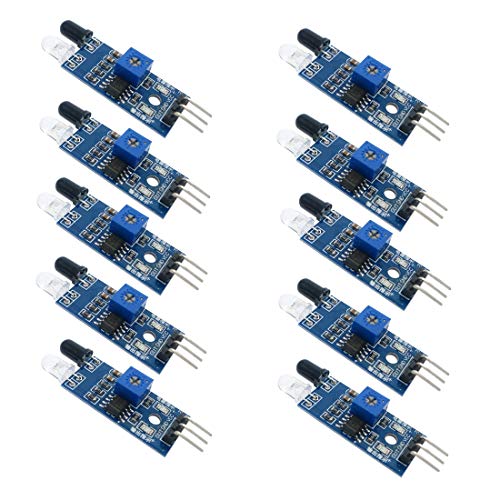
| Versatile IR Obstacle Sensors | Sensor Type: Infrared obstacle avoidance | Detection Distance / Range: 2–30 cm (adjustable) | Output Type: Digital output (0/1) | VIEW LATEST PRICE | Read Our Analysis |
| M12 NPN NO Inductive Proximity Sensors 4mm |
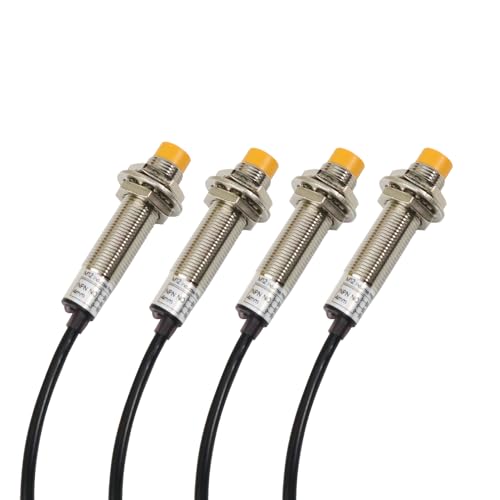
| Durable Industrial Grade | Sensor Type: Inductive proximity (NPN NO) | Detection Distance / Range: 4 mm ±10% | Output Type: NPN Normally Open (NO), push-pull | VIEW LATEST PRICE | Read Our Analysis |
| HiLetgo NJK-5002C Hall Effect Sensors (2pcs) |
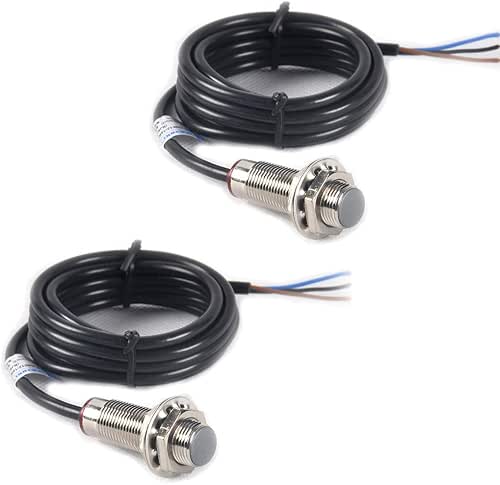
| Precision Hall Effect | Sensor Type: Hall Effect sensor (NPN NO) | Detection Distance / Range: Up to 10 mm | Output Type: NPN Normally Open (NO) | VIEW LATEST PRICE | Read Our Analysis |
| HC-SR04 Ultrasonic Distance Sensor 10pcs for Arduino |
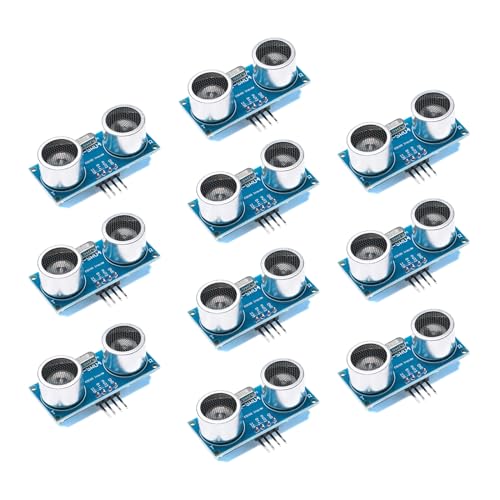
| Long-Range Ultrasonic | Sensor Type: Ultrasonic distance sensor | Detection Distance / Range: 2 cm–500 cm | Output Type: Digital signal (via TRIG/ECHO pins) | VIEW LATEST PRICE | Read Our Analysis |
More Details on Our Top Picks
Taiss LJ12A3-4-Z/AX Inductive Proximity Sensor (2pcs)
At the time you need reliable identification of iron objects with a compact design, the Taiss LJ12A3-4-Z/AX Inductive Proximity Sensor is a perfect fit. This set includes two sensors with a metal shell and a sturdy plastic exterior, measuring just 66 by 21 mm. You’ll appreciate its 4 mm detecting range and NPN normally closed output, handling up to 300 mA current. Powered through DC 6–36 V, it features a 3-wire connection for easy wiring. Its M12 thread and 1.16-meter cable make installation straightforward. Having a mass of only 100 grams, it offers precision without bulk for your projects.
- Sensor Type:Inductive proximity (NPN NC)
- Detection Distance / Range:4 mm ±10%
- Output Type:NPN Normally Closed (NC)
- Supply Voltage:DC 6–36 V
- Application / Use Case:Iron object detection
- Package Quantity:2 pieces
- Additional Feature:Metal shell cylinder
- Additional Feature:1.16 m cable length
- Additional Feature:NPN normally closed output
HiLetgo 10pcs IR Obstacle Avoidance Sensor Modules
In case you’re building Arduino smart cars or robots that need reliable obstacle sensing, the HiLetgo 10pcs IR Obstacle Avoidance Sensor Modules offer a straightforward solution with easy integration. Each module operates between 3.3V and 5V, directly connecting to your microcontroller’s IO pins. They detect obstacles within 2–30 cm at a 35° angle, using an LM393 comparator for digital output. Whenever an obstacle is detected, a green LED lights up, and the output goes low. You can fine-tune detection distance via an onboard potentiometer, but it’s usually pre-adjusted. Their compact size and screw holes make mounting simple.
- Sensor Type:Infrared obstacle avoidance
- Detection Distance / Range:2–30 cm (adjustable)
- Output Type:Digital output (0/1)
- Supply Voltage:3.3–5 V
- Application / Use Case:Obstacle avoidance, line tracking
- Package Quantity:10 pieces
- Additional Feature:Adjustable detection range
- Additional Feature:LM393 comparator chip
- Additional Feature:Red/green indicator LEDs
M12 NPN NO Inductive Proximity Sensors 4mm
You’ll appreciate the M12 NPN NO Inductive Proximity Sensors should you need reliable sensing of metal objects within a tight 4mm range. These sensors, featuring an M12 thread and a push-pull NPN normally open output, operate on 12–24V DC and deliver precise detection with ±10% accuracy. Their brass, nickel-plated shell resists corrosion, while the unshielded design guarantees quick response to fast-moving targets. You can mount them easily and connect directly to PLCs, making them ideal replacements for small switches. Plus, they withstand dust, oil, vibration, and temperatures up to 85°C, assuring durability in demanding settings.
- Sensor Type:Inductive proximity (NPN NO)
- Detection Distance / Range:4 mm ±10%
- Output Type:NPN Normally Open (NO), push-pull
- Supply Voltage:DC 6–36 V (typical 12–24 V)
- Application / Use Case:Metal detection, PLC integration
- Package Quantity:4 pieces
- Additional Feature:Brass nickel-plated shell
- Additional Feature:Reverse/short-circuit protection
- Additional Feature:Unshielded design
HiLetgo NJK-5002C Hall Effect Sensors (2pcs)
Engineers and hobbyists who need reliable metal sensing within a short range will appreciate the HiLetgo NJK-5002C Hall Effect Sensors. These NPN, 3-wire, normally open switches detect metal objects up to 10 mm away, making them perfect for precise proximity tasks. You’ll operate them comfortably between 5 and 30 VDC, with load currents up to 150 mA. Each sensor features a red LED output indicator and a compact 12 mm diameter design. With two sensors included, 1.2 m leads, and durable copper and PBT construction, these affordable units offer dependable performance for your projects.
- Sensor Type:Hall Effect sensor (NPN NO)
- Detection Distance / Range:Up to 10 mm
- Output Type:NPN Normally Open (NO)
- Supply Voltage:5–30 VDC
- Application / Use Case:Metal object detection
- Package Quantity:2 pieces
- Additional Feature:10 mm detection distance
- Additional Feature:Red LED output indicator
- Additional Feature:PBT plastic components
HC-SR04 Ultrasonic Distance Sensor 10pcs for Arduino
In case you’re building projects that demand precise distance measurements, the HC-SR04 Ultrasonic Distance Sensor is a perfect fit. This 10-piece set offers a ranging distance from 2 cm to 500 cm with 0.3 cm resolution, making it ideal for robotics, automation, and IoT applications. It operates on a 5 V DC supply and draws less than 2 mA, ensuring low power consumption. With simple VCC, TRIG, ECHO, and GND pins, you can easily integrate it with Arduino or other microcontrollers. Its high sensitivity provides reliable, consistent readings for obstacle sensing and object tracking.
- Sensor Type:Ultrasonic distance sensor
- Detection Distance / Range:2 cm–500 cm
- Output Type:Digital signal (via TRIG/ECHO pins)
- Supply Voltage:5 V DC
- Application / Use Case:Obstacle detection, distance measurement
- Package Quantity:10 pieces
- Additional Feature:0.3 cm resolution
- Additional Feature:Low power consumption
- Additional Feature:Pins: TRIG and ECHO
Factors to Consider When Choosing Proximity Sensors
Upon selecting proximity sensors, you’ll want to weigh the sensing technology, recognition distance, and output signal options that fit your project. Don’t forget to check environmental compatibility and power supply requirements to guarantee reliable performance. These factors will help you pick the best sensor for your needs.
Sensing Technology Types
Although choosing the right proximity sensor depends on your specific application, grasping the different sensing technologies helps you make an informed decision. Inductive sensors excel at spotting metal targets with short ranges and high durability, perfect for harsh, dirty environments. Capacitive sensors sense both conductive and non-conductive materials, including liquids, but can be affected by humidity. Ultrasonic sensors use sound pulses to discover various surfaces at longer ranges, even transparent or dark objects. Photoelectric sensors rely on light and offer fast, long-range spotting but depend heavily on target reflectivity and ambient light conditions. Hall-effect sensors detect magnetic fields or magnets, providing reliable, contactless switching in tough environments. Comprehending these technologies guarantees you pick a sensor that matches your material, environment, and performance needs precisely.
Detection Distance Range
Considering sensing distance range plays a crucial role in choosing the right proximity sensor for your application. You need to match the sensor’s maximum sensing range to your required sensing distance—short-range under 10 mm, medium 10 mm to 30 cm, or long-range over 30 cm—to avoid false triggers. Keep in mind the sensor’s effective range tolerance and repeatability, like ±10% for inductive sensors, to guarantee consistent performance. Also, factor in target size, material, and surface reflectivity since smaller or low-reflectivity targets demand closer sensing or higher sensitivity. It’s smart to leave a margin between the sensor’s rated range and actual distance to offset environmental effects like dust or humidity. For flexible setups, pick sensors with adjustable sensing ranges through potentiometers or teachable thresholds.
Output Signal Options
Choose the right output signal type to guarantee your proximity sensor communicates effectively with your control system. Digital outputs like NPN/PNP and normally-open or normally-closed switches offer simple on/off sensing, ideal for PLC or relay inputs. In case you need continuous feedback, analog outputs (0–10 V, 4–20 mA, or 0–5 V) provide a voltage or current proportional to distance, perfect for precise position or level monitoring. Open-collector or open-drain outputs are great whenever wiring multiple sensors in wire-OR setups or interfacing with various supply voltages. Push-pull outputs actively drive signals both high and low, enabling faster switching without external pull-ups. Always consider fail-safe requirements, response time, output current, and controller compatibility to make certain your sensor’s output matches your system’s needs reliably.
Environmental Compatibility
While choosing proximity sensors, you’ll need to make certain they can withstand the environmental conditions where they’ll function. Check the operating temperature range to guarantee the sensor maintains accuracy under your site’s temperature extremes. Confirm ingress protection ratings like IP67 or IP68 and corrosion resistance to handle wet, dusty, or oily environments. Make sure the sensor’s sensing principle suits your ambient conditions—consider dust, humidity, and surface reflectivity. Also, verify immunity to electrical noise, EMI, or RFI, and look for built-in filtering or shielding should you operate in noisy industrial settings. Finally, assess mechanical sturdiness, vibration tolerance, and mounting options to prevent false triggers or premature failure in high-impact or vibration-heavy locations. This assures your sensor performs reliably and lasts longer.
Power Supply Requirements
When choosing proximity sensors, you’ll need to confirm that your power supply matches the sensor’s voltage requirements to guarantee reliable operation. Check the sensor’s voltage range—common options include 5 V, 12–24 V, or 6–36 V—and make sure your system delivers stable power within that range to prevent damage. Also, verify the maximum output current and load drive capability so your power supply and electronics can handle peak currents. Consider power-up behavior, since some sensors demand a stable startup period or current surge protection; adding decoupling capacitors or soft-start circuits helps. Don’t forget to assess quiescent and active power consumption to size batteries or supplies effectively. Finally, maintain proper grounding, a common voltage reference, and protect against reverse polarity and electrical noise for consistent sensor performance.
Mechanical Design Features
Because proximity sensors often face harsh conditions, their mechanical design plays a crucial role in ensuring durability and reliable performance. You should pick the right housing and thread size, like M12 or larger, to match mounting holes and secure proper sealing. Choose sensor body materials such as brass, stainless steel, or plastic with suitable plating to resist corrosion, wear, oil, dust, and vibration. Pay attention to sensing face style—shielded or unshielded—and length to control the sensing field and avoid false sensing events. Verify cable length and connector type, whether a prewired cable or M8/M12 connector, for easy installation and maintenance. Finally, check the ingress protection (IP) rating and operating temperature range to guarantee consistent performance under moisture, dust, and thermal stress.
