

Most mini desktops from five years ago couldn’t handle sustained creative workloads without throttling, but several 2026 models fix that with better cooling and faster memory. You’ll want to match the tiny box to your main tasks—streaming, editing, or office work—because each pick trades size for specific strengths. Keep going to see which mini fits your needs and where each one compromises.
| NIMO Mini PC Desktop N100 – 4GB/128GB WiFi6 |

| Compact Powerhouse | Processor: 12th Gen Intel N100 | Memory (RAM): 4 GB | Internal Storage: 128 GB SSD | VIEW LATEST PRICE | Read Our Analysis |
| HP EliteDesk 800 G6 Mini Desktop i5 16GB 1TB |

| Business Workhorse | Processor: Intel 10th Gen Core i5-10500T | Memory (RAM): 16 GB | Internal Storage: 1 TB PCIe NVMe M.2 SSD | VIEW LATEST PRICE | Read Our Analysis |
| KAMRUI Pinova P1 Mini PC Ryzen 4300U 16GB |

| Versatile Performer | Processor: AMD Ryzen 4300U | Memory (RAM): 16 GB (installed; upgradable) | Internal Storage: 256 GB M.2 SSD (plus extra M.2 slots) | VIEW LATEST PRICE | Read Our Analysis |
| ACEMAGICIAN M1 Mini PC Ryzen 7 7735HS |

| Creative Powerhouse | Processor: AMD Ryzen 7 7735HS | Memory (RAM): 24 GB LPDDR5 | Internal Storage: 512 GB PCIe SSD | VIEW LATEST PRICE | Read Our Analysis |
| GMKtec N95 Mini PC (8GB 256GB Dual 4K) |
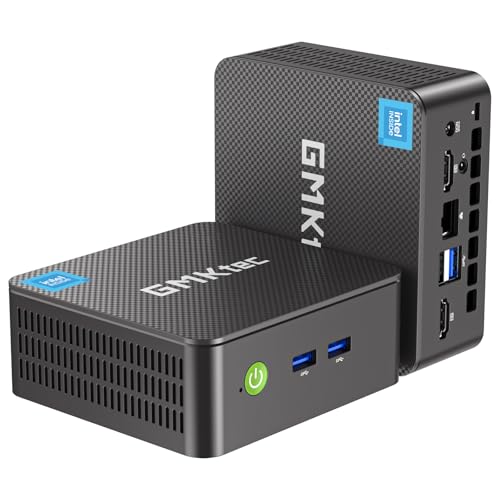
| Media-Focused Value | Processor: 12th Gen Intel Alder Lake N95 | Memory (RAM): 8 GB DDR4 | Internal Storage: 256 GB M.2 2242 SSD | VIEW LATEST PRICE | Read Our Analysis |
| ACEMAGIC M1 Mini PC i9-11900H (32GB,1TB) |
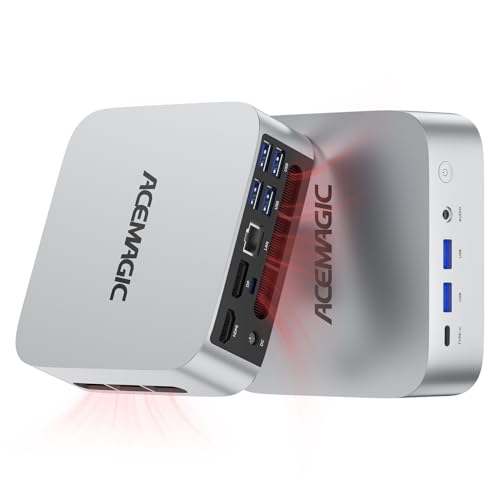
| High-End Workstation | Processor: Intel Core i9-11900H | Memory (RAM): 32 GB DDR4 (2 × 16 GB) | Internal Storage: 1 TB M.2 2280 SSD | VIEW LATEST PRICE | Read Our Analysis |
More Details on Our Top Picks
NIMO Mini PC Desktop N100 – 4GB/128GB WiFi6
Should you need an ultra-compact, travel-friendly desktop that handles everyday multitasking and light gaming, the NIMO Mini PC Desktop N100—powered with a 12th Gen Intel N100—gives you surprising performance in a pocket-sized chassis, alongside WiFi 6, triple 4K display support, and a 4GB/128GB setup that’s ideal for students, remote workers, or anyone who values space-saving portability. You’ll get performance that outpaces older i3 1115G4 systems, Bluetooth 5.2, four USB 3.0 ports plus a high-speed USB-C, dual HDMI and USB-C video for simultaneous triple 4K output, and a compact 4.92 x 4.33 x 1.57-inch design. A 90-day return policy and two-year technical support round it out.
- Processor:12th Gen Intel N100
- Memory (RAM):4 GB
- Internal Storage:128 GB SSD
- Video/Display Support:Triple-display (2×HDMI + USB-C) up to 4K UHD
- Wireless Connectivity:WiFi 6, Bluetooth 5.2
- USB Ports / Type-C:4 × USB 3.0 + 1 × high-speed USB Type-C (video)
- Additional Feature:Ultra-compact travel-friendly
- Additional Feature:Triple 4K UHD output
- Additional Feature:2-year technical support
HP EliteDesk 800 G6 Mini Desktop i5 16GB 1TB
Should you need a compact business PC that balances snappy multitasking with reliable security, the HP EliteDesk 800 G6 Mini is a strong choice—its 10th‑gen Intel Core i5 (6 cores, 12 threads) and 16 GB of RAM handle office suites, video calls, and light content work without breaking a sweat. You get integrated Intel UHD Graphics 630 with 4K support, a 1 TB PCIe NVMe M.2 SSD for fast boot and transfers, and Windows 11 Pro tested under Microsoft Registered Refurbisher guidelines. I/O covers USB‑C 3.2, six USB‑A 3.2, Ethernet, VGA, serial, audio, Wi‑Fi, Bluetooth; keyboard and mouse are included.
- Processor:Intel 10th Gen Core i5-10500T
- Memory (RAM):16 GB
- Internal Storage:1 TB PCIe NVMe M.2 SSD
- Video/Display Support:Supports 4K (integrated UHD Graphics 630)
- Wireless Connectivity:Wi‑Fi (unspecified generation), Bluetooth
- USB Ports / Type-C:USB-C 3.2 ×1, USB-A 3.2 ×6
- Additional Feature:Windows 11 Pro
- Additional Feature:Multiple legacy ports
- Additional Feature:Includes keyboard and mouse
KAMRUI Pinova P1 Mini PC Ryzen 4300U 16GB
Should you need a compact machine that can handle multi‑screen productivity and light media work without breaking the bank, the KAMRUI Pinova P1 with its Ryzen 4300U and Radeon iGPU is a strong pick. You get a 4‑core/4‑thread CPU (2.7–3.7 GHz) and Radeon graphics up to 1.4 GHz, providing ~10% better multi‑threaded performance than N‑series chips and 3–4× UHD‑class GPU throughput. It ships with 16 GB DDR4 (single‑channel) and a 256 GB M.2 SSD, supports up to 64 GB dual‑channel RAM and 4 TB storage across two M.2 slots. Triple 4K outputs, six USB 3.2 ports, gigabit Ethernet, Wi‑Fi 5, and 24/7 reliability make it ideal for HTPCs, NAS, signage, and light server or workstation duties.
- Processor:AMD Ryzen 4300U
- Memory (RAM):16 GB (installed; upgradable)
- Internal Storage:256 GB M.2 SSD (plus extra M.2 slots)
- Video/Display Support:Triple 4K outputs (HDMI 2.0, DP 1.4, USB-C)
- Wireless Connectivity:Wi‑Fi 5 (802.11ac), Bluetooth
- USB Ports / Type-C:Six USB 3.2 ports + 1 × USB-C (data + video)
- Additional Feature:Dual M.2 slots
- Additional Feature:24/7 operation ready
- Additional Feature:Auto Power-On/RTC
ACEMAGICIAN M1 Mini PC Ryzen 7 7735HS
In case you need a compact workhorse for multitasking and light creative work, the ACEMAGICIAN M1 with its Ryzen 7 7735HS delivers—8 cores/16 threads, Ryzen-level single- and multi-core increases, and Radeon 680M graphics make it ideal for office productivity, programming, light gaming, and media-center or small-server roles. You get Ryzen 7 7735HS (3.2–4.75 GHz, 16 MB cache), 24 GB LPDDR5 at 5500 MT/s, and a 512 GB PCIe SSD, plus room for a 2.5″ drive to reach up to 4 TB. Triple 4K@60 outputs, USB-C Gen2, 2.5 G LAN, WiFi 6, and 24/7 support finish the package.
- Processor:AMD Ryzen 7 7735HS
- Memory (RAM):24 GB LPDDR5
- Internal Storage:512 GB PCIe SSD
- Video/Display Support:Triple display (HDMI, DP, USB-C) 4K@60Hz
- Wireless Connectivity:WiFi 6, Bluetooth 5.2
- USB Ports / Type-C:5 × USB 3.2 + USB-C Gen2 (DP1.4, PD)
- Additional Feature:2.5 Gbps Ethernet
- Additional Feature:24/7 customer service
- Additional Feature:LPDDR5 5500 MT/s memory
GMKtec N95 Mini PC (8GB 256GB Dual 4K)
Should you need a compact, budget-friendly mini PC that handles office work, media playback and light virtualization, the GMKtec N95 is a solid pick—its 12th Gen Alder Lake N95 CPU and dual HDMI 2.0 outputs let you run routine productivity tasks and drive two 4K@60Hz displays without fuss. You get 4 cores, 4 threads, up to 3.4 GHz burst and roughly 36% better performance versus older N-series chips. With 8 GB DDR4 and a 256 GB M.2 SSD you’ll enjoy snappier boot and multitasking. Intel UHD graphics with AV1 decoding, WiFi 5, Gigabit Ethernet, USB 3.2, Bluetooth 5.0, VESA mount, and a one-year warranty round it out.
- Processor:12th Gen Intel Alder Lake N95
- Memory (RAM):8 GB DDR4
- Internal Storage:256 GB M.2 2242 SSD
- Video/Display Support:Dual 4K via 2×HDMI 2.0
- Wireless Connectivity:WiFi 5, Bluetooth 5.0
- USB Ports / Type-C:USB 3.2 (up to 10 Gbps) + unspecified USB-C support
- Additional Feature:AV1 video decoding
- Additional Feature:VESA mount compatible
- Additional Feature:1-year limited warranty
ACEMAGIC M1 Mini PC i9-11900H (32GB,1TB)
In case you need desktop-class performance in a compact chassis, the ACEMAGIC M1 Mini PC with an Intel Core i9-11900H delivers—its eight cores and 16 threads handle video editing, 3D modeling, and data-heavy workloads without a full tower. You get 32 GB DDR4 (dual-channel) and a 1 TB M.2 SSD, with expansion to 64 GB RAM and up to 4 TB storage via an extra M.2 slot. Intel UHD Graphics drives triple 4K displays at 60 Hz. Connectivity includes WiFi 6, Bluetooth 5.2, Gigabit Ethernet, multiple USB ports, and DP over Type-C. Cooling and a three-year warranty round it out.
- Processor:Intel Core i9-11900H
- Memory (RAM):32 GB DDR4 (2 × 16 GB)
- Internal Storage:1 TB M.2 2280 SSD
- Video/Display Support:Triple 4K (HDMI 2.0, DP1.4, full-featured USB-C)
- Wireless Connectivity:WiFi 6, Bluetooth 5.2
- USB Ports / Type-C:Front 2 × Type-A 10 Gbps, Rear 4 × Type-A 5 Gbps, 1 × full-featured Type-C 10 Gbps
- Additional Feature:High-performance cooling
- Additional Feature:3-year limited warranty
- Additional Feature:Ubuntu/Linux compatible
Factors to Consider When Choosing a Mini Desktop Computer
Upon choosing a mini desktop, you should initially match performance needs to your typical tasks so you don’t overspend on CPU power you won’t use. Check memory and storage capacity and speed, consider graphics and display support for your workflows, and confirm the ports and wireless options you’ll need. Also weigh size and portability against cooling and upgradeability to find the right balance.
Performance Needs
Assess your workload initially—pick CPUs with enough cores/threads and improve clocks for multitasking or content creation, while basic office and web tasks run fine on lower-power dual- or quad-core chips. Match core counts and clock speeds to the apps you run: higher cores and turbo clocks help virtualization, heavy editing, and parallel workloads. Check integrated GPU specs and clocks when you plan light gaming, video work, or multiple displays, since graphics performance varies and affects smoothness. Favor systems with good sustained thermal performance so CPUs and GPUs can hold turbo clocks under long loads. Finally, prioritize faster storage and sufficient RAM bandwidth and capacity for responsiveness—NVMe PCIe SSDs and dual-channel memory noticeably amplify real-world snappiness compared with slower alternatives.
Memory And Storage
Memory and storage choices have the biggest impact on how snappy your mini desktop feels, so pick RAM capacity and type that match your tasks and make sure the drive interface is fast enough for your workload. Aim for 8–16 GB DDR4 or LPDDR5 for general multitasking; choose 16–32+ GB and higher bandwidth for heavy multitasking, VMs, video editing, or creative apps. Check whether RAM is soldered or uses SO‑DIMM slots — upgradeable memory extends lifespan and supports up to 64 GB or more. Favor NVMe PCIe x4 M.2 SSDs for much faster boot and transfer speeds versus SATA. Verify how many M.2 slots and SATA ports the mini PC exposes, and plan internal capacity (256–1,024 GB) alongside external drives or NAS for large media and backups.
Graphics And Displays
Speculating whether the mini PC’s GPU will keep up with your workflow? Check integrated or discrete GPU specs—execution units/cores and clock speeds—to guarantee smooth 3D rendering, video editing, or light gaming; higher counts and clocks matter. Confirm supported display outputs and standards (HDMI 2.0/2.1, DisplayPort 1.4, USB-C with DP Alt Mode) so your monitor(s) run at 4K@60 Hz or better. Verify how many external displays the system can drive and max resolution per output for dual- or triple-4K workflows. Inspect video decoding/encoding hardware (AV1, HEVC/H.265, H.264) and GPU-accelerated codecs to speed playback and transcoding. Finally, consider VRAM or shared-memory setups and dual-channel memory support, since more/faster memory bandwidth enhances integrated graphics performance.
Connectivity Options
At the moment you pick a mini desktop, prioritize a balanced set of fast physical ports—like USB‑C with DisplayPort Alt Mode and USB 3.2/3.0 Type‑A—so your drives, docks, and peripherals all run at full speed. Also confirm USB‑C power delivery, data throughput, and video capabilities so one cable can handle charging, display, and storage whenever needed. Check for multiple video outputs (HDMI 2.0/2.1, DisplayPort 1.4 or USB‑C DP) and explicit multi‑display support in case you’ll run dual or triple 4K@60Hz. For networking, prefer Gigabit or 2.5 GbE wired Ethernet plus Wi‑Fi 6 and current Bluetooth for reliable, low‑latency connections. Finally, verify total USB count, audio jacks, and any legacy ports required by your peripherals or enterprise gear.
Size And Portability
Balancing size and portability upfront helps you pick a mini desktop that fits your workspace and travel needs: check dimensions and weight (many compact models sit under roughly 5 × 5 × 2 inches and weigh less than a pound), confirm VESA or stand-mount options to hide the unit behind a monitor, and consider how easy it is to open for upgrades—while also noting port placement and ventilation so the machine stays accessible and cool in tight spots. You’ll want a footprint that fits desks, entertainment centers, or bags and a mountable design to reclaim space. Verify whether the chassis releases for RAM or storage changes; sealed boxes limit upgrades. Finally, confirm front-facing ports for daily use and allow clearance for airflow to avoid awkward placement.
Cooling And Reliability
Because compact cases trap heat, you should prioritize a mini PC’s cooling capability and proven reliability before buying. Check processor TDP and confirm the cooler—heat pipes, vapor chamber, or active fan—can dissipate sustained wattage to avoid thermal throttling. Look for documented features: multiple heat pipes, centrifugal or axial fans with stated RPM/airflow, and dedicated ducts or vents for intake and exhaust. Prefer systems with 24/7 stability testing and durable parts like quality fans and temperature-rated capacitors provided that you need constant uptime. Compare noise versus cooling using dB ratings and fan curves to balance acoustic comfort with thermal headroom. Finally, verify internal layout and expandability—space for drives and RAM plus airflow clearance prevents upgrades from harming cooling or reliability.
Warranty And Support
While specifications and cooling determine daily performance, warranty and support decide how problems get fixed should they arise; you should confirm warranty length and scope, available support channels and hours, service methods (on-site, mail-in, or return-to-manufacturer), and whether optional extended or accidental-damage plans and timely firmware/driver updates are offered. You should look for at least a one-year hardware warranty with clear coverage for CPU, SSD, RAM and power supply. Check support responsiveness via phone, email and live chat, and whether hours include weekends or 24/7 help. Verify service methods and typical turnaround times so you won’t be offline for weeks. See whether accidental-damage, battery or adapter faults are covered and whether extended protection is available. Confirm commitment to OS, driver and firmware updates.
