

At the time your Nest dropped offline during a January freeze because its internal battery failed, you lost remote control and comfort for hours. You’ll want batteries that fit exactly, protect against over‑charge and short circuits, and hold capacity through cold snaps. Below I compare six top replacement packs and AA options so you can pick the right one for your thermostat and avoid another unexpected outage.
| Replacement Battery for Nest Learning Thermostat (3rd Gen) |

| Best Compatible Fit | Voltage: 3.7 V | Chemistry / Type: Li-Polymer | Compatibility / Intended Use: Nest Learning Thermostat (3rd Gen) — A0013, T3007ES, T3008US, T4000ES | VIEW LATEST PRICE | Read Our Analysis |
| Philips AA 1.5V Lithium Batteries 24-Pack |

| Longest-Lasting Supply | Voltage: 1.5 V | Chemistry / Type: Lithium (non-rechargeable) | Compatibility / Intended Use: AA batteries for high-drain devices (toys, cameras, thermostats, detectors) | VIEW LATEST PRICE | Read Our Analysis |
| 2025 Replacement Battery for Nest Learning Thermostat |

| Reliable Upgrade | Voltage: 3.7 V | Chemistry / Type: Li-Polymer | Compatibility / Intended Use: Nest Learning Thermostat (2nd & 3rd Gen) — T3008US, T4000ES, T3007ES, A0013 | VIEW LATEST PRICE | Read Our Analysis |
| 450mAh Replacement Battery for Nest Learning Thermostat |
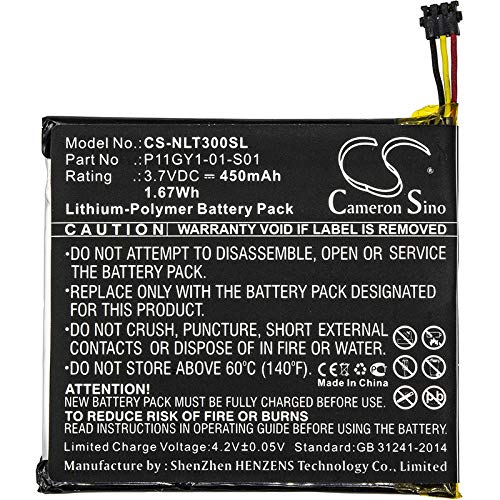
| Higher-Capacity Option | Voltage: (not explicitly labelled voltage; Li-Polymer — implied 3.7 V) | Chemistry / Type: Lithium Polymer | Compatibility / Intended Use: Nest Learning Thermostat models (T200377, T200477, T200577, T200777, T200877, etc.) | VIEW LATEST PRICE | Read Our Analysis |
| Replacement 3.7V Battery for Learning Thermostat Models |

| Professional Replacement | Voltage: 3.7 V | Chemistry / Type: Li-Polymer | Compatibility / Intended Use: Learning Thermostat models T200377, T200477, T200577, T200777, T200877 | VIEW LATEST PRICE | Read Our Analysis |
| Replacement Li-Polymer Battery for Nest Thermostat Gen 2/3 |
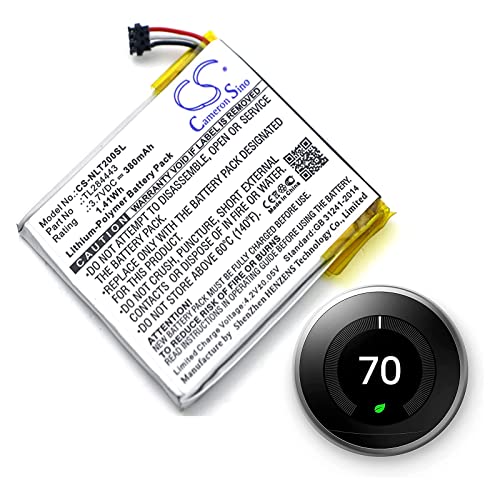
| Warranty-Backed Choice | Voltage: 3.7 V | Chemistry / Type: Li-Polymer | Compatibility / Intended Use: Nest A0013; Learning Thermostat 2nd & 3rd Gen (T3007ES, T3008US, T4000ES) and Thermostat E | VIEW LATEST PRICE | Read Our Analysis |
More Details on Our Top Picks
Replacement Battery for Nest Learning Thermostat (3rd Gen)
Should you own a Nest Learning Thermostat (3rd Gen) and need a reliable replacement, this 3.7 V, 380 mAh Li‑Polymer pack is built to match the original A0013 battery’s fit and performance—so you’ll restore runtime without fuss. You’ll get a compact, 48.60 × 44.10 × 2.90 mm black pack weighing 11 g that directly fits models T3007ES, T3008US, T4000ES, A0013. It delivers 1.41 Wh with no memory effect and includes protections for over-charge, over-discharge, over-heat, over-current, and short-circuit. RoHS, CE, and UL certifications guarantee safety. Replace it once operating time drops noticeably.
- Voltage:3.7 V
- Chemistry / Type:Li-Polymer
- Compatibility / Intended Use:Nest Learning Thermostat (3rd Gen) — A0013, T3007ES, T3008US, T4000ES
- Capacity / Energy:380 mAh / 1.41 Wh
- Physical Size / Weight (compact spec):48.60 × 44.10 × 2.90 mm; 11.0 g
- Safety / Protections / Certifications:Protections (over-charge, over-discharge, over-heat, over-current, short-circuit); RoHS, CE, UL
- Additional Feature:No memory effect
- Additional Feature:Circulatory function
- Additional Feature:UL certified
Philips AA 1.5V Lithium Batteries 24-Pack
Should you need long-lasting, low-temperature power for a thermostat (or other high-drain home devices), choose the Philips AA 1.5V Lithium 24-pack — it delivers up to 7× the energy of alkaline cells, a 10-year storage life, and reliable operation from −20°C to +30°C. You’ll get 24 lightweight, leakproof L91 cells that supply +291% more power for devices like thermostats, cameras, alarms, and remotes. They’re non-rechargeable, contain no dangerous metals, and suit extreme weather or emergency backup needs. With compact packaging and consistent output, this Philips pack keeps HVAC controls and safety systems running without frequent swaps.
- Voltage:1.5 V
- Chemistry / Type:Lithium (non-rechargeable)
- Compatibility / Intended Use:AA batteries for high-drain devices (toys, cameras, thermostats, detectors)
- Capacity / Energy:(AA cells — capacity not listed; performance claims: up to 7x energy vs alkaline)
- Physical Size / Weight (compact spec):AA size; item weight 14.1 oz (package)
- Safety / Protections / Certifications:Leakproof; contains no dangerous metals (safety/handling claims)
- Additional Feature:Non-rechargeable primary
- Additional Feature:10-year storage life
- Additional Feature:Extreme temperature rated
2025 Replacement Battery for Nest Learning Thermostat
Should you need a direct, high-quality replacement for a 2nd- or 3rd‑generation Nest Learning Thermostat, choose the 2025 Upgrade Version Battery (TL284443); it’s designed specifically for Nest models T3008US, T4000ES, T3007ES, and A0013, delivers 3.7 V Li‑Polymer power at 380 mAh, and includes a protective initial charge state that requires an extended initial charge to guarantee reliable activation. You’ll want to confirm your thermostat’s original part number or model matches TL284443 before buying. This Li‑Polymer cell provides 1.41 Wh, fits directly into listed Nest units, and should be installed and charged following Nest guidance to avoid issues.
- Voltage:3.7 V
- Chemistry / Type:Li-Polymer
- Compatibility / Intended Use:Nest Learning Thermostat (2nd & 3rd Gen) — T3008US, T4000ES, T3007ES, A0013
- Capacity / Energy:380 mAh / 1.41 Wh
- Physical Size / Weight (compact spec):(same form as Nest replacement) dimensions implied same as originals; capacity 380 mAh
- Safety / Protections / Certifications:Protective state on first use to prevent charging failures (safety behavior)
- Additional Feature:Protective initial state
- Additional Feature:Extended first-charge required
- Additional Feature:Part number TL284443
450mAh Replacement Battery for Nest Learning Thermostat
Should you need a compact, drop-in replacement to keep a Nest Learning Thermostat powered, this 450mAh lithium‑polymer battery is a solid pick — it’s designed for T200377/T200477/T200577/T200777/T200877 and other Nest Learning models and fits the thermostat’s slim profile (1.9 x 1.68 x 0.11 inches). You get a 450mAh Li‑Po cell (one included), tipping the scales at 1.44 ounces, model number T200577, initially listed March 22, 2019. Reviews average 3.6/5 from 37 users, so expect mixed feedback. Check warranty details from the seller and use the listing’s feedback tools should you spot pricing or listing issues.
- Voltage:(not explicitly labelled voltage; Li-Polymer — implied 3.7 V)
- Chemistry / Type:Lithium Polymer
- Compatibility / Intended Use:Nest Learning Thermostat models (T200377, T200477, T200577, T200777, T200877, etc.)
- Capacity / Energy:450 mAh
- Physical Size / Weight (compact spec):1.9 x 1.68 x 0.11 in; 1.44 oz
- Safety / Protections / Certifications:Safety/warranty info provided; standard replacement cautions (listing)
- Additional Feature:Higher 450mAh capacity
- Additional Feature:Sold since 2019
- Additional Feature:Includes one battery
Replacement 3.7V Battery for Learning Thermostat Models
Should you own a Learning Thermostat T200377, T200477, T200577, T200777 or T200877 and need a direct replacement, this 3.7V Li‑Polymer pack (450mAh) from Yibudt fits the original size and connector so you can swap it quickly without modifying the unit. You’ll get a CS‑NLT300SL pack compatible with part numbers 3701-0001-01 and P11GY1-01-S01, sized 48.24 x 42.78 x 2.76 mm and tipping the scales at 37 g. Observe polarity upon installing, don’t disassemble or expose to fire or high heat, and replace only with the designated pack. Warranty voids should the label’s removed; verify compatibility before ordering.
- Voltage:3.7 V
- Chemistry / Type:Li-Polymer
- Compatibility / Intended Use:Learning Thermostat models T200377, T200477, T200577, T200777, T200877
- Capacity / Energy:450 mAh
- Physical Size / Weight (compact spec):48.24 x 42.78 x 2.76 mm (1.9 x 1.68 x 0.11 in); 37.0 g / 1.31 oz
- Safety / Protections / Certifications:Safety cautions (do not disassemble, avoid high temp, observe polarity); warranty/after-sales
- Additional Feature:Warranty label caution
- Additional Feature:Multiple part numbers
- Additional Feature:Manufacturer Yibudt
Replacement Li-Polymer Battery for Nest Thermostat Gen 2/3
Should you want a direct, drop-in replacement for a Nest Learning Thermostat (2nd/3rd gen or Thermostat E), this Li‑Polymer battery delivers the same form factor and a decoded chip so your thermostat will behave like it did originally. It fits A0013, T3007ES/T3008US/T4000ES and Thermostat E models. Specs: Li‑Polymer, 380 mAh (1.41 Wh), 3.7 V, 48.60×44.10×2.90 mm. Built to original-equivalent standards, it includes overcharge, over-discharge, over-voltage and short-circuit protection and undergoes strict testing. ISO 9001, RoHS and CE certified, shipped in shock-absorbent foam. You get 30-day returns, a one-year warranty and 24/7 support with installation video.
- Voltage:3.7 V
- Chemistry / Type:Li-Polymer
- Compatibility / Intended Use:Nest A0013; Learning Thermostat 2nd & 3rd Gen (T3007ES, T3008US, T4000ES) and Thermostat E
- Capacity / Energy:380 mAh / 1.41 Wh
- Physical Size / Weight (compact spec):48.60 × 44.10 × 2.90 mm
- Safety / Protections / Certifications:Protections (overcharge, over-discharge, over-voltage, short-circuit); ISO 9001, RoHS, CE
- Additional Feature:ISO 9001 certified
- Additional Feature:Shock-absorbent packaging
- Additional Feature:1-year warranty
Factors to Consider When Choosing Batteries for Thermostat
When selecting batteries for your thermostat, you’ll want to check the battery chemistry, voltage, and capacity to make certain compatibility and adequate runtime. Also consider the operating temperature range so the cells perform reliably in your home’s conditions and the physical size to make sure they fit the compartment. These factors together determine how long and how well your thermostat will run between replacements.
Battery Chemistry Type
Battery chemistry determines how long your thermostat runs between charges or battery swaps, how it behaves in different temperatures, and what safeguards the device needs. Choose lithium‑ion or Li‑Polymer should you have a modern smart thermostat with a rechargeable pack — they give high energy density and compact size but need proper charging circuitry and protections against over‑charge, over‑discharge, temperature extremes, and short circuits. For simpler thermostats or backup power, alkaline or lithium primary AA/AAA cells work well; primaries have long shelf life (often ~10 years) and low self‑discharge. NiMH rechargeables are an alternative but have higher self‑discharge and worse cold performance, plus they require different pack sizing due to lower per‑cell voltage.
Voltage Requirements
Because your thermostat’s electronics expect a specific nominal voltage, match the replacement pack or cells to that value (commonly ~3.7 V for Li‑ion/Li‑Po packs or 1.5 V per alkaline cell) so the device and its charging circuitry operate correctly. Check the thermostat’s specs or the original pack label and confirm total pack voltage for multi‑cell assemblies rather than guessing from one cell. Don’t substitute a higher or lower nominal voltage; that can cause erratic behavior, improper charging, or permanent damage. Should your unit use an internal rechargeable pack, match the chemistry and nominal voltage so the charger sees the right profile. For external AA/AAA use the correct per‑cell voltage—1.5 V alkaline or 1.2 V NiMH—so sensing and operation remain accurate.
Capacity And Runtime
Runtime determines how long your thermostat will keep running between charges or replacements, so pick capacity to match your device’s needs. Battery capacity (mAh or Wh) directly sets runtime—higher mAh/Wh gives longer operation under the same load. Whenever devices use different voltages, compare usable energy (Wh) or voltage-plus-mAh rather than mAh alone to estimate real-world runtime. You can estimate runtime by dividing battery energy (Wh) by your thermostat’s average power draw (W); for example, 1.4 Wh powering a 0.1 W device yields about 14 hours. Keep in mind that age and environmental factors reduce usable capacity, so an older pack or unfavorable conditions will shorten that estimate. In the event your thermostat uses Wi‑Fi, a bright display, or many sensors, choose higher capacity or plan for more frequent replacements.
Operating Temperature Range
At any time your thermostat faces wide temperature swings, check the battery’s specified operating range to make sure it covers those extremes—many lithium cells work from about −20°C to +60°C, while alkaline types often have narrower limits. You’ll see capacity drop sharply below 0°C, so cold locations can cut runtime or keep the unit from starting. High heat speeds self-discharge and chemical breakdown, so pick chemistries rated for sustained exposure at your thermostat’s maximum ambient temperature. For unconditioned installs like attics or garages, choose cells with proven low-temperature start-up and wider specs. Also review storage-temperature limits and long-term thermal stability: cycling near limits shortens life and raises leakage or safety risks. Match specs to real site conditions for reliable HVAC control.
Physical Size Fit
Should your replacement cell doesn’t match the original’s dimensions and connector, it won’t fit properly or could stress the thermostat’s internals. Measure the compartment’s length, width and thickness, and pick a replacement that matches those numbers so contacts align. Verify connector type and polarity so the new cell mates with terminals without forcing or modifying wiring. Account for bezel or casing clearance—mounting clips, adhesive pads or foam eat space inside the housing. Check thickness tolerance: a 1–2 mm increase can stop the cover from closing or stress components. Prefer cells that match form factor specifications (for example pouch dimensions for Li‑Polymer packs) rather than choosing solely on voltage and capacity to make certain correct physical fit.
Safety And Protections
Because thermostat batteries sit inside small, often warm enclosures, pick cells and packs that include built‑in protections—overcharge, over‑discharge, short‑circuit, over‑current, and over‑temperature—to prevent overheating, swelling, or fire. You should also verify relevant safety certifications like CE, RoHS, UL, or ISO 9001 to confirm third‑party testing for electrical and material safety. Don’t use batteries that require modifications or removal of safety labels; doing so can disable protective circuitry and void the warranty. Follow manufacturer installation guidance to keep protections intact. Finally, operate batteries within the manufacturer’s temperature range (commonly around -20°C to +30°C for lithium cells) so safety circuits function properly and reduce the risk of failure.
Shelf Life And Storage
Should you select batteries for a thermostat, consider shelf life and storage habits since they determine whether cells will hold enough charge at the moment you actually need them; alkaline cells typically retain usable capacity for 5–10 years and lithium cells for about 10 years, but high temperatures and humidity can accelerate self‑discharge. Store cells in a cool, dry place ideally below 25°C (77°F), keep them in original packaging or an insulated container, and avoid metal contact to prevent shorting. Check manufacturer-stated self-discharge rates and pick low self-discharge chemistries for emergency or seasonal use. For low-drain thermostats, rotate stock FIFO (initial in, initial out) and discard any battery older than its rated shelf life to guarantee reliable operation.
Frequently Asked Questions
Can Thermostat Batteries Be Recycled and Where to Take Them?
Yes — you can recycle thermostat batteries. Take them to battery recycling kiosks, hazardous-waste facilities, electronics stores (like Best Buy), or municipal drop-off events. Check local guidelines and remove batteries safely before transport.
How Often Should I Replace Batteries in a Smart Thermostat?
About every 6–12 months; 80% of thermostat failures stem from weak batteries, so you’ll replace them annually for reliability, or sooner should your thermostat or app warns you, especially before extreme heating or cooling seasons.
Can Battery Type Affect Wi‑Fi Connectivity and Smart Features?
Yes — battery type can affect Wi‑Fi and smart features. Should you use low-voltage or depleted cells, your thermostat might reboot, drop connectivity, or limit functions. You should choose fresh, high-quality batteries and replace them regularly.
Are Rechargeable Batteries Safe for Thermostats?
Sure—rechargeable batteries can be safe for thermostats provided you choose the correct chemistry and maintain them properly. They’ll usually work, but you’ll want reliable rechargeable NiMH cells, regular replacements, and careful charging to prevent performance problems.
Do Extreme Temperatures Shorten Thermostat Battery Life?
Yes — extreme temperatures shorten thermostat battery life. You’ll see reduced capacity in cold and accelerated self-discharge in heat, so you’ll need to replace batteries more often or keep the thermostat in a moderate-temperature location.
Final Thoughts
You’ve got the picks to keep your thermostat—and your home—steady, like a well-tuned engine humming in the background. Choose the right voltage, size, and protections, match polarity and fit, and prefer certified, long‑life cells to avoid surprises. Store spares cool and swap worn packs promptly to dodge outages. With these choices, your HVAC will run smoother, longer—reliable as a lighthouse guiding you through stormy seasons.
