

You’re juggling devices, rooms, and slow spots, and you want a mesh setup that actually fixes coverage without a tech degree. I’ll walk you through solid 2026 picks—from budget AX rigs to Wi‑Fi 7 powerhouses—and what matters for your home, so you can match features, wired options, and range to real needs. Stick around to see which system fits your layout and internet plan.
| TP-Link Deco X55 AX3000 WiFi 6 Mesh System (3-Pack) |

| Best for Large Homes | Wi‑Fi Standard: Wi‑Fi 6 (802.11ax) | Mesh Capable: Yes — 3‑pack mesh system | Coverage (stated): Up to 6,500 sq. ft. (3‑pack) | VIEW LATEST PRICE | Our Analysis |
| TP-Link Archer AX21 AX1800 WiFi 6 Router |

| Budget Performance | Wi‑Fi Standard: Wi‑Fi 6 (802.11ax) | Mesh Capable: Not a mesh system (single router) — but can be used with extenders (router only) | Coverage (stated): Coverage not specified as system value (router; extended coverage dependent on home) | VIEW LATEST PRICE | Our Analysis |
| Amazon eero 6 Wi‑Fi Mesh Router (1‑Pack) |
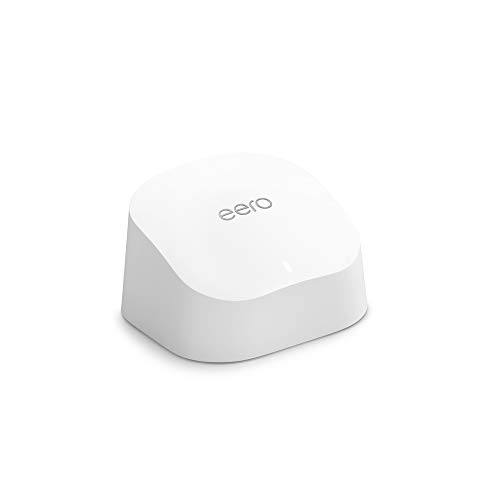
| Easy Smart-Home Starter | Wi‑Fi Standard: Wi‑Fi 6 (802.11ax) | Mesh Capable: Yes — single eero node, part of expandable mesh | Coverage (stated): Up to 1,500 sq. ft. (1‑pack) | VIEW LATEST PRICE | Our Analysis |
| NETGEAR Orbi 370 WiFi 7 Mesh System (RBE373) |

| Cutting-Edge Speed | Wi‑Fi Standard: Wi‑Fi 7 (backward compatible with older standards) | Mesh Capable: Yes — router + 2 extenders mesh system | Coverage (stated): Up to 6,000 sq. ft. (system) | VIEW LATEST PRICE | Our Analysis |
| TP-Link Deco XE70 Pro AXE4900 Wi‑Fi 6E Mesh (3-Pack) |

| Future-Proof Power | Wi‑Fi Standard: Wi‑Fi 6E (802.11ax/6E; includes 6 GHz) | Mesh Capable: Yes — 3‑pack mesh system | Coverage (stated): Up to 2,900 sq. ft. (3‑pack) — note regional variance mentioned | VIEW LATEST PRICE | Our Analysis |
More Details on Our Top Picks
TP-Link Deco X55 AX3000 WiFi 6 Mesh System (3-Pack)
Should you want a simple, reliable mesh that covers a large home and handles lots of devices, the TP‑Link Deco X55 AX3000 (3‑pack) is a smart pick — its Wi‑Fi 6 AX3000 radios and AI‑driven mesh deliver broad 6,500 sq. ft. coverage, support up to 150 devices, and let any unit act as the router while using wired Ethernet backhaul for maximum performance. You’ll get 2×2/HE160 2402 Mbps plus 2×2 574 Mbps streams, three Gigabit ports per node, and guided setup via the Deco app. HomeShield provides basic security, QoS, and parental controls; a modem’s required for most ISPs.
- Wi‑Fi Standard:Wi‑Fi 6 (802.11ax)
- Mesh Capable:Yes — 3‑pack mesh system
- Coverage (stated):Up to 6,500 sq. ft. (3‑pack)
- Device Capacity / Supported Devices:Up to 150 devices
- Wired Ports / Backhaul:Each unit has 3 Gigabit Ethernet ports; supports wired backhaul
- Security & Management:TP‑Link HomeShield (basic security, QoS, parental controls); Deco app remote management; Secure‑by‑Design pledge
- Additional Feature:AI‑driven mesh optimization
- Additional Feature:Any unit router-capable
- Additional Feature:Deco app guided setup
TP-Link Archer AX21 AX1800 WiFi 6 Router
Should you want an affordable entry to Wi‑Fi 6 that boosts speeds and supports more devices without upgrading your modem, the TP‑Link Archer AX21 (AX1800) is a solid pick—its AX1800 throughput (up to 1200 Mbps on 5 GHz and 574 Mbps on 2.4 GHz), OFDMA for multi‑device efficiency, and four high‑gain antennas deliver better coverage and less congestion for busy homes and small apartments. You’ll get beamforming, an FEM chipset for extended range, and OpenVPN/PPTP server support. It’s compatible with major ISPs, needs a separate modem, and benefits from firmware updates and TP‑Link’s support for reliable, affordable Wi‑Fi 6 performance.
- Wi‑Fi Standard:Wi‑Fi 6 (802.11ax)
- Mesh Capable:Not a mesh system (single router) — but can be used with extenders (router only)
- Coverage (stated):Coverage not specified as system value (router; extended coverage dependent on home)
- Device Capacity / Supported Devices:Not specified as a max count (designed for multi‑device use with OFDMA)
- Wired Ports / Backhaul:Gigabit Ethernet ports (exact count implied by router); requires modem; supports wired connections
- Security & Management:Advanced security design (CISA pledge); VPN server support; Tether app / firmware updates recommended; phone support
- Additional Feature:Four high‑gain antennas
- Additional Feature:OpenVPN & PPTP support
- Additional Feature:Tether app compatibility
Amazon eero 6 Wi‑Fi Mesh Router (1‑Pack)
Looking for a simple, reliable mesh that handles lots of devices and smart-home gear? The Amazon eero 6 (1‑pack) gives you whole‑home Wi‑Fi 6 coverage up to 1,500 sq. ft. and handles internet speeds up to 900 Mbps. TrueMesh routes traffic to cut drop‑offs, supporting 4K streaming, gaming, and conferencing while accommodating 75+ devices. Setup takes minutes via the eero app and you can manage your network remotely. Built‑in Zigbee links compatible smart devices to Alexa without extra hubs. Automatic updates and cross‑compatible hardware make expansion and ongoing security maintenance effortless; US support is available seven days a week.
- Wi‑Fi Standard:Wi‑Fi 6 (802.11ax)
- Mesh Capable:Yes — single eero node, part of expandable mesh
- Coverage (stated):Up to 1,500 sq. ft. (1‑pack)
- Device Capacity / Supported Devices:Supports 75+ devices
- Wired Ports / Backhaul:Ethernet port(s) on single unit (implied for router functionality); supports wired connections
- Security & Management:Automatic updates; eero app for setup and remote management; free customer support; Zigbee hub (smart home)
- Additional Feature:Built‑in Zigbee hub
- Additional Feature:TrueMesh traffic routing
- Additional Feature:Automatic software updates
NETGEAR Orbi 370 WiFi 7 Mesh System (RBE373)
In case you need top-tier whole-home speed for simultaneous 4K streaming, gaming, and video calls, the NETGEAR Orbi 370 WiFi 7 mesh system (RBE373) delivers — its dual-band WiFi 7 platform and improved backhaul push up to 5 Gbps across roughly 6,000 sq. ft., and the included router plus two BE5000 extenders support about 70 devices while offering a 2.5 Gigabit Internet port and automatic security updates. You’ll get WiFi 7 throughput (1.7x faster than WiFi 6), backward compatibility, and dedicated hardware for home entertainment and hybrid work. Setup’s straightforward, and Advanced Router Protection keeps firmware and security current.
- Wi‑Fi Standard:Wi‑Fi 7 (backward compatible with older standards)
- Mesh Capable:Yes — router + 2 extenders mesh system
- Coverage (stated):Up to 6,000 sq. ft. (system)
- Device Capacity / Supported Devices:Supports up to 70 devices
- Wired Ports / Backhaul:Includes 2.5 Gigabit Internet port (plus other ports on units) and enhanced backhaul
- Security & Management:Built‑in security, automatic firmware updates, Advanced Router Protection; NETGEAR support/warranty
- Additional Feature:WiFi 7 standard
- Additional Feature:2.5 Gigabit Internet port
- Additional Feature:Includes router + 2 extenders
TP-Link Deco XE70 Pro AXE4900 Wi‑Fi 6E Mesh (3-Pack)
Need ultra‑low congestion and top Wi‑Fi 6E speeds for a busy smart home or home office? The TP‑Link Deco XE70 Pro AXE4900 (3‑pack) gives you tri‑band Wi‑Fi across six streams with a dedicated 6 GHz band, combined throughput up to 4.9 Gbps, and capacity for about 200 devices. You’ll cover up to 2,900 sq. ft., enjoy a unified SSID with AI‑roaming, and benefit from wireless plus 2.5 Gbps wired backhaul. Each unit has a 2.5 Gbps WAN/LAN plus two Gigabit ports, supports VPNs and major ISPs, and includes HomeShield security managed via the Deco app.
- Wi‑Fi Standard:Wi‑Fi 6E (802.11ax/6E; includes 6 GHz)
- Mesh Capable:Yes — 3‑pack mesh system
- Coverage (stated):Up to 2,900 sq. ft. (3‑pack) — note regional variance mentioned
- Device Capacity / Supported Devices:Handles up to 200 devices
- Wired Ports / Backhaul:Each unit has one 2.5 Gbps WAN/LAN + two Gigabit Ethernet ports; supports wired backhaul
- Security & Management:HomeShield premium available, Secure‑by‑Design pledge, Deco app for setup/management, automatic/security updates
- Additional Feature:Dedicated 6 GHz band
- Additional Feature:2.5 Gbps WAN/LAN port
- Additional Feature:AI‑roaming self‑learning
Factors to Consider When Choosing a Mesh Wifi Router
At the time of choosing a mesh Wi‑Fi router, you’ll want to match coverage area and device capacity to your home and usage. Check for current Wi‑Fi standards, wired backhaul support, and resilient security plus parental controls. Those factors determine performance, reliability, and safety for years to come.
Coverage Area Needed
Coverage matters: measure your home’s total square footage (including all levels) and add about 10–20% to account for overlaps and walls so you pick a mesh system rated for that expanded area. Next, factor in building materials—thick concrete, brick, or metal studs can cut range by 30–70% versus drywall, so increase your target coverage whenever those materials are present. Count floors and plan node placement so at least one node per floor sits within 30–50 feet (or one room) of the next to preserve strong backhaul. Prioritize node placement for high‑usage zones like home offices, media rooms, or patios rather than just raw square footage. Should you need sustained performance, include nodes with wired backhaul options.
Device Capacity Limits
A good mesh system should support more simultaneous connections than you currently have, since each smartphone, camera, and smart plug adds to the load and high‑bandwidth devices (like 4K streamers or gaming rigs) demand far more resources than simple IoT sensors. Check the vendor’s maximum simultaneous connections—typical ranges run 50–200+—and pick one that exceeds your household peak to avoid congestion. Account for device types and prioritize capacity for concurrent high‑throughput clients rather than raw device count. Look for multi‑device technologies such as OFDMA and MU‑MIMO to improve effective capacity and lower latency under load. Add 20–50% headroom for growth, and recall real‑world performance depends on distance, interference, node placement, and traffic mix.
Wi‑Fi Standard Support
Device capacity affects how much traffic your mesh needs to handle, but the Wi‑Fi standard determines the raw speed, latency, and airtime efficiency that underpin that capacity. Choose the newest standard your devices support—Wi‑Fi 6, 6E, or 7—for future‑proofing: each step offers higher throughput, lower latency, and better multi‑device efficiency than Wi‑Fi 5. Wi‑Fi 6 brings OFDMA and Target Wake Time to improve simultaneous connections and client battery life. Wi‑Fi 6E adds a 6 GHz band to reduce congestion. Wi‑Fi 7 increases peak speeds, wider channel widths, and multi‑link operation for demanding uses like 4K/8K streaming and cloud gaming. Make sure backward compatibility so legacy devices still connect, and verify device support for wider channels (160 MHz+) and available range (2.4/5/6 GHz).
Wired Backhaul Options
Consider wired Ethernet backhaul whether you want the most stable, low‑latency mesh performance—especially for large homes, heavy streaming, or gaming. Use LAN or dedicated multi‑gig ports (1 Gbps, 2.5 Gbps) between nodes to get steadier throughput and lower latency than wireless links. A dedicated wired backhaul frees radios for clients, enhancing capacity and cutting congestion in dense or high‑bandwidth environments. Before you buy, confirm nodes support passthrough routing or configurable WAN/LAN ports and verify your home cabling (Cat5e vs Cat6) can handle multi‑gig speeds. Wired links let you space nodes farther apart or place them on different floors without losing performance, and they simplify wired NAS or IoT access. Plan switch placement, PoE/power, and a star versus daisy‑chain topology to avoid single‑uplink bottlenecks.
Security And Parental Controls
Wired backhaul gives you rock‑solid performance, but you still need to lock down who and what can talk across that fast network. Choose mesh systems with built‑in security: automatic firmware updates, intrusion detection, and malware/IoT protection to reduce exposure. Verify WPA3 support, strong admin password enforcement, and multi‑factor authentication so attackers can’t change settings.
For kids, pick granular parental controls: age‑based profiles, content filtering, time‑of‑day limits, and pause‑internet options to enforce rules. Prefer routers that offer guest networks and VLANs to isolate visitor or children’s devices from sensitive gear. Make sure remote management and monitoring provide real‑time alerts, usage reports, and the ability to update security or parental settings from anywhere.
App And Management Ease
While top‑speed hardware matters, the app is how you’ll actually live with your mesh system—so pick one that makes setup and everyday management fast and intuitive. Choose apps that guide you step‑by‑step through setup and push automatic firmware updates so installation and maintenance stay simple. Confirm remote management lets you view and control devices, reboot nodes, and tweak settings from anywhere for quick troubleshooting. Look for granular parental controls and QoS—schedule‑based access, device bandwidth limits, and traffic prioritization—to manage household usage easily. Make sure the interface shows real‑time network health (signal strength, client count, throughput) and per‑device usage so you can spot weak spots. Prefer apps with role‑based access, guest controls, and easy backup/restore for smoother multi‑user administration.
Budget And Future Proofing
Good app design makes setup and daily management painless, but you also need to contemplate about what you’ll pay now and later. Set a budget ceiling, then plan to add 20–30% should you want Wi‑Fi 6/6E/7 support to keep devices compatible for years. Prioritize multi‑gig Ethernet, tri‑band or 6 GHz support, and strong MU‑MIMO/OFDMA over chasing peak speeds. Match spending to home size and device count: small apartments can use modest routers, while larger homes or 100+ devices require mesh with broader coverage and higher capacity. Factor total cost of ownership: subscription fees, extra nodes, and eventual hardware replacement. Should you’ll keep a network 4–6 years, favor platforms with resilient update policies and hardware headroom.
