

In case you want reliable Wi‑Fi across a large home, mesh extenders are the easiest way to fill dead zones without rewiring. You’ll find options that give Wi‑Fi 6 speeds, wired backhaul, and smart‑home hubs like Thread or Zigbee, plus app‑driven setup and security features such as WPA3. I’ll compare top picks and key buying criteria so you can pick the right match for your space and devices — but to start, a quick look at what matters most.
| Amazon eero 6+ Mesh WiFi System 3-Pack |

| Best for Smart Homes | Coverage: Up to 4,500 sq. ft. (3‑pack) | Wi‑Fi Standard: Wi‑Fi 6 (with 160 MHz support) | Mesh Technology: TrueMesh mesh system | VIEW LATEST PRICE | Our Analysis |
| Amazon eero 6 Mesh WiFi System 2-Pack |

| Ideal Mid‑Size Homes | Coverage: Up to 3,000 sq. ft. (2‑pack) | Wi‑Fi Standard: Wi‑Fi 6 | Mesh Technology: Mesh technology (eero mesh) | VIEW LATEST PRICE | Our Analysis |
| Amazon eero 6 Mesh Wi‑Fi Add-On Extender |
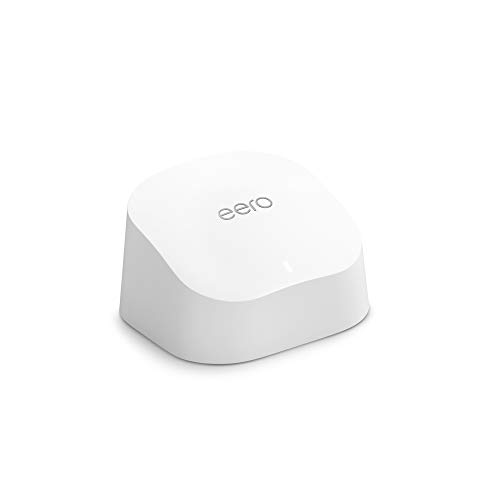
| Best Expandable Extender | Coverage: Adds up to 1,500 sq. ft. (extender) | Wi‑Fi Standard: Wi‑Fi 6 | Mesh Technology: TrueMesh extender for eero mesh | VIEW LATEST PRICE | Our Analysis |
| Amazon eero 6 Mesh WiFi System (2-Pack) |

| Great for Device‑Dense Homes | Coverage: Up to 3,000 sq. ft. (2‑pack) | Wi‑Fi Standard: Wi‑Fi 6 | Mesh Technology: Optimized eero mesh technology | VIEW LATEST PRICE | Our Analysis |
| TP-Link Deco X55 AX3000 WiFi 6 Mesh (3-Pack) |

| Best Coverage & Capacity | Coverage: Up to 6,500 sq. ft. (3‑pack) | Wi‑Fi Standard: Wi‑Fi 6 (AX3000) | Mesh Technology: AI‑driven Deco mesh | VIEW LATEST PRICE | Our Analysis |
More Details on Our Top Picks
Amazon eero 6+ Mesh WiFi System 3-Pack
Looking for reliable whole‑home Wi‑Fi that handles lots of devices? The Amazon eero 6+ 3‑pack covers up to 4,500 sq. ft. and supports 75+ devices, so you’ll keep phones, TVs, and smart gadgets online. You get Wi‑Fi 6 with a 160 MHz channel for more bandwidth, TrueMesh tech to cut drop‑offs, and backward compatibility with earlier eeros. Built‑in Thread and Zigbee hub support Alexa devices, removing separate hub needs. eero Plus adds security, parental controls, and ad/tracker blocking (auto‑renews following a one‑month trial). Setup’s simple via the eero app; support’s available through email or phone.
- Coverage:Up to 4,500 sq. ft. (3‑pack)
- Wi‑Fi Standard:Wi‑Fi 6 (with 160 MHz support)
- Mesh Technology:TrueMesh mesh system
- Parental / Network Controls:Parental controls (schedules, filters) via eero Plus
- App Setup & Management:Setup and remote management via eero app
- Customer Support & Updates:Automatic updates; support: [email protected], +1‑877‑659‑2347
- Additional Feature:160 MHz channel support
- Additional Feature:Built‑in Thread & Zigbee
- Additional Feature:TrueMesh patented routing
Amazon eero 6 Mesh WiFi System 2-Pack
Should you need reliable whole‑home Wi‑Fi for streaming, gaming, or work-from-home setups, the Amazon eero 6 2‑pack is a strong choice — it gives up to 3,000 sq ft of Wi‑Fi 6 coverage and supports internet plans up to 500 Mbps so you won’t hit bandwidth limits during 4K video or video calls. You get one router and one extender, and mesh tech reduces dead spots for smoother gaming and conferencing. The eero app guides setup, lets you manage devices, schedules, and parental filters. Built‑in security, ad/tracker blocking, automatic updates, and a 1‑month eero Plus trial round out the package.
- Coverage:Up to 3,000 sq. ft. (2‑pack)
- Wi‑Fi Standard:Wi‑Fi 6
- Mesh Technology:Mesh technology (eero mesh)
- Parental / Network Controls:Parental controls (schedules, filters) via app/eero Plus
- App Setup & Management:Setup and remote management via eero app
- Customer Support & Updates:Automatic updates; support: [email protected], +1‑877‑659‑2347
- Additional Feature:Supports up to 500 Mbps
- Additional Feature:1 router + 1 extender
- Additional Feature:Cross‑compatible expandability
Amazon eero 6 Mesh Wi‑Fi Add-On Extender
Provided that you already have an eero mesh system and need to fill gaps for 4K streaming, gaming, or video calls, the Amazon eero 6 add‑on extender is a straightforward way to add up to 1,500 sq. ft. of Wi‑Fi 6 coverage. You’ll reduce dead spots and keep high-bandwidth activities smooth thanks to TrueMesh, which intelligently routes traffic to minimize drop-offs. Setup’s simple in the eero app, and you can manage the network or add multiple extenders to scale coverage. Automatic updates maintain security and features, and US support is available seven days a week via email or phone.
- Coverage:Adds up to 1,500 sq. ft. (extender)
- Wi‑Fi Standard:Wi‑Fi 6
- Mesh Technology:TrueMesh extender for eero mesh
- Parental / Network Controls:Managed via eero app (parental controls available on network)
- App Setup & Management:Setup and management via eero app
- Customer Support & Updates:Automatic updates; support: [email protected], +1‑877‑659‑2347
- Additional Feature:Adds 1,500 sq. ft.
- Additional Feature:Requires existing eero
- Additional Feature:Scalable multi‑extender support
Amazon eero 6 Mesh WiFi System (2-Pack)
Should you need reliable whole‑home Wi‑Fi for streaming, gaming, or video calls, the Amazon eero 6 (2‑pack) is a strong choice — it covers up to 3,000 sq. ft., supports plans up to 500 Mbps, and uses Wi‑Fi 6 to handle 75+ devices with reduced dead spots. You’ll get one router and one extender that optimize mesh connections to cut buffering and support 4K streaming and low‑latency gaming. Setup’s simple via the eero app, which also lets you manage the network remotely. It doubles as a Zigbee hub, expands with other eeros, updates firmware automatically, and includes US support.
- Coverage:Up to 3,000 sq. ft. (2‑pack)
- Wi‑Fi Standard:Wi‑Fi 6
- Mesh Technology:Optimized eero mesh technology
- Parental / Network Controls:Parental controls (schedules, filters) via app
- App Setup & Management:Setup and remote management via eero app
- Customer Support & Updates:Automatic firmware updates; support: [email protected], +1‑877‑659‑2347
- Additional Feature:Zigbee smart home hub
- Additional Feature:Supports 75+ devices
- Additional Feature:Any‑time firmware auto‑updates
TP-Link Deco X55 AX3000 WiFi 6 Mesh (3-Pack)
Should you need reliable Wi‑Fi across a large home with many devices, the TP‑Link Deco X55 AX3000 (3‑pack) delivers fast Wi‑Fi 6 performance and mesh coverage for up to 6,500 sq. ft. and 150 connected devices. You’ll get AX3000 speeds (2×2/HE160 2402 Mbps + 2×2 574 Mbps) and an AI‑driven mesh that adapts to interference, eliminating dead zones and buffering. Each unit has three Gigabit Ethernet ports and supports wired backhaul; any node can act as the router. Setup and management use the Deco app, and HomeShield provides no‑cost security, QoS, and parental controls. A modem is required.
- Coverage:Up to 6,500 sq. ft. (3‑pack)
- Wi‑Fi Standard:Wi‑Fi 6 (AX3000)
- Mesh Technology:AI‑driven Deco mesh
- Parental / Network Controls:Parental controls via TP‑Link HomeShield (basic, no‑cost)
- App Setup & Management:Guided setup and remote management via Deco app
- Customer Support & Updates:Regular updates; support via Deco app and TP‑Link support (CISA pledge noted)
- Additional Feature:AX3000 (HE160) speeds
- Additional Feature:3 Gigabit Ethernet ports
- Additional Feature:Wired backhaul supported
Factors to Consider When Choosing a Mesh Extender
While selecting a mesh extender, consider the coverage area you need and how many devices it must support. Check for current Wi‑Fi standard support, backhaul options and available Ethernet ports, and whether it plays nicely with your smart home devices. Balancing those factors will help you choose an extender that fits your home and future needs.
Coverage Area Needed
For a reliable mesh setup, start measuring the total square footage you need covered—including additional floors and any detached spaces—so you can pick an extender with enough range; then increase that figure by 20–50% to allow for more devices and future growth. Next, factor in building materials and obstructions: thick walls, metal, and concrete can cut effective range by 30–80%, so plan extra coverage where those materials exist. Make sure placement overlap with your main network—extend into at least one area that still has a strong signal, not just fringe coverage, to maintain seamless handoff. In multi‑level homes prioritize vertical coverage, mounting extenders roughly halfway between floors to reliably pass signal between stories.
Device Capacity Limits
Although range and placement matter, you also need to check how many devices your mesh extender and the whole network can realistically support, since advertised counts (often 50–150+) are shared across the mesh and don’t guarantee full-speed connections for every gadget. Look at the maximum concurrent-device rating for both the node and the system, and map that to your phones, TVs, smart speakers, cameras, and IoT gear. Keep in mind advertised totals are shared, so more extenders increase coverage but won’t always preserve per-device throughput under heavy load. Factor in typical usage—light browsing versus 4K streaming or gaming—and choose extenders with newer tech and solid firmware that use OFDMA, MU‑MIMO, and smart traffic routing to raise real-world capacity.
Wi‑Fi Standard Support
Should you want the best performance and future-proofing, pick a mesh extender that supports Wi‑Fi 6 (802.11ax) and key features like OFDMA and MU‑MIMO to handle multiple devices efficiently; also look for 160 MHz channel support, dual‑ or tri‑band radios, and more spatial streams (e.g., 4×4 vs 2×2) to boost aggregate throughput while keeping legacy compatibility (802.11ac/n/a/b/g) so older gadgets still connect reliably. You’ll get higher per‑device speeds and better congestion handling with Wi‑Fi 6. Provided you stream 4K or game, 160 MHz matters for maximum single‑stream bandwidth. Dual‑ or tri‑band designs let you segment traffic to preserve client performance, and additional spatial streams raise total capacity. Confirm backward compatibility so older devices don’t drop off.
Backhaul And Ports
As you set up a mesh extender, the way nodes connect—wired Ethernet or wireless—will make the biggest difference in real‑world speed and stability, so prioritize wired backhaul whenever possible. Should you be able to run Ethernet, choose units with multiple Gigabit ports and support for wired backhaul so nodes talk at full gigabit speeds and handle multi‑Gbps internet plans. For wireless setups, check whether the mesh offers a dedicated 5 GHz or 6 GHz backhaul and wider channels (e.g., 160 MHz); those preserve throughput but are more sensitive to interference. Prefer tri‑band designs whenever you need a reserved backhaul band; dual‑band systems share radios with clients. Finally, look for automatic backhaul selection and link aggregation to optimize throughput and provide failover.
Smart Home Integration
Beyond raw backhaul and ports, consider how the extender will fit into your smart‑home ecosystem: you want a unit that speaks the same radio languages (Thread, Zigbee, Z‑Wave) or includes a built‑in hub so your sensors and bulbs can join locally without extra bridges. Check explicit hub compatibility and built‑in hub functionality so pairing stays simple and automation triggers stay fast. Make sure the extender integrates with your voice assistant or automation platform via native support or standard APIs for reliable routines. Prefer devices that expose local control rather than cloud‑only operation so scenes keep working during internet outages. Finally, confirm firmware updates and security coverage for the smart‑home stack to preserve compatibility and protect connected devices as standards evolve.
Security And Privacy
While a mesh extender’s primary job is amplifying coverage, you should treat it as a frontline security device: pick units that support WPA3 (or at least WPA2‑AES), deliver signed automatic firmware updates, and offer firewall, guest/VLAN segmentation, and device isolation so a compromised gadget can’t easily reach the rest of your network. Also check for privacy-focused features like DNS over TLS/HTTPS, built‑in ad and tracker blocking, and granular local logging controls to limit telemetry. Verify whether parental controls and security subscriptions are optional and whether they auto‑renew; avoid devices that lock core protection behind mandatory paywalls or cloud-only services. Prioritize extenders that balance modern encryption, verified updates, and on‑device controls so you retain visibility and reduce external dependency.
App And Management
In choosing a mesh extender, pay close attention to the app and management features—good software turns a capable device into an easily controlled network. You’ll want a mobile app with guided setup and step‑by‑step installation to simplify adding extenders to your existing mesh. Make sure it supports remote management so you can monitor, pause, or change settings from anywhere. Prefer automatic firmware updates to keep extenders secure without manual work. Look for parental controls and scheduling to set device‑level access times and filters. Check for device and traffic visibility—connected device counts and per‑device usage—to diagnose slowdowns and allocate bandwidth. Finally, choose an app with straightforward guest network management for easy troubleshooting and temporary access.
Expandability Options
Should you plan to grow coverage over time, check that an extender can join your existing mesh as a full node so adding units won’t strip away features or performance. You’ll want compatibility across device generations and firmware so future extenders integrate without hiccups. Confirm the system’s maximum supported nodes and rated network size to match your square footage and device count. Prefer extenders with wired Ethernet backhaul or multi‑Gig ports so you can link nodes with cables for consistent throughput as you scale. Finally, make sure the management app or controller lets you add and configure extenders remotely and keeps settings unified—SSIDs, security, parental controls—so expansion feels seamless and doesn’t force manual reconfiguration at each new node.
