
A covered patio changes how you use your yard, from late lunches under a roof to evening gatherings with a little more privacy. The right structure needs to match your footprint, anchoring surface, weather exposure, and the way you actually spend time outdoors. These gazebos range from expansive hardtop shelters to adjustable-louver pergolas, plus a curtain set and vehicle-focused carport for more specialized setups.
The Shortlist At A Glance

Domi 14’X24′ Gazebo, Hardtop Gazebo

Domi 14’X24′ Gazebo with Double Roof

Domi 14’X20′ Gazebo with Double Roof
Domi 12×20 Aluminum Outdoor Louvered Pergola

Domi 12’X12′ Gazebo, Hardtop Gazebo, Gray

10 x 10 Ft Gazebo Privacy Curtains, Khaki

PHI VILLA 10×20 Carport, Metal Carport

Domi 10×12 Outdoor Hardtop Gazebo, Brown

Aoxun 12’x10′ Hardtop Gazebo, Brown
What Each Pick Brings To The Table
Large patios can support more than a small dining set, and this 14-by-24-foot Domi creates 336 square feet beneath a galvanized-steel roof. The ventilated double roof uses a raised upper layer to encourage airflow, while its sloped shape directs water away rather than allowing it to collect overhead.
Privacy curtains, removable netting, and three J-hooks make the area easier to arrange for dinner, lights, or a fan. For most backyards with a properly prepared installation area, this is the better fit for long tables and larger gatherings than the smaller Domi 12’X12′ Gazebo.
Everyday Wins
- 336 square feet leaves room for separate dining and lounge zones.
- Double-roof ventilation supports a breezier covered sitting area.
- Netting and curtains let you shift between airflow and privacy.
- Three J-hooks provide planned hanging points for lights or decor.
- Pre-drilled bases help you prepare a fixed installation.
Things To Consider
- The 14-by-24-foot footprint needs a large, level surface before installation.
- Check local structure rules before committing to a permanent-style setup.
This Domi shares the same expansive 336-square-foot footprint as the first pick, but it switches to a powder-coated aluminum frame with 4.72-inch square posts. The roof gutter channels runoff through the frame and down the posts, a useful detail for a paved patio where you want drainage directed away from the seating area.
Double-sided zippered netting and privacy curtains bring more control to an open backyard setting. You may find its 10.5-foot height especially useful for hanging a light fixture over a long outdoor table, though the installation area still needs deliberate planning.
Standout Benefits
- Integrated gutter routing gives rainwater a defined exit path.
- Aluminum posts resist rust and corrosion in exposed outdoor placements.
- 336 square feet suits larger family meals and group events.
- Two-sided zippers make netting access less awkward around furniture.
Worth Noting
- The wide 24-foot length asks for a clear, level installation zone.
- Pre-drilled post bases still require suitable anchors for your surface.
- The stated snow-load figure merits attention in regions with winter accumulation.
The 14-by-20-foot format trims four feet from the longer Domi layouts while preserving a substantial 280-square-foot covered space. Its double-layer galvanized-steel roof supports airflow, and the sloped panels are designed to shed rain and snow toward the frame drainage path.
That balance makes sense for a patio with room for an outdoor dining set plus a conversation area, without the full 24-foot reach of the two larger Domis. The honest read is that this is still a sizeable permanent-style structure, not a compact pop-up shelter.
Why It Works Well
- 280 square feet supports flexible seating without the longest footprint here.
- Raised double roofing encourages air movement on warm afternoons.
- Sloped steel panels help move precipitation off the roof surface.
Trade Offs
- The 20-foot length remains a serious space commitment for narrow patios.
Who It Suits Best
You benefit most from this layout with a broad patio that needs a sheltered dining-and-lounging zone.
Where Another Pick Suits Better
Domi 12’X12′ Gazebo, Hardtop Gazebo, Gray suits you better where a square 144-square-foot footprint fits the patio.
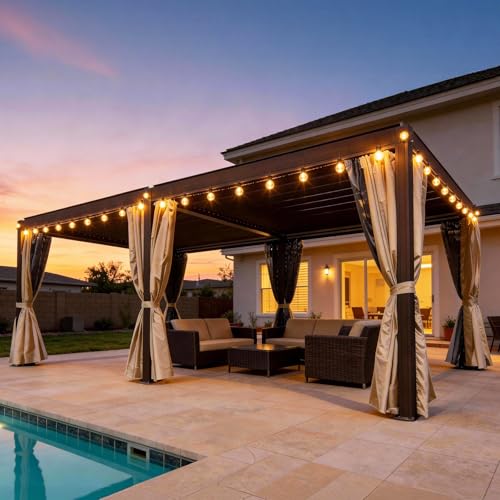
A fixed hardtop gives you constant cover, while this 12-by-20-foot pergola adds a crank-operated louver roof for a more adjustable patio routine. Louvers are rotating roof slats, and this system opens from 0 to 90 degrees so you can change shade and ventilation through the day.
The full-aluminum roof and poles set it apart from the steel-roof gazebos above, while hidden gutters keep drainage within the roof structure. Depending on your sun exposure, that hands-on roof control may matter more than a permanently shaded ceiling.
The Upside
- The crank lets you alter light and airflow without moving furniture.
- Full-aluminum construction resists rust and corrosion.
- Hidden gutters keep the roofline visually cleaner around a patio.
- Included curtains and netting expand privacy options.
- 240 square feet suits outdoor meals and relaxed seating.
- Pre-drilled bases help plan a fixed anchored installation.
Minor Gripes
- The louver mechanism adds a control step compared with a fixed hardtop.
- Expansion screws are suggested, so your mounting surface deserves a close check.
The Domi 12’X12′ Gazebo brings the hardtop formula into a more contained square layout, with 144 square feet under a galvanized-steel double roof. Compared with the 14-foot-wide Domi structures, it is much easier to picture beside a compact patio dining set or four-piece lounge arrangement.
Three J-hooks, curtains, and removable netting support a finished outdoor room rather than just a roofed platform. One thing worth considering is that 12 feet in each direction still needs a clear foundation and sensible walking clearance around the posts.
Advantages To Know
- Square proportions suit patios that cannot accept a long rectangular roofline.
- Three J-hooks create dedicated spots for lights or small hanging accessories.
- Removable netting supports ventilation during casual outdoor meals.
- Privacy curtains help separate the seating area from nearby neighbors.
Room For Improvement
- Its 144-square-foot interior is less suited to very large entertaining layouts.
- Local installation requirements deserve review before anchoring the frame.
- Pre-drilled bases need anchors matched to your patio material.
Not every outdoor refresh needs a new structure, and these four khaki side panels target existing 10-by-10-foot gazebos. Each polyester panel combines a privacy curtain with a pull-up mesh window, letting you choose between a more enclosed wall and a ventilated screened opening.
Loops suit square or round pipes, while hooks work with slide rails, so the attachment options cover several pavilion layouts. You need to measure your gazebo carefully first, since this set contains curtains only and does not include a frame or canopy.
Well-Handled Touches
- Pull-up mesh windows let you add airflow without removing whole panels.
- Four panels can enclose all sides of a compatible 10-by-10 structure.
- Loop and hook attachments give you two mounting approaches.
Points To Note
- Compatibility depends on your existing gazebo dimensions and hanging system.
- You supply the canopy and metal frame separately.
- The khaki color should suit your current outdoor setup before purchase.
- Washable panels need dry storage between seasons.
Made For
You get the most from this set with a compatible 10-by-10 gazebo frame that needs more privacy and screening.
Consider Something Else When
Domi 10×12 Outdoor Hardtop Gazebo, Brown suits you better when you need a complete hardtop structure rather than replacement walls.
Vehicle coverage calls for a different layout, and the PHI VILLA 10-by-20 carport prioritizes open-sided access beneath corrugated steel roofing. Its powder-coated iron frame uses square pipes, while galvanized roof panels and water-stop strips focus on managing weather exposure around stored vehicles.
The stated 100-mph wind rating is notably higher than the 40-mph figures on several Domi hardtops. For a driveway, boat parking area, or equipment zone, that open design may be more practical than curtains and netting, though it offers less privacy.
A Few Highlights
- A 10-by-20 footprint suits vehicle, boat, or equipment coverage.
- Corrugated steel roofing creates a dedicated overhead weather barrier.
- Water-stop strips address potential leakage points along roof panels.
- The open sides make vehicle entry and exit straightforward.
Softer Spots
- Open sides do not provide the enclosed feel of a curtain-equipped gazebo.
- Measure vehicle width, height, and turning clearance before assigning a parking spot.
Right Fit For
You benefit most from this carport with a driveway or yard space dedicated to vehicles, boats, or outdoor equipment.
Not Your Match When
Aoxun 12’x10′ Hardtop Gazebo, Brown suits you better when your priority is screened backyard seating with curtains.
At 10 by 12 feet, this Domi hardtop gazebo makes more sense for a defined patio nook than the large 14-by-24 structures higher in the list. The aluminum and galvanized-steel build uses a double roof for ventilation, and the sloped profile helps move rain and snow downward.
Its included curtains and netting let you create a more contained outdoor dining or reading corner. In a smaller yard, the 20-pound-rated hook can be handy for a light or fan, but you should keep the total hanging load within that stated limit.
A Favorable Mix
- 10-by-12 dimensions fit patios where a 12-foot square feels too broad.
- Double roofing promotes airflow over a compact seating arrangement.
- Curtains and netting offer privacy and a screened layer.
- The hook supports hanging accessories up to 20 pounds.
- Aluminum and galvanized steel resist fading, rust, and corrosion.
Small Caveats
- The compact floor area limits large table-and-lounge combinations.
The Aoxun uses a double-layer polycarbonate roof rather than the galvanized-steel roofing found on the Domi hardtops. Polycarbonate is a rigid plastic panel material, and here it is paired with a powder-coated frame, removable polyester curtains, and zippered inner netting.
The 12-by-10 footprint suits a small patio conversation set or compact dining arrangement. For a backyard retreat where screened ventilation matters, its hooks provide useful hanging points for a light, fan, or decorations, though you need to decide whether polycarbonate is your preferred roof material.
Strengths Worth Knowing
- Polycarbonate double roofing combines overhead cover with airflow space.
- Removable curtains create a more private outdoor sitting area.
- Zippered netting keeps the sides usable while maintaining ventilation.
- Hanging hooks support lights, fans, or decorative accessories.
Areas To Watch
- The 12-by-10 footprint is geared toward smaller gatherings rather than large hosted events.
- Review the illustrated installation directions before selecting your placement surface.
- Your roof-material preference matters, since this uses polycarbonate rather than steel.
Best Suited To
You benefit most from this gazebo with a smaller patio that needs curtains, netting, and a polycarbonate roof.
A Better Fit Elsewhere
Domi 12×20 Aluminum Outdoor Louvered Pergola suits you better where adjustable shade and airflow matter throughout the day.
What Matters Before You Set Up a Gazebo
Match the Footprint to Furniture
Measure the intended pad, then map the furniture you want beneath the roof plus walking room around every post. A 10-by-12 gazebo can suit a compact dining setup, while a 14-by-24 structure is designed for much broader hosting layouts. Leave room for curtain movement and door access rather than measuring only the tabletop.
Look Closely at Roof Design
A double roof creates a raised vent zone that can encourage airflow under the canopy. Sloped hardtops direct precipitation downward, while louvered pergolas let you adjust the roof angle for changing sun. Your local weather and whether you want fixed cover or daily control should drive this decision.
Plan the Mounting Surface
Permanent-style structures with pre-drilled bases need a level surface and anchors suited to that surface. Concrete patios, decks, and compacted ground call for different preparation, so confirm the installation instructions before selecting a location. Local rules can also apply to larger freestanding structures.
Decide How Much Enclosure You Need
Curtains create privacy, while netting adds a screened barrier without blocking as much airflow. Open carports prioritize access for vehicles instead. A gazebo near close neighbors usually benefits from panels, while an open lawn dining area may need only a roof.
Details That Separate Similar-Looking Shelters
Common Shopping Slip Ups
Measuring only the roof area is a frequent mistake. Account for post locations, curtain clearance, furniture, anchors, and walking paths before settling on a size.
Where the Extra Money Goes
Higher-tier structures often add aluminum frames, integrated gutters, thicker supports, adjustable louvers, or more substantial hardtop materials. Spending more makes sense where daily patio use, exposed placement, or control over sunlight is central to your setup.
Frequently Asked Questions
What gazebo size works for a patio dining set?
A 10-by-12 or 12-by-12 layout can suit a compact dining arrangement. Measure the table, chairs pulled out, and circulation space before deciding.
Are double-roof gazebos useful in warm weather?
Yes, a raised double roof supports airflow through the roof area. That design can make a covered seating space feel less closed in during warm afternoons.
Do gazebo curtains and netting serve different purposes?
Yes, curtains add privacy and visual separation. Netting creates a screened layer while allowing more air movement and outward visibility.
What should you check before anchoring a gazebo?
Check that the surface is level and appropriate for the supplied base design. You should also review local requirements for permanent outdoor structures.
Is a louvered pergola different from a hardtop gazebo?
Yes, a louvered pergola uses adjustable roof slats that change shade and ventilation. A fixed hardtop gazebo keeps its roof position unchanged.