

You know that moment while a bargain finds you—a crisp $50 bill folded into a coat pocket—and it feels like luck? Picking a gaming PC under $1,000 is a lot like that: you can land surprisingly powerful parts—6+ core CPUs, NVMe drives, and midrange GPUs—that outmaneuver their price tags. I’ll walk you through five systems that do exactly that and what makes each one a smart buy, so you can spot the real value quickly.
| Gaming PC i7 GTX 1660 Super 512GB 16GB RAM |
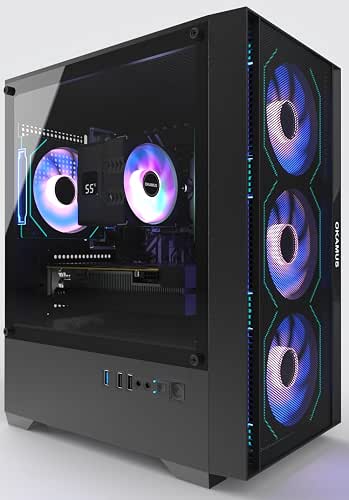
| Best 1080p Performer | Processor (CPU): Intel Core i7 (high-performance i7) | Graphics Card (GPU): NVIDIA GTX 1660 Super (6 GB) | System Memory (RAM): 16 GB RAM | VIEW LATEST PRICE | Read Our Analysis |
| GMKtec K11 Mini Gaming PC – Ryzen 9 32GB,1TB |

| Powerhouse Compact | Processor (CPU): AMD Ryzen 9 8945HS (8c/16t, up to 5.4 GHz) | Graphics Card (GPU): Integrated/APU GPU (Ryzen 9 with external eGPU/expansion support) — primary listing focuses on CPU/APU platform and Oculink for eGPU | System Memory (RAM): 32 GB DDR5 (5600 MT/s), expandable to 128 GB | VIEW LATEST PRICE | Read Our Analysis |
| CYBERPOWERPC Gamer Master PC Ryzen 5 7600 RTX 4060 |
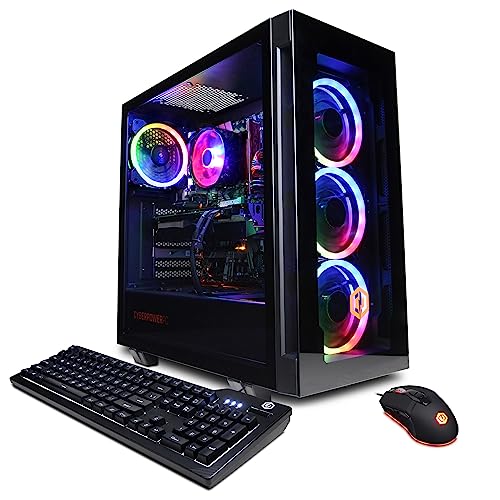
| Best GPU Value | Processor (CPU): AMD Ryzen 5 7600 (6c/12t, 3.8 GHz base) | Graphics Card (GPU): NVIDIA GeForce RTX 4060 (8 GB) | System Memory (RAM): 16 GB DDR5 RAM | VIEW LATEST PRICE | Read Our Analysis |
| STGAubron Gaming PC Desktop — Intel i7 RX 580 |

| Classic Value Pick | Processor (CPU): Intel Core i7 (4th gen, up to 3.9 GHz) | Graphics Card (GPU): AMD Radeon RX 580 (8 GB GDDR5) | System Memory (RAM): 16 GB RAM | VIEW LATEST PRICE | Read Our Analysis |
| NOVATECH Phantom Prebuilt Gaming PC – Xeon i7 RX580 |

| Reliable Workhorse | Processor (CPU): Intel Xeon E3 V6 (i7-class, 3.5 GHz) | Graphics Card (GPU): AMD Radeon RX 580 | System Memory (RAM): 16 GB DDR4 RAM | VIEW LATEST PRICE | Read Our Analysis |
More Details on Our Top Picks
Gaming PC i7 GTX 1660 Super 512GB 16GB RAM
Provided that you want solid 1080p performance without breaking the bank, this i7 system with a GTX 1660 Super delivers — it balances a high-performance Intel i7, 16 GB RAM, and a 512 GB M.2 for fast load times, making it ideal for gamers who stream, multitask, or create content on a budget. You’ll get smooth 1080p frame rates and reliable multitasking with 16 GB under load. The GTX 1660 Super 6GB is pre-removed and boxed for safe transit, so you just plug it into the PCIe slot. Four ARGB fans, a digital temp cooler, WiFi 6, Bluetooth, and Windows 11 round it out.
- Processor (CPU):Intel Core i7 (high-performance i7)
- Graphics Card (GPU):NVIDIA GTX 1660 Super (6 GB)
- System Memory (RAM):16 GB RAM
- Primary Storage:512 GB M.2 SSD
- Operating System:Windows 11 Home
- Networking (Wi‑Fi / Ethernet / Bluetooth):Wi‑Fi 6; Bluetooth 5.2/5.3; Ethernet implied via standard desktop I/O
- Additional Feature:ARGB lighting remote
- Additional Feature:Digital temp-display cooler
- Additional Feature:Pre-removed boxed GPU
GMKtec K11 Mini Gaming PC – Ryzen 9 32GB,1TB
Should you want desktop-class Ryzen performance in a compact, upgradeable chassis, the GMKtec K11 Mini is a smart pick—its Ryzen 9 8945HS (up to 5.4 GHz) and 32GB of DDR5 let you handle gaming, streaming, and content work without bottlenecks. You’ll appreciate three power modes (Quiet 35W, Balance 54W, Performance 65W) and an upgradeable TDP to 70W for sustained clocks. Dual-channel 5600 MT/s RAM and a 1TB PCIe 4.0 SSD are ready now and expandable (128GB RAM, up to 8TB storage). Oculink enables eGPU use, four simultaneous 4K outputs, dual NIC, Wi‑Fi 6, and dependable cooling with low noise.
- Processor (CPU):AMD Ryzen 9 8945HS (8c/16t, up to 5.4 GHz)
- Graphics Card (GPU):Integrated/APU GPU (Ryzen 9 with external eGPU/expansion support) — primary listing focuses on CPU/APU platform and Oculink for eGPU
- System Memory (RAM):32 GB DDR5 (5600 MT/s), expandable to 128 GB
- Primary Storage:1 TB PCIe 4.0 M.2 SSD (dual Gen4 slots)
- Operating System:(Not explicitly stated as different) — UEFI/BIOS configurable; sells as Mini PC (assumed Windows-ready) [product focuses on hardware; OS not highlighted]
- Networking (Wi‑Fi / Ethernet / Bluetooth):Wi‑Fi 6; Intel i226V 2.5GbE LAN; Bluetooth 5.2
- Additional Feature:Oculink for eGPU
- Additional Feature:Triple UEFI performance modes
- Additional Feature:Dual PCIe Gen4 SSD slots
CYBERPOWERPC Gamer Master PC Ryzen 5 7600 RTX 4060
Should you want strong 1080p performance without spending over $1,000, the CYBERPOWERPC Gamer chief pairs a Ryzen 5 7600 CPU with an RTX 4060 to deliver smooth high-frame-rate gaming and solid multitasking out of the box. You get a 3.8 GHz six-core, 12-thread processor, 16 GB DDR5, and a 500 GB PCIe Gen4 SSD that boots fast and handles modern titles well. The RTX 4060’s 8 GB VRAM and HDMI plus two DisplayPorts support crisp gameplay across monitors. The tempered-glass case, RGB lighting, included keyboard and mouse, Windows 11, warranty, and lifetime tech support round out the package.
- Processor (CPU):AMD Ryzen 5 7600 (6c/12t, 3.8 GHz base)
- Graphics Card (GPU):NVIDIA GeForce RTX 4060 (8 GB)
- System Memory (RAM):16 GB DDR5 RAM
- Primary Storage:500 GB PCIe Gen4 NVMe SSD
- Operating System:Windows 11 Home 64-bit
- Networking (Wi‑Fi / Ethernet / Bluetooth):802.11ac Wi‑Fi ready; Gigabit Ethernet (RJ-45); 7.1 audio (Bluetooth not specified)
- Additional Feature:Tempered glass side panel
- Additional Feature:Included mouse and keyboard
- Additional Feature:Free lifetime tech support
STGAubron Gaming PC Desktop — Intel i7 RX 580
Provided you want a budget-friendly desktop that handles 1080p gaming and multitasking without breaking the bank, the STGAubron Gaming PC is a solid pick—its quad-core Intel i7 (4th gen) paired with an RX 580 8GB lets you play most modern titles at smooth frame rates while juggling streaming or editing. You get 16GB RAM, a snappy 512GB SSD, and Windows 11 Home ready out of the box. Connectivity includes HDMI, DisplayPort, DVI, Wi‑Fi 6, Bluetooth 5.0, and Ethernet. RGB lighting, four RGB fans, mouse and keyboard round out the package, plus a one‑year warranty.
- Processor (CPU):Intel Core i7 (4th gen, up to 3.9 GHz)
- Graphics Card (GPU):AMD Radeon RX 580 (8 GB GDDR5)
- System Memory (RAM):16 GB RAM
- Primary Storage:512 GB SSD
- Operating System:Windows 11 Home 64-bit
- Networking (Wi‑Fi / Ethernet / Bluetooth):Wi‑Fi 6; RJ-45 Ethernet; Bluetooth 5.0
- Additional Feature:Serial port included
- Additional Feature:Four RGB fans
- Additional Feature:Claims 60+ FPS titles
NOVATECH Phantom Prebuilt Gaming PC – Xeon i7 RX580
Should you want a budget-friendly rig that prioritizes raw multitasking and reliable 1080p gaming, the NOVATECH Phantom delivers with its Xeon E3-class CPU and 16 GB of DDR4 RAM. You’ll get an i7-class 3.5 GHz Xeon, RX580 graphics, and a 512 GB M.2 SSD for fast boots and responsive performance. It handles CS2, VR, and demanding apps while streaming 4K content. The tower’s RGB fans, built-in Wi‑Fi and Bluetooth keep connectivity tidy. Windows 11 ships ready, and a one-year warranty plus manufacturer support gives peace of mind for entry-level enthusiasts.
- Processor (CPU):Intel Xeon E3 V6 (i7-class, 3.5 GHz)
- Graphics Card (GPU):AMD Radeon RX 580
- System Memory (RAM):16 GB DDR4 RAM
- Primary Storage:512 GB M.2 SSD
- Operating System:Windows 11 (primary shipping OS)
- Networking (Wi‑Fi / Ethernet / Bluetooth):Built-in Wi‑Fi and Bluetooth (versions not specified)
- Additional Feature:Xeon E3 V6 CPU
- Additional Feature:VR-capable gaming mention
- Additional Feature:High-quality tower chassis
Factors to Consider When Choosing a Gaming Computer Under 1000
Upon picking a gaming PC under $1000, you’ll want to balance processor performance with the graphics card to match the games you play. Check memory size and whether you can upgrade later, plus pick an SSD and adequate storage space. Also consider cooling solutions and noise levels so your system runs reliably without being distracting.
Processor Performance Needs
Speculating how much CPU power you really need for 1080p gaming on a sub-$1000 rig? You should aim for at least 6 cores and 12 threads to keep frame pacing consistent in CPU-heavy titles and while streaming. Prioritize single-thread performance and base/turbo clocks around 3.5–4.5 GHz because many games still favor higher per-core frequency for FPS. Pick a chip with a power envelope that sustains turbos—35–65W+ in small builds or 65W+ in desktops—to avoid thermal throttling during long sessions. Confirm motherboard support for DDR4/DDR5 and PCIe 4.0 to future-proof bandwidth for NVMe storage and upcoming GPUs. Beyond roughly eight cores, returns diminish unless you stream or run other CPU-intensive workloads.
Graphics Card Choice
Your CPU choice sets the ceiling for what your GPU can deliver, so pick a graphics card that complements a 6-core/12-thread chip and 16 GB of dual-channel RAM to hit smooth 1080p gameplay. Prioritize GPUs with at least 4–6 GB VRAM—4 GB can limit modern AAA titles at higher settings, while 6 GB is a safer baseline for 1080p. Focus on real benchmarks that show 60+ FPS on medium-to-high settings in your preferred games rather than chasing model names. Check the card’s TDP and make certain your 450–600W PSU and case cooling can sustain peak clocks. Finally, verify physical fit and slot width so the card fits your case and leaves room in the budget for future upgrades.
Memory And Upgradability
Consider memory and upgrade options as the parts that keep a sub-$1000 gaming PC flexible: aim for 16 GB in a dual-channel kit (2×8 GB) to handle modern games and background apps, pick DDR4 3200+ or DDR5 4800+ depending on the platform, and confirm the motherboard’s DIMM count and max capacity so you can cheaply add RAM later. You should prefer two-module kits for better bandwidth and smoother frame pacing versus a single stick. Check the board supports user-replaceable UDIMM/SODIMM and how many slots remain free; a 4-slot board gives cheaper incremental upgrades. Also verify maximum supported capacity (64/128 GB) and that expansion won’t force a motherboard swap, so you can extend memory as workloads grow.
Storage Type And Size
With RAM and upgrade paths locked in, storage is the next area that affects load times and how many games you can keep installed. Prioritize an NVMe PCIe SSD (2280 M.2) for your boot drive — it’s typically 3–6× faster than SATA SSDs, cutting boot and game load times dramatically. Aim for 500 GB–1 TB total SSD capacity so the OS plus several AAA titles fit comfortably. Should you need more space on a budget, use a dual-storage setup: a 256–512 GB NVMe for OS/games and a 1–2 TB HDD for media and backups. Check motherboard slots and PCIe generation (3.0 vs 4.0) for future upgrades, and confirm NVMe heatsinks or airflow to avoid thermal throttling.
Cooling And Noise Levels
Often overlooked, cooling and noise determine whether you’ll enjoy long gaming sessions or get distracted via throttling and whirring fans. Check the case airflow layout and fan count: more intake/exhaust fans and unobstructed front-to-back flow lower GPU/CPU temps under load. Verify CPU coolers and GPU thermal solutions—heat pipes, vapor chambers, and copper bases—so components sustain boost clocks instead of thermal throttling. Look for measured noise ratings (dBA) and aim for systems below ~35 dBA at idle to avoid distracting background noise. Confirm fan control options and preset modes (quiet, balance, performance) so you can trade noise for cooling whenever necessary. Finally, make sure the chassis and PSU allowance for larger or extra fans and taller aftermarket coolers for future upgrades.
Power Supply Reliability
Frequently overlooked, the power supply is the backbone of any sub-$1000 gaming PC, and you’ll want one that’s efficient, stable, and protected. Choose at least an 80 PLUS Bronze unit—Gold is better—to keep efficiency ≥82–87%, cut heat, and lower bills. Match wattage to headroom: 450–650W covers most single-GPU 1080p builds while leaving ~20–30% spare for aging and upgrades. Verify stable +12V delivery with low ripple and voltage regulation within ±5% to shield CPU/GPU. Prioritize protections (OCP, OVP, UVP, SCP, OPP) and a minimum three-year warranty. Prefer high-quality internals like Japanese capacitors, reliable fan bearings, and modular or semi-modular cables to improve airflow, reduce clutter, and simplify future swaps.
Connectivity And Ports
Power delivery and ports both determine how your rig performs in the real world, so after picking a reliable PSU you’ll want to check connectivity and I/O. Make sure the PC includes at least one Gigabit Ethernet port for stable, low-latency online play; consider 2.5GbE in case you want faster wired networking. Look for Wi‑Fi 6 and Bluetooth 5.x for better wireless throughput and reliable headsets/controllers. Confirm multiple display outputs — HDMI (2.0/2.1) and DisplayPort (1.4/2.0) — to drive high-refresh or multi-monitor setups at native resolutions. Check for a healthy mix of USB ports: USB‑A 3.0 minimum and preferably USB‑C/USB4 for fast peripherals and external SSDs. Finally verify high-bandwidth expansion like PCIe x4, Thunderbolt, or Oculink for add-on eGPUs or capture devices.
Future Upgrade Options
While a $1,000 gaming PC can be a great starting point, you’ll want to confirm upgrade headroom so future improvements don’t force expensive replacements. Check the power supply’s wattage and PCIe connectors (6/8‑pin) to make certain it can feed a stronger GPU or CPU without immediate replacement. Verify the motherboard’s socket, chipset, supported TDP and BIOS updateability so you can accept newer or higher‑power CPUs. Confirm physical expansion—PCIe x16/x4 lanes, M.2 slots, and drive bays—and that the case fits longer GPUs and extra drives. Inspect RAM headroom: DIMM slot count, maximum supported DDR generation, capacity and speed for upgrades from 16 GB to 32–64+ GB. Finally, be sure the chassis and cooling have fan mounts, radiator space and CPU cooler clearance for higher‑TDP parts.
