

For the best Ethernet home automation hubs in 2026, consider the Cudy GS105 and NETGEAR GS105NA for reliable 5-port gigabit connectivity with fanless, quiet operation. The NETGEAR GS305 offers similar features with efficient jumbo frame support, while the NETGEAR 8-Port switch suits larger setups. These hubs deliver fast, secure, and energy-efficient performance, perfect for growing smart homes. Keep exploring to uncover key factors that’ll help you pick the ideal switch for your network.
| Cudy GS105 5-Port Gigabit Ethernet Switch |

| Reliable Metal Build | Number of Ports: 5 Gigabit RJ45 ports | Data Transfer Rate per Port: 1000 Mbps per port | Management Type: Unmanaged, plug-and-play | VIEW LATEST PRICE | Read Our Analysis |
| NETGEAR 5-Port Gigabit Ethernet Switch (GS105NA) |
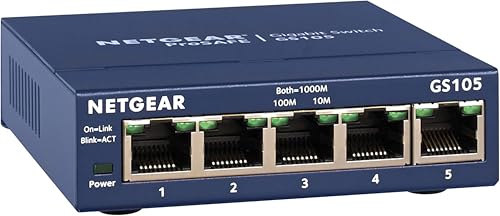
| Professional Lifetime Warranty | Number of Ports: 5 auto-sensing Gigabit RJ45 ports | Data Transfer Rate per Port: 1000 Mbps per port | Management Type: Unmanaged, plug-and-play | VIEW LATEST PRICE | Read Our Analysis |
| NETGEAR 8-Port Gigabit Ethernet Unmanaged Switch |
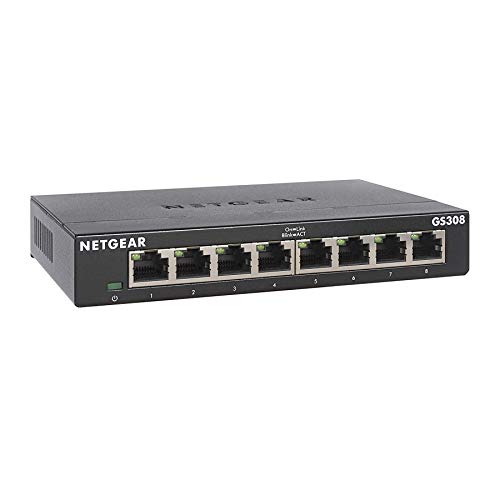
| Best for Larger Networks | Number of Ports: 8 Gigabit Ethernet (RJ45) ports | Data Transfer Rate per Port: 1 Gbps (1000 Mbps) | Management Type: Unmanaged, plug-and-play | VIEW LATEST PRICE | Read Our Analysis |
| NETGEAR 5-Port Gigabit Ethernet Switch (GS305) |

| Top-Rated Essentials | Number of Ports: 5 Gigabit Ethernet ports | Data Transfer Rate per Port: 1000 Mbps | Management Type: Unmanaged, plug-and-play | VIEW LATEST PRICE | Read Our Analysis |
More Details on Our Top Picks
Cudy GS105 5-Port Gigabit Ethernet Switch
Should you’re looking for a reliable, no-fuss way to expand your home network, the Cudy GS105 5-Port Gigabit Ethernet Switch delivers plug-and-play convenience with five high-speed RJ45 ports. This unmanaged switch supports speeds up to 1000 Mbps per port, ensuring smooth streaming, gaming, and file transfers. Its durable metal, fanless design keeps it cool and quiet, while energy-efficient tech minimizes power use. You can place it on your desk or mount it on a wall. Compact and lightweight, the GS105 is perfect for enhancing your home automation hub without complicated setup or maintenance.
- Number of Ports:5 Gigabit RJ45 ports
- Data Transfer Rate per Port:1000 Mbps per port
- Management Type:Unmanaged, plug-and-play
- Case Material and Design:Metal case, fanless design
- Installation Options:Desktop placement or wall-mount
- Energy Efficiency Compliance:Energy-efficient power-saving technology (2W max)
- Additional Feature:Jumbo frame support (15 KB)
- Additional Feature:Fanless metal housing
- Additional Feature:Low power consumption (2W max)
NETGEAR 5-Port Gigabit Ethernet Switch (GS105NA)
Provided that you need a reliable and silent switch to connect multiple gigabit devices in your home automation setup, the NETGEAR 5-Port Gigabit Ethernet Switch (GS105NA) fits the bill perfectly. With five auto-sensing 10/100/1000 Mbps ports, it guarantees fast, full-duplex data transfer up to 2000 Mbps per port. Its fanless, sturdy metal design keeps noise minimal and durability high. Setup is plug-and-play, with desktop or wall-mount options included. You’ll appreciate features like DSCP-based QoS, jumbo frame support, and energy-efficient operation. Backed through a limited lifetime warranty and excellent customer ratings, it’s a solid choice for your network needs.
- Number of Ports:5 auto-sensing Gigabit RJ45 ports
- Data Transfer Rate per Port:1000 Mbps per port
- Management Type:Unmanaged, plug-and-play
- Case Material and Design:Sturdy metal case, fanless design
- Installation Options:Desktop or wall-mount placement, wall-mount kit included
- Energy Efficiency Compliance:Energy Efficient Ethernet compliant (IEEE 802.3az)
- Additional Feature:DSCP-based QoS support
- Additional Feature:Next-day replacement service
- Additional Feature:Wall-mount kit included
NETGEAR 8-Port Gigabit Ethernet Unmanaged Switch
Should you need a straightforward, reliable way to connect multiple devices in your home or office network, the NETGEAR 8-Port Gigabit Ethernet Unmanaged Switch is a perfect fit. With eight Gigabit Ethernet ports, it offers plug-and-play convenience—no setup required. Its silent, fanless design guarantees quiet operation, while energy-efficient IEEE 802.3az compliance keeps power use low. Compact and durable, you can place it on a desk or mount it on a wall. Supporting auto-negotiation and non-blocking switching, this metal-cased hub delivers fast, stable connections. It comes with a 3-year warranty and enjoys top customer ratings.
- Number of Ports:8 Gigabit Ethernet (RJ45) ports
- Data Transfer Rate per Port:1 Gbps (1000 Mbps)
- Management Type:Unmanaged, plug-and-play
- Case Material and Design:Metal case, fanless operation
- Installation Options:Desktop placement or wall mount
- Energy Efficiency Compliance:Energy-efficient design compliant with IEEE 802.3az
- Additional Feature:8-port capacity
- Additional Feature:3-year limited warranty
- Additional Feature:Silent fanless operation
NETGEAR 5-Port Gigabit Ethernet Switch (GS305)
Provided you’re looking to quickly set up a reliable wired network without fuss, the NETGEAR 5-Port Gigabit Ethernet Switch (GS305) fits the bill perfectly. This unmanaged, plug-and-play hub requires no software or configuration, letting you connect up to five devices at gigabit speeds effortlessly. Its silent, fan-less design guarantees noise-free operation, while the compact metal case can sit on your desk or mount on a wall. Energy-efficient and equipped with LED indicators for each port, it’s an ideal choice for home automation setups. Plus, it comes with a solid three-year warranty for peace of mind.
- Number of Ports:5 Gigabit Ethernet ports
- Data Transfer Rate per Port:1000 Mbps
- Management Type:Unmanaged, plug-and-play
- Case Material and Design:Metal case, fanless operation
- Installation Options:Desktop placement or wall mount
- Energy Efficiency Compliance:Energy-efficient design compliant with IEEE 802.3az
- Additional Feature:EU spare part availability
- Additional Feature:Wide voltage input (100–240 V)
- Additional Feature:Industry 3-year warranty
Factors to Consider When Choosing Ethernet Home Automation Hubs
When picking an Ethernet home automation hub, you’ll want to weigh how many ports it offers and the data transfer speed to keep your devices running smoothly. Don’t forget to check power consumption efficiency and the quality of the build materials for long-term reliability. Also, look for installation flexibility so setup is easier in your space.
Number Of Ports
Figuring out the right number of ports for your Ethernet home automation hub means counting all the wired devices you plan to connect—controllers, cameras, smart plugs, and more—and adding 20–30% extra to handle future growth or temporary setups. Make sure to match port count with your network segmentation needs by reserving separate ports for critical devices like your home automation controller and PoE cameras. Should you employ Power over Ethernet (PoE) devices, verify your hub has enough PoE-capable ports or plan for injectors. Consider hubs with more ports than you currently need for centralized wiring and neatness. Keep in mind, more ports mean bigger size and higher power use, so pick a model that fits your available rack or closet space and power budget.
Data Transfer Speed
Increase your home automation’s responsiveness via choosing an Ethernet hub that supports high data transfer speeds. Opt for hubs and switches with at least gigabit Ethernet (1000 Mbps) to handle streaming high-res video, large media transfers, or multiple simultaneous data flows smoothly. Make certain the hub supports full-duplex operation so each port can send and receive data simultaneously, effectively doubling bandwidth for two-way traffic. Also, consider the switching capacity and forwarding rate to avoid bottlenecks whenever handling aggregate network traffic. Jumbo frame support (up to 9–15 KB) is beneficial for efficient large-packet transfers, reducing CPU load and enhancing throughput. Finally, verify your cabling and connected devices support the target speeds to maximize end-to-end performance and truly unlock your home automation system’s potential.
Power Consumption Efficiency
After ensuring your Ethernet hub delivers the speed and capacity your home automation needs, you’ll want to focus on how much power it consumes. Check the hub’s idle and maximum power draw—many efficient devices use under 3 W at idle and just slightly more under load, helping you save on energy costs. Prefer hubs supporting Energy Efficient Ethernet (IEEE 802.3az) to reduce power during low traffic. Look for fanless, passive-cooled designs with metal or vented enclosures to avoid extra energy use and noise from fans. Consider how many ports you need; consolidating devices on one energy-efficient hub usually consumes less power than multiple switches. Also, evaluate the power supply’s efficiency and whether the hub supports low-voltage DC operation to minimize conversion losses.
Build Quality Materials
Choosing an Ethernet home automation hub means paying close attention to build quality materials, as they directly impact durability and performance. Opt for metal or aluminum enclosures since they offer superior heat dissipation and mechanical strength compared to plastic, helping prevent thermal throttling and extending lifespan. Look for fanless, convection-cooled designs to reduce noise and mechanical failure while keeping components cool. Make certain RJ45 ports are solidly mounted with strain relief to avoid damage from repeated cable use. Check that the chassis includes mounting options like rubber feet or wall brackets and secure PCB mounting to minimize vibration. Finally, prioritize enclosures with proper EMI shielding and grounded metal construction to maintain network signal stability and reduce electromagnetic interference.
Installation Flexibility Options
When setting up your Ethernet home automation hub, you’ll want to take into account installation flexibility to make certain it fits seamlessly into your space. Check whether the hub supports both desktop placement and wall-mounting, and confirm mounting hole spacing and weight limits for secure installation. Verify its operating temperature range and ventilation needs—fanless designs work best in enclosed spots like closets or attics. Confirm power input requirements and whether it supports PoE, ensuring nearby outlets or PoE-enabled ports are available to avoid extra adapters. Consider port density and layout to prevent cable congestion on your rack or shelf. Finally, opt for energy-efficient, quiet hubs provided that you’ll place them in inhabited areas where noise and heat matter. This way, your setup stays neat, functional, and discreet.
Network Compatibility Standards
Beyond physical setup, your Ethernet home automation hub must align with your network’s technical standards to guarantee smooth communication and dependable performance. Make sure it supports IEEE 802.3 standards (10/100/1000 Mbps) with auto-negotiation, so it interoperates flawlessly with your existing devices and achieves expected speeds. Check for full-duplex operation and 802.3x flow control to minimize collisions and enhance throughput whenever multiple devices communicate simultaneously. In case you plan to power devices via Ethernet, confirm compatibility with PoE standards (802.3af/at/bt). Also, verify support for both IPv4 and IPv6 addressing along with standard routing and ARP behaviors to integrate seamlessly into modern networks. Finally, in case you need traffic prioritization or segmentation, make certain the hub honors VLAN tagging (802.1Q) and QoS/DSCP markings for reliable automation performance.
Warranty And Support
Although the initial cost matters, you should also weigh the warranty and support options carefully as you pick an Ethernet home automation hub. Check the warranty length and type—multi-year limited warranties offer better coverage than just one year. See whether the warranty includes on-site or next-business-day replacement, which minimizes downtime, or whether it only covers repair and return. Know what’s excluded, like wear-and-tear or accidental damage, so you’re not caught off guard by repair costs. Also, investigate technical support channels: 24/7 phone, live chat, email, or forums. Quick, reliable responses matter. Finally, verify the vendor’s firmware and security update policy to make certain your hub stays secure and reliable long-term. These factors safeguard your investment and home automation experience.
