

In case you’ve used an HP Elite 6300 Tower with a big HDD for years, you know sluggish previews kill your workflow. You’ll want a system that pairs fast single‑core speed with lots of RAM, an NVMe scratch disk, and a color‑accurate display, and the six picks here hit those marks in different ways. Keep going to find which compact Dell, expandable HP tower, or Ryzen all‑in‑one fits how you edit.
| HP Elite 6300 Tower PC Core i5 16GB 3TB |
| Budget Workhorse | Processor: Intel Core i5-3470 (4-core, 3.2 GHz) | Memory (RAM): 16 GB DDR3 | Primary Storage Type & Size: 3 TB HDD | VIEW LATEST PRICE | Read Our Analysis |
| Dell OptiPlex 5060 Desktop PC – Intel i5 32GB |

| Value Performer | Processor: 8th Gen Intel Core i5 (hexa-core, ~3.2 GHz) | Memory (RAM): 32 GB DDR4 | Primary Storage Type & Size: 500 GB SSD (primary boot) | VIEW LATEST PRICE | Read Our Analysis |
| Dell Optiplex 7050 SFF i7-7700 32GB 1TB SSD |

| Compact Powerhouse | Processor: Intel Core i7-7700 (4-core, 3.6 GHz) | Memory (RAM): 32 GB DDR4 | Primary Storage Type & Size: 1 TB SSD | VIEW LATEST PRICE | Read Our Analysis |
| HP Workstation Desktop PC i5 Quadro K1200 32GB |

| Creative Workstation | Processor: Intel Core i5 (8th Gen, hexa-core) | Memory (RAM): 32 GB DDR4 | Primary Storage Type & Size: 1 TB SSD (plus 4 TB HDD) | VIEW LATEST PRICE | Read Our Analysis |
| Dell Optiplex 7070 Tower i7-9700 32GB 1TB SSD |

| High-Performance Pick | Processor: Intel Core i7-9700 (8-core, 3.4 GHz) | Memory (RAM): 32 GB DDR4 | Primary Storage Type & Size: 1 TB SSD | VIEW LATEST PRICE | Read Our Analysis |
| HP 27″ FHD Touchscreen All-in-One PC Ryzen 5 |

| Space-Saving All-in-One | Processor: AMD Ryzen 5 7520U (4-core, up to 4.3 GHz) | Memory (RAM): 16 GB | Primary Storage Type & Size: Up to 2 TB PCIe SSD | VIEW LATEST PRICE | Read Our Analysis |
More Details on Our Top Picks
HP Elite 6300 Tower PC Core i5 16GB 3TB
Should you’re editing photos on a budget and need reliable multitasking, the renewed 2018 HP Elite 6300 Tower delivers: its quad‑core Core i5 and 16 GB of RAM let you run Lightroom and basic Photoshop workflows smoothly, while the roomy 3 TB drive gives you plenty of local storage for RAW files. You’ll appreciate the Core i5‑3470’s 3.2 GHz base speed for responsive culling and batch exports. Integrated Intel HD 4000 limits heavy GPU tasks, so avoid intensive filters or large panoramas. Windows 10 Pro, Wi‑Fi, DVD‑ROM and multiple USB ports keep compatibility broad. It’s a cost‑effective option for entry-level editing.
- Processor:Intel Core i5-3470 (4-core, 3.2 GHz)
- Memory (RAM):16 GB DDR3
- Primary Storage Type & Size:3 TB HDD
- Graphics (GPU):Integrated Intel HD Graphics 4000
- Operating System:Windows 10 Pro (64-bit)
- Wireless Connectivity:Wi‑Fi
- Additional Feature:DVD-ROM optical drive
- Additional Feature:Large 3 TB HDD
- Additional Feature:Renewed 2018 model
Dell OptiPlex 5060 Desktop PC – Intel i5 32GB
Should you need a reliable photo-editing workstation that balances performance and value, the Dell OptiPlex 5060 with a hexa-core Intel i5 and 32GB of RAM delivers responsive multitasking and smooth 4K previews for demanding image workflows. You’ll get an 8th-gen i5 (3.2 GHz) and Intel HD 630 graphics capable of quick edits, fast rendering, and fluid multi-tab browsing. A 500GB SSD boots apps fast, and internal SATA expansion lets you add storage. Windows 11 Pro readiness, Wi‑Fi and Ethernet, plentiful USBs, DisplayPorts and USB‑C keep peripherals supported. Renewed via a Microsoft refurbisher with tech support and sustainability focus.
- Processor:8th Gen Intel Core i5 (hexa-core, ~3.2 GHz)
- Memory (RAM):32 GB DDR4
- Primary Storage Type & Size:500 GB SSD (primary boot)
- Graphics (GPU):Integrated Intel HD 630
- Operating System:Windows 11 Pro ready
- Wireless Connectivity:Wi‑Fi adapter included
- Additional Feature:USB Type-C port
- Additional Feature:DisplayPort x2 outputs
- Additional Feature:Microsoft refurbished
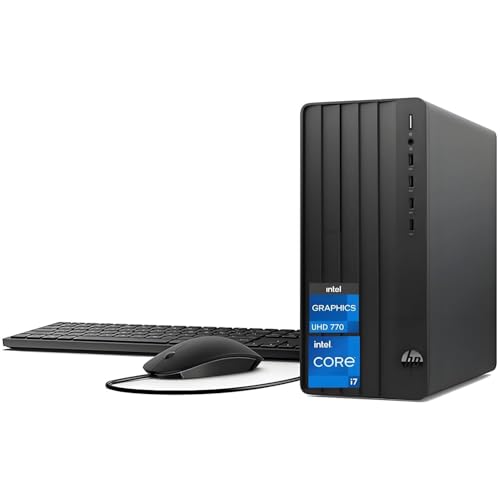
Dell Optiplex 7050 SFF i7-7700 32GB 1TB SSD
Should you need a reliable, no-frills editing workstation, the Dell OptiPlex 7050 SFF with an i7-7700, 32 GB RAM, and 1 TB SSD delivers snappy performance for multitasking and large photo libraries. You’ll get a professionally renewed small-form-factor PC with a tested core, 90-day seller warranty, and Windows 11 Pro ready for your photo apps. The i7-7700’s four cores and 3.6 GHz base clock handle editing and export tasks; 32 GB RAM prevents swapping. Fast SSD storage reduces load times. It supports dual monitors via HDMI and DisplayPort, includes Ethernet, Bluetooth, a USB WiFi adapter, keyboard, and mouse.
- Processor:Intel Core i7-7700 (4-core, 3.6 GHz)
- Memory (RAM):32 GB DDR4
- Primary Storage Type & Size:1 TB SSD
- Graphics (GPU):Integrated (supports HDMI/DisplayPort; no discrete GPU)
- Operating System:Windows 11 Pro (64-bit)
- Wireless Connectivity:USB Wi‑Fi adapter included
- Additional Feature:Small form factor
- Additional Feature:Bundled keyboard/mouse
- Additional Feature:90-day seller warranty
HP Workstation Desktop PC i5 Quadro K1200 32GB
Provided that you need a reliable workstation for heavy photo and 3D work, the HP with an Intel Core i5 hexacore and 32GB of DDR4 RAM delivers the multitasking power you’ll want for large RAW files and complex edits. You get a Quadro K1200 4GB GPU that’s ISV‑certified for Adobe, AutoCAD and 3D apps, ensuring driver stability and predictable performance. The 1TB SSD boots Windows 11 Pro quickly while a 4TB HDD stores projects. Ports are plentiful—USB-A, USB-C, DisplayPort, VGA, serial and Ethernet—plus Wi‑Fi and Bluetooth. It’s a solid, practical workstation for serious photo, video and CAD workflows.
- Processor:Intel Core i5 (8th Gen, hexa-core)
- Memory (RAM):32 GB DDR4
- Primary Storage Type & Size:1 TB SSD (plus 4 TB HDD)
- Graphics (GPU):NVIDIA Quadro K1200 4 GB (discrete)
- Operating System:Windows 11 Pro (Renewed)
- Wireless Connectivity:Wi‑Fi 5G (and Bluetooth)
- Additional Feature:NVIDIA Quadro K1200
- Additional Feature:Dual-drive (1TB SSD + 4TB HDD)
- Additional Feature:ISV-certified apps
Dell Optiplex 7070 Tower i7-9700 32GB 1TB SSD
Should you need fast, reliable multitasking for photo editing, the Dell OptiPlex 7070 Tower with its 9th‑gen i7-9700 and 32GB of RAM delivers the responsive performance you’ll appreciate while working with large RAW files and multiple layers. You get an octa-core CPU and 1TB SSD for quick boot and snappy file access, plus Intel UHD 630 supporting 4K output for accurate previews. Windows 11 Pro, Wi‑Fi 6 and ample USB including Type‑C keep workflows smooth. Refurbished through a Microsoft Authorized Refurbisher, it includes warranty and support, and offers internal SATA expansion should you require more storage.
- Processor:Intel Core i7-9700 (8-core, 3.4 GHz)
- Memory (RAM):32 GB DDR4
- Primary Storage Type & Size:1 TB SSD
- Graphics (GPU):Integrated Intel UHD Graphics 630
- Operating System:Windows 11 Pro
- Wireless Connectivity:Internal Wi‑Fi 6 PCIe adapter included
- Additional Feature:Internal Wi‑Fi 6 adapter
- Additional Feature:Octa-core i7-9700
- Additional Feature:PS/2 legacy ports
HP 27″ FHD Touchscreen All-in-One PC Ryzen 5
In case you need a compact, all-in-one workstation that balances everyday photo editing with responsive touch control, the HP 27″ FHD Touchscreen All-in-One with Ryzen 5 delivers—its 27″ FHD touchscreen and 16 GB of RAM make quick adjustments, layer work, and multitasking feel smooth without a separate monitor or tower. You get an AMD Ryzen 5 7520U (4 cores, 8 threads, up to 4.3 GHz) with integrated Radeon graphics, a 27″ IPS touch display (1920×1080, anti‑glare, 250 nits), and up to 2 TB PCIe SSD. Windows 11, USB-C, multiple USB-A, HDMI, Ethernet, Wi‑Fi, Bluetooth, plus keyboard, mouse, and an 8‑in‑1 hub round it out.
- Processor:AMD Ryzen 5 7520U (4-core, up to 4.3 GHz)
- Memory (RAM):16 GB
- Primary Storage Type & Size:Up to 2 TB PCIe SSD
- Graphics (GPU):Integrated AMD Radeon Graphics
- Operating System:Windows 11
- Wireless Connectivity:Wi‑Fi and Bluetooth
- Additional Feature:27″ FHD touch display
- Additional Feature:Includes PLUSERA hub
- Additional Feature:Wireless keyboard and mouse
Factors to Consider When Choosing a Desktop Computer for Photo Editing
Whenever choosing a desktop for photo editing, you’ll want a fast processor and enough RAM to handle large RAW files and multitasking. Prioritize SSD storage and a capable GPU for smoother edits and faster exports, and make sure your monitor offers accurate color reproduction. Balancing these factors will give you the performance and visual fidelity you need.
Processor Performance Needs
Although CPUs don’t get the spotlight like GPUs, you will observe faster, smoother editing with a processor that combines high single-core clocks (3.5 GHz+), strong multi-core performance (at least quad-core, 6–8 cores recommended), and a generous cache, since those traits speed up UI responsiveness, batch exports, and handling large RAW or multi-layer files. You should favor chips with high IPC and 8–16MB (or larger) cache to reduce latency whenever scrubbing images or stacking layers. For GPU-accelerated filters, pick a balanced CPU with solid multi-thread throughput so preprocessing and exports don’t bottleneck. Also consider sustained surge capability: good cooling and adequate TDP headroom let the processor maintain peak clocks during long edits and heavy export sessions.
RAM Capacity Requirements
Most photo editors will want to prioritize RAM capacity before speed: 8–16 GB can handle simple JPEG edits and light multitasking, but complex RAW files, panoramas, and heavy composites benefit from 32 GB, and power users working with huge layered or 16‑bit files should aim for 64 GB or more to avoid swapping and slow previews. You should choose capacity based on typical file types and multitasking: 8–16 GB for casual work, 32 GB for serious RAW and multi-app workflows, and 64+ GB for professional batch processing or massive layered files. Prioritize capacity initially, then match modules for dual/quad-channel operation and use at least DDR4-class memory. Leave 25–50% headroom to accommodate plugins, OS tasks, and future needs without performance drops.
Storage Type And Speed
Choose fast, durable storage to keep your photo edits smooth and your workflow predictable. Use an NVMe PCIe SSD as your OS and scratch drive—its 1,500–7,000+ MB/s reads/writes slash load, export, and render times compared with ~500–600 MB/s SATA SSDs. Keep a separate fast NVMe (500 GB–1 TB) for active libraries and scratch files to avoid I/O contention during large RAW edits and multi-layer exports. For long-term archives and backups, rely on high-capacity HDDs or slower SATA SSDs (3–4 TB+) because they offer far better cost per GB despite ~100–200 MB/s speeds. Check sustained write performance and TBW/endurance (e.g., 300–600 TBW). For very large or multi-user workflows, consider RAID (speed vs. redundancy) or a Thunderbolt NVMe enclosure.
GPU For Photo Tasks
Consider the GPU as the part that keeps your editing interface snappy and GPU-accelerated tools responsive. For typical photo work, a dedicated GPU with 2–4 GB VRAM will speed up zooming, rotation, filters, and previews; 6–8+ GB helps when you stitch panoramas, edit huge RAW files, or build complex multi-layer composites. Match the GPU to your apps: make sure OpenCL/DirectX/Vulkan/CUDA support per Lightroom or Photoshop. Higher memory bandwidth and more CUDA cores or shader units cut lag on large canvases, 4K displays, and AI-based noise reduction/upscaling. Should you mainly do RAW development and CPU batch jobs, a midrange or integrated GPU suffices—invest more in CPU and NVMe storage. For wide-gamut monitors, verify 10‑bit support and necessary DisplayPort/HDMI outputs.
Monitor And Color Accuracy
As you’re picking a monitor for photo editing, prioritize accurate, consistent color and wide viewing angles so your edits translate reliably across devices and in print. Choose an IPS or VA panel over TN to avoid color shifts at off angles. For general work, target ≥99% sRGB; for print or pro workflows, aim for ≥90% Adobe RGB or high DCI-P3. Get a display that supports true 10-bit color or 8-bit+FRC to minimize banding and preserve smooth gradients. Prefer monitors that allow hardware calibration or work cleanly with a colorimeter and LUT adjustments so white point, gamma, and gamut stay consistent. Look for factory Delta E ≤2 (ideally ≤1 after calibration) and ~250–350 nits brightness for reliable softproofing.
Connectivity And Ports
Color-accurate monitors matter, but the ports and connectivity on your desktop make that accuracy practical through getting large RAW files, previews, and backups where they need to go quickly. You should choose multiple high‑bandwidth display outputs (DisplayPort or HDMI 2.0+) to drive a 4K monitor at 60Hz or a dual‑monitor setup. Prioritize USB‑C or Thunderbolt 3/4 for fast external SSDs, RAID arrays, and tethered camera transfers — aim for 10 Gbps+ or up to 40 Gbps. Include several USB 3.0/3.1 Gen‑2 ports and internal SATA connectors to support card readers and additional drives. A dedicated SD or UHS‑II reader on the front/I/O panel speeds media offload. Finally, get reliable wired networking (Gigabit or 2.5GbE) plus Wi‑Fi 6/6E for stable large‑file transfers and backups.
Expandability And Upgrades
Plan for growth so your desktop won’t hold you back as your photo workflow gets heavier. Choose a motherboard with multiple RAM slots and support for 64–128GB DDR4/DDR5 so you can add memory for large RAW files and multitasking. Confirm the case and PSU offer spare drive bays plus SATA and M.2 connectors to fit high‑capacity HDDs and NVMe SSDs for scratch and archives. Pick a chassis that fits a full‑height GPU and provides strong airflow so you can install workstation or GPU‑accelerated cards later. Verify PSU wattage, connectors, and available PCIe slots to avoid a full overhaul whenever adding GPUs, RAID controllers, or capture cards. Finally, make certain accessible I/O expansion like extra USB headers, Thunderbolt/USB‑C support, and more display outputs.
