

When you sit a lot and feel nagging back or hip pain, you’ll want a chair that actually supports your spine and relieves pressure under your sit bones. Look for adjustable lumbar placement near L3–L4, a medium‑firm memory foam or latex top layer over a supportive base, and seat depth plus arm and tilt adjustments. I’ll highlight top gear and what to check so you can pick the right setup for long-term comfort—start with the cushions.
| TushGuard Memory Foam Seat Cushion for Pain Relief |
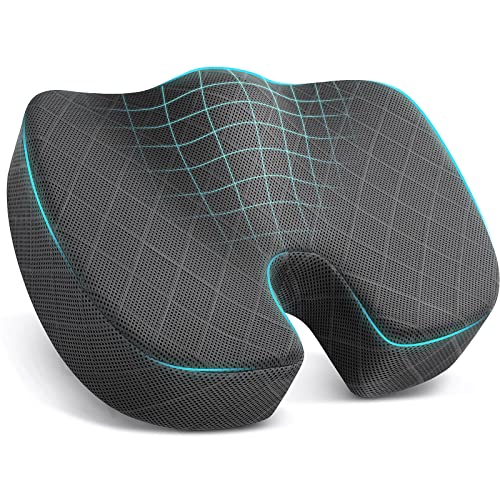
| Comfort & Coccyx Support | Primary Material: 100% pure memory foam | Pain Relief / Ergonomic Support: Supports coccyx, relieves hip pressure and back discomfort from sitting | Removable Washable Cover: Zippered breathable cover, machine-washable | VIEW LATEST PRICE | Read Our Analysis |
| ComfiLife Adjustable Memory Foam Under-Desk Footrest |

| Adjustable Ergonomic Relief | Primary Material: High-density memory foam | Pain Relief / Ergonomic Support: Reduces back and sciatica pain; eases lower-back and hip pressure | Removable Washable Cover: Removable cover, machine-washable | VIEW LATEST PRICE | Read Our Analysis |
More Details on Our Top Picks
TushGuard Memory Foam Seat Cushion for Pain Relief
Should you spend long hours sitting and need targeted relief for tailbone and hip pressure, the TushGuard memory foam cushion is a smart choice—it uses 100% pure memory foam and a U-shaped hollow to cradle your coccyx, adapt to your contours, and reduce discomfort from prolonged sitting. You’ll get firm yet soft support that uses body heat to conform, then quickly rebounds. The non-slip rubber bottom keeps it steady, and the machine-washable zippered cover removes easily for cleaning. It fits all chair types, adds seat height, includes a carry handle, and suits travelers, students, drivers, the elderly, and anyone needing portable pressure relief.
- Primary Material:100% pure memory foam
- Pain Relief / Ergonomic Support:Supports coccyx, relieves hip pressure and back discomfort from sitting
- Removable Washable Cover:Zippered breathable cover, machine-washable
- Portability:Built-in handle; fits travel and multiple seating types
- Multipurpose Use:Fits office, car, airplane, gaming chairs, wheelchairs, bleachers, dorms, etc.
- Non-slip / Stable Placement:Non-slip rubber bottom for stable placement
- Additional Feature:U-shaped coccyx cutout
- Additional Feature:Built-in carrying handle
- Additional Feature:Adds seat height
ComfiLife Adjustable Memory Foam Under-Desk Footrest
Should you sit for long stretches and need targeted relief for lower-back and hip pressure, the ComfiLife Adjustable Memory Foam Under-Desk Footrest is built to help—its high-density memory foam and adjustable height let you customize elevation and movement to reduce sciatica and improve circulation. You’ll get proper foot placement to ease pressure on hips, knees, and legs during prolonged sitting. Use it flipped as a rocker for ankle rolls or under-knee support while lying down. The removable, machine-washable cover keeps it fresh, and the durable foam outperforms cheap plastic pads. Lightweight and portable, it travels from office to plane with you.
- Primary Material:High-density memory foam
- Pain Relief / Ergonomic Support:Reduces back and sciatica pain; eases lower-back and hip pressure
- Removable Washable Cover:Removable cover, machine-washable
- Portability:Lightweight for travel and multi-location use
- Multipurpose Use:Works under desk, under knees while lying down, for plane/office/couch/laptop use
- Non-slip / Stable Placement:Functions as under-desk footrest/rocker for stable foot support and movement while seated
- Additional Feature:Adjustable height settings
- Additional Feature:Flips to rocker
- Additional Feature:Larger surface area
Factors to Consider When Choosing a Desk Chair for Back and Hip Pain
Upon choosing a chair for back and hip pain, you’ll want to focus on key features like lumbar support design and the seat cushion material to protect your spine and hips. Check seat depth and width for proper thigh support, and make sure armrests are adjustable so your shoulders stay relaxed. Also look for a reliable tilt and recline mechanism that lets you change posture throughout the day.
Lumbar Support Design
Pick a chair that gives real lumbar support—one that preserves your natural lower-back curve and reduces disc pressure and muscle strain during long sitting. You want adjustable lumbar depth and height so the support matches your spine: aim for about 2–4 inches of vertical adjustability and multiple depth settings. Position the top of the support at or just above your beltline (L3–L4) to target the lumbar vertebrae and limit pain radiating to the hips. Prefer contoured or variable-density lumbar pads that’re firmer centrally and softer at the edges to spread load and avoid pressure points. Should you shift or recline often, choose continuous responsive lumbar support so alignment stays intact and static loading on lumbar tissues drops.
Seat Cushion Material
Now that your lumbar support is set to match your spine, pay attention to the seat cushion: it determines how your pelvis sits, how load’s distributed across your hips and tailbone, and how comfortable you remain over hours. Choose high-density memory foam to conform to contours and redistribute pressure, reducing coccyx and hip hotspots while resisting permanent sag. Consider gel-infused or ventilated foam in case you overheat—those variants dissipate heat better than solid foam. Latex offers a springy, breathable alternative with faster rebound and long-term durability. Aim for a medium-firm top layer (about 4–6/10) over a supportive base to minimize pelvic tilt and preserve alignment. Removable, moisture-wicking, washable covers keep hygiene and thermal comfort simple.
Seat Depth And Width
A few simple measurements can make the difference between a chair that supports your hips and one that causes numbness or strain: aim for 2–4 inches (5–10 cm) of clearance between the seat front and the back of your knees and choose a seat at least 2–4 inches wider than your hip width so you can shift without feeling confined. Seat depth should support most of your thighs without compressing behind the knees; adjustable depth is ideal so shorter users can shorten the seat and taller users can extend it for full thigh support. A contoured or waterfall front eases pressure and aids circulation, helping hip and lower-back comfort. Keep in mind that added cushions or extenders change effective depth and width and can alter lumbar and hip alignment.
Adjustable Armrests
Lean on well-designed, adjustable armrests to keep your shoulders relaxed and your spine aligned—especially while you’re sitting for long stretches. Choose armrests with 2–4 inches of height adjustment so your elbows sit near 90°, reducing shoulder tension that can cascade into the hips. Width and pivot adjustments let you tuck elbows close to your torso, preventing outward rotation that stresses the lumbar-pelvic region. Fore-aft (depth) adjustment accommodates different arm lengths so you won’t be pushed forward or slump. Look for soft, contoured pads with 0.5–1 inch cushioning to disperse pressure and avoid numbness that can refer pain down the shoulder–hip chain. Removable or fully retractable armrests give closer desk access and 1–2 inches thigh clearance to protect pelvic tilt.
Tilt And Recline Mechanism
Adjustable armrests help keep your shoulders and pelvis aligned, but how the chair tilts matters just as much for offloading the lumbar spine and hips. Choose a chair with an adjustable recline angle (about 90°–135°) so you can shift load from your discs to the backrest during long sessions. Use tilt tension control to set recline resistance to your body weight and avoid abrupt motion that strains your lower back. Prefer synchro-tilt mechanisms (2:1 or 3:1) so the seat and back move at different ratios, keeping hip and lumbar angles healthy. Lockable recline positions let you fix task-specific postures, reducing sustained hip joint loading. Should you experience hip discomfort, try a forward-tilt (4°–8°) to lower hip flexion and disc pressure.
Height And Foot Support
Getting your seat height and foot support right lets you keep knees at about a 90°–110° angle with thighs parallel to the floor, reducing strain on your lumbar spine and hips. Set seat height so your feet rest flat; should they dangle, add a footrest to avoid extra pressure on ischial tuberosities and the coccyx. Aim for hip height slightly above knees (near a 100° hip-to-knee angle) whenever that eases posterior pelvic tilt and sacral loading. Choose an adjustable footrest or platform offering 1–4 inches of elevation to vary positions, maintain circulation, and lower hip and lower-back discomfort. Prefer non-slip surfaces with 10–14 inches of depth to support different foot placements and rolling or stretching movements.
Breathability And Cover
Breathable covers and well-designed upholstery matter because they keep your lower back and hips cooler, drier, and better supported during long sits. Choose mesh or moisture-wicking fabrics with high air permeability (aim for mesh with >50% open area) to dissipate heat and sweat, reducing skin irritation. Prefer ventilated foams—open-cell or perforated memory foam—paired with breathable fabric to promote airflow to the sacral and gluteal regions and lower pressure buildup. Look for removable, machine-washable covers made from antimicrobial or moisture-wicking textiles to maintain hygiene and cut odors that can inflame pressure points. Make certain covers are elastic and well-fitted so they don’t bunch or slide; that preserves lumbar and pelvic alignment and prevents localized pressure that worsens back and hip pain.
