

You’ll want reliable commercial timer switches like the NSi TORK 1109A for flexible 120–277V lighting control or the TU40 for heavy-duty, multi-volt use with multiple daily cycles. For easy in-wall mechanical timing, the C412H and C512H spring-wound models offer power-independent operation and durable metal faceplates. The T101M provides straightforward 24-hour mechanical timing and manual override. Each suits different loads and settings, and grasping their features helps you choose the perfect fit for your application.
| NSi TORK 1109A Indoor Multi-Volt Lighting Timer |
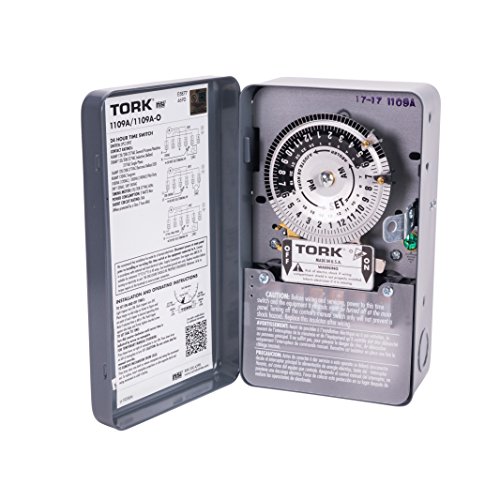
| Versatile Multi-Volt | Voltage Compatibility: 120/208/277 V dual-voltage (120–277 V) | Maximum Amperage Capacity: 40 A general purpose/resistive | Timing Cycle Type: 24-hour mechanical cycle, repeating daily | VIEW LATEST PRICE | Read Our Analysis |
| NSi TORK TU40 40-Amp Electromechanical Timer |

| Indoor/Outdoor Durable | Voltage Compatibility: 120–277 VAC, 60 Hz | Maximum Amperage Capacity: 40 A | Timing Cycle Type: 24-hour programming, repeating daily | VIEW LATEST PRICE | Read Our Analysis |
| NSI TORK C412H Spring-Wound In-Wall Twist Timer |
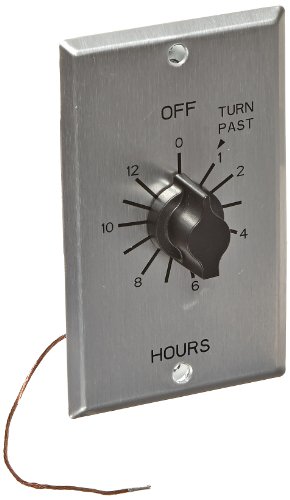
| Compact Countdown | Voltage Compatibility: 125–277 VAC | Maximum Amperage Capacity: 20 A resistive | Timing Cycle Type: Spring-wound countdown timer (1–12 hours) | VIEW LATEST PRICE | Read Our Analysis |
| TORK C512H Spring-Wound In-Wall Twist Timer |

| Reliable In-Wall Timer | Voltage Compatibility: 125 VAC | Maximum Amperage Capacity: 20 A resistive | Timing Cycle Type: Spring-wound countdown timer (1–12 hours) | VIEW LATEST PRICE | Read Our Analysis |
| T101M 24-Hour Mechanical Timer Switch 120V 40A |

| Heavy-Duty Precision | Voltage Compatibility: 120 VAC, 60 Hz | Maximum Amperage Capacity: 40 A resistive/inductive | Timing Cycle Type: 24-hour mechanical timer with up to 12 ON/OFF cycles | VIEW LATEST PRICE | Read Our Analysis |
More Details on Our Top Picks
NSi TORK 1109A Indoor Multi-Volt Lighting Timer
Provided you need a reliable timer switch that handles a wide range of voltages and loads, the NSi TORK 1109A Indoor Multi-Volt Lighting Timer is an excellent choice. You can use it with voltages from 120 to 277 V and manage up to 40 amps for general-purpose lighting or appliances. It supports multiple load types, including incandescent, LED, motors, and pumps. Programming is simple with a 24-hour mechanical dial allowing up to 24 on/off settings daily. The durable plastic design mounts easily and requires no batteries, making it ideal for commercial setups needing dependable, versatile timing solutions.
- Voltage Compatibility:120/208/277 V dual-voltage (120–277 V)
- Maximum Amperage Capacity:40 A general purpose/resistive
- Timing Cycle Type:24-hour mechanical cycle, repeating daily
- Application Type:Lighting and appliances (incandescent, CFL, LED, motors, pumps, HVAC)
- Mounting Type:Tripper mounting with dial
- Motor Load Capacity (Horsepower):2 HP at 120 V, 5 HP at 240 V
- Additional Feature:Mechanical 24-hour cycle
- Additional Feature:Up to 24 on/off settings
- Additional Feature:No batteries required
NSi TORK TU40 40-Amp Electromechanical Timer
Should you need a reliable timer that handles high loads and works both indoors and outdoors, the NSi TORK TU40 40-Amp Electromechanical Timer is a solid choice. It supports 120–277 VAC and various loads, from incandescent to LED, making it versatile for commercial use. You can set multiple on/off cycles daily with 15-minute minimum intervals using simple pull and push tabs on the dial. Its real-time clock face and automatic voltage sensing simplify setup. Ideal for controlling air conditioners, pumps, signs, and more, this universal multi-volt timer offers dependable automation for your appliances every day.
- Voltage Compatibility:120–277 VAC, 60 Hz
- Maximum Amperage Capacity:40 A
- Timing Cycle Type:24-hour programming, repeating daily
- Application Type:Indoor/outdoor appliance control (air conditioners, water heaters, pumps, signs, lamps, fans)
- Mounting Type:Indoor/outdoor universal multi-volt, dial with tabs
- Motor Load Capacity (Horsepower):Not specified in HP, but supports 20 A ballast, 15 A tungsten loads
- Additional Feature:Indoor/outdoor rated
- Additional Feature:Automatic voltage detection
- Additional Feature:15-minute minimum intervals
NSI TORK C412H Spring-Wound In-Wall Twist Timer
Should you need a reliable timer switch that handles heavy-duty loads without complicated setup, the NSI TORK C412H Spring-Wound In-Wall Twist Timer is built for you. It offers a 1–12 hour variable countdown via a spring-wound twist knob, requiring no adjustments after installation. With a metal-brushed aluminum faceplate, it fits standard electrical boxes and supports 20 A resistive loads and 2 HP motor loads at 125 VAC. UL listed and designed for long-term use, this DPST switch suits commercial and residential spaces like hotels, kitchens, and HVAC systems, ensuring automatic shutoff and dependable performance.
- Voltage Compatibility:125–277 VAC
- Maximum Amperage Capacity:20 A resistive
- Timing Cycle Type:Spring-wound countdown timer (1–12 hours)
- Application Type:Motors, lights, ventilation fans, HVAC, pumps, appliances
- Mounting Type:In-wall mounting, standard electrical box
- Motor Load Capacity (Horsepower):2 HP motor loads at 125 VAC
- Additional Feature:Spring-wound knob operation
- Additional Feature:Metal-brushed aluminum faceplate
- Additional Feature:Fits standard electrical box
TORK C512H Spring-Wound In-Wall Twist Timer
In case you need a reliable timer that doesn’t rely on electrical power, the TORK C512H Spring-Wound In-Wall Twist Timer is a smart choice. You simply twist the knob for a 1 to 12-hour countdown, perfect for controlling motors, lights, fans, and pumps indoors. Its spring-wound mechanism guarantees consistent timing without electricity. The in-wall design fits standard electrical boxes and features a durable metal faceplate, blending professionalism with easy installation. Rated for 20 A resistive loads and 2 hp motors at 125 VAC, it’s UL Listed to guarantee quality and long-lasting performance in commercial settings.
- Voltage Compatibility:125 VAC
- Maximum Amperage Capacity:20 A resistive
- Timing Cycle Type:Spring-wound countdown timer (1–12 hours)
- Application Type:Motors, lights, ventilation fans, HVAC, pumps
- Mounting Type:In-wall mounting, standard electrical box
- Motor Load Capacity (Horsepower):2 HP motor loads at 125 VAC
- Additional Feature:No power needed timing
- Additional Feature:Professional metal faceplate
- Additional Feature:Variable 1–12 hour countdown
T101M 24-Hour Mechanical Timer Switch 120V 40A
In case you need a reliable timer switch that handles heavy-duty applications, the T101M 24-Hour Mechanical Timer Switch is built to meet those demands with its 40-amp capacity and compatibility with 2 HP motors. You’ll appreciate its 24-hour dial with 15-minute markings, allowing up to 12 ON/OFF cycles daily. The mechanical design supports various devices like HVAC systems and pool pumps, with a manual override for instant control. Durable from -40°F to 130°F, it’s easy to install but requires professional handling. Plus, it comes with a one-year warranty and 24/7 customer support for peace of mind.
- Voltage Compatibility:120 VAC, 60 Hz
- Maximum Amperage Capacity:40 A resistive/inductive
- Timing Cycle Type:24-hour mechanical timer with up to 12 ON/OFF cycles
- Application Type:Lights, pool pumps, fans, water heaters, HVAC, irrigation, exhaust fans
- Mounting Type:Wall-mounted mechanical dial timer
- Motor Load Capacity (Horsepower):2 HP motors
- Additional Feature:Manual override switch
- Additional Feature:Up to 12 cycles/day
- Additional Feature:Includes wiring diagram
Factors to Consider When Choosing Commercial Timer Switches
While selecting a commercial timer switch, you’ll want to contemplate voltage and load capacity to guarantee it handles your equipment safely. Reflect on the timer type and operation, as well as how flexible the programming needs to be for your schedule. Don’t forget installation requirements and compatibility with your appliances to avoid any surprises.
Voltage And Load Capacity
Although selecting a commercial timer switch might seem straightforward, matching its voltage and load capacity to your specific application is essential to guarantee safety and reliability. Always match the timer’s rated voltage to your circuit, whether it’s 120 V, 240 V, or 277 V, since using a timer outside its voltage range can cause damage or hazards. Check that its amperage and horsepower ratings meet or exceed your load, considering resistive amps and motor HP to avoid overheating. Different load types—resistive, tungsten, ballast, electronic ballast/LED, and motor—have unique current demands, so verify separate ratings accordingly. Should the timer control remote contactors or relays, confirm pilot duty and control circuit ratings. For multi-voltage timers, confirm frequency compatibility (50/60 Hz) and observe any derating for safe continuous use.
Timer Type And Operation
Since timer switches come in various types and operational styles, choosing the right one depends on your specific needs and application complexity. For simple, power-free setups, mechanical timers like spring-wound or cam/dial models work well. Should you require flexibility and precision, electromechanical or electronic timers offer better programming options. Check the timing resolution and minimum ON/OFF intervals to match your control requirements. Decide whether a 24-hour cycle, multi-day/week scheduler, or countdown timer suits your schedule. Look for features like manual override switches and retained program memory to handle power outages and allow local control. Also, consider whether you desire a real-time clock synced to the wall clock for timed events or a basic interval countdown for runtime measurement.
Installation Requirements
Choosing the right commercial timer switch means carefully checking its electrical compatibility with your building’s supply and equipment. You need to verify the timer’s voltage and phase (single or three-phase) match the circuit it replaces. Confirm amperage and load type ratings meet or exceed your connected devices to prevent overloads. Check whether the device requires a neutral, ground, or control circuit and make certain your electrical box has the needed conductors and space. Decide on the mounting type—whether in-wall, surface, panel, or DIN-rail—and make certain the enclosure size and environmental rating comply with local codes. Plan installation steps: route conduit or cables, disconnect power safely, have a qualified electrician ready, and follow all local electrical codes and permit requirements for a smooth, safe setup.
Compatibility With Appliances
After making certain your commercial timer switch fits the electrical installation requirements, you’ll want to focus on how well it works with your specific appliances. To begin, verify the timer’s voltage and phase rating match your appliance circuit—whether that’s 120–277 V single-phase or 240 V/3-phase—to prevent damage. Match the timer’s current and load ratings to your appliance’s draw, considering amps and horsepower for motors and distinct ratings for lighting types. Check the timer’s contact type and number of poles to make certain all live conductors are switched properly. Also, confirm the timer’s minimum ON/OFF interval suits your appliance’s duty cycle to avoid excessive cycling. Lastly, consider the environmental rating in case your appliance is outdoors or exposed to moisture or temperature extremes.
Programming Flexibility
Whenever selecting a commercial timer switch, you’ll want to make certain it offers the programming flexibility that fits your operation’s unique schedule. Check the minimum and maximum programmable intervals to handle short pulses or extended run times. Verify how many ON/OFF events it supports daily so you can set multiple start and stop times without hassle. Consider provided it allows 24-hour cycles, multi-day schedules, or day-of-week programming to match weekdays, weekends, or custom calendars. Look for manual override options and whether overrides keep or pause your preset schedules. Finally, evaluate the programming interface—whether mechanical dials, digital menus, or app control—to make certain it’s easy to read, modify, and back up schedules, making maintenance and quick adjustments straightforward.
Durability And Certifications
Since commercial timer switches often operate under demanding conditions, you’ll want to prioritize durability and proper certifications to guarantee reliable performance. Look for UL, ETL, or CE listings that confirm the timer meets safety standards. Choose models rated for amperage and motor horsepower at or above your maximum load—typically 20–40 A and multi-horsepower ratings—to avoid overheating. Check temperature and environmental ratings to make certain the switch can handle site conditions, whether indoors or outdoors. Prefer heavy-duty mechanical or electromechanical designs with metal gears and corrosion-resistant enclosures for longer cycle life. Also, verify pilot duty and ballast ratings in case controlling lighting or motor loads, so the contacts match the intended switching duty. These factors make certain your timer switch remains reliable and safe in commercial settings.
