

About 70% of pool owners wish they could swim longer into spring and fall, and you can make that happen with the right heater. You’ll want options that fit different pool sizes and budgets, from compact 11,000–12,000 BTU units to efficient heat pumps and solar kits, so you can weigh cost, noise, and compatibility. Stick around to see which models give the best performance and value for your setup.
| 14,000 BTU Electric Pool Heater for Above-Ground Pools |
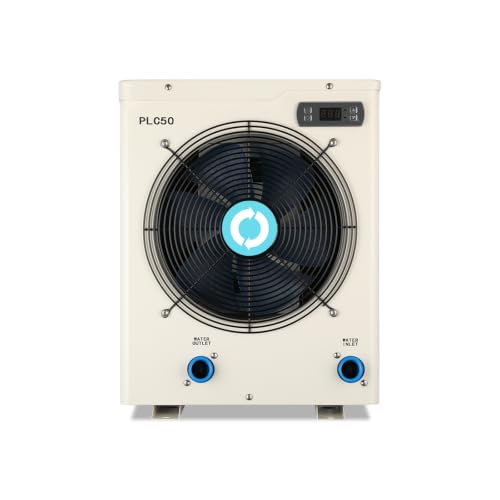
| Best for Mid-Size Pools | Heating Output: Max 16,184 BTU/hr | Pool Compatibility / Capacity: Above-ground pools up to 5,000 gallons | Operating Temperature Range: Ambient 40°F–100°F; water up to 105°F | VIEW LATEST PRICE | Read Our Analysis |
| 11000BTU Electric Above-Ground Pool Heater (PLC30) |
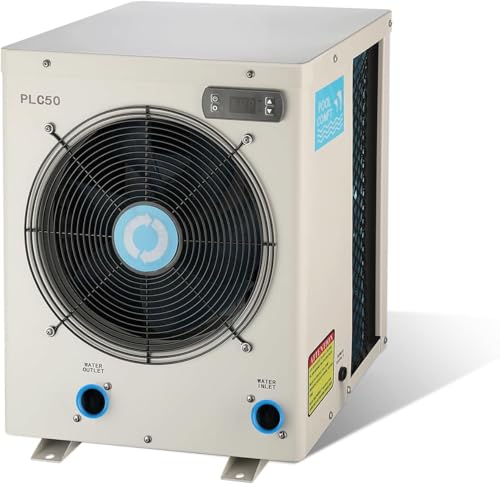
| Small Pool Pick | Heating Output: Max 11,488 BTU/hr | Pool Compatibility / Capacity: Above-ground pools up to 2,000 gallons | Operating Temperature Range: Ambient 50°F–100°F; water up to 100°F | VIEW LATEST PRICE | Read Our Analysis |
| AQUASTRONG Swimming Pool Heat Pump for 6500 Gallons |

| High-Output Performer | Heating Output: 18,000 BTU | Pool Compatibility / Capacity: Advertised for up to 5,000 gallons (name claims 6,500) | Operating Temperature Range: Heat 59°F–104°F; cool 59°F–83°F | VIEW LATEST PRICE | Read Our Analysis |
| 16,000 BTU Electric Above-Ground Pool Heat Pump |
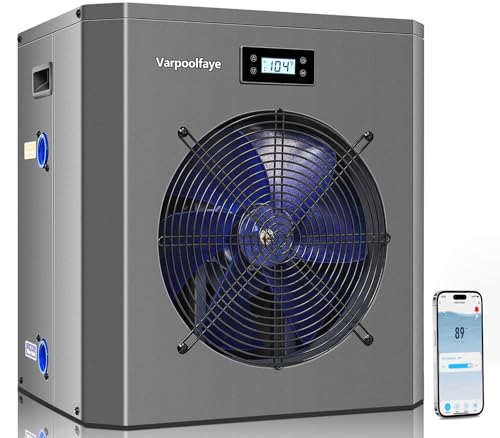
| Smart WiFi Controller | Heating Output: Max 16,000 BTU | Pool Compatibility / Capacity: Above-ground and inground compatible | Operating Temperature Range: Heat 59°F–104°F; cool 46°F–82°F | VIEW LATEST PRICE | Read Our Analysis |
| 16000 BTU Electric WiFi Pool & Spa Heater |

| App-Enabled Powerhouse | Heating Output: 16,000 BTU | Pool Compatibility / Capacity: Pools up to 5,000 gallons | Operating Temperature Range: Heat 59°F–104°F; cool 46°F–82°F | VIEW LATEST PRICE | Read Our Analysis |
| Doheny’s Solar Heater for Above Ground Pools (Kit) |
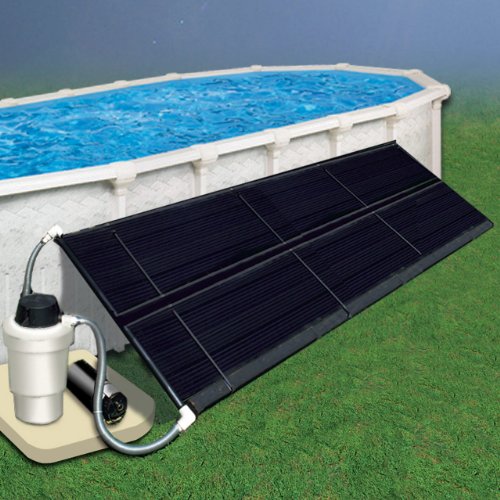
| Solar Energy Saver | Heating Output: Solar kit ~40,000–120,000 BTU (depending on kit size) | Pool Compatibility / Capacity: Sizing recommendations by pool dimensions (12’–28′ round / various ovals) | Operating Temperature Range: Dependent on solar conditions (extends season; no specific numeric range) | VIEW LATEST PRICE | Read Our Analysis |
More Details on Our Top Picks
14,000 BTU Electric Pool Heater for Above-Ground Pools
Should you want a compact, efficient heater for an above-ground pool up to 5,000 gallons, this 14,000 BTU electric heat pump is a smart choice — it extracts heat from the air (COP 5.6) to raise water temperatures quickly and extend your swim season. You’ll get up to 16,184 BTU/hr output, operate between 40°F and 100°F ambient, and reach water temperatures up to 105°F under ideal conditions. Intelligent controls maintain your set temperature while a flow sensor syncs operation with the pump. Check U.S. temperature maps for model selection, enjoy a 2-year warranty, and notice the brand’s UNICEF support.
- Heating Output:Max 16,184 BTU/hr
- Pool Compatibility / Capacity:Above-ground pools up to 5,000 gallons
- Operating Temperature Range:Ambient 40°F–100°F; water up to 105°F
- Energy/Heat Efficiency:COP 5.6
- Controls / Automation:Intelligent control IC; automatic temp maintenance; built-in water flow sensor
- Installation / Connections:Designed to work with pool pump timing; flow sensor (standard plumbing connections implied)
- Additional Feature:UNICEF sponsorship affiliation
- Additional Feature:Built-in water flow sensor
- Additional Feature:2-year warranty
11000BTU Electric Above-Ground Pool Heater (PLC30)
Should you want a compact, energy-efficient heater for a small above-ground pool or spa, the 11,000 BTU PLC30 heat pump is a smart choice — it’s built for pools up to 2,000 gallons (fits 9 ft, 11 ft, 15 ft sizes) and delivers up to 11,488 BTU/hr with a COP of 5.3, so it uses far less electricity than electric-resistance heaters while heating water to as warm as 100°F. You’ll get heat pump efficiency through pulling warmth from air at 50–100°F and moving it into water. Quick connectors make installation tool-free and plug-and-play; the intelligent control IC maintains your target temperature automatically, so once it’s running you’ll barely touch the controls.
- Heating Output:Max 11,488 BTU/hr
- Pool Compatibility / Capacity:Above-ground pools up to 2,000 gallons
- Operating Temperature Range:Ambient 50°F–100°F; water up to 100°F
- Energy/Heat Efficiency:COP 5.3
- Controls / Automation:Intelligent control IC; automatic temp maintenance; plug-and-play
- Installation / Connections:Quick-connectors; tool-free hookup; plug-and-play
- Additional Feature:Tool-free quick connectors
- Additional Feature:Plug-and-play setup
- Additional Feature:Fits 9/11/15 ft pools
AQUASTRONG Swimming Pool Heat Pump for 6500 Gallons
Should you want quiet, energy-efficient year-round heating for a medium-sized above-ground pool, the AQUASTRONG heat pump is a strong pick—its 18,000 BTU output and 5.5 COP deliver efficient warmth for pools up to about 5,000–6,500 gallons while running as low as 38 dB. You’ll get dual-mode temperature control (heat 59–104°F, cool 59–83°F) and a precision thermostat maintaining ±2°F. It extends your season up to six months and supports year-round use with auto-defrost and a 4-season design. Installation’s quick with included adapters and conversion kits, the smart panel is easy to use, and a 3-year warranty plus lifetime support back it.
- Heating Output:18,000 BTU
- Pool Compatibility / Capacity:Advertised for up to 5,000 gallons (name claims 6,500)
- Operating Temperature Range:Heat 59°F–104°F; cool 59°F–83°F
- Energy/Heat Efficiency:COP 5.5
- Controls / Automation:Multi-mode smart control panel; precision thermostat ±2°F
- Installation / Connections:Includes 1.25″ hose adapters and 1.5″ conversion kits; under 10-minute install claimed
- Additional Feature:Ultra-quiet 38 dB
- Additional Feature:Auto-defrost system
- Additional Feature:Lifetime technical support
16,000 BTU Electric Above-Ground Pool Heat Pump
Should you want a quiet, energy-efficient way to extend your swim season, the 16,000 BTU electric above-ground pool heat pump is a smart pick — it delivers up to 16,000 BTU with a COP as high as 4.3, so it uses far less electricity than resistance heaters while maintaining comfortable water temperatures. You’ll get heating and cooling modes, WiFi control for remote temperature setting and timed on/off, and a 120 V supply for straightforward power. It operates quietly at 50 dB, fits above-ground or inground pools, and includes DN32–38 mm connectors, power cord, manual, and online support for simple installation and year-round comfort.
- Heating Output:Max 16,000 BTU
- Pool Compatibility / Capacity:Above-ground and inground compatible
- Operating Temperature Range:Heat 59°F–104°F; cool 46°F–82°F
- Energy/Heat Efficiency:COP up to 4.3
- Controls / Automation:Dual-mode with WiFi control; remote timed on/off
- Installation / Connections:Includes DN32–38 mm connectors and power cord; user manual/online support
- Additional Feature:WiFi remote control
- Additional Feature:120 V power supply
- Additional Feature:50 dB quiet operation
16000 BTU Electric WiFi Pool & Spa Heater
Should you want reliable year-round heating for an above-ground pool up to 5,000 gallons, the 16,000 BTU Electric WiFi Pool & Spa Heater is a smart choice. You’ll get a strong compressor and a COP of 4.3, so it heats efficiently across 59–104°F and even cools 46–82°F. The 120V unit includes WiFi for app scheduling, remote on/off, and temperature control, letting you manage comfort from anywhere. It runs quietly at about 50 dB, works with salt or fresh water, and connects via DN32–38 mm fittings. With a 118‑inch power cable, installation is quick and simple.
- Heating Output:16,000 BTU
- Pool Compatibility / Capacity:Pools up to 5,000 gallons
- Operating Temperature Range:Heat 59°F–104°F; cool 46°F–82°F
- Energy/Heat Efficiency:COP 4.3
- Controls / Automation:WiFi app-based scheduling and remote control
- Installation / Connections:Includes two DN32–38 mm connectors; 118″ power cable; quick installation
- Additional Feature:App-based scheduling
- Additional Feature:Saltwater compatible
- Additional Feature:118″ power cable
Doheny’s Solar Heater for Above Ground Pools (Kit)
Should you want an energy‑saving way to extend your swim season, Doheny’s above‑ground solar heater kit is a smart choice for owners of small to medium pools who prefer a low‑maintenance, cost‑effective solution. You circulate pool water through solar collectors that cut gas or electric use and add roughly 40,000 BTU for a 2.5′ x 20′ panel, 80,000 BTU for 5′ x 20′, or about 120,000 BTU if combined. Match kit size to pool dimensions per Doheny’s guidance. Mount on a roof or sloped plywood with the optional roof/rack kit; you’ll supply PVC or flex piping. Add a 2‑way diverter for on/off control.
- Heating Output:Solar kit ~40,000–120,000 BTU (depending on kit size)
- Pool Compatibility / Capacity:Sizing recommendations by pool dimensions (12’–28′ round / various ovals)
- Operating Temperature Range:Dependent on solar conditions (extends season; no specific numeric range)
- Energy/Heat Efficiency:Solar—uses free solar energy (BTU output given instead of COP)
- Controls / Automation:Two-way diverter valve for loop control; manual system controls (no electronic thermostat included)
- Installation / Connections:Roof/rack mount options; mounting kit components listed; PVC/flexible piping not included; uses diverter valve in filter/solar loop
- Additional Feature:Roof/rack mounting kit
- Additional Feature:Multiple collector sizes
- Additional Feature:2-way diverter valve
Factors to Consider When Choosing an Above Ground Pool Heater
Whenever choosing a heater, you’ll want to match its capacity to your pool’s size so it can heat efficiently. Check the unit’s energy efficiency rating and operating temperature range to make sure it meets your comfort needs and keeps costs down. Also consider installation requirements and hookups so you know whether you can set it up yourself or need professional help.
Pool Size Compatibility
Because pool heaters must match the volume they’re meant to warm, start confirming your pool’s gallonage and then pick a unit rated for at least that capacity—small above-ground pools (~2,000 gallons) typically need about 11,000–12,000 BTU while larger ones up to ~5,000 gallons often require 14,000–16,000 BTU or more. Check the manufacturer’s maximum-gallon recommendation and choose a heater whose rated capacity meets or exceeds your pool’s volume to make certain efficient heating. For modest pools (under ~2,000–3,000 gallons) pick compact, lower-output models to avoid short cycling. Should you maintain higher temperatures or use the pool year-round, size up slightly as a safety margin to offset heat loss. Match capacity to use for predictable performance.
Heating Capacity Needed
Now that you’ve matched heater size to pool volume, you’ll want to calculate the heating capacity needed so the unit actually reaches and holds your target temperature. Start through estimating BTU requirements: roughly 8–12 BTU per gallon for a moderate seasonal lift (for example, a 3,000‑gallon pool needing a 10°F rise ≈ 30,000–36,000 BTU). Match heater output to pool size and local climate—larger pools or cooler regions need higher BTU/hr to overcome greater heat loss. Factor in ambient temperature, wind, night cooling, and whether you employ a solar cover to avoid underpowering. Consider COP or electrical efficiency to gauge electrical draw and true output. Finally, choose higher BTU/hr when you want faster heat‑up; lower output can maintain temperature slowly.
Energy Efficiency Rating
A few key metrics will tell you how much it costs to run a heater and how well it holds temperature, so focus on efficiency as much as raw BTU output. Check the coefficient of performance (COP); higher COPs (around 4.0+) deliver more heat per electrical input and cut operating costs. Compare seasonal performance at the ambient temperatures you expect, since heat pump COP falls as air cools. Look beyond peak BTUs: match rated output to pool volume and stated efficiency to estimate run-time and energy use. Favor units with accurate thermostats and smart controls to avoid frequent on/off cycling, which wastes energy. Finally, evaluate insulation and heat-loss mitigation—sealed exchangers, insulated plumbing, and a good pool cover enhance effective efficiency.
Operating Temperature Range
When choosing a heater, check both the ambient air range and the unit’s water temperature limits so you know whether it’ll start and reach your desired swim temp in your climate. You should confirm the heater’s minimum ambient operating temperature—many heat pumps need about 40–50°F to run efficiently and might not work below that. Also verify maximum water temperature capability, often around 100–105°F, so it can hit and hold your preferred setpoint. Look for heating range specs and any cooling capability to make certain the unit manages both raising and lowering temperatures as needed. Prioritize models with wide operating ranges and reliable auto-defrost for colder weather, and match thermostat accuracy (within a few degrees) to your comfort needs.
Installation And Hookups
Plan your installation carefully so the heater ties into your pool system safely and efficiently: confirm the available electrical supply (voltage, breaker/GFCI needs) and that your pump provides the required flow, match inlet/outlet fittings to your plumbing size (or have proper adapters like 1.25″ unions), and position the unit on a level, well-ventilated pad with clearance for service and condensate drainage. Check voltage (commonly 120–240V) and circuit capacity before buying; many units need a dedicated breaker and GFCI. Measure plumbing diameters (DN32–38mm) and flow compatibility so the pump can meet the heater’s minimum. Use short, direct runs with unions, shutoff valves, and quick-connects for easy winterization and service. Include flexible or threaded unions to absorb vibration and simplify replacement.
Noise And Defrosting
After you’ve sited and hooked up the heater, don’t overlook how noise and defrost cycles will affect comfort and performance; you’ll want to check published decibel ratings (often 38–50 dB) and how the unit handles low temperatures. You should review spec sheets for sound pressure or sound power at a stated distance so you know how loud it will be near inhabited spaces. Expect auto-defrost cycles whenever ambient temps drop; these temporarily cut heating output and can add intermittent compressor and fan noise. Different defrost methods (reverse-cycle, electric, hot-gas) change energy use and defrost frequency, so factor efficiency hits during cold weather. Place the unit with clear airflow, add vibration-isolating mounts, and consider a nearby sound barrier to reduce perceived noise.
Warranty And Support
Protection matters while you’re comparing above-ground pool heaters, so start checking exactly what the warranty covers and for how long—typical terms run 1–3 years for parts and labor, but compressors and heat exchangers could have different limits. You’ll want explicit exclusions listed (corrosion, freeze damage, improper plumbing) and observe whether wear items like fans or seals carry shorter terms. Confirm whether the warranty requires professional installation or routine maintenance—seasonal inspections or approved parts could be conditions. Ask whether the warranty is transferable and whether repairs are pro-rated as the unit ages to forecast ownership costs. Finally, verify technical support options (phone, email, online resources) and whether extended or lifetime support exists beyond the written warranty.
Frequently Asked Questions
Can I Run a Pool Heater on a Standard Household Electrical Circuit?
Yes — you can, although you probably shouldn’t without checking. Most electric pool heaters draw far more amps than a standard 15–20A circuit supports, so you’ll need a dedicated higher-capacity circuit installed through a licensed electrician.
How Do Pool Heaters Affect My Energy Bills Monthly?
Picture your meter spinning faster: heaters raise your monthly energy bills noticeably. You’ll pay more with electric or gas units, though efficiency, local rates, and usage patterns determine how much—proper insulation and timers can curb those costs considerably.
Are These Heaters Safe for Inflatable or Soft-Sided Pools?
Yes — you can use heaters with inflatable or soft-sided pools, but you’ll need gentler options like low-temperature electric or small heat pump units, and you’ll want protective mats, careful placement, and constant monitoring to avoid damage or overheating.
What Maintenance Does a Pool Heat Pump Require Each Year?
You’ll perform annual maintenance: clean or replace filters, inspect and clear coils/fins, check refrigerant and electrical connections, lubricate moving parts, test thermostat and safety controls, and schedule a professional tune-up to make certain efficient, safe operation.
Can I Use a Pool Heater With a Saltwater Chlorination System?
Yes, you can. You’ll need corrosion-resistant heater components or a titanium heat exchanger, maintain proper salt levels, and monitor chlorine production to prevent excessive chlorine that could damage the heater; follow manufacturer guidance and routine inspections.
Final Thoughts
You’ve got the tools to stretch your season and keep the water inviting—pick compact BTU units for small pools, bigger heat pumps for medium ones, and feature-rich models should you want Wi‑Fi or salt compatibility. Consider COP, voltage, plumbing, flow, noise and defrost, and size up for a safety margin. Like a careful gardener tending blooms before frost, choose the heater that fits your pool’s pulse and let warm swims linger into crisp evenings.
