

Should you’re updating baseboard or line‑voltage controls, you’ll want gear that’s reliable, easy to install, and matches your system’s voltage and load. You’ll find everything from simple manual dials to smart Wi‑Fi models with energy tracking and room sensors. I’ll walk through six pro‑recommended options, what each excels at, and the key factors installers watch for—so you’re able to pick the right thermostat for your setup.
| YeloDeer 4-Pack 4-Wire Baseboard Heater Thermostats |

| Budget Multi-Pack | Compatibility Type: 120 V electric baseboard / fan‑forced heaters | Voltage / Wiring Requirement: 120 V, 4‑wire | Control Type: Manual, non‑programmable dial | VIEW LATEST PRICE | Read Our Analysis |
| Honeywell Home RTH9600WF Smart Color Wi‑Fi Thermostat |
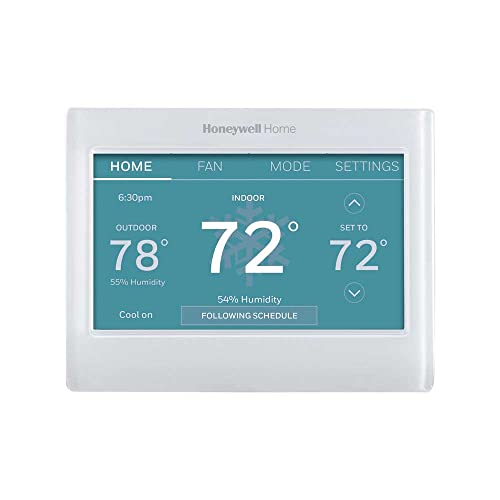
| Smart Home Leader | Compatibility Type: Forced air, hot water, steam, heat pumps (NOT electric baseboard) | Voltage / Wiring Requirement: Low‑voltage thermostat (C‑wire required) | Control Type: Programmable / smart touchscreen | VIEW LATEST PRICE | Read Our Analysis |
| 20/4 Thermostat Wire 500ft White (CMR/Riser) |

| Installer Essential | Compatibility Type: HVAC systems including heat pumps, water heaters, air conditioners, electric baseboard | Voltage / Wiring Requirement: 20/4 thermostat wire (for low‑voltage control wiring) | Control Type: (Cable) Enables thermostat control signals (wired thermostat) | VIEW LATEST PRICE | Read Our Analysis |
| Sensi Touch 2 Smart Thermostat with Color Touchscreen |

| Balanced Smart Pick | Compatibility Type: Most residential HVAC equipment (requires C‑wire) | Voltage / Wiring Requirement: Low‑voltage (C‑wire required) | Control Type: Programmable touchscreen (smart) | VIEW LATEST PRICE | Read Our Analysis |
| meross Smart Thermostat for Electric Baseboard & Heaters |

| Best for Baseboards | Compatibility Type: High‑voltage electric baseboard, convector, fan‑forced heaters (120–240V) | Voltage / Wiring Requirement: 120–240 V, requires 4+ wires | Control Type: Programmable via app (smart) | VIEW LATEST PRICE | Read Our Analysis |
| Dual Voltage 4-Wire Manual Electric Baseboard Thermostat |

| Professional Dual-Voltage | Compatibility Type: Electric baseboards and fan‑forced heaters (110–265V dual voltage) | Voltage / Wiring Requirement: 110–265 V dual voltage, 4‑wire compatible | Control Type: Manual, non‑programmable dial | VIEW LATEST PRICE | Read Our Analysis |
More Details on Our Top Picks
YeloDeer 4-Pack 4-Wire Baseboard Heater Thermostats
In case you need a simple, reliable thermostat for 120 V baseboard or fan-forced heaters, the YeloDeer 4-pack is a solid pick—it’s designed for homeowners or landlords who want straightforward, manual temperature control (40–80 °F) without handling smart features or complex setups. You’ll get four 120 V, 4-wire thermostats with a 2400 W max load; they’re not for heat pumps, gas/oil systems, central AC, humid areas, or high-power devices. The electronic dials offer finer accuracy than mechanical types, with a smooth, large knob and indicator lights showing power and active heating. Installation is flush, low-profile, and includes clear instructions.
- Compatibility Type:120 V electric baseboard / fan‑forced heaters
- Voltage / Wiring Requirement:120 V, 4‑wire
- Control Type:Manual, non‑programmable dial
- Temperature Range / Accuracy:40–80°F (4.4–26.7°C); electronic accuracy better than mechanical
- Installation / Included Materials:Includes installation instructions; compatible with baseboard connectors
- Indicator / Display:Indicator lights for connection point and active heating; large knob
- Additional Feature:4-pack bundle
- Additional Feature:Indicator heating light
- Additional Feature:Low-profile white design
Honeywell Home RTH9600WF Smart Color Wi‑Fi Thermostat
Should you want a smart, ENERGY STAR–certified thermostat that gives detailed usage tracking and works with most forced-air and heat pump systems, the Honeywell Home RTH9600WF is a strong choice. You’ll get usage reports, personalized energy tips, and eligibility for utility rebates and ongoing incentives. It supports gas, oil, electric forced air, hot water, steam, and heat pumps with electric backup, but not electric baseboard (120–240V) or heating-only oil systems without a C‑wire. A C‑wire (or adapter) is required. The color touchscreen shows indoor/outdoor temps, humidity, and forecast, and you can control it remotely via app or voice assistants.
- Compatibility Type:Forced air, hot water, steam, heat pumps (NOT electric baseboard)
- Voltage / Wiring Requirement:Low‑voltage thermostat (C‑wire required)
- Control Type:Programmable / smart touchscreen
- Temperature Range / Accuracy:(Not specified numerically) displays indoor temp; precise digital control
- Installation / Included Materials:Includes wall plate, screws, anchors, wire labels, guides
- Indicator / Display:Color touchscreen showing temp, humidity, weather
- Additional Feature:Customizable color touchscreen
- Additional Feature:Remote app control
- Additional Feature:ENERGY STAR certified
20/4 Thermostat Wire 500ft White (CMR/Riser)
Should you need a reliable, no-frills solution for thermostat hookups, the 20/4 Thermostat Wire 500ft White (CMR/Riser) is ideal for HVAC contractors and DIYers who value dependable conductivity and commercial-grade safety. You get four 20-gauge solid bare copper conductors that guarantee consistent signal and power transfer for thermostats, heat pumps, water heaters, solar interfaces, air conditioners, and electric baseboard systems. The riser-rated CMR jacket meets commercial/residential fire and safety requirements, and the 500 ft roll supports continuous runs without splicing. It’s a practical, cost-effective choice whenever you want durable wiring that simplifies installations and minimizes troubleshooting.
- Compatibility Type:HVAC systems including heat pumps, water heaters, air conditioners, electric baseboard
- Voltage / Wiring Requirement:20/4 thermostat wire (for low‑voltage control wiring)
- Control Type:(Cable) Enables thermostat control signals (wired thermostat)
- Temperature Range / Accuracy:(Wire) Supports precise thermostat communication (no specific range)
- Installation / Included Materials:500 ft roll of 20/4 thermostat wire (CMR/riser)
- Indicator / Display:(Wire) no display — used for thermostat/display connections
- Additional Feature:500 ft roll
- Additional Feature:20‑gauge solid copper
- Additional Feature:Riser (CMR) rated jacket
Sensi Touch 2 Smart Thermostat with Color Touchscreen
Should you want a touchscreen thermostat that’s easy to install and gives you smart energy tools, the Sensi Touch 2 is a strong pick—its color touchscreen, Wi‑Fi remote access, and programmable scheduling make it ideal for tech‑minded homeowners who have a C‑wire and want energy savings plus simple DIY setup. You’ll get ENERGY STAR efficiency, usage reports, alerts, and maintenance notifications to help cut about 23% of HVAC energy. The top‑rated app uses Bluetooth for setup, guides installation, and supports Sensi Room Sensors (sold separately) to balance temperatures. Privacy promises no selling of personal data, and the package includes hardware and manuals.
- Compatibility Type:Most residential HVAC equipment (requires C‑wire)
- Voltage / Wiring Requirement:Low‑voltage (C‑wire required)
- Control Type:Programmable touchscreen (smart)
- Temperature Range / Accuracy:(Not specified numerically) digital control with room sensors for balanced temps
- Installation / Included Materials:Includes mounting hardware, installation guide; app‑guided DIY install
- Indicator / Display:Color touchscreen display
- Additional Feature:Sensi room sensor support
- Additional Feature:Usage and maintenance alerts
- Additional Feature:DIY app-guided install
meross Smart Thermostat for Electric Baseboard & Heaters
Should you need a smart thermostat made specifically for high-voltage electric baseboard or convector heaters, the meross 4‑wire model is a clear choice—its 120–240V support, 16A output (up to 3840W at 240V), and built-in energy meter let you control heavy-load heaters precisely while tracking power use. You’ll install it in under 30 minutes provided you have four or more wires available; it preserves settings during outages and resumes automatically. The Meross app offers 7×24 scheduling, real-time and historical energy reports, open-window detection, summer mode, and integrations with HomeKit, Alexa, Google, and SmartThings plus voice control.
- Compatibility Type:High‑voltage electric baseboard, convector, fan‑forced heaters (120–240V)
- Voltage / Wiring Requirement:120–240 V, requires 4+ wires
- Control Type:Programmable via app (smart)
- Temperature Range / Accuracy:41–95°F; ±1°F accuracy
- Installation / Included Materials:Requires 4+ wires; typical install <30 minutes; (unit included)
- Indicator / Display:White LCD display with real‑time energy readout
- Additional Feature:Built-in electricity meter
- Additional Feature:Open-window detection
- Additional Feature:7×24 programmable scheduling
Dual Voltage 4-Wire Manual Electric Baseboard Thermostat
In case you need a straightforward, reliable thermostat that handles both 120V and 240V baseboard heaters, this dual-voltage 4‑wire manual model is a strong choice—especially should you want precise electronic temperature control without programming. You get dual voltage (110–265V) support, up to 20 A capacity (2400 W @120V, 4800 W @240V), and terminals accepting up to 12 AWG. The electronic sensor offers better accuracy than mechanical units across 40°F–80°F. A large smooth dial gives continuous setpoint control while indicator lights show connection points and active heating. It’s compatible with baseboards and fan-forced heaters and includes detailed installation instructions.
- Compatibility Type:Electric baseboards and fan‑forced heaters (110–265V dual voltage)
- Voltage / Wiring Requirement:110–265 V dual voltage, 4‑wire compatible
- Control Type:Manual, non‑programmable dial
- Temperature Range / Accuracy:40–80°F (4.4–26.7°C); electronic accuracy better than mechanical
- Installation / Included Materials:Includes detailed installation instructions; terminals accept up to 12 AWG
- Indicator / Display:Indicator lights showing connection and active heating; large dial
- Additional Feature:Dual 110–265V support
- Additional Feature:20 A max terminal rating
- Additional Feature:CE and UKCA certified
Factors to Consider When Choosing a 4 Wire Thermostat
Upon selecting a 4‑wire thermostat, you’ll want to check the voltage compatibility range and make sure the unit’s load capacity limits match your heater. Confirm the wiring and terminals align with your existing setup and pick the control type that fits your needs—manual, programmable, or digital. Also consider installation requirements like mounting, space, and any additional components you’ll need.
Voltage Compatibility Range
Although voltage specs can seem technical, you’ll need to match the thermostat’s rated voltage and current to your system to avoid failures or safety hazards. Verify the thermostat’s rated voltage—common options are 120 V single-phase, 240 V single-phase, or dual-voltage 110–265 V—so it’s compatible with your supply. Confirm it’s a line-voltage model when you’re controlling heaters, not a low-voltage control unit. Check maximum current and wattage ratings (for example, 16 A or 20 A and the corresponding watts at system voltage) to guarantee safe operation. For multi-zone 4-wire installs, be certain terminal ratings and wiring configuration match the junction box supply. Account for voltage drop on long runs and the thermostat’s allowable tolerance (typically ±10–20%) for reliable performance.
Load Capacity Limits
Because a thermostat must safely carry your heater’s full electrical load, you should start with matching its maximum amperage and wattage ratings to the heater and supply voltage to avoid overheating or trips. Verify the thermostat rating meets or exceeds the heater load (for example, 20 A at 120 V supports up to 2400 W) and confirm voltage compatibility—single-voltage, dual-voltage, or explicit 120–240 V support—so the device handles the circuit safely. Check continuous versus intermittent duty ratings and pick a thermostat rated for continuous operation at the heater’s full wattage provided it runs long periods. Make certain conductor gauge recommendations align with your circuit to prevent overheating or voltage drop, and add a safety margin for inrush currents and reduced device stress.
Wiring And Terminals
After you’ve verified load capacity, turn your attention to the thermostat’s wiring and terminals, since proper connections are what keep the device safe and functional. Make sure the unit provides four dedicated terminals—usually two for power and two for load or sensor control—and that each is clearly labeled for hot, neutral/return, ground, and load circuits. Verify terminal screw size and wire gauge compatibility; many high-current baseboard thermostats accept up to 12 AWG. Confirm terminal voltage ratings match your circuit (for example, 120–240 V) and check whether a separate common (C) or neutral is required and present in your wiring. Finally, inspect terminal insulation and spacing for adequate clearance to handle high-voltage connections and meet local code requirements.
Control Type Options
Upon choosing a 4‑wire thermostat, pick the control type that matches your comfort goals, wiring, and heater ratings—manual models keep things simple, programmable units cut energy via scheduling setbacks, smart Wi‑Fi options add remote control and integrations, and relay or line‑voltage designs must be selected to match your heater’s voltage and ampacity; electronic digital thermostats give tighter temperature precision than basic mechanical controls.
You’ll choose manual should you want straightforward dial adjustment and minimal setup, accepting no automatic setbacks. Go programmable for 7‑day, 5/2, or single‑week schedules to reduce runtime. Choose smart Wi‑Fi for remote setback, learning features, and home‑automation links. In the event your system is line‑voltage, match the relay rating to heater voltage and amps to avoid overload. Prefer electronic digital models whenever you need ±1–2°F accuracy and extra features like open‑window detection.
Installation Requirements
At that moment you pick a 4‑wire thermostat, make sure your wall box has at least four conductors and enough room to handle the wiring and any larger gauge (commonly up to 12 AWG) required for higher‑amp circuits. Also confirm system voltage (120V vs 240V) and that the thermostat and wiring are rated for that voltage and the expected current/wattage. Verify a dedicated circuit and appropriately sized breaker exists, and turn power off at the breaker before touching wiring. In case your setup needs separate load switching or true line/neutral separation, run a proper fourth conductor instead of relying on shared or multi‑strand jumpers. Always follow manufacturer wiring diagrams and local electrical codes, and consider a qualified electrician for high‑voltage heater circuits.
Smart Integration Support
Once the wiring and breaker considerations are handled, you’ll want to make sure the thermostat actually plays nicely with your smart home. To start, verify it supports your protocol — Wi‑Fi, Zigbee, Z‑Wave, Thread, or Matter — so it integrates seamlessly with existing hubs. Confirm power needs: many smart features require a C‑wire or multi‑wire hookup for continuous power. Check local automation and voice compatibility (Alexa, Google Assistant, Siri/HomeKit) so routines and voice control work without full cloud dependence. Review data reporting: real‑time energy use, historical logs, and open API access let you monitor and tie into third‑party platforms. Finally, confirm the manufacturer provides firmware updates, encrypted communication, regular security patches, and clear privacy policies to protect interoperability and network access.
Temperature Accuracy Range
When choosing a 4‑wire thermostat, pay close attention to its temperature range and accuracy so it can hold the setpoints you actually need; check the specified min/max range (e.g., 40°F–80°F) and the stated accuracy (such as ±1°F) to understand both the limits and how closely it’ll maintain your target. You should confirm the thermostat’s min/max covers your comfort and safety needs, and prefer electronic models with continuous adjustment over coarse stepped settings for finer control. Check whether it uses an internal ambient sensor or supports remote/room sensors, since sensor placement changes perceived accuracy. Finally review response characteristics—deadband, hysteresis and cycling limits—because they determine how tightly temperature is held and how often the system cycles.
Frequently Asked Questions
Can a 4-Wire Thermostat Control Multiple Zones Independently?
Yes, a 4-wire thermostat can control one zone independently, but it won’t manage multiple zones through itself; you’ll need separate thermostats or a zoning controller with motorized dampers to independently control several zones.
Are 4-Wire Thermostats Compatible With Legacy Line-Voltage Systems?
No, they usually aren’t compatible with legacy line-voltage systems; you’ll need a dedicated line-voltage thermostat or a relay/transformer interface because 4-wire thermostats expect low-voltage control wiring, not direct high-voltage switching.
How Do I Safely Test a 4-Wire Thermostat Before Installation?
You should disconnect power, confirm wiring labels, use a multimeter to check continuity and voltage on each wire, and simulate calls for heat/cool. Don’t touch live parts; in case readings’re off, stop and call a pro.
Can a 4-Wire Thermostat Be Converted for Low-Voltage Use?
About 60% of thermostats now use low-voltage systems, and yes—you can often convert a 4-wire thermostat for low-voltage use through using a relay or adapter; you’ll need proper wiring, a common wire, and HVAC compatibility checks.
What Maintenance Extends the Life of an Electric Baseboard Thermostat?
You’ll extend an electric baseboard thermostat’s life by cleaning dust, checking wiring connections, tightening terminals, replacing frayed wires, testing thermostatic control, avoiding frequent extreme setpoint changes, and scheduling periodic professional inspections to catch issues prematurely.
Final Thoughts
Picking the right 4‑wire thermostat helps you save energy and stay comfortable, and pros often recommend choices above for differing needs—simple manual control, smart scheduling, touchscreen ease, HomeKit/Alexa support, wide voltage range, or heavy‑duty relays. Did you know upgrading to a programmable or smart thermostat can cut heating energy use roughly 10–30%? So choose the model that fits your wiring, load, and habits, and you’ll likely see lower bills and better comfort.
