

As you used high‑tack acrylic tape to fix a bulging carpet‑to‑tile junction in a busy rental hallway and it held through a winter storm, you learned why pros favor specific adhesives. You’ll want to match adhesive type to substrate porosity, temperature swings, and edge thickness to avoid failures. Keep going to see the five options that make those choices simple—and which ones to pick for future removal or maximum durability.
| Self-Adhesive Wood Grain Floor Transition Strip (Dark Gray) |

| Stylish Choice | Material: PVC | Self-adhesive: Peel-and-stick (red backing) | Cut-to-fit / Custom length: Cut easily to required length | VIEW LATEST PRICE | Our Analysis |
| Grey Self-Adhesive Carpet-to-Tile Transition Strip (3m) |

| Heavy-Duty Performer | Material: Premium (unspecified) PVC-like material | Self-adhesive: Strong self-adhesive (red-backed tape) | Cut-to-fit / Custom length: Measure and cut to customized length | VIEW LATEST PRICE | Our Analysis |
| Self-Adhesive Vinyl Floor Transition Strip (Light Gray) |

| Reliable Adhesion | Material: PVC | Self-adhesive: Double self-adhesive tape | Cut-to-fit / Custom length: Cut to desired length | VIEW LATEST PRICE | Our Analysis |
| Flexible PVC Carpet Edge Trim Strip – 20FT |

| Best for Carpets | Material: PVC | Self-adhesive: Self-adhesive peel-and-stick | Cut-to-fit / Custom length: Cuttable with scissors/knife for custom lengths | VIEW LATEST PRICE | Our Analysis |
| 10ft Self-Adhesive PVC Floor Transition Strip (Gray) |
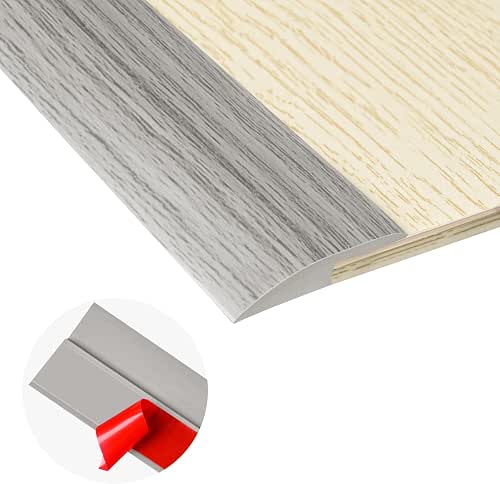
| Family-Friendly Pick | Material: PVC | Self-adhesive: Self-adhesive backing | Cut-to-fit / Custom length: Cut to size | VIEW LATEST PRICE | Our Analysis |
More Details on Our Top Picks
Self-Adhesive Wood Grain Floor Transition Strip (Dark Gray)
Should you need a fast, low-profile finish for gaps between different floors, the self-adhesive wood-grain transition strip in dark gray is a great choice—it’s peel-and-stick, cuts easily to size, and sticks firmly without extra fasteners, so you can handle most installs yourself with minimal tools. You’ll work with a durable, flexible PVC strip about 3.3 ft long, 2 in wide, and 0.13 in thick, featuring an graceful wood-grain pattern. Apply firm pressure to the red-backed adhesive after trimming to fit. It conceals gaps, joins laminate, vinyl, or tile, reduces trip hazards, and lasts without extra tape.
- Material:PVC
- Self-adhesive:Peel-and-stick (red backing)
- Cut-to-fit / Custom length:Cut easily to required length
- Suitable for floor transitions:Covers gaps, acts as divider between flooring types
- Surface prep / heat recommended:Apply firm pressure (clean surface implied)
- Durability / resistance properties:Durable, flexible, low profile
- Additional Feature:Low-profile reduced trip hazard
- Additional Feature:Wood-grain aesthetic options
- Additional Feature:Flexible PVC construction
Grey Self-Adhesive Carpet-to-Tile Transition Strip (3m)
Choose this grey self-adhesive carpet-to-tile changeover strip provided you want a quick, tool-free solution that secures and protects floor joins while handling everyday wear. You’ll get a 3 m threshold strip ideal for carpet-to-tile, wood-to-carpet, or tile-to-door transitions in homes, hotels, restaurants, and halls. Made from premium, eco-friendly material, it resists scratches, abrasion, stains, water, and heat, and’s easy to clean. It covers edges up to 5 mm. Install via measuring, cutting, peeling the red-backed tape, and pressing firmly—heat with a hairdryer for better adhesion. Heat prior to removal to reduce residue.
- Material:Premium (unspecified) PVC-like material
- Self-adhesive:Strong self-adhesive (red-backed tape)
- Cut-to-fit / Custom length:Measure and cut to customized length
- Suitable for floor transitions:For wood/carpet/tile/threshold transitions
- Surface prep / heat recommended:Clean surface; use hairdryer to heat for better adhesion
- Durability / resistance properties:Scratch-, abrasion-, stain- and water-resistant; heat-resistant
- Additional Feature:Covers edge height ≤5 mm
- Additional Feature:Scratch/heat/stain resistant
- Additional Feature:3 m continuous length
Self-Adhesive Vinyl Floor Transition Strip (Light Gray)
Should you need a quick, low‑maintenance way to join different floor types, the light‑gray self‑adhesive vinyl threshold strip is ideal for homeowners and installers who value durability and ease. You’ll get premium PVC that’s scratch- and wear-resistant for long-term use with minimal upkeep. Double self-adhesive tape and an improved profile increase adhesion; reverse-roll the strip first to remove packaging curl. It connects carpet, tile, laminate, and hardwood, smoothing height differences at doorways and ramps, though it won’t suit uneven surfaces. Installation is tool-free: clean and dry the floor, cut to length, remove backing, press firmly for a tidy, safer transition.
- Material:PVC
- Self-adhesive:Double self-adhesive tape
- Cut-to-fit / Custom length:Cut to desired length
- Suitable for floor transitions:Connects carpet, tile, laminate, hardwood
- Surface prep / heat recommended:Clean and dry floor; reverse-roll to remove curl (heat not required but prep needed)
- Durability / resistance properties:Scratch-resistant, wear-resistant, long-term use
- Additional Feature:Double-adhesive tape design
- Additional Feature:Reverse-roll to remove curl
- Additional Feature:Not for uneven surfaces
Flexible PVC Carpet Edge Trim Strip – 20FT
Should you need a flexible, weatherproof edge trim that stays put, this 20 ft PVC carpet strip is ideal for homeowners and installers working with thin carpets (up to 0.2 in). You’ll get a deep grey, 1.3-inch-wide trim made from durable, recyclable PVC that stays flexible in cold and resists stains. It’s waterproof for indoor or outdoor high-traffic areas and protects carpet edges while reducing trip hazards and debris buildup. The peel-and-stick backing uses industry-leading adhesive; clean the surface beforehand and apply heat provided it’s curled. Cut to length with scissors or a knife and confirm carpet thickness prior to fitting.
- Material:PVC
- Self-adhesive:Self-adhesive peel-and-stick
- Cut-to-fit / Custom length:Cuttable with scissors/knife for custom lengths
- Suitable for floor transitions:Connects carpets to floors, protects edges
- Surface prep / heat recommended:Clean surface; apply heat if strip is bent from shipping
- Durability / resistance properties:Durable, stain-resistant, waterproof, remains flexible in cold
- Additional Feature:20 ft long roll
- Additional Feature:Fits carpets ≤0.2 in
- Additional Feature:Remains flexible in cold
10ft Self-Adhesive PVC Floor Transition Strip (Gray)
Provided you want a low-profile, kid- and senior-friendly solution, the 10ft self-adhesive PVC connector strip (gray) is ideal for sealing gaps between floor surfaces without drilling. You’ll appreciate PVC’s non-toxic, odorless composition and matte, anti-dust finish that resists scratches, abrasion, dirt, and stains. Cut to size, clean and dry the area, heat slightly for flexibility, peel the backing and press firmly; no tools or floor damage required. It handles floor-to-floor, tile gaps, thresholds under 5 mm, and even stovetop edges to block oil. Press and wait to secure long-lasting adhesion and a cleaner look.
- Material:PVC
- Self-adhesive:Self-adhesive backing
- Cut-to-fit / Custom length:Cut to size
- Suitable for floor transitions:Covers gaps where two flooring surfaces meet
- Surface prep / heat recommended:Clean and dry surface; heat with hair dryer before use recommended
- Durability / resistance properties:Scratch-resistant, abrasion-resistant, dirt-resistant, smudge-resistant
- Additional Feature:Matte anti-dust finish
- Additional Feature:Softer than aluminum alternatives
- Additional Feature:Suitable for stovetop gaps
Factors to Consider When Choosing an Adhesive for Transition Strip
As you’re picking an adhesive for a transition strip, you’ll need to check surface compatibility so it bonds to your flooring and strip material. Consider adhesive strength, moisture resistance, and temperature tolerance to make sure the joint holds up in your environment. Also factor in cure time so you can plan installation and foot traffic accordingly.
Surface Compatibility
Pick an adhesive that actually matches the surfaces you’re joining, because substrate compatibility drives whether the bond will hold. Match the formula to the substrate—vinyl/PVC, tile/glazed ceramics, wood/laminate, or carpet backing—since some adhesives won’t grip nonporous glazed tile or oily, finished wood. Check porosity and prep: porous concrete or raw wood might need a primer because they’ll soak up adhesive, while nonporous surfaces require degreasing and full drying. Verify maximum gap and height tolerance; transition adhesives work best on even surfaces with differences under about 5 mm (0.2 in). Confirm temperature and moisture ratings for your environment, and choose a flexible adhesive for thin or soft materials so joints stay pliable and resist peeling.
Adhesive Strength
After matching the adhesive to the substrates and prepping surfaces, you need to evaluate bond strength against the loads the strip will face. Check shear and peel ratings—aim for peel strength above about 10 N/25 mm for moderate loads and confirm shear values exceed expected foot‑traffic forces. Use high‑tack adhesives for immediate grab so strips don’t shift, and prioritize high ultimate shear strength to resist long‑term movement. Match adhesive chemistry to substrate: adhesion falls on low‑surface‑energy plastics, dusty or porous materials unless the product’s rated for them. Verify temperature range performance—choose adhesives that retain at least 80% of room‑temperature bond across your -10°C to 50°C range. Finally, decide between removable and permanent systems based on future access needs.
Moisture Resistance
Accounting for moisture resistance is critical should your changeover strip will face spills, humidity, or vapor from beneath flooring, so choose adhesives rated water-resistant or waterproof and check their humidity‑tolerance specs. You should pick products specifically labeled for wet conditions—kitchens, bathrooms, entryways, and damp basements need adhesives that won’t soften or fail. For PVC and vinyl, pressure-sensitive high‑bond acrylics give strong initial tack plus good water resistance. Always make certain substrates are dry and clean before application; remove contaminants that undermine adhesion. Where surfaces stay damp or vapor emissions exist, confirm compatibility with residual moisture or use vapor‑resistant adhesives. In case frequent wetting is likely, supplement the adhesive with primers or mechanical fasteners to prevent delamination and extend service life.
Temperature Tolerance
Upon installing threshold strips in spaces that see wide temperature swings, choose an adhesive rated for both the expected ambient and long‑term service temperatures so the bond won’t soften, creep, or fail. Check the manufacturer’s application temperature versus service temperature: many pressure‑sensitive adhesives work from about −20°C to 60°C (−4°F to 140°F), but direct sun, stoves, or unconditioned areas demand adhesives rated to 80°C (176°F) or higher. For cold jobs pick formulations with low‑temperature tack and curing so you get immediate adhesion below 0°C (32°F). Also factor differential thermal expansion between the strip and substrate; an adhesive with elasticity or good shear strength will absorb movement without debonding. Match adhesive specs to real site conditions for durable performance.
Cure Time
Once you’ve matched adhesive temperature ratings to site conditions, consider how long the bond needs to develop before it can take traffic. Cure time is the span after initial tack at which an adhesive reaches full strength—anywhere from minutes for fast-setting products to 24–72 hours or longer for PSAs and contact adhesives. Many self-adhesive tapes grab quickly but still need 24–48 hours dwell for maximum load resistance. Recall temperature and humidity: warmth and moderate humidity speed curing, while cold or very dry air slows it. Substrate porosity and prep matter too—clean, dry, nonporous surfaces reach rated strength faster than dirty or porous ones. Follow the manufacturer’s cure window and recommended pressure or clamping prior to foot traffic, heavy loads, or moisture exposure.
Removability Ease
Should you expect to remove or reposition shift strips later, pick adhesives with medium to low permanent tack—like removable acrylics or repositionable PSAs—so the strip comes up without excessive force or finish damage. Check peel strength; aim for lower peel values (under about 2 N/cm) to minimize the chance of lifting or gouging finishes. Prefer clean-peel formulations and always test a concealed spot initially, since some residue might need heat or solvents to remove. Consider backing design: thin, single-layer tapes tend to shear and release cleaner than thick foam adhesives. Finally, match the product to your environment—high heat or humidity can increase permanence, so choose adhesives rated for easy removal under the temperatures and moisture you anticipate.
Flexibility And Movement
Because thresholds strips bridge different floor materials and see constant foot traffic, choose adhesives that stay flexible after curing so joints can move without delaminating. You should pick formulations like MS polymer, polyurethane, or flexible acrylics that retain elasticity across a wide temperature range (typically −20°C to +80°C) to handle thermal expansion and contraction. Aim for an elongation at break of at least 100%—higher is better—so the bond stretches without cracking. Use pressure-sensitive or tacky adhesives that cure to a rubbery, non-brittle state to absorb impact and minor substrate deflection. Also verify high shear and peel strength while confirming compatibility with both substrates and recommended adhesive thickness; overly stiff products or too-thin bond lines will transfer stress and invite failure where floors flex.
Chemical Safety
Flexibility and movement requirements influence more than just mechanical performance—they also affect which chemicals you should accept in an adhesive. Check VOC emissions and pick low‑VOC or certified low‑emission formulas to protect indoor air quality during and after installation. Verify chemical composition for irritants or sensitizers—avoid isocyanates and strong solvents like toluene or xylene should occupants have respiratory sensitivities. Match adhesive chemistry (solvent‑based, water‑based, acrylic, rubber‑based) to your flooring to prevent reactions that could degrade materials or create harmful byproducts. Review curing temperature, humidity requirements, and off‑gassing timelines, since heat or prolonged cure can raise emissions. Finally, confirm disposal instructions and persistence of residues to prevent contamination and comply with local hazardous‑waste rules.
