

Do you need a water filter for your Keurig? Yes, a water filter is generally highly recommended for your Keurig. However, specific exceptions exist. Using a keurig water filter improves your coffee’s taste. It also extends your machine’s lifespan. You get potential health benefits too. The need for filtration depends on your water source.
Key Takeaways
A Keurig water filter makes your coffee taste better. It removes bad flavors from tap water.
Using a filter protects your Keurig machine. It stops mineral buildup that can cause damage.
Filtered water helps you brew healthier coffee. It removes harmful things from your water.
You might not need a filter if you use bottled water. You also might not need one if your home already filters water.
Change your Keurig filter regularly. This keeps your coffee fresh and your machine working well.
Why Use a Keurig Water Filter?
You might wonder why you should bother with a water filter for your Keurig. The reasons are clear. Using a water filter significantly improves your coffee experience. It also protects your machine and promotes healthier brewing.
Enhancing Coffee Flavor and Aroma
Your coffee’s taste starts with your water. Tap water often contains chemicals and minerals that can ruin your brew. For example, chlorine and chloramine are common disinfectants in city water. They introduce chemical flavors. Metals like iron and copper can come from old pipes. These metals cause bitterness in your coffee. Hardness minerals, such as bicarbonate, also emphasize bitter aspects. Even small particles of sediment can make your coffee taste muddy.
A good water filter removes these unwanted elements. Activated carbon filters are very effective. They work through a process called adsorption. This process pulls chlorine, volatile organic compounds (VOCs), and other impurities from the water. This mechanism improves the taste and smell of your water. It makes your coffee taste cleaner and more vibrant.
Protecting Your Keurig Brewer
Your Keurig coffee machine works hard for you. Hard water, however, can damage it over time. Hard water contains trace minerals like calcium and magnesium. When your Keurig heats this water, these mineral particles react. They bond to surfaces inside the machine. This forms a hard, limestone-like layer. This layer is called scale buildup.
Scale buildup harms your Keurig. It reduces the machine’s efficiency. It can also cause clogs and breakdowns. This shortens your brewer’s lifespan. A keurig water filter prevents this mineral buildup. It keeps your machine running smoothly for longer. This saves you money on repairs or replacements.
Healthier Brew with Filtered Water
Using filtered water in your Keurig offers health benefits too. Unfiltered tap water can contain various contaminants. These include chlorine, pesticides, heavy metals, microplastics, and sulfur. Your Keurig water filter removes these substances.
A dirty coffee machine can also become a breeding ground. Microorganisms like bacteria, yeast, and mold thrive in warm, moist environments. Studies show that many coffee makers can harbor these germs. Some can even be disease-causing strains, like E. coli or Salmonella. While your tap water might be safe to drink, it can still introduce impurities. Filtering your water helps reduce these risks. It protects you from harmful substances. This leads to a healthier brew and better overall well-being.
When You Might Not Need a Water Filter
While a water filter often improves your Keurig experience, some situations make it less necessary. You might already have clean water. Your Keurig model might not even require a filter. Understanding your water source also helps you decide.
Using Bottled or Pre-Filtered Water
You might already use water that is clean enough for your Keurig. If you fill your Keurig with bottled water, you likely do not need an extra filter. Bottled water often comes purified or distilled. This means it already lacks the impurities a Keurig filter would remove.
Many homes also have their own water filtration systems. You might use a pitcher filter, like Brita. Perhaps you have a filter on your kitchen faucet. Some homes even have whole-house filtration systems. These systems remove chlorine, sediment, and other contaminants from your tap water. When you use water from these sources, it is already clean. Adding another filter in your Keurig becomes redundant. You are already using filtered water.
Keurig Models Without Filter Requirements
Not all Keurig brewers need a water filter. Some models do not even have a spot for one. Other models make the filter optional. For example, the Keurig K-Express brewer does not require a filter. You can use it perfectly fine without one.
You can also use your Keurig water reservoir without the filter cartridge holder. This is true even if your model has a filter slot. You simply choose not to insert a filter. Always check your specific Keurig model’s manual. It tells you if a filter is necessary or just an option.
Understanding Your Water Source
Your local water quality plays a big role in deciding if you need a filter. If you have naturally soft water, you might not need a filter to prevent scale buildup. City water supplies often provide reports on water quality. You can check these reports. They tell you what is in your water.
Consider testing your water if you are unsure. Water quality parameters help you decide. These parameters include:
Physical Parameters: Look at color, taste, and odor. Check for cloudiness (turbidity) or total dissolved solids.
Chemical Parameters: Measure pH levels, hardness, and chlorine content.
Biological Parameters: Check for bacteria or other microorganisms.
Assessing these parameters helps you determine if filtration is necessary. Different uses for water have different needs. If your water already meets high standards, you might not need an extra filter. This helps you decide if do you need a water filter for your keurig. Knowing your water quality helps you choose the best water to use in a keurig.
Types of Keurig Water Filters and Their Function
You now understand why a filter is important. Next, you should know how these filters work. Keurig brewers primarily use two types of filtration methods. These methods ensure your water is clean and your coffee tastes great.
Activated Carbon Filtration Explained
Keurig water filters mostly rely on activated carbon. This material is very porous. It has a large surface area. Activated carbon removes impurities from water through a process called adsorption. Pollutants stick to the carbon granules. This is like a magnet pulling tiny metal pieces. Microorganisms on these filters also help. They break down the adsorbed pollutants.
Activated carbon is excellent at removing chlorine. Chlorine often makes tap water taste and smell bad. It also removes other organic compounds. These compounds can affect your coffee’s flavor. The filter also traps sediment. Sediment includes tiny particles like rust or dirt. Removing these elements gives you a cleaner, better-tasting cup of coffee.
The Role of Ion-Exchange in Filters
Some Keurig filters also use ion-exchange resins. These resins are tiny beads. They are made of synthetic or natural polymers. These beads have special chemical groups. These groups attract and exchange certain ions in water. They work based on the ions’ electrical charge.
Ion exchange resin contains ionizable functional groups. These groups have both positive and negative elements. One part is mobile, and the other stays attached to the bead. For example, a strong acid cation exchange resin bead has immobile anionic radicals. It also has mobile sodium cations. Ion exchange happens when raw water ions move into the bead. They exchange with the mobile part of the functional group. The displaced ions then move back into the water.
Cation exchange resins remove positive ions. They exchange hydrogen ions for cations like sodium, calcium, or aluminum. Anion exchange resins remove negative ions. They exchange hydroxyl ions for anions like chloride. The hydrogen and hydroxyl ions then combine. They form pure water. These resins have a limited capacity. You must recharge them periodically. Chemicals like sulfuric acid or sodium chloride can recharge them. This process reverses the purification. It replaces bound contaminants with hydrogen and hydroxyl ions.
Selecting and Maintaining Your Keurig Water Filter
You understand the benefits of a Keurig water filter. Now, learn how to choose the right one and keep it working well. Proper selection and maintenance ensure your coffee always tastes great.
Choosing the Correct Keurig Water Filter
You need to select the correct filter for your Keurig brewer. Keurig models vary. Filter types can depend on your brewer’s serial number. For example, older K-Classic models might use filters compatible with serial numbers 44, 45, or 48. Newer models, like those with a tall handle, might use filters for serial number 55. Always check your Keurig’s manual or the filter packaging. This ensures you get the right keurig water filter. A mismatched filter will not fit or work correctly.
When to Replace the Filter for Optimal Performance
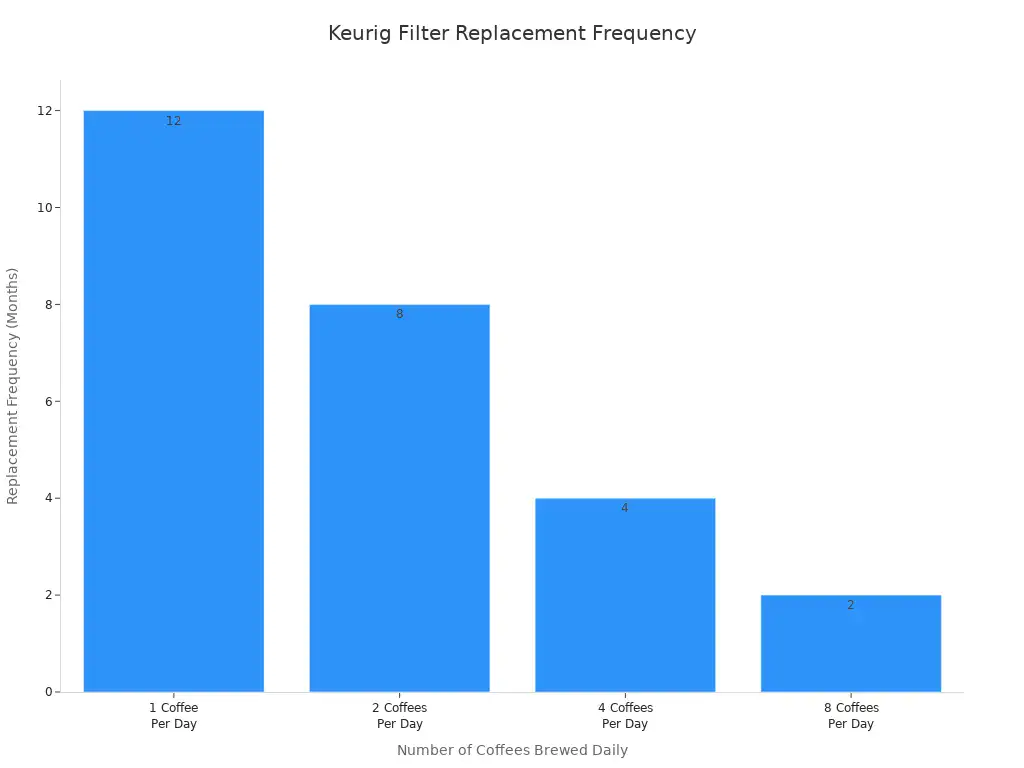
You must replace your Keurig water filter regularly. This keeps your coffee tasting fresh. Keurig advises you to replace the filter every two months. You should also replace it after filtering 40 gallons of coffee. Some users replace it sooner if coffee taste declines. You might also change it during descaling routines.
Here is a guide for when to change your keurig filter:
Number Of Coffees Brewed Each Day | Suggested Filter Replacement Frequency |
|---|---|
1 | 1 Year + |
2 | 8 Months |
4 | 4 Months |
8 | 2 Months |
You should remove the old filter from its holder. Then, you can install the new filter. Make sure you rinse the new filter before placing it in the reservoir. This consistency ensures the best brew taste. You should remove the old filter and replace it on schedule.
Best Water to Use in a Keurig
You want the best water to use in a keurig. Filtered tap water is often ideal. It removes impurities that affect taste and machine longevity. Avoid distilled water. It lacks minerals. These minerals are important for extracting coffee flavors. Also, distilled water can sometimes harm your machine’s sensors. Use water that is clean, fresh, and free from strong odors or tastes.
So, do you need a water filter for your Keurig? Generally, yes, a Keurig water filter is a smart choice for most users. It gives you superior coffee taste. It also extends your machine’s life. You gain peace of mind about water quality. Your decision depends on your water source and Keurig model. Make informed choices. A small effort in filtration leads to a much better coffee experience.
FAQ
Can you use tap water in your Keurig without a filter?
Yes, you can use tap water without a filter. However, your coffee might not taste as good. Tap water often contains chlorine and minerals. These can affect flavor. Using unfiltered water also increases mineral buildup in your machine. This can shorten its lifespan.
What happens if you do not use a water filter in your Keurig?
If you do not use a water filter, mineral deposits can build up inside your Keurig. This is called scale. Scale can clog your machine and reduce its efficiency. It can also make your coffee taste bad. Your brewer might break down sooner without a filter.
Are all Keurig water filters the same?
No, Keurig water filters are not all the same. Different Keurig models require specific filter types. Always check your brewer’s manual or the filter packaging. This ensures you buy the correct filter for your machine. Using the wrong filter will not fit or work properly.
How often should you change your Keurig water filter?
You should change your Keurig water filter every two months. You can also change it after brewing about 60 tank refills. Regular replacement ensures your coffee tastes fresh. It also helps protect your machine from mineral buildup. Consistent filter changes give you the best results.

