

Should you’re replacing or upgrading thermostats for electric baseboard heaters, you’ll want gear that’s safe, accurate, and easy to use. I’ll walk you through seven top options in 2026—from Wi‑Fi smart models to rugged double‑pole mechanical units—so you can match features to your setup and budget. Keep an eye on line‑voltage compatibility and amp ratings, because a wrong choice can cost you comfort or safety.
| Wi-Fi Smart Thermostat for Electric Baseboard Heaters |

| Best Smart Option | Compatibility (heating type): Electric baseboard heaters (120–240V) | Voltage / Power type: 120–240 VAC line-voltage | Controls / Interface: LCD display + app control + device buttons; voice assistants | VIEW LATEST PRICE | Read Our Analysis |
| Honeywell Home Programmable Single-Stage Thermostat (RTH20B) |

| Best For Single-Stage Systems | Compatibility (heating type): Single-stage forced air / hot water / gas/oil/electric (NOT electric baseboard 120–240V) | Voltage / Power type: Low-voltage (wired, battery-powered controller for 24VAC systems) | Controls / Interface: Push-button controls with large backlit LCD | VIEW LATEST PRICE | Read Our Analysis |
| Honeywell RLV3150A1004 Non-Programmable Electric Heat Thermostat |
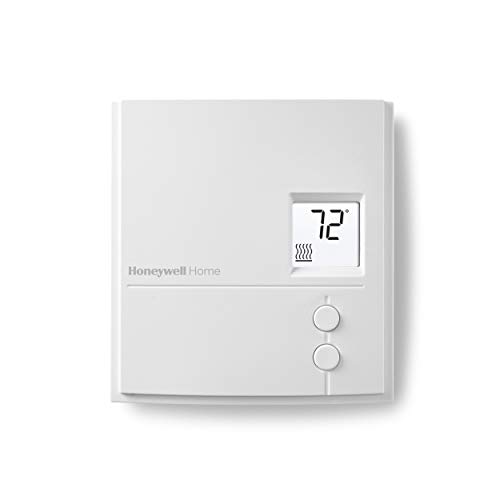
| Quiet High-Capacity | Compatibility (heating type): Line-voltage electric heating (240V) — baseboards/convectors/etc. | Voltage / Power type: 240V line-voltage | Controls / Interface: Digital push-button interface with backlit display | VIEW LATEST PRICE | Read Our Analysis |
| Cadet Double Pole Mechanical Wall Thermostat T522-W |

| Durable Mechanical Choice | Compatibility (heating type): Electric baseboard/wall-mounted heaters (120/240V, 208V) | Voltage / Power type: 120/240V and 208V line-voltage (double-pole) | Controls / Interface: Mechanical twist dial | VIEW LATEST PRICE | Read Our Analysis |
| Smart Tat LCD Electric Baseboard Thermostat (Non-Programmable) |

| Simple Digital Pick | Compatibility (heating type): Electric baseboard / wide applicability across electric heating systems (95–240V) | Voltage / Power type: 95–240V line-voltage | Controls / Interface: LCD display with keypad | VIEW LATEST PRICE | Read Our Analysis |
| Robertshaw DPST Line Voltage Electric Heat Thermostat 802 |

| Reliable Classic | Compatibility (heating type): Baseboard and radiant electric heating (line-voltage) | Voltage / Power type: Line-voltage (DPST) — typical baseboard/radiant electric | Controls / Interface: Mechanical bimetal control (dial/switch) — J-box mount | VIEW LATEST PRICE | Read Our Analysis |
| Non-Programmable Single-Stage Home Thermostat with Backlight |

| Easy Install Backlit | Compatibility (heating type): Multiple low-voltage HVAC types (NOT electric baseboard/line-voltage) | Voltage / Power type: Low-voltage (24 VAC or battery) — NOT line-voltage | Controls / Interface: Simple push-button/controls with backlit LCD | VIEW LATEST PRICE | Read Our Analysis |
More Details on Our Top Picks
Wi-Fi Smart Thermostat for Electric Baseboard Heaters
Should you’ve got 120–240V electric baseboard heaters and want remote control plus scheduling, a Wi‑Fi smart thermostat is a great choice: it connects to your 2.4 GHz network, works with Smart Life/Tuya, and lets you program and control temperatures from the device, app, or via Alexa/Google Assistant to cut energy use and protect pipes. You’ll get an LCD Fahrenheit display showing current and target temps, time, and Wi‑Fi status. Install uses a custom wall plate, screws, and pigtail wires for standard American/Canadian boxes. You’ll program schedules from the device or app and control heaters remotely worldwide.
- Compatibility (heating type):Electric baseboard heaters (120–240V)
- Voltage / Power type:120–240 VAC line-voltage
- Controls / Interface:LCD display + app control + device buttons; voice assistants
- Programmability:Programmable (on-device and via app)
- Installation type / wiring:Wall-mounted, includes wall plate, pigtail wires (fits US/CA electrical boxes)
- Display / Readout:LCD Fahrenheit display (temp, time, target, Wi‑Fi)
- Additional Feature:Remote app control
- Additional Feature:Voice assistant compatible
- Additional Feature:Smart Life / Tuya
Honeywell Home Programmable Single-Stage Thermostat (RTH20B)
Should you run a simple single-stage heating system and want a straightforward, battery-powered programmable thermostat, the Honeywell RTH20B gives you 5-2 day scheduling, a large backlit LCD, and easy push-button controls. You’ll get a compact, white wall-mounted unit that supports 1 heat/1 cool systems but isn’t compatible with 120–240V electric baseboard heat. It runs on two AA batteries (not included), offers an extended low-heat setpoint to 32°F, filter-change alerts, and custom display settings. Installation’s simple as a direct replacement for older RTH models; a Honeywell UWP wall plate helps future upgrades. It carries a one-year warranty.
- Compatibility (heating type):Single-stage forced air / hot water / gas/oil/electric (NOT electric baseboard 120–240V)
- Voltage / Power type:Low-voltage (wired, battery-powered controller for 24VAC systems)
- Controls / Interface:Push-button controls with large backlit LCD
- Programmability:Programmable (5-2 day) with non-programmable option
- Installation type / wiring:Wall-mounted replacement (wired), battery-powered; UWP wall plate recommended
- Display / Readout:Large backlit LCD screen
- Additional Feature:5-2 day scheduling
- Additional Feature:Battery powered (2 AA)
- Additional Feature:Change-filter reminder
Honeywell RLV3150A1004 Non-Programmable Electric Heat Thermostat
Assuming you want a quiet, precise thermostat for 240V baseboard or convector heating, the Honeywell RLV3150A1004 delivers with 0.15°C accuracy and completely silent TRIAC switching. You’ll get a non-programmable, line-voltage digital unit made for 240V electric baseboards, convectors, radiant ceilings, and fan-forced heaters. It handles 500–3000W resistive loads (2–12.5A) on a simple 2-wire installation, includes mounting hardware, and uses push-button controls with a backlit display. Should you require reliable, high-capacity temperature control without clicking relays or programming features, this Honeywell model offers straightforward, precise performance for hardwired electric heating systems.
- Compatibility (heating type):Line-voltage electric heating (240V) — baseboards/convectors/etc.
- Voltage / Power type:240V line-voltage
- Controls / Interface:Digital push-button interface with backlit display
- Programmability:Non-programmable
- Installation type / wiring:2-wire line-voltage installation; includes mounting hardware
- Display / Readout:Backlit digital display
- Additional Feature:3000W max load
- Additional Feature:100% silent switching
- Additional Feature:High accuracy (0.15°C)
Cadet Double Pole Mechanical Wall Thermostat T522-W
Should you need a straightforward, reliable wall thermostat for 120/240 V or 208 V electric baseboard heaters, the Cadet T522-W delivers with a double-pole, positive-off design that improves safety and compatibility for both homeowners and electricians. You’ll get a 22-amp white thermostat that fits most line-voltage, wall-mounted electric heaters. It uses a mechanical twist dial for simple temperature control, so you won’t fuss with programming. Color-coded wires make installation and wiring straightforward, whether you’re replacing an old unit or installing new. The double-pole, four-wire configuration offers safer disconnecting of both hot legs for peace of mind.
- Compatibility (heating type):Electric baseboard/wall-mounted heaters (120/240V, 208V)
- Voltage / Power type:120/240V and 208V line-voltage (double-pole)
- Controls / Interface:Mechanical twist dial
- Programmability:Non-programmable (mechanical)
- Installation type / wiring:4-wire double-pole wiring; color-coded wires; replaces line-voltage thermostats
- Display / Readout:No digital display (mechanical dial)
- Additional Feature:Double-pole safety
- Additional Feature:Positive off position
- Additional Feature:Color-coded wiring
Smart Tat LCD Electric Baseboard Thermostat (Non-Programmable)
In case you want a simple, reliable way to control a wired electric baseboard heater, the Smart Tat LCD thermostat is a solid pick—especially for users who don’t need scheduling features but do want clear feedback and resilient electronics. You’ll get a wired, non-programmable digital controller that handles 95–240 V and up to 16 A, ideal for many baseboard systems. The single-chip microcomputer core enhances anti-interference performance, so operation stays stable. The LCD with keypad and scratch-resistant screen presents clear, easy-to-read data. It simplifies daily heater control, offers wide applicability, and focuses on dependable, straightforward temperature management.
- Compatibility (heating type):Electric baseboard / wide applicability across electric heating systems (95–240V)
- Voltage / Power type:95–240V line-voltage
- Controls / Interface:LCD display with keypad
- Programmability:Non-programmable digital
- Installation type / wiring:Wired connection (line-voltage)
- Display / Readout:LCD display (scratch-resistant)
- Additional Feature:Anti-interference core
- Additional Feature:Scratch-resistant screen
- Additional Feature:Wide voltage range
Robertshaw DPST Line Voltage Electric Heat Thermostat 802
Should you need a straightforward, reliable replacement for a baseboard or radiant electric heating system, the Robertshaw 802 delivers with its DPST double-pole switching and positive “OFF” position that guarantees safe, complete shutdown of both hot and neutral lines. You’ll find it fits most electric heat models and installs quickly in a J-box, making replacement simple. Its bimetal temperature sensing gives control accuracy of about ±2ºF, so you get steady comfort without constant fiddling. The DPST configuration and positive-off switch prioritize safety and clear system shutoff, giving you dependable temperature control and peace of mind.
- Compatibility (heating type):Baseboard and radiant electric heating (line-voltage)
- Voltage / Power type:Line-voltage (DPST) — typical baseboard/radiant electric
- Controls / Interface:Mechanical bimetal control (dial/switch) — J-box mount
- Programmability:Non-programmable (mechanical thermostat)
- Installation type / wiring:J-box compatible, quick install, DPST wiring
- Display / Readout:No electronic display (mechanical bimetal controls)
- Additional Feature:Positive-off switch
- Additional Feature:Bimetal sensing accuracy
- Additional Feature:J-box compatible
Non-Programmable Single-Stage Home Thermostat with Backlight
Should you want a simple, reliable wall thermostat for a conventional heating or cooling system, this non-programmable single-stage model with a blue backlit LCD delivers straightforward control and easy installation. You’ll like the clear display, simple controls, and front-load battery access. It runs on 24 VAC or two AAA batteries; most systems don’t need a C-wire, though heat-only and cool-only setups do. It’s compatible with many conventional systems but not with electric baseboard (110–240V), line-voltage, mini-splits, or dual-fuel setups — so verify compatibility initially. Adjustable swing, calibration, Celsius/Fahrenheit conversion, and selectable compressor delay add useful protection and efficiency.
- Compatibility (heating type):Multiple low-voltage HVAC types (NOT electric baseboard/line-voltage)
- Voltage / Power type:Low-voltage (24 VAC or battery) — NOT line-voltage
- Controls / Interface:Simple push-button/controls with backlit LCD
- Programmability:Non-programmable single-stage (basic), no multi-day scheduling noted
- Installation type / wiring:Wall-mounted with universal sub-base and large terminal blocks; battery compartment access
- Display / Readout:Backlit LCD display
- Additional Feature:Dual power options
- Additional Feature:Compressor delay protection
- Additional Feature:Adjustable temperature differential
Factors to Consider When Choosing a Thermostat For Electric Baseboard Heaters
Upon selecting a thermostat for electric baseboard heaters, you’ll want to check voltage and compatibility with your heater and wiring. Consider how easy installation will be, whether you need programmable schedules or precise temperature control, and whether smart connectivity matters to you. Balancing those features with accuracy and wiring requirements will help you pick the right unit.
Voltage And Compatibility
Because electric baseboard systems run on line voltage, you need a thermostat made for 120–240 V rather than a low‑voltage 24 V model; also confirm whether your heater needs single‑pole or double‑pole control so the thermostat’s switching matches your wiring. Check the thermostat’s maximum and minimum load ratings (amps or watts at the system voltage) to make certain it can safely handle the combined wattage of your heaters. Confirm the unit supports your wiring configuration — 2‑wire or 4‑wire — and that it fits the electrical box and grounding setup already in place. Should you want smart features, verify compatibility with 2.4 GHz Wi‑Fi and that the thermostat won’t require a 24 V common wire.
Wiring And Installation
Should you’re installing a thermostat for electric baseboard heaters, plan the wiring and installation carefully to match the thermostat’s voltage, pole configuration, and power needs. Make sure the thermostat is rated for line-voltage (120–240 V) and matches the heater’s amperage to avoid overloads. Confirm whether your system needs a single-pole (2-wire) or double-pole (4-wire) thermostat and wire accordingly for safe switching. Check the wall box for a neutral or second hot; some line-voltage thermostats are self-powered, others need a neutral or batteries. Use a correctly sized junction or wall box to fit all wires and pigtails, follow local code for grounding and wire gauge, turn off power, verify with a multimeter, and secure connections with proper wire nuts or lugs.
Programmability And Scheduling
In case you want tight control over comfort and energy use, prioritize a programmable thermostat that matches how you live and heat—choose 5‑2 or 7‑day models in case your weekly routine varies, pick thermostats that allow 3–6 periods per day for finer control, and make sure they support setback temperatures plus a frost‑protection hold to prevent freezing. With programming you’ll typically save 10–30% versus manual operation because heating only runs when needed. Check time‑of‑day increments and number of daily periods to balance comfort and savings. Prefer models with remote app scheduling, geofencing, or smart‑home triggers so schedules adapt to your presence. Avoid non‑programmable units in case you want automated setbacks; they require manual changes and miss potential energy savings.
Accuracy And Temperature Control
At any time you want steady, comfortable heat without wasting electricity, pick a thermostat that gives precise temperature control—aim for ±0.5°F accuracy and a small temperature differential so the baseboards don’t short‑cycle or overshoot. You should favor electronic line‑voltage thermostats with digital sensors rather than bi‑metal coils because they hold temperature tighter (often 0.5–1.0°F swing versus 2°F+). Choose models with adjustable differential or sensitivity so you can trade slight comfort shifts for fewer cycles and lower energy use. Look for advanced control algorithms like PID or adaptive learning to minimize overshoot in well‑insulated rooms. Finally, verify the setpoint range and a reliable calibration/offset feature so the displayed temperature matches actual conditions.
Smart Connectivity Options
Precise temperature control is only part of the story—smart connectivity determines how easily you can manage that control from anywhere. Choose a thermostat that supports 2.4 GHz Wi‑Fi for reliable remote app access; many line‑voltage models skip 5 GHz. Confirm compatibility with major smart‑home ecosystems so you may use voice assistants and include the thermostat in routines. Look for remote scheduling and geofencing in the app to enable energy‑saving setbacks whenever you leave and automatic adjustments on return. Check whether the device requires a cloud account or allows local/LAN‑only control should you prefer privacy and less reliance on external servers. Finally, verify OTA firmware updates and a manufacturer commitment to regular security patches to protect your system.
Frequently Asked Questions
Can a Smart Thermostat Reduce Electric Baseboard Heating Bills Significantly?
Yes — you can cut baseboard heating costs with a smart thermostat via scheduling setbacks, using geofencing, and optimizing runtimes; it won’t work miracles but can materially reduce wasted heating and lower bills if used properly.
Are These Thermostats Compatible With Multi-Zone Systems?
A map icon: yes — you can connect many smart baseboard thermostats into true multi‑zone setups. You’ll control independent zones, but you’ll need compatible thermostats, a supporting hub or app, and correct wiring for reliable operation.
Do Any Models Require Professional Wiring or Can I DIY Install?
Most models you’ll find are DIY-friendly with line-voltage wiring, but some smart or multi-zone thermostats require professional wiring or an electrician for safe 240V connections and compliance; check installation requirements and local codes before starting.
How Do Thermostats Handle Voltage Differences (120v Vs 240V)?
Like a fork in the road, thermostats match voltage via design: you’ll buy a 120V or 240V model or use a relay/line-voltage adapter; mix-ups risk damage, so always confirm ratings and wiring before installing.
Are There Safety Certifications to Look for With Line-Voltage Thermostats?
Yes — you should look for UL or ETL listing, CSA or cUL certification, and compliance with local electrical codes; manufacturers often mention NRTL markings and thermostat-specific standards like UL 873 or UL 60730 for safety and reliability.
