

Like trading up to a faster highway, choosing a Wi‑Fi 6 router can clear traffic for every device in your home. You’ll want gear that balances speed, range, and smart‑home support without overpaying for unused features. I’ll walk you through six top picks—from mesh‑friendly eero to a cutting‑edge Wi‑Fi 7 option—so you can match a router to your home size, device load, and wired backhaul needs.
| Amazon eero 6 Mesh WiFi Router (1-Pack) |
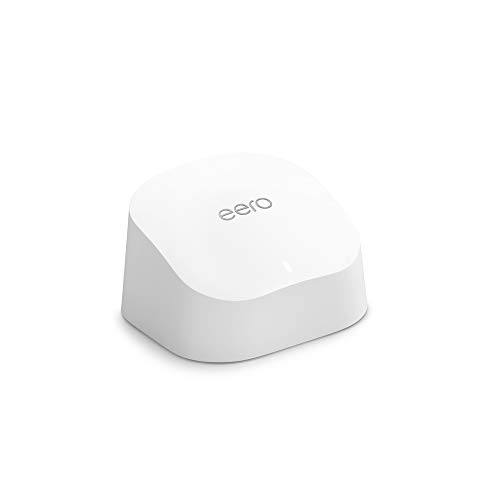
| Best for Simplicity | Wi‑Fi Standard: Wi‑Fi 6 (802.11ax) | Bands: Dual‑band (2.4 + 5 GHz) | Coverage (stated): Up to 1,500 sq. ft. | VIEW LATEST PRICE | Read Our Analysis |
| NETGEAR R6700AX WiFi 6 AX1800 Dual-Band Router |

| Best for Wired Devices | Wi‑Fi Standard: Wi‑Fi 6 (802.11ax) | Bands: Dual‑band (2.4 + 5 GHz) | Coverage (stated): Up to 1,500 sq. ft. | VIEW LATEST PRICE | Read Our Analysis |
| TP-Link Archer AX10 WiFi 6 Router |

| Budget-Friendly Pick | Wi‑Fi Standard: Wi‑Fi 6 (802.11ax) | Bands: Dual‑band (2.4 + 5 GHz) | Coverage (stated): (No single declared whole‑home figure; implied home coverage for typical use) — specific sq. ft. not stated | VIEW LATEST PRICE | Read Our Analysis |
| TP-Link Archer AXE75 AXE5400 WiFi 6E Router |

| Best for Gaming | Wi‑Fi Standard: Wi‑Fi 6E (backward Wi‑Fi 6/6E compatible) | Bands: Tri‑band (2.4 + 5 + 6 GHz) | Coverage (stated): (No single declared whole‑home figure in summary) | VIEW LATEST PRICE | Read Our Analysis |
| NETGEAR Nighthawk Tri‑Band WiFi 7 Router (RS280S) |

| Future-Proof Powerhouse | Wi‑Fi Standard: Wi‑Fi 7 (includes Wi‑Fi 6/6E-era compatibility) — listed as next‑gen but supports modern Wi‑Fi 6 device compatibility | Bands: Tri‑band (includes 6 GHz plus other bands) | Coverage (stated): Up to 2,500 sq. ft. | VIEW LATEST PRICE | Read Our Analysis |
| ASUS RT-AX1800S WiFi 6 Dual-Band Router |

| Best for Security & Mesh | Wi‑Fi Standard: Wi‑Fi 6 (802.11ax) | Bands: Dual‑band (2.4 + 5 GHz) | Coverage (stated): (No single declared whole‑home figure in summary) | VIEW LATEST PRICE | Read Our Analysis |
More Details on Our Top Picks
Amazon eero 6 Mesh WiFi Router (1-Pack)
Should you want simple, reliable whole‑home Wi‑Fi 6 without fuss, the Amazon eero 6 (1‑pack) is a great pick — it covers up to 1,500 sq. ft., handles 75+ devices, and supports speeds to 900 Mbps, so you can stream 4K, game, and video‑conference with fewer drop‑offs thanks to TrueMesh. You’ll set it up in minutes via the eero app and manage your network remotely. Built‑in Zigbee links smart devices to Alexa, cutting hub clutter. Automatic updates keep features and security current, free US support is available daily, and you can expand the system easily.
- Wi‑Fi Standard:Wi‑Fi 6 (802.11ax)
- Bands:Dual‑band (2.4 + 5 GHz)
- Coverage (stated):Up to 1,500 sq. ft.
- Wired Ports (Ethernet):Not specified in summary (mesh node; typical eero has Ethernet ports)
- Device Capacity / Multi‑device Support:Supports 75+ devices
- Security & Software Features:Automatic updates; Zigbee smart‑hub; eero app remote management; free US support
- Additional Feature:Built-in Zigbee hub
- Additional Feature:TrueMesh traffic routing
- Additional Feature:Automatic firmware updates
NETGEAR R6700AX WiFi 6 AX1800 Dual-Band Router
Should you want a reliable, budget-friendly Wi‑Fi 6 upgrade for a small to mid-size home, the NETGEAR R6700AX delivers AX1800 speeds and coverage for about 1,500 sq. ft., supporting up to 20 devices while connecting to any ISP via your existing cable modem. You’ll get dual-band Wi‑Fi 6 performance (up to 1.8 Gbps) for streaming, gaming, and conferencing, plus four Gigabit Ethernet ports for wired gear. It’s a router-only unit made for U.S. use and works with cable, fiber, satellite, or DSL up to 1 Gbps. Built-in security, updates, and free expert support help keep your network protected.
- Wi‑Fi Standard:Wi‑Fi 6 (802.11ax)
- Bands:Dual‑band (2.4 + 5 GHz)
- Coverage (stated):Up to 1,500 sq. ft.
- Wired Ports (Ethernet):4 × Gigabit Ethernet ports
- Device Capacity / Multi‑device Support:Supports up to 20 devices
- Security & Software Features:Built‑in security measures; enhanced safety features; free expert help
- Additional Feature:4× Gigabit LAN ports
- Additional Feature:Made for U.S. use
- Additional Feature:Connects to modem-only
TP-Link Archer AX10 WiFi 6 Router
Should you need an affordable Wi‑Fi 6 upgrade that handles dozens of smart devices without breaking the bank, the TP‑Link Archer AX10 delivers solid AX1500 performance with OFDMA, MU‑MIMO and four high‑gain antennas to improve coverage and capacity for streaming, gaming, and video calls. You’ll get dual‑band 802.11ax with 1024‑QAM, beamforming, and a 900MHz dual‑core CPU to keep simultaneous streams smooth. It supports Gigabit WAN and four LAN ports, OneMesh extenders, Alexa, and backward compatibility with older devices. Should you desire budget near‑Gigabit wireless and reliable multi‑device handling, the Archer AX10 is a practical pick.
- Wi‑Fi Standard:Wi‑Fi 6 (802.11ax)
- Bands:Dual‑band (2.4 + 5 GHz)
- Coverage (stated):(No single declared whole‑home figure; implied home coverage for typical use) — specific sq. ft. not stated
- Wired Ports (Ethernet):4 × Gigabit Ethernet LAN ports; Gigabit WAN
- Device Capacity / Multi‑device Support:AX1500 with OFDMA/MU‑MIMO to handle more devices (no fixed count)
- Security & Software Features:OneMesh support; works with Alexa; firmware/support via TP‑Link
- Additional Feature:OneMesh compatible
- Additional Feature:900 MHz dual-core CPU
- Additional Feature:Four Gigabit LANs
TP-Link Archer AXE75 AXE5400 WiFi 6E Router
Should you want fast, low‑latency Wi‑Fi for gaming and 4K/8K streaming in busy homes, the TP‑Link Archer AXE75 (AXE5400) is built for that, thanks to its new 6 GHz band and combined 5,400 Mbps throughput across tri‑band Wi‑Fi 6E. You’ll get 6 GHz and 5 GHz at 2402 Mbps each and 574 Mbps on 2.4 GHz, with 160 MHz channels and OFDMA to handle many devices. A 1.7 GHz quad‑core CPU and 512 MB RAM keep performance steady. It supports OneMesh, WPA3, OpenVPN/PPTP/L2TP, and HomeShield basic security; you’ll still need a modem for most ISPs.
- Wi‑Fi Standard:Wi‑Fi 6E (backward Wi‑Fi 6/6E compatible)
- Bands:Tri‑band (2.4 + 5 + 6 GHz)
- Coverage (stated):(No single declared whole‑home figure in summary)
- Wired Ports (Ethernet):(Summary lists general tri‑band features; ports not detailed)
- Device Capacity / Multi‑device Support:OFDMA and tri‑band for increased device capacity (no fixed count)
- Security & Software Features:WPA3 support; TP‑Link HomeShield (security, parental controls, QoS) and VPN support
- Additional Feature:6 GHz Wi‑Fi 6E band
- Additional Feature:1.7 GHz quad-core CPU
- Additional Feature:VPN server/client support
NETGEAR Nighthawk Tri‑Band WiFi 7 Router (RS280S)
Were you upgrading to Wi‑Fi 7 for maximum throughput and future‑proofing, the NETGEAR Nighthawk RS280S stands out with tri‑band 320 MHz channels and a dedicated 6 GHz band that handle up to 100 devices and deliver up to 2.4× faster speeds than Wi‑Fi 6, making it ideal for 4K/8K streaming, gaming, and dense smart‑home setups. You’ll get BE9200-class speeds up to 9.2 Gbps, coverage to about 2,500 sq. ft., and multiple multi‑gig ports: one 2.5G WAN, two 2.5G LAN and two 1G LAN. It’s router‑only, includes one year of Armor security, and needs a separate modem for cable service.
- Wi‑Fi Standard:Wi‑Fi 7 (includes Wi‑Fi 6/6E-era compatibility) — listed as next‑gen but supports modern Wi‑Fi 6 device compatibility
- Bands:Tri‑band (includes 6 GHz plus other bands)
- Coverage (stated):Up to 2,500 sq. ft.
- Wired Ports (Ethernet):One 2.5 Gig internet port; two 2.5 Gig LAN; two 1 Gig LAN
- Device Capacity / Multi‑device Support:Supports up to 100 devices
- Security & Software Features:NETGEAR Armor (1‑year), automatic firmware updates, Advanced Router Protection
- Additional Feature:WiFi 7 (BE9200 speeds)
- Additional Feature:Multi‑gig 2.5G ports
- Additional Feature:Includes 1‑year Armor
ASUS RT-AX1800S WiFi 6 Dual-Band Router
In case you want a budget‑friendly Wi‑Fi 6 router that’s great for gaming, streaming, and small‑to‑medium homes, the ASUS RT‑AX1800S delivers solid performance with its 2×2 Wi‑Fi 6 radios, 1024‑QAM support, and AiMesh expandability. You’ll get MU‑MIMO and OFDMA for smoother multi‑device use, 80 MHz channel bandwidth, and improved throughput and battery life for clients (real results depend on environment and traffic). Hardware includes four external antennas, a dual‑core CPU, one Gigabit WAN and four Gigabit LAN ports, and compact dimensions. Security features include AiProtection Classic, Instant Guard VPN, parental controls, and built‑in VPN support.
- Wi‑Fi Standard:Wi‑Fi 6 (802.11ax)
- Bands:Dual‑band (2.4 + 5 GHz)
- Coverage (stated):(No single declared whole‑home figure in summary)
- Wired Ports (Ethernet):One Gigabit WAN; four Gigabit LAN
- Device Capacity / Multi‑device Support:MU‑MIMO and OFDMA for multi‑device efficiency (no fixed count)
- Security & Software Features:AiProtection Classic (Trend Micro) subscription‑free, ASUS Instant Guard VPN, parental controls, AiMesh support
- Additional Feature:AiMesh-compatible
- Additional Feature:AiProtection (Trend Micro)
- Additional Feature:ASUS Instant Guard VPN
Factors to Consider When Choosing a Router Wifi 6
Upon choosing a Wi‑Fi 6 router, you’ll want to compare speed ratings and supported standards so your network stays fast and future‑proof. Check coverage, device capacity, and wired ports to make sure the router handles your home’s layout and the number of gadgets you use. Also prioritize strong security features and timely firmware updates to keep your network safe.
Speed And Standards
Because Wi‑Fi 6 brings technical upgrades like 1024‑QAM, wider channel widths, and OFDMA, you’ll see higher peak and multi‑device throughput than with Wi‑Fi 5—so start checking a router’s stated aggregate class (AX1500, AX1800, AX5400), supported channel widths (80 vs 160 MHz) and whether it includes 6 GHz (Wi‑Fi 6E). Beyond labels, verify MU‑MIMO, OFDMA, and the number of spatial streams to gauge real‑world multi‑device performance and latency. Don’t forget wired limits: a Gigabit WAN/LAN port will cap your internet speed, therefore look for multi‑gig ports should your plan or NAS demand more. Also consider simultaneous tri‑band designs that add capacity through separating traffic. Match these specs to your device mix and internet service to avoid bottlenecks.
Coverage And Range
Although a router’s headline coverage number gives you a quick estimate, don’t treat it as a guarantee—check the stated square‑footage against your floorplan and add margin for walls, floors, and interfering materials that will cut range dramatically. Compare the manufacturer’s nominal area (many list ~1,500 sq ft per unit) to your layout, recalling real‑world range varies. Heavy materials—concrete, brick, metal, foil‑backed insulation—and appliances will reduce signal and throughput. Look for higher‑gain external antennas and beamforming to focus signals and extend usable reach. For multi‑story or large homes, choose mesh‑capable systems or add access points to preserve coverage and seamless roaming. Expect peak Wi‑Fi 6 speeds near the router; speeds fall with distance and obstacles, so plan placement accordingly.
Device Capacity Limits
Plan for more than just device count while sizing a Wi‑Fi 6 router: look at stated concurrent‑device capacity but also check spatial streams, channel widths (80/160 MHz), and the CPU/RAM specs that drive connection handling. You should verify the router supports OFDMA and MU‑MIMO, since those technologies let many clients share airtime efficiently. Keep in mind capacity isn’t just theoretical—available spatial streams and wider channels let more high‑throughput devices run simultaneously. Account for your upstream internet and LAN/WAN throughput, because those can bottleneck a busy network. Consider device mix—IoT sensors, phones, cameras and streamers have different latency and bandwidth needs—plan for peak simultaneous activity, not just total devices. Prefer routers with stronger CPUs and more memory when you expect heavy loads or advanced features.
Wired Connectivity Options
Upon choosing a Wi‑Fi 6 router, don’t overlook wired connectivity — it often determines real‑world performance more than wireless specs. Check how many Ethernet LAN ports you get and whether they’re Gigabit or multi‑gig (2.5G/10G) so PCs, consoles, NAS, or switches run at full speed. Confirm the WAN port matches your broadband — Gigabit or multi‑gig — and supports link aggregation should you need above‑1 Gbps throughput. In the event you plan networked storage or printer sharing, look for USB or eSATA ports for direct attachment and media server use. Consider LACP support on LAN/WAN for combining links or redundancy, and verify a dedicated wired backhaul port should you wire mesh nodes for maximum stability and lower wireless congestion.
Security And Updates
Because routers sit at the edge of your network, you should prioritize models that get regular, automatic firmware updates and support modern security standards like WPA3 and secure management interfaces (HTTPS/SSH or vetted cloud auth). Also confirm built‑in threat protection—malware scanning and intrusion prevention—and whether it’s subscription‑free or requires paid renewal. Check the vendor’s update cadence and end‑of‑life policy; monthly or quarterly patches and multi‑year support cut long‑term exposure. Prefer routers with user‑controllable isolation tools: guest networks, VLANs, and granular parental/IoT device controls let you segment traffic and limit damage from compromised devices. Finally, verify secure credential handling (strong admin passwords, 2FA where available) and clear, timely security advisories from the maker.
Mesh And Expandability
Should you require blanket coverage across a large or multi‑story home, choose a Wi‑Fi 6 router that’s mesh‑capable so you can add nodes to create a single seamless network and eliminate dead zones. Check whether it uses standard mesh protocols (like Wi‑Fi EasyMesh and WPA3) or a proprietary system so new nodes remain compatible. Estimate node count—single units typically cover about 1,000–2,500 sq ft—and prefer systems that support wired backhaul to keep inter‑node throughput high. Look for scalability features: automatic firmware updates, centralized app or web management, and cross‑device compatibility so additions configure smoothly. Lastly, evaluate device capacity and bandwidth handling (OFDMA/MU‑MIMO, channel widths, tri‑band or 6 GHz availability) to preserve performance as you expand.
Smart Home Compatibility
Consider about your router as the smart-home hub you didn’t know you needed: choose one with a built‑in Zigbee or Thread radio (or clear support for third‑party hubs) so your bulbs, locks, and sensors can talk locally without extra bridges. Also confirm WPA3 and strong guest‑network isolation to protect typically weak IoT devices from attacks. Check for native voice‑assistant integration or open APIs should you want seamless control and automation through speakers or controllers. Pick a router with QoS or device prioritization to keep latency‑sensitive gear like cameras and doorbells stable during peak use. Finally, verify mesh/extender compatibility and the ability to create separate SSIDs or VLANs so you can segment smart devices for reliability and security.
